

Key takeaways
- Find the best stainless steel moka pots for gas, electric and induction. Six stovetop options compared, with honest notes on aluminum look-alikes.
The Bialetti Venus in the 6-cup size is the best overall stainless steel moka pot here: it is a stovetop espresso-style maker built from stainless steel that Bialetti markets for all hobs, induction included, and it holds a useful amount for one or two drinkers. A moka pot brews by pushing steam-heated water up through a basket of fine grounds, giving a concentrated, espresso-like cup without a machine. Two of the six listed products are actually aluminum, so this guide tells you which, why it matters, and who should still consider them.
Quick List
- Bialetti Venus 4-cup – best for solo drinkers who want a small induction-ready stainless pot
- Bialetti Venus 6-cup – best for the everyday one-to-two-person household
- Primula Classic 6-cup – best for a no-frills stovetop pot on gas or electric, but it is aluminum
- IMUSA 6-cup stainless – best for a plain, mirror-polished stainless pot on a conventional stove
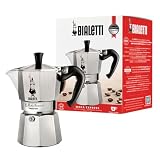
- Bialetti Moka Express 6-cup – best for the classic Italian look, with the caveat that it is aluminum
- Bialetti Venus 10-cup – best for entertaining and larger households
Which One Is Right for You?
| If you… | Choose |
|---|---|
| cook on induction and want the safest bet | Bialetti Venus (4, 6, or 10-cup) |
| make one small cup at a time | Bialetti Venus 4-cup |
| brew for two or want a flexible daily size | Bialetti Venus 6-cup |
| host guests or brew a large batch | Bialetti Venus 10-cup |
| want stainless steel on a gas or electric stove with straightforward construction | IMUSA 6-cup |
| do not mind aluminum and want a traditional Italian-style pot | Bialetti Moka Express |
| want a basic aluminum greca-style pot for Cuban or Italian coffee | Primula Classic |
If the word “stainless” in your search matters, treat the Moka Express and the Primula Classic as alternatives rather than matches. They are included because they are common alternatives and sit in the same category of stovetop pots. The Venus family and the IMUSA are the stainless steel choices.
All 6 Picks in Detail
1. Bialetti Venus 4-Cup – Best for Solo Drinkers on Induction
As an Amazon Associate we earn from qualifying purchases at no extra cost to you.

The 4-cup Venus is the smallest induction-ready option here. Retailer listings describe 18/10 stainless steel construction and a stated capacity of about 170 ml, or 5.7 oz, in line with the listing title. Some sources quote a higher figure, probably the water chamber volume, so use 5.7 oz as the brewed output and confirm on the product page.
It suits one person who wants a single strong cup or a small americano base, or a couple who share one cup. Note that Bialetti uses the Italian “cup”, which is a small espresso-sized pour (retailers cite about 1.45 oz), not a mug.
- Capacity: 4 cups, about 5.7 oz brewed
- Material: stainless steel (18/10 per retailer descriptions)
- Cooktops: marketed for all types, including induction
- Approximate size: about 17 cm tall and 9.5 cm across at the base, per a manufacturer regional page
- Cleaning: Bialetti’s guidance leans toward hand washing; listings disagree on dishwasher use
- Style: octagonal-style Venus body with a flip-top lid
Pros:
- Induction compatible without an adapter plate
- Stainless steel body does not carry the aluminum taste some people notice in older pots
- Right size for one
Cons:
- Too small for two full cups
- Stainless conducts heat more slowly than aluminum, so expect a slightly longer brew time
- Hand washing is the safe default
Step up to the 6-cup if you ever brew for two; stay with this one if you only ever make a single serving.
2. Bialetti Venus 6-Cup – Best for the Everyday Household

This is the pick for most readers. The 6-cup Venus holds about 7.9 oz according to the listing title, with retailer figures around 235 to 240 ml. That is enough for two small cups or one generous americano-style mug when diluted with hot water. It shares the same stainless build and induction suitability as the other Venus sizes.
It suits couples, remote workers who drink two cups a day, and anyone who wants a single pot that does not feel too small or too bulky. Because six cups of Bialetti measure only about 8 oz, it is not a pot for a table of guests.
- Capacity: 6 cups, 7.9 oz per the listing title
- Material: stainless steel
- Cooktops: all types, including induction, per the listing
- Approximate size: roughly 100 mm base and 200 mm height per a manufacturer regional page
- Output style: concentrated, espresso-like coffee
- Care: wash by hand and dry completely
Pros:
- Best balance of size and versatility in the group
- Works on gas, electric, ceramic, and induction
- Durable stainless body
Cons:
- Not a large-batch pot
- Gasket and filter plate are consumables and will eventually need replacement
- Slower to heat than aluminum
It is the sensible middle of the Venus line: larger than the 4-cup, easier to store than the 10-cup.
3. Primula Classic Stovetop Espresso Maker – Best for a Basic Pot, but It Is Aluminum

The Primula Classic is a long-running budget-style stovetop pot, and it should be said plainly that the Classic line is aluminum. Retailer listings and the maker’s own pages describe cast aluminum and recommend gas, electric, and ceramic stovetops. Primula sells a separate stainless steel model, so check which one you are buying.
It suits people who want to brew a greca-style pot of Cuban or Italian coffee on a conventional stove and do not require stainless steel. It is a poor match for anyone with an induction cooktop, since plain aluminum is not magnetic and no listing we found confirms induction use.
- Capacity: 6 espresso cups per the listing title; confirm the ounce figure on the page
- Material: aluminum for the Classic line
- Cooktops: gas, electric, ceramic; induction not confirmed
- Handle: easy-grip design per the maker
- Style: greca or moka pot form
- Care: hand wash and avoid abrasive pads on aluminum
Pros:
- Light and quick to heat
- Familiar design that works with fine-ground coffee
- Good fit for gas ranges
Cons:
- Not stainless steel
- Not suitable for induction without an adapter
- Aluminum can darken or pit if put in a dishwasher
If you wanted stainless steel, the IMUSA below is the closer match for a similar style of use.
4. IMUSA 6-Cup Stainless Steel Stovetop Coffeemaker – Best Plain Stainless Pot for Gas or Electric

The IMUSA B120-22062M is a straightforward 6-cup stainless steel pot with a mirror-polished finish, a cool-touch handle, a flip-up top, and a side pour spout. Listings recommend gas, ceramic, and electric stovetops and do not mention induction. One buyer comment suggests induction only works with an induction-compatible plate underneath, so treat it as non-induction unless the maker says otherwise.
It suits readers who want stainless steel and a conventional stove, and who prefer a simple, polished pot to a design-led one. The listed capacity of 6 cups at roughly 8 oz in one retailer description should be taken with caution, since moka pot cups are usually small.
- Capacity: 6 cups; ounce figures vary by source
- Material: stainless steel with a mirror finish
- Cooktops: gas, ceramic, electric; induction not stated
- Filter: reusable, per the listing
- Weight: about 1.2 lb per the manufacturer; other listings round it differently
- Warranty: a short manufacturer warranty is noted in listings; confirm the terms
Pros:
- Stainless steel on a traditional design
- Side pour spout and cool-touch handle
- Simple, easy-to-learn operation
Cons:
- No stated induction support
- One buyer reported that not all the water moved up to the top chamber, which can come down to technique and heat
- Thin manufacturer detail compared with the Bialetti pots
Compared with the Venus, it gives up induction and brand support in exchange for a plainer build.
5. Bialetti Moka Express 6-Cup – Best Classic Italian Look, Aluminum Body

The Moka Express is the pot most people picture when they hear “moka.” The 6-cup size is listed at about 300 ml of boiler capacity by several retailers, with brewed output closer to 270 ml in one review. Crucially, it is aluminum, and the standard Moka Express does not work on induction unless you place an adapter plate under it. Bialetti’s Venus and Moka Induction lines exist for that purpose.
It suits anyone on gas or electric who values the classic octagonal shape and the thin, quick-heating aluminum body. It is the wrong choice for induction users, and it is not stainless steel.
- Capacity: 6 cups; about 300 ml boiler capacity per retailers
- Material: aluminum (Natural Silver finish per the title)
- Cooktops: gas, electric; induction needs an adapter plate
- Approximate size: about 108 mm wide and 210 mm tall per one source
- Replaceable parts: gaskets and filter plates are sold separately by Bialetti and third parties
- Care: hand wash with no detergent soaking, per common guidance
Pros:
- Fast heat-up and a long design history
- Easy-to-find replacement parts
- Classic shape that fits many cabinets and drying racks
Cons:
- Aluminum rather than stainless steel
- No direct induction use
- Can discolor with dishwasher cleaning
Pair it with a Venus in your head: same brand and similar results, but the Venus handles induction and the Moka Express handles tradition.
6. Bialetti Venus 10-Cup – Best for Larger Households and Guests

The 10-cup Venus is the big sibling in the stainless line. Retailers quote about 460 to 480 ml (roughly 15.5 oz), with listing details such as a base of about 127 mm and a height of about 238 mm. It is the only pot here that can serve four small cups without a second batch.
It suits dinner hosts, families with more than one coffee drinker, and anyone who makes a concentrate to dilute for milk drinks across the morning. It is also heavier and bulkier than the others, so check your burner size and storage.
- Capacity: 10 cups, about 15.5 oz
- Material: stainless steel
- Cooktops: marketed for all hobs, including induction
- Approximate size: about 127 mm base and 238 mm height per a manufacturer regional page
- Brew time: longer than smaller pots because of greater water volume
- Care: hand wash recommended
Pros:
- Largest capacity in the group
- Same induction-ready stainless construction as the smaller Venus pots
- Good for batch concentrate
Cons:
- Overkill for a single drinker
- Needs a larger burner and more attention near the end of the brew
- Pots of this size are more likely to scorch coffee if left on high heat
If you rarely brew more than two cups, the 6-cup Venus is a better daily fit.
Specs Compared
| Product | Material | Size label | Approx. brewed volume | Induction |
|---|---|---|---|---|
| Bialetti Venus 4-cup | Stainless steel | 4 cups | About 5.7 oz (170 ml) | Yes, per listing |
| Bialetti Venus 6-cup | Stainless steel | 6 cups | About 7.9 oz (235 to 240 ml) | Yes, per listing |
| Primula Classic 6-cup | Aluminum | 6 cups | Confirm on listing | Not confirmed |
| IMUSA 6-cup | Stainless steel | 6 cups | Confirm on listing | Not stated |
| Bialetti Moka Express 6-cup | Aluminum | 6 cups | About 300 ml boiler capacity | No, adapter needed |
| Bialetti Venus 10-cup | Stainless steel | 10 cups | About 15.5 oz (460 to 480 ml) | Yes, per listing |
How We Chose These
This is a research-based ranking. We compared each listing’s title and description against manufacturer regional pages, retailer specification fields, and published editorial descriptions of stovetop pots. Ranking factors were material (stainless first), induction support, capacity relative to common household use, ease of care, and how clearly the maker documents the product. Where the listing and other sources disagreed, such as the Primula’s material or capacity figures, we reported the conflict. The ranking rests on documentation and published descriptions.
What to Look For
Stainless steel versus aluminum
Aluminum heats fast, is light, and costs less to make, which is why it dominates traditional moka pots. Its downsides are that it is not induction compatible, it can discolor, and it should not go in a dishwasher. Stainless steel is heavier and slower to heat, but it handles daily abuse, resists staining, and can work on induction when the base is magnetic. If you are shopping on a “stainless steel” search, check the title carefully, because “stovetop espresso maker” listings often mix both.
Induction compatibility
An induction cooktop only heats cookware that attracts a magnet. Plain aluminum fails that test, and some stainless steel does too. Look for a maker’s explicit statement such as “suitable for all types of hobs,” as Bialetti uses for the Venus line. If a listing is silent, assume no, and bring a magnet to the stove or buy a pot with a stated induction claim. An adapter plate under an aluminum pot works but slows the brew and adds a heavy accessory.
Size and what a “cup” means
Moka pot cups are small. A 6-cup pot makes roughly 235 to 300 ml of liquid depending on the model, which is enough for two small cups or a mug of americano when diluted. Fill the chamber by volume, not by cup count, and buy the size you will actually fill. A pot brews best when full, because a half-filled basket can lead to uneven extraction. A worked example: if you want one 8 oz mug of coffee diluted from concentrate, a 4-cup or 6-cup pot will do it; if you want two such mugs, move to the 10-cup.
Grind, heat, and technique
Use a fine grind, slightly coarser than espresso and finer than drip. Fill the basket level without tamping, keep the water below the safety valve, and use medium heat with the lid open so you can watch the flow. Remove the pot from the heat when the stream turns pale and begins to gurgle, then cool the base briefly under cold water to stop the extraction. A moka pot makes strong coffee but does not reach the pressure of an espresso machine, so expect a concentrated brew rather than crema-topped espresso.
Care and consumables
The rubber gasket and the metal filter plate wear out. Replace the gasket when it hardens, cracks, or the pot leaks at the join, and rinse the filter plate to keep the holes open. Let the pot dry fully before storing it. Hand washing with warm water and a soft cloth is the safest approach for both stainless and aluminum, even where a listing says dishwasher safe.
Safety and heat management
Every moka pot is a small pressure vessel with a safety valve on the boiler, so never fill water above the valve and never leave the pot unattended on a hot burner. Match the burner to the base: on gas, keep the flame under the footprint of the pot so it does not lick up the sides and heat the handle. On induction, start at a medium setting and adjust, because induction responds quickly. Let the pot cool before unscrewing it, and use a cloth if the body is still hot.
Questions
Is a stainless steel moka pot better than aluminum?
It is more durable and works on induction when designed for it, but it heats more slowly and often costs more. Aluminum brews just as well on gas or electric if you accept the care requirements.
Can I use a moka pot on an induction stove?
Only if it has a magnetic base. Bialetti markets the Venus for all hobs including induction, while standard aluminum pots such as the Moka Express need an adapter plate.
How much coffee does a 6-cup moka pot make?
Roughly 235 to 300 ml depending on the model, which is about 8 to 10 oz. Treat the cup count as a rough size label, not a number of mugs.
What grind should I use?
Use a fine grind that is a little coarser than espresso. Pre-ground coffee marketed for moka or espresso pots usually works, but very fine powder can clog the filter plate.
Why does my moka pot taste bitter or metallic?
Bitterness usually comes from too much heat, too fine a grind, or leaving the pot on the burner after it starts gurgling. A metallic note can come from an unrinsed new pot, so wash and brew a throwaway batch first.
Is a moka pot the same as an espresso machine?
No. Both produce concentrated coffee, but a moka pot works at much lower pressure than the roughly 9 bar commonly cited for espresso machines. Expect a strong, rich brew without a thick layer of crema.
Do I need to replace the gasket?
Yes, eventually. When the rubber ring hardens, cracks, or the pot leaks around the seam, swap it for a new one that matches your size.
Update History
- October 20, 2026 – Initial publication; product set drawn from current catalog listings.
- Check the product page for current specifications and availability before buying.
Sources
- Manufacturer and regional brand pages for Bialetti, Primula, and IMUSA
- Retailer listing titles and specification fields for each pot
- Published retailer and editorial descriptions of capacity, materials, and induction suitability


Write Your Review
No reviews yet. Be the first to share your experience!