

Our Top Picks
Quick answer: Start with the Fresh Roasted Coffee Organic Ethiopian Yirgacheffe if you want a certified organic medium roast with a clean citrus finish. Choose The Coffee Bean and Tea Leaf Ethiopia Yirgacheffe for a light roast from a heritage roaster, the Cooper’s Cask Ethiopian Bold Light Roast for a two-pound bag of natural-process coffee, the Cubico Coffee Ethiopian Yirgacheffe for a straightforward medium roast at a budget tier, and the Javabean Ethiopian Yirgacheffe for a blueberry-leaning medium roast in a twelve-ounce bag.
As an Amazon Associate, we earn from qualifying purchases.
Table of Contents
- What Makes Ethiopian Coffee Different
- How We Chose These Five Bags
- Quick Comparison
- 1. Fresh Roasted Coffee Organic Ethiopian Yirgacheffe
- 2. The Coffee Bean and Tea Leaf Ethiopia Yirgacheffe Single Origin
- 3. Cooper’s Cask Ethiopian Bold Light Roast
- 4. Cubico Coffee Ethiopian Yirgacheffe
- 5. Javabean Ethiopian Yirgacheffe Beans
- Brewing Ethiopian Beans at Home
- Safety, Identity and Care Checks
- Frequently Asked Questions
- Conclusion
- Product and ASIN Reference
Ethiopia is where coffee began, and its beans still taste like nowhere else. A washed Yirgacheffe can smell like jasmine and lemon and drink like sweet tea, while a natural-processed Sidamo can taste like blueberry and wine. No other single origin covers that much ground in one bag, which is why Ethiopian coffee has become the first single origin most home brewers try once they move past blends. The five bags in this guide are all single-origin Ethiopian coffees, all roasted and ready to grind, and all sold as whole bean so the freshness window starts at your grinder rather than at the roaster’s.
The five picks cover the realistic ways to buy into this origin. One is a certified organic medium roast from a cooperative in the Gedeo Zone, one is a light roast from a heritage roaster that sources from the top one percent of arabica, one is a two-pound bag of natural-process coffee for households that brew every day, and two are budget-tier medium roasts in twelve-ounce bags for anyone who wants the origin character without a large commitment. Each one was checked at the listing level before it earned a place, and the specs below come from the makers’ published listing information. Where a listing does not publish a detail, the spec block says so instead of filling the gap.
What Makes Ethiopian Coffee Different
The birthplace claim is literal. Coffee arabica grows wild in the forests of southwestern Ethiopia, and the legend of the goatherd Kaldi, whose flock grew lively after eating red coffee cherries, is set in that same landscape. Every coffee plant on earth descends from those Ethiopian forests, and the country’s heirloom varietals still carry a genetic diversity that no other origin matches. That diversity is the reason Ethiopian cups taste so varied: the same species, grown a valley apart, can produce a floral tea-like coffee in one place and a wild berry bomb in another.
Regions are the flavor map. Yirgacheffe is the most famous name, a small zone in the Gedeo area of southern Ethiopia known for washed coffees with jasmine aromatics, citrus acidity and a tea-like body. Sidamo is the larger region around it, producing washed coffees with peach, apricot, honey and lemon character. Guji is a newer designation carved out of Sidamo, known for natural-process lots with explosive fruit. Harrar, in the east, produces wild, winey naturals with a heavier body. Knowing the region tells you more about the cup than any other line on the bag, and all five picks in this guide name their region on the listing.
Washed and natural are two different coffees. In the washed process, the cherry fruit is removed before the beans are fermented and dried, which produces a clean, bright cup where the origin character shows through clearly. In the natural process, the whole cherry dries in the sun with the fruit intact, and the sugars ferment into the bean, which produces a heavier body and intense berry and wine notes. Most Yirgacheffe on the market is washed; most Harrar is natural; Sidamo and Guji appear in both. This guide includes both processes, because a buyer who has only tried washed Ethiopian coffee has only tried half the origin.
Altitude builds the acidity. Ethiopian coffee grows at high elevation, often between 1,700 and 2,200 meters, where cooler nights slow the cherry’s ripening and the bean develops more complex sugars. That slow maturation is what gives Ethiopian coffee its bright, lively acidity and its floral aromatics. Lower-grown coffee from the same country tastes flatter and heavier, which is why the better listings name their altitude or their washing station rather than only the country.
Light and medium roasts carry the origin. A delicate Ethiopian natural roasted to medium-dark tastes mostly like roast, and the terroir disappears under it. Light roasts preserve the floral and citrus notes, medium roasts balance origin character with roast sweetness, and medium-dark roasts suit only the drinkers who want body over brightness. Every pick in this guide is a light or medium roast, because that is the range where Ethiopian coffee shows what it is.
Heirloom is a varietal, not a marketing word. Ethiopian farmers grow hundreds of local landrace varieties, grouped under the label heirloom, rather than the named cultivars that dominate Latin American farms. That mixture is part of the cup’s complexity and part of its variability: two bags from the same region can taste different because the varietal mix differs. Roasters who name heirloom on the bag are describing a real farming fact, and the picks in this guide that use the word are doing the same.
Whole bean keeps the window open. Roasted coffee stales through exposure to air, and grinding multiplies the exposed surface many times over. Whole beans hold their aromatics for weeks after opening, while ground coffee fades in days. Every pick here is sold as whole bean, so the freshness window starts when you grind, not when the roaster packs the bag.
How We Chose These Five Bags
The shortlist started with one hard rule: the product had to be a roasted, single-origin Ethiopian coffee, because green unroasted beans belong in the site’s home-roasting guide and blends belong in the blend guides. Every pick also had to be a real, currently listed product whose identity could be confirmed from its Amazon listing data, with the product name, origin, roast level and bag size matched to that exact listing. Any coffee whose listing could not be confirmed cleanly was dropped rather than guessed at.
The five picks were chosen to span the origin rather than repeat it. The Fresh Roasted organic Yirgacheffe is the certified organic medium roast, the Coffee Bean and Tea Leaf Yirgacheffe is the light roast from a heritage roaster, the Cooper’s Cask bag is the natural-process bulk buy, and the Cubico and Javabean bags are the two budget-tier medium roasts. Two regions appear, Yirgacheffe and Sidamo, and both washed and natural processing appear, so the guide shows the origin’s range instead of five versions of the same cup.
Several well-known Ethiopian coffees were deliberately left out. The Volcanica Yirgacheffe whole bean bag and the illy Ethiopia selection already appear in this site’s single-origin espresso guide, so neither is repeated here. The Bones Coffee Ethiopia single-origin is the top pick of the single-origin guide on our sister site myhomeespresso.com, so it is not repeated here either, because the pipeline keeps each product to one site. Only the whole-bean listing of the Fresh Roasted organic Yirgacheffe is used; the ground listing of the same coffee is the same beans in a different format, so it does not appear as a separate pick.
Quick Comparison
| Product | Roast | Region and process | Bag | Best for |
|---|---|---|---|---|
| Fresh Roasted Coffee Organic Ethiopian Yirgacheffe | Medium | Yirgacheffe, washed | 12 oz whole bean | Certified organic everyday cup |
| The Coffee Bean and Tea Leaf Ethiopia Yirgacheffe | Light | Sidamo highlands, washed | 1 lb whole bean or ground | Light-roast clarity |
| Cooper’s Cask Ethiopian Bold Light Roast | Light | Goma, natural dry process | 2 lb whole bean | Bulk natural-process buying |
| Cubico Coffee Ethiopian Yirgacheffe | Medium | Yirgacheffe | 12 oz whole bean | Budget medium roast |
| Javabean Ethiopian Yirgacheffe Beans | Medium | Yirgacheffe | 12 oz whole bean | Blueberry-leaning medium roast |


1. Fresh Roasted Coffee Organic Ethiopian Yirgacheffe
This is the balanced pick in the guide, and the one with the most certifications on the bag. The beans come from a cooperative in the Gedeo Zone of southern Ethiopia, founded in 2012, and the listing names the cooperative’s work directly: the farmers maintain a sustainable livelihood through the cooperative’s structure, and the coffee is certified organic by PA Certified Organic, certified Fair Trade, and certified kosher by the Orthodox Union. The roast is medium, which puts this bag in the middle of the origin’s range, bright enough to show the Yirgacheffe character and developed enough to brew well across methods.
The cup the maker describes is sweet and mild, with hints of bright citrus, sweet tangerine and lime, a powerful and bright acidity, and a finish the listing calls a dry lemon tea. That profile is exactly what a washed Yirgacheffe should taste like: citrus on the front, tea on the finish, nothing heavy. The beans are heirloom varietals, washed and sun dried, and the roasting is done in an environmentally friendly Loring roaster in the United States, which the maker names as part of its sustainability story. The roasting facility is SQF certified and powered by renewable energy, and the coffee is packed and sealed immediately after roasting.
Testing is the detail that sets this listing apart from the other budget and mid-range bags. The coffee is subjected to third-party laboratory screening for mold, mycotoxin and pesticides, and the listing states that screening plainly rather than leaving it to a badge. For a buyer who has read about mold in coffee and wants a maker that tests for it, that line is the reason to choose this bag over a cheaper Yirgacheffe with no testing claim at all.
The twelve-ounce whole bean bag is the right size for a household that brews a pot or two a day and works through a bag inside a few weeks. Whole bean is the format to buy here, because the medium roast and the citrus notes both fade faster once ground, and the bag’s resealable packaging keeps the beans fresh between brews. This is the pick for a drinker who wants the origin character, the certifications and the testing record in one bag, without stepping up to a premium tier.
One honest limitation is that the medium roast will not satisfy a drinker chasing the brightest possible Yirgacheffe. The light roasts further down this guide show more floral lift and more citrus snap, while this bag trades a little of that brightness for a rounder, more forgiving cup. If your brewing is mostly drip or French press rather than pour over, that trade is a good one, because the rounder cup is more consistent across methods.
Specs
- Tier: Mid-range
- ASIN: B08KWQ1C2N
- Origin: Yirgacheffe, Gedeo Zone, Ethiopia
- Roast: Medium
- Process: Washed, sun dried
- Varietal: Ethiopian heirloom
- Form: Whole bean, 12 oz
- Certifications: USDA Organic, Fair Trade, OU Kosher
- Testing: Third-party screened for mold, mycotoxin and pesticides
- Roaster: Loring roaster, SQF-certified renewable-energy facility
- Best for: A certified organic everyday Ethiopian cup
Choose the Fresh Roasted organic Yirgacheffe if you want the certifications, the testing record and a clean citrus cup in one twelve-ounce bag. It is the most complete mid-range pick in this guide.
2. The Coffee Bean and Tea Leaf Ethiopia Yirgacheffe Single Origin

The Coffee Bean and Tea Leaf is the oldest roaster in this guide, and its Ethiopia Yirgacheffe is the light roast pick. The beans are hand selected from small farms high above the town of Sidamo, washed and then soaked in fermentation tanks for up to three days, a wet process that produces an intensely flavorful bean with a floral, jasmine-like character. The maker describes its sourcing as the top one percent of arabica, and the light roast is chosen to keep that character intact rather than covering it with roast flavor.
The cup the maker describes is bright and floral, with jasmine and lemon notes, a mellow and smooth taste, and a mild acidity with a delicate floral finish. That is the classic washed Yirgacheffe profile at its lightest expression: aromatics first, sweetness second, body third. The light roast keeps the beans vibrant, and the maker notes that the coffee works across pour over, French press and cold brew, with the floral notes showing best in a paper-filter pour over where the clarity is highest.
The one-pound bag is sold in whole bean and ground formats, and the listing also notes organic options, so the same coffee can be bought to match the grinder you own or the brewer you use most. A pound is a generous size for a light roast, which is worth noting because light roasts are denser beans that need a slightly finer grind than a medium roast of the same origin. If you grind at home, start a touch finer than your usual setting and adjust from there, because the density difference is real and it shows in the drawdown time.
This is the pick for a drinker who already knows they like light roast coffee and wants a heritage roaster’s version of the origin. The maker has been buying from small farms in this region for decades, and the consistency of the roast is part of what the bag is selling: the same floral cup, bag after bag, rather than a different lot character every harvest. For a daily drinker who wants reliability alongside brightness, that consistency matters as much as the flavor notes.
One honest limitation is that light roasts are the least forgiving in this guide. They need water close to 195 to 200 degrees Fahrenheit and a precise grind, and they punish a coarse grind or cool water with a thin, sour cup. If your kettle has no temperature control and your grinder is a blade grinder, the medium roasts in this guide will treat you better. The light roast rewards good technique and exposes poor technique, which is the trade it has always made.
Specs
- Tier: Premium
- ASIN: B0D19DNBFS
- Origin: Sidamo highlands, Ethiopia
- Roast: Light
- Process: Washed, wet processed, sun dried
- Bean type: 100 percent arabica, specialty grade
- Form: Whole bean or ground, 1 lb bag
- Flavor: Floral aroma, jasmine and lemon, mellow smooth taste
- Sourcing: Hand selected from small farms
- Best for: Light-roast clarity from a heritage roaster
Choose The Coffee Bean and Tea Leaf Ethiopia Yirgacheffe if you brew pour over and want the brightest, most floral expression of the origin. It is the light roast benchmark in this guide.
3. Cooper’s Cask Ethiopian Bold Light Roast
Cooper’s Cask is a small Rhode Island roaster, and its Ethiopian Bold is the natural-process pick in this guide, sold in a two-pound whole bean bag. The beans are Grade 1 single origin from the Goma district, grown at about 2,000 meters, and they are dry processed: the whole cherries are laid out on raised beds to dry in the sun, with the fruit pulp left on the cherry as it dries. That process lets the fruit’s sugars infuse the bean, and it is the reason this coffee tastes so different from the washed bags above it.
The flavor notes the maker names are lemon tart, raw honey and floral nectar, with a bright and clean character and an intense, colorful flavor. The natural process adds a winey, berry undertone that washed Yirgacheffe does not have, and the light roast keeps that fruit forward rather than roasting it down. The roaster describes the cup as intensely bright and clean, and the tasting profile as vibrant, which is accurate for a Grade 1 natural at this altitude: the brightness comes from the acidity, the color comes from the fruit, and the honey note comes from the dried cherry sugars.
The two-pound bag is the bulk buy in this guide, and it suits a household that brews Ethiopian coffee every day. Two pounds of whole bean is about a month of daily brewing for a two-cup household, and the E-Zip foil resealable bag keeps the beans fresh after opening. The roaster roasts in small batches to order, so the bag arrives fresh rather than warehouse-aged, and the same coffee is also sold ground for buyers without a grinder. Buying the whole bean format is the better choice here, because a two-pound bag of ground coffee would fade long before it was finished.
This is the pick for a drinker who already loves natural-process coffee and wants it in quantity. The fruit-forward character is the most distinctive in this guide, and the two-pound size is the most economical way to keep it on hand. It also suits cold brew well, because the natural process fruit notes survive the long cold steep and come through as berry and honey in the finished cup.
One honest limitation is that natural-process beans can be less consistent from bag to bag than washed beans, because the drying cherries ferment unevenly and the fruit character varies with the harvest. A buyer who wants the same cup every morning may find the washed picks more predictable. The other limitation is the roast: this is a light roast, so it needs the same careful water temperature and grind as the Coffee Bean and Tea Leaf pick above, and it will taste thin if the water runs cool.
Specs
- Tier: Premium
- ASIN: B08C33JXRR
- Origin: Goma district, Ethiopia
- Roast: Light
- Process: Natural dry process, sun dried on raised beds
- Varietal: Ethiopian heirloom
- Grade: Grade 1 single origin
- Altitude: About 2,000 meters
- Form: Whole bean, 2 lb bag, also sold ground
- Flavor: Lemon tart, raw honey, floral nectar
- Best for: A bulk bag of bright natural-process coffee
Choose the Cooper’s Cask Ethiopian Bold if you brew every day and want the most fruit-forward cup in this guide in a two-pound bag. It is the natural-process showcase and the best bulk buy here.
4. Cubico Coffee Ethiopian Yirgacheffe
Cubico Coffee is the straightforward pick in this guide, a medium roast Yirgacheffe in a twelve-ounce whole bean bag with no elaborate story attached. The listing names the origin as Yirgacheffe, the bean type as 100 percent arabica, the roast as medium, and the form as whole bean, and it notes that the product contains at least 95 percent organic material. The maker’s description is short: the beans are sourced from the birthplace of coffee, and the cup is both exotic and familiar, which is an honest summary of what a medium roast Yirgacheffe tastes like to a first-time buyer.
The medium roast is the reason to choose this bag over the light roasts above it. A medium roast Yirgacheffe keeps the citrus and floral notes while adding enough roast sweetness to round out the cup, which makes it more forgiving across brew methods. Drip, French press and pour over all work well with it, and it does not demand the precise water temperature that the light roasts need. For a household where more than one person brews and nobody wants to calibrate a kettle, that forgiveness is worth more than the extra brightness a light roast offers.
The twelve-ounce bag is the smallest commitment in this guide alongside the Javabean bag below, and it suits a drinker who wants to try the origin before buying a larger bag. Twelve ounces is about two weeks of daily brewing for a single-cup drinker, which is short enough that the beans stay fresh from opening to the last scoop. Whole bean is the only format this listing offers, so a grinder is required, and the beans should be ground just before brewing rather than in advance.
The honest limitation is that this listing publishes fewer details than the others in the guide. It does not name a washing station, a cooperative, an altitude or a tasting note beyond the maker’s short description, so the spec block below says so plainly. That thinness is not a defect in the coffee itself, and the listing is a real, currently listed product with a full spec table, but a buyer who wants traceability down to the farm will find more of it in the Fresh Roasted and Cooper’s Cask listings. What this bag offers instead is simplicity: a medium roast Yirgacheffe at a budget tier, with nothing to calibrate and nothing to research.
Specs
- Tier: Budget
- ASIN: B078QYM2N5
- Origin: Yirgacheffe, Ethiopia
- Roast: Medium
- Bean type: 100 percent arabica, single origin
- Form: Whole bean, 12 oz
- Organic material: At least 95 percent organic material per the listing
- Tasting notes: Not published on the listing
- Washing station: Not published on the listing
- Best for: A straightforward medium roast at a budget tier
Choose the Cubico Yirgacheffe if you want the origin character in a simple medium roast and a small bag. It is the least demanding pick in this guide.
5. Javabean Ethiopian Yirgacheffe Beans

Javabean is the second budget-tier pick, a twelve-ounce whole bean medium roast from Yirgacheffe with a blueberry note named on the listing itself. The listing’s flavor field reads Blueberry, and the roast level is medium, the form is whole bean, the bean type is 100 percent arabica, and the product carries USDA Organic certification. That combination, a named fruit note, a medium roast and an organic certification in a twelve-ounce bag, is the reason this coffee earns the last place in the guide rather than a larger or more expensive bag.
The blueberry note is the detail that distinguishes this bag from the Cubico bag above it. Both are medium roast Yirgacheffe in twelve-ounce whole bean bags, but the Javabean listing names a specific fruit character while the Cubico listing does not name any tasting note at all. Blueberry is the classic Yirgacheffe note, the one that first-time buyers notice and remember, and a medium roast carries it well because the roast is light enough to preserve the fruit and dark enough to keep the cup round. For a drinker who wants to know what Yirgacheffe tastes like before committing to a premium bag, blueberry in a medium roast is the clearest possible introduction.
The USDA Organic certification is the other reason to choose this bag. Organic certification is common on Ethiopian coffee, because much of it is grown without synthetic inputs by smallholder farmers, but not every listing carries the certification, and the two budget picks in this guide differ on exactly this point. The Javabean bag is certified organic, the Cubico bag is described only as containing at least 95 percent organic material, and a buyer who wants the certification on the bag will choose accordingly.
Brewing is the same as for any medium roast whole bean: grind just before brewing, use water close to 195 to 200 degrees Fahrenheit, and let the grounds bloom for about half a minute before the main pour. The medium roast is forgiving enough for drip and French press, and it shows its best in a pour over where the blueberry note has room to come through. A twelve-ounce bag lasts about two weeks of daily single-cup brewing, which keeps the beans inside their fresh window from opening to finish.
The honest limitation is the same as the Cubico pick: the listing publishes few details beyond the origin, roast, form and certification. It does not name a region inside Yirgacheffe, a washing station, a cooperative or an altitude, so the spec block says so. The blueberry note is the listing’s own flavor field rather than a roaster’s tasting note, and a buyer who wants a full traceability story should look at the Fresh Roasted or Cooper’s Cask bags instead. What this bag offers is a named fruit note, an organic certification and a small bag at a budget tier, which is a fair trade for the thinness of its published detail.
Specs
- Tier: Budget
- ASIN: B07NVZC99F
- Origin: Yirgacheffe, Ethiopia
- Roast: Medium
- Bean type: 100 percent arabica, single origin
- Form: Whole bean, 12 oz
- Certification: USDA Organic
- Flavor: Blueberry, per the listing flavor field
- Washing station: Not published on the listing
- Altitude: Not published on the listing
- Best for: A blueberry-leaning medium roast at a budget tier
Choose the Javabean Yirgacheffe if you want the classic blueberry note and an organic certification in a small bag. It is the clearest first taste of the origin in this guide.
Brewing Ethiopian Beans at Home
Ethiopian beans reward a few habits that matter more for this origin than for most. Start by grinding just before brewing, because the floral aromatics that make Yirgacheffe distinctive are the first thing to fade once the beans are ground. A burr grinder gives a more even grind than a blade grinder, and an even grind matters here because the light roasts in this guide are dense beans that extract unevenly when the grind is mixed fine and coarse.
Use water close to 195 to 200 degrees Fahrenheit. Light roasts need the hotter end of that range to extract fully, while medium roasts are comfortable across it. Water cooler than that range leaves a light roast thin and sour, and water hotter than it risks bitterness in a medium roast, so a kettle with temperature control is the most useful accessory for this origin after the grinder itself. If the kettle has no control, bring the water to a boil and let it stand for about half a minute before pouring.
Dose by weight rather than by scoop, because bean density varies between roasts and a scoop of light roast weighs more than a scoop of medium roast. A common starting ratio is one part coffee to sixteen parts water by weight, which suits pour over and drip, while French press suits a slightly stronger ratio of one part coffee to fourteen parts water. Weigh the water as well as the coffee if the setup allows it, and keep the ratio steady while adjusting only the grind until the cup tastes right.
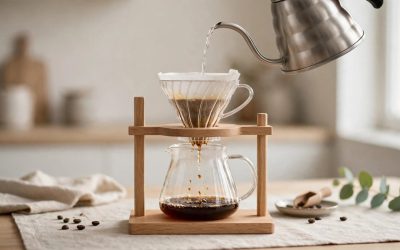
Bloom the grounds before the main pour. Add just enough water to saturate the bed, then wait about half a minute while the coffee releases gas and swells. Ethiopian beans, especially the natural-process Cooper’s Cask bag, release a lot of gas during the bloom, and skipping it leads to uneven extraction and a cup that tastes both sour and bitter at once. After the bloom, pour in slow, steady spirals from the center outward, keeping the water level even and the grounds fully wet.
Choose the brew method to match the roast. Pour over shows the most clarity and suits the two light roasts best, because the paper filter keeps the cup clean and the floral notes have room to show. French press adds body and suits the medium roasts, because the immersion and the metal filter let more oils through and round out the citrus. Cold brew suits the natural-process bag especially well, because the long steep pulls the berry and honey notes forward while softening the acidity. Espresso is the hardest method for this origin: the light roasts need a fine grind and careful temperature, and the natural-process bag can clog a grinder with sticky residue, so dial in slowly and expect to adjust the grind several times.
Safety, Identity and Care Checks
Whole bean coffee is a low-risk product, and no CPSC recall covers whole bean coffee as a product class, nor any of the five picks in this guide. The identity checks matter more than usual here, because coffee listings look alike across brands and a listing title can describe a whole bean bag or a ground bag with very similar words. Before ordering, confirm that the listing title names the same product shown in the reference table at the end of this guide, including the roast level, the origin and the bag size, and that the form is whole bean where the table says whole bean. After the bag arrives, check that the roast date is printed on the bag, that the beans are whole and evenly roasted, and that the bag is sealed and undamaged.
Several coffee recalls from recent years are worth naming precisely because they are easy to confuse with this category, even though none of them covers a bag of whole bean coffee. The Sensio Bella Pro Series and Cooks steam espresso machine recall of March 2025 concerned electric steam-driven espresso machines; a bag of beans has no heating element, so it is a different product class entirely. The Kidisle single-serve coffee maker recall of June 2026 concerned a pod machine that could clog and release hot liquid; again, a different class. The Keurig MINI Plus recall of December 2014 concerned an electric brewer, and the Starbucks Barista blade grinder recall of 2009 concerned a blade grinder. None of those products is a bag of coffee beans, and none of the five picks here is electric.
Food and glass recalls in coffee are the closest categories, and they still do not touch these picks. The Clover Valley instant coffee recall of August 2025 concerned glass jars of instant coffee, a food product in glass packaging, not whole bean coffee. The Our Family decaf matter of March 2025 was a labeling recall about ground coffee sold as decaffeinated, not about any of the five bags here. The Lyons Magnus recall of July and August 2022 covered more than fifty ready-to-drink beverages, including Oatly Barista Edition cartons, which is why no Oatly product appears in this guide; none of the five picks is a ready-to-drink beverage. The NuNaturals monk fruit and stevia powder recall of July 2025 was a sweetener recall covering one lot, not coffee. The point of naming them is to keep the categories separate: a recall on a brewer, a glass jar or a sweetener says nothing about a bag of whole beans.
One labeling notice deserves a plain statement. The Fresh Roasted Coffee listing carries a California Proposition 65 warning about acrylamide, a chemical that forms during the roasting of coffee and many other foods. Proposition 65 warnings are labeling notices, not recalls, and acrylamide is present in roasted coffee generally rather than in one brand’s beans. The notice is on the listing for California buyers, and it does not change the identity or the safety standing of the coffee.
Unroasted beans are the other identity trap in this category. Green coffee beans are a different product from roasted beans: they must be roasted at home before brewing, and they belong in the site’s home-roasting guide, not in a guide about roasted coffee. Before ordering, check that the listing says roasted, roast level and ready to grind, rather than green or unroasted. The Grand Parade green Yirgacheffe beans already appear in this site’s home-roasting guide, and no green coffee appears among the five picks here.
Care is mostly about storage. Keep whole beans in an opaque, airtight container in a cool, dry place, away from light and humidity. Ground coffee stays fresh for about four weeks after opening, while whole beans stay fresh for about eight weeks, so the whole bean format in this guide is also the longer-lasting one. Do not store beans in the refrigerator or freezer for daily use, because condensation forms on the beans each time the container is opened, and moisture is the fastest way to stale coffee. Buy the bag size that matches how fast the household brews: a twelve-ounce bag for a single-cup drinker, a one-pound bag for a two-cup household, and the two-pound Cooper’s Cask bag only for a household that brews every day.
Frequently Asked Questions
What does Yirgacheffe mean on a coffee bag?
Yirgacheffe is a small coffee-growing zone in the Gedeo area of southern Ethiopia, and the name on a bag means the beans were grown in that zone. It is the most famous Ethiopian origin, known for washed coffees with jasmine aromatics, citrus acidity and a tea-like body. The name is a region, not a brand or a roast level, so two Yirgacheffe bags from different roasters can taste different while sharing the same regional character. Sidamo is the larger region around Yirgacheffe, Guji is a newer zone carved out of Sidamo, and Harrar is a separate eastern region known for wild, winey naturals.
Are Ethiopian coffee beans good for espresso?
They can be, with care. Ethiopian beans make a bright, floral espresso with citrus and berry notes, and the Fresh Roasted medium roast in this guide is the easiest starting point because its roast level is forgiving. Light roasts need a fine grind and water close to 195 to 200 degrees Fahrenheit, and the natural-process Cooper’s Cask bag can leave sticky residue in a grinder, so expect to adjust the grind several times while dialing in. A drinker who wants a straightforward daily espresso may prefer a medium roast blend, while a drinker who enjoys experimenting will find Ethiopian single origins among the most rewarding beans to pull as espresso.
Should I buy Ethiopian coffee whole bean or ground?
Whole bean, whenever a grinder is available. Ethiopian coffee’s most distinctive quality is its aromatics, jasmine, citrus and berry, and those aromatics fade fastest once the beans are ground. Whole beans hold their character for about eight weeks after opening, while ground coffee fades in about four weeks. Ground coffee is the right choice only when there is no grinder at home, and in that case a smaller bag is better, because a large bag of ground coffee will be stale long before it is finished. Every pick in this guide is sold as whole bean for exactly this reason.
How long do Ethiopian coffee beans stay fresh after opening?
About eight weeks for whole beans kept in an opaque, airtight container in a cool, dry place, and about four weeks for ground coffee stored the same way. The roast date printed on the bag matters more than any best-by date: beans are at their best from about five days after roasting, once the carbon dioxide has settled, through about three weeks after roasting, and they decline gradually after that. A bag bought in a size the household finishes inside a month will always taste better than a bulk bag that sits open for two months, which is why the bag sizes in this guide are matched to different brewing habits.
Conclusion
Ethiopian coffee is the origin that rewards curiosity more than any other, and the five bags in this guide cover its range honestly. The Fresh Roasted Coffee Organic Ethiopian Yirgacheffe is the certified organic medium roast with a clean citrus finish and a third-party testing record. The Coffee Bean and Tea Leaf Ethiopia Yirgacheffe is the light roast from a heritage roaster, the brightest and most floral cup here. The Cooper’s Cask Ethiopian Bold Light Roast is the natural-process bulk buy, the most fruit-forward coffee in the guide in a two-pound bag. The Cubico Coffee Ethiopian Yirgacheffe is the straightforward medium roast at a budget tier, and the Javabean Ethiopian Yirgacheffe is the blueberry-leaning medium roast with an organic certification in a small bag.
Start with the Fresh Roasted bag if this is your first Ethiopian coffee, choose the Coffee Bean and Tea Leaf bag if you brew pour over and want the brightest cup, pick the Cooper’s Cask bag if you brew every day and want the natural-process character in quantity, take the Cubico bag if you want a simple medium roast at a budget tier, and try the Javabean bag if you want the classic blueberry note in a small bag. Whichever you choose, confirm the listing matches the reference table, grind just before brewing, keep the water close to 195 to 200 degrees Fahrenheit, and store the beans in an opaque, airtight container so the origin character that makes Ethiopian coffee worth buying stays in the cup.
More from Amazon
Programs that pair well with the guide above. Offers and eligibility are set by Amazon and may change.
Set up recurring deliveries of everyday items on eligible products. Terms and savings are set by Amazon.
Explore Subscribe & SaveCollect the home and kitchen items you want in one registry that guests can shop from.
Create a wedding registryFree shipping on eligible items, Prime Video and more. Eligible new members can start with a free trial.
Start a Prime free trialAudiobooks and podcasts to listen to on the go. Eligible new members can start with a free trial.
Try Audible freeAs an Amazon Associate we earn from qualifying purchases.


Write Your Review
No reviews yet. Be the first to share your experience!