

Key takeaways
- Breville Barista Express Impress review: assisted tamping, dosing, 25 grind settings, manual steam and who benefits most from the upgrade.
The Breville Barista Express Impress takes the familiar Barista Express recipe, an integrated grinder, a 54mm portafilter and a manual steam wand, and adds a system that measures the dose and tamps the puck for you. It is best for beginners who want one machine that handles grinding, dosing and tamping with consistent pressure. It is less compelling for experienced home baristas who already tamp well, or for anyone who wants automatic milk. The extra automation helps with puck preparation, not with every part of making espresso.
Quick Verdict
- Best for: new espresso drinkers who want to skip the hardest part of puck prep: dose and tamp consistency.
- What is new versus the Barista Express: the Impress Puck System, with intelligent dosing, precision measurement and assisted tamping at about 22 pounds of pressure with a 7-degree twist.
- Still manual: grind size adjustments, shot judgment and milk steaming remain your job.
- Trade-off: a larger footprint and more moving parts than a compact machine with no grinder.
- Skip it if: you already tamp consistently, or you want hands-free milk drinks.
Key Specs
| Spec | Breville Barista Express Impress (BES876) |
|---|---|
| Portafilter | 54mm stainless steel; single wall and dual wall baskets |
| Grinder | Integrated conical burr, 25 grind settings |
| Dose design | About 18 g ideal dose per Breville; retailers cite an adjustable range around 19 to 22 g, so confirm on listing |
| Assisted tamping | Constant 22 lb impression with a 7-degree barista twist |
| Heating | Thermocoil with PID temperature control, 200 degrees F |
| Extraction | Low-pressure pre-infusion, then 9 bar from a 15 bar Italian pump |
| Steam wand | Manual, for hand-textured microfoam |
| Water tank | About 2 L (67 fl oz) per most listings |
| Bean hopper | About 250 g (8.8 oz) per most listings; confirm |
| Included | Milk jug (480 ml), cleaning tablets, trimming tool, steam wand cleaning tool and more |
| Dimensions, weight, wattage | Differ across listings; confirm on the product page |
Breville’s page confirms the portafilter, grind settings, tamping force, thermocoil heating and extraction profile. Water tank and hopper values come from retailer sheets and consistently point to roughly 2 liters and 250 grams, but the exact numbers, along with the outside dimensions, weight and wattage, differ between sources.
Who It Is For (and Who Should Skip It)
Who benefits most
The machine is aimed at someone who has watched espresso tutorials and decided that dosing and tamping look intimidating. The Impress system removes two variables that cause most early frustration. It also suits shared households where several people will pull shots, since the dosing and tamping steps behave the same no matter who is at the machine.
Because the grinder sits above the portafilter, a single appliance handles beans, dose and puck. That is a real advantage in a small kitchen where you would otherwise need a separate grinder, scale and tamping mat.
Who should consider something else
If you already tamp well and enjoy the process, the original Barista Express, with the same thermocoil, pre-infusion and 54mm portafilter, offers most of the same experience with fewer assisted parts. If you want automatic milk, the Barista Touch family is the natural direction. If you want the quickest heat-up, the Barista Pro uses a different heating system and is worth a look. If space is tight, a compact machine plus a separate grinder is often easier to fit than one large unit.
What It Does Well
It makes puck preparation repeatable
Assisted tamping applies a constant 22 pounds, followed by a 7-degree twist that polishes the surface. Twenty-two pounds sits within the range many baristas use, so the point is not extra force. The point is that the force and finish are identical every time. For a beginner, that removes a major source of inconsistent shots, and it lets you tune results with grind size alone.
Dosing that learns
The intelligent dosing system measures the puck and adjusts the next dose according to the previous outcome. Reviewers say it takes a few shots to settle after a change of beans, because the system measures puck depth and a different bean can throw off its first estimate. Expect a short calibration period whenever you switch coffees, and expect to spend a few shots dialing in.
All the essentials in one footprint
The grinder, portafilter, steam wand, hot water spout, and water filter holder are all on the machine. That reduces shopping and setup. The accessories include a milk jug, a trimming tool and cleaning supplies, so there is little else you must buy to start.
Thermocoil with PID control
The heating system targets 200 degrees Fahrenheit using PID control, which keeps water temperature steady during the shot. Thermocoil machines take longer to be ready than ThermoJet machines. Give it time to warm and lock the portafilter in while it does, since a preheated group head makes a noticeable difference in how the first shot tastes.
A forgiving workflow
Low-pressure pre-infusion is a quiet advantage, because it wets the puck evenly before the main extraction at 9 bar, reducing the chance of channeling. Combined with consistent tamping, it makes the machine kind to people who are still learning to read a shot.
A sample dial-in session
Start with a fresh bag and a mid-range grind setting. Run the grinder into the portafilter, let the machine dose and tamp, lock in and pull a double shot with the stock dual wall basket. Aim for a liquid weight of about twice the dose in a time around 25 to 30 seconds, which is a common starting recipe rather than a rule. If the shot finishes in much less time and tastes sharp and thin, move one or two steps finer. If it crawls out slowly and tastes bitter, move coarser. After each change, pull another shot and let the dosing system recalibrate before judging.
Two or three adjustments are usually enough to land in a drinkable range. Keep notes by bean, roast date and setting. When you switch bags, expect to move a few notches, because roast level and age both shift how fast water flows through the puck.
Where It Falls Short
- Grind size is still on you. Reviewers consistently note that the Impress system fixes dose and tamp consistency, but it does not tell you whether the shot ran too fast or too slow. You still need to adjust the grind and judge the result.
- Calibration with new beans. A change in bean type can confuse the dosing sensor for a shot or two. That wastes a little coffee until the system adapts.
- Manual milk only. The steam wand is manual. Beginners who want hands-free lattes should look at the Touch models.
- It is not small. With an integrated grinder, hopper and a water tank at the back, it needs more counter width and more overhead clearance than a Bambino. Measure before buying, since listings give differing dimensions.
- More parts to clean. The grinder, tamping mechanism and dosing path need regular cleaning. Follow the cleaning instructions, brush out the grinder area and keep the hopper clear of old, stale beans.
- Single boiler workflow. You cannot pull a shot and steam milk at the same moment, so a milk drink takes a pause between stages.
One more practical limit: the integrated grinder is a convenience, not a separate high-end grinder. It does the job for a home setup, and 25 settings give enough range for most roasts. Those who later want finer control or the ability to swap grinders will find the all-in-one design restricting. That is the usual trade-off with integrated machines, and it is worth deciding up front whether you value the simplicity more than the upgrade path.
Cleaning discipline matters more with a built-in grinder too. Coffee oils build up in the burr chamber and chute, and stale grounds can affect flavor and dosing. Empty the hopper if you will be away for a while, use the cleaning tablets and tools that come with the machine on the schedule in the instruction book, and keep beans out of direct sunlight and away from the heat of the machine as best you can.
How It Compares
| Machine | Grinder | Dose and tamp | Heating | Milk | Best for |
|---|---|---|---|---|---|
| Barista Express Impress | Built in, 25 settings | Assisted | Thermocoil, PID | Manual | Beginners who want consistent pucks |
| Barista Express | Built in, 16 settings | Manual | Thermocoil, PID | Manual | Learning the full manual workflow |
| Barista Pro | Built in, 30 settings | Manual | ThermoJet, about 3 seconds | Manual | Faster heat-up with a digital display |
| Barista Touch Impress | Built in, 30 settings | Assisted | ThermoJet | Automatic (Auto MilQ) | Touchscreen drinks with automatic milk |
Grind setting counts come from Breville product pages. Within this family, the Impress adds a measurable convenience over the Express. It does not fully replace the learning curve, and it does not include automatic milk.
Is the upgrade worth it?
The answer depends on what slows you down today. If uneven tamping and inconsistent doses are the cause of your bad shots, the Impress system addresses them directly. If your shots are already decent and you want to improve flavor through better beans or finer control of extraction, the extra automation will not change much, and the money may go further on fresh coffee, a scale and a good milk pitcher. Treat the Impress version as a way to shorten the beginner stage, not as a shortcut to expert-level espresso.
Alternatives Worth Considering
Breville Barista Express Impress in brushed stainless steel – the machine reviewed here
As an Amazon Associate we earn from qualifying purchases at no extra cost to you.

The BES876BSS is the standard stainless version of the machine discussed above. It makes the most sense for someone who wants an integrated grinder with assisted dosing and tamping, and who is comfortable steaming milk manually. Plan to keep the beans fresh in the hopper, brush the grinder area regularly and expect a short dialing-in period with each new bag. Confirm the accessory list and current finish options on the listing.
Breville Barista Express – why consider it
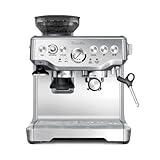
The BES870XL is the original, with manual dosing and tamping, 16 grind settings and an analog interface. It uses the same thermocoil heating, 54mm portafilter and pre-infusion. If you want to learn the full workflow, or you already tamp confidently, you save the extra automation and gain a simpler machine. Many new buyers find it an excellent teaching tool, since it shows exactly what each step does. Confirm the current accessories and dimensions on the listing.
Breville Barista Express Impress in Black Stainless Steel – the finish option

The BES876BST offers the same Impress machine in black stainless steel. It suits kitchens built around darker appliances. The features should match the brushed stainless model, including the integrated grinder, assisted tamping and manual steam wand, but check the listing to confirm the included accessories and any differences by seller.
Breville Barista Express Impress, certified remanufactured – why consider it

This listing is a certified remanufactured unit of the same machine. People consider remanufactured models when they want the Impress features at a lower outlay, but the trade-off is that condition, packaging, included accessories and warranty terms may differ from a new unit. Read the listing carefully for what is covered, how long, and what comes in the box before you decide.
Questions
Does the Barista Express Impress tamp for you?
Yes. The assisted tamping lever applies a constant 22 pounds of pressure and finishes with a 7-degree twist. You still lock the portafilter in and follow the prompts for the steps around it.
Do I still need to adjust the grind?
Yes. The machine has 25 grind settings, and you will choose one based on how the shot flows and tastes. The Impress system helps with dose and tamp, but it does not decide grind size.
Can it make lattes automatically?
The steam wand is manual. You froth the milk yourself, which takes some practice. For an automatic option, look at the Barista Touch family.
Is it a big upgrade over the Barista Express?
It depends on your skill. Beginners gain the most from consistent dosing and tamping. Experienced home baristas may see less benefit, because they already manage those steps well by hand.
How long does it take to warm up?
It uses a thermocoil rather than ThermoJet, so it takes longer than the faster-heating Breville models. Sources vary on exact times, so confirm with Breville’s documentation and allow a few minutes with the portafilter locked in.
Does it work with pre-ground coffee?
The workflow is designed around the built-in grinder. The dosing system relies on the grind flowing into the portafilter, so check the manual before attempting to bypass it.
Update History
- October 21, 2026 – Initial publication; specifications checked against manufacturer documentation where available.
- Check the product page for current specifications and availability before buying.
Sources
- Manufacturer product pages for the Barista Express Impress and related models
- Retailer specification sheets for tank, hopper and accessory details
- Published reviews and comparison articles covering dosing, tamping and day-to-day behavior

Write Your Review
No reviews yet. Be the first to share your experience!