

Key takeaways
- Philips 5500 review: LatteGo milk system, 20 hot and iced drinks, ceramic grinder and tank specs, with honest limits and alternatives.
The Philips 5500 Series is a fully automatic bean-to-cup machine built around the LatteGo milk system, a two-piece frother with no tubes to clean. It suits households that drink a mix of black coffee and milk drinks, want one-touch results, and would rather rinse two plastic parts than descale a steam wand. It is a weaker fit if you want manual control over milk texture or plan to dial in espresso like a barista. This review covers the specifications that matter, where the machine stops short, how it compares with cheaper and pricier options, and what to confirm on the listing before you order.
Quick Verdict
- Strong choice for families and mixed-taste households: up to 20 one-touch drinks, hot and iced, with four saved user profiles plus a guest slot.
- LatteGo is the main reason to pick it over a tube-based milk system, because the carafe and lid come apart in two pieces and rinse in seconds.
- The ceramic grinder has 12 settings and is meant to be adjusted rarely; this is a convenience machine, not a tinkerer’s machine.
- The milk carafe is small (about 0.26 L), so large batches of milk drinks mean refilling between rounds.
- Variant numbers differ by retailer, so confirm the exact model code, voltage and included filter on the product page.
Key Specs
| Spec | Philips 5500 Series (EP5544 family) |
|---|---|
| Drinks | Up to 20 recipes, hot and iced, plus hot water and frothed milk (confirm the exact list on your listing) |
| Pump pressure | 15 bar |
| Grinder | Ceramic, 12 grind settings |
| Bean hopper | About 275 g (roughly 9.7 oz), aroma-seal lid |
| Water tank | About 1.8 L (roughly 61 oz), front access |
| Milk system | LatteGo, two parts, no tubes; carafe about 0.26 L |
| Strength and temperature | 5 aroma strength levels, 3 temperature settings |
| Profiles | 4 user profiles plus a guest option |
| Display | Color touch display |
| Grounds container | About 12 servings, front access |
| Spout height | Adjustable, about 85 to 145 mm (3.3 to 5.7 in) |
| Size and weight | About 433 mm high, 246 mm wide, 371 mm deep (17 by 9.7 by 14.6 in); about 8 kg (17.6 lb) |
| Power (US versions) | 120 V, about 1500 W; confirm on the rating label |
| Water filter | Compatible with the AquaClean cartridge; confirm whether one is included |
| Warranty | Two years listed by the manufacturer; confirm for your region |
Who It Is For (and Who Should Skip It)
It suits
The 5500 makes sense when several people in one home want different drinks. One person takes an Americano, another a flat white, a third an iced latte. The four profiles remember each person’s strength, volume and milk amount, so the daily routine becomes a screen tap. It also suits anyone who has had a bean-to-cup machine with a milk tube and a steam wand, found the cleaning tedious, and wants a simpler system. The front-access water tank and grounds container help on a counter where the machine sits under a cabinet.
It is also a good fit for people who like iced coffee. Philips designed several of the recipes to brew concentrated coffee over ice, which saves the usual workaround of chilling a hot drink.
Skip it if
Skip the 5500 if you want to steam milk by hand for latte art. LatteGo makes a consistent foam but gives you almost no control over microfoam texture. Skip it if you drink several large milk drinks in a row, because the carafe holds only a small amount. Skip it if you want a stepless, fine-tunable grinder for espresso; twelve ceramic steps are enough for daily use but will not satisfy someone chasing a specific extraction. And skip it if you want a compact machine for a tiny kitchen: it is not huge, but at roughly 14.6 inches deep it needs real counter space plus clearance above for filling the hopper.
What It Does Well
Milk cleaning that takes seconds
LatteGo is the headline feature. Milk is whipped into foam by air flow inside a two-piece unit, so it never travels through a tube and never touches the machine’s internals. Philips says the parts can be rinsed under a tap or placed in the dishwasher. Retailer guides and reviewers consistently cite this as the biggest practical advantage over tube-based systems, which need rinse cycles and periodic tube changes. One caution from reviewers: the outlet can collect dried milk if you leave it overnight, so a quick wipe after the last drink of the day helps.
A real drink menu
Twenty recipes is a large number, and most of it is genuinely different rather than renamed. The list includes espresso, coffee, americano, cappuccino, latte macchiato, caffe latte, flat white, ristretto, lungo, a travel mug recipe, and a set of iced versions. Strength, coffee length and milk length can be adjusted per drink, and an extra shot function adds punch to any recipe. Hot water and plain frothed milk are available as separate selections.
Quiet-brew design and quick start
Philips advertises SilentBrew, which it says reduces brewing noise by up to 40 percent compared with earlier models. That is a manufacturer claim, and noise is subjective, but the design intent is clear: this machine is meant for open-plan kitchens and early mornings. A QuickStart function lets you brew soon after switching on rather than waiting for a long warm-up.
Fresh-bean grinding with a pre-ground option
The ceramic grinder keeps its edge for a long time and runs cooler than many metal burrs, which is a reasonable match for a machine that grinds for every cup. The hopper holds around 275 g, enough for a week or more for a couple. A bypass lets you drop in pre-ground coffee, which is useful for decaf when the hopper holds regular beans.
Easy-to-reach parts
Front access to the water tank and the grounds container means you do not have to slide the machine out from under a shelf for routine tasks. The grounds container holds about 12 servings before it asks to be emptied, which is roughly one emptying every few days for a two-person household.
A daily routine that stays short
A typical day with a machine like this looks simple. Top up the water tank when the display asks, add beans every few days, empty the grounds container and drip tray when prompted, and rinse the two LatteGo parts after milk drinks. Weekly, the brew group can be pulled out and rinsed under the tap, and the machine runs automatic rinse cycles at start-up and shut-down. Descaling is prompted by the machine, and the AquaClean cartridge, when fitted, is meant to stretch the gap between descaling cycles. None of this is unique to Philips, but the front-access layout and the short list of removable parts keep the workload low compared with machines that need a tube flush after every cappuccino.
Room to grow with the household
Because strength, length and milk amount can be saved per profile, the machine adapts when tastes change. A teenager who starts with sweet iced lattes and a parent who drinks a double-length black coffee can each have a button that never needs resetting. The guest option gives visitors a clean slate without overwriting anyone’s saved recipe, which is a small touch that matters in a shared kitchen.
Where It Falls Short
Small milk carafe
At about 0.26 L the carafe is sized for one to three milk drinks, depending on cup size. If you serve guests, expect to refill between rounds. Philips also positions the carafe as a drink-making component, not a long-term milk container, so plan to wash and dry it rather than store milk in it for days.
Limited control over foam and temperature
Milk foam is consistent but not adjustable in the way a steam wand is. Coffee temperature has three settings. If you prefer very hot milk drinks or specific microfoam textures, you will be working within a narrow range. Plant-based milks work with LatteGo according to Philips, but results vary by brand, so expect some trial and error.
Grinder maintenance advice is strict
Instructions quoted from the manual say not to touch the grind setting during the first month or so of use, and to adjust it only while the grinder is running. That caution protects the mechanism but means dialing in is a slow process, a few cups at a time. Some owners suggest staying away from the very finest settings, which can produce weak or slow-flowing coffee.
Not a barista-style espresso
Automatic machines of this type use a fixed brew unit and preset pressure. The espresso is perfectly drinkable and consistent, but it will not match a good semi-automatic machine with a quality grinder for flavor depth or crema control. If you enjoy the process of making espresso, look at the semi-automatic alternatives later in this review.
Variant confusion
The 5500 is sold under several model codes (EP5544 with different suffixes), and listings may differ in filter inclusion, finish and warranty details. Verify the model code, voltage and included accessories before ordering.
How It Compares
| Machine | Milk system | Drinks | Best for |
|---|---|---|---|
| Philips 5500 (this review) | LatteGo, two parts | Up to 20, hot and iced | Households with varied tastes and a wish for easy cleaning |
| Philips 3300 Series | LatteGo, two parts | Fewer pre-sets (see the listing) | Smaller households that mostly want the core milk drinks |
| De’Longhi Magnifica Evo (LatteCrema) | LatteCrema carafe with connector | 7 one-touch recipes | Buyers who prefer a conical steel burr grinder and a compact body |
| De’Longhi Magnifica Duo | Hot and cool milk carafes | 20, including cold-brew style drinks | People who want cold milk foam and cold extraction |
The 5500 sits above the 3300 on menu depth and personalization and in the same broad class as the Magnifica line. The deciding factors are milk system cleaning, grinder preference and whether you want the extras of the Duo.
Alternatives Worth Considering
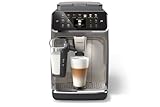
Philips 5500 Series, LatteGo with 20 hot and iced pre-sets – the listing most buyers will compare first
As an Amazon Associate we earn from qualifying purchases at no extra cost to you.

This listing describes the 5500 Series with the LatteGo milk system and 20 hot and iced pre-sets, with adjustable coffee strength and milk amount. It is the version to look at if you want the full recipe menu and the cleaning advantage described above. Check the model code against the manufacturer’s EP5544 family, confirm the voltage and see whether a water filter is included. If the specifications on this page match what you read here, you have the machine this review is about.
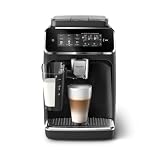
Philips 5500 Series, SilentBrew with intuitive touch display – the second listing to compare

A second listing for the 5500 Series emphasizes the touch display, SilentBrew and a 100 percent ceramic grinder, with 20 coffee varieties. It is the same machine family, so the real question is which listing offers the finish, warranty details and included accessories you want. Compare the model code and the stated recipe count between the two before choosing. Differences in what ships in the box can matter more than the headline features, especially a starter water filter and cleaning tablets.
Philips CA6700 universal liquid descaler – why consider it

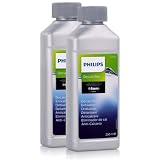
Every fully automatic machine needs descaling, and using the maker’s recommended solution is the safest route to keeping the warranty intact. This liquid descaler is sold for Philips, Saeco and other fully automatic coffee machines in a pack of two bottles. If you live in a hard-water area, running the machine with a water filter and descaling when prompted is the main long-term maintenance task. Confirm on the Philips support pages which descaler and which interval your exact model calls for, and never mix descaling products.
Questions
Does the Philips 5500 make real espresso?
It brews a concentrated shot at about 15 bar with a fixed brew group, which is espresso in the sense that matters for most home drinks. It does not offer the control of a semi-automatic machine, so you adjust strength, length and grind rather than dose, tamp and pre-infusion.
How hard is the LatteGo to clean?
It has two pieces and no tubes, and Philips says it can be rinsed quickly or placed in the dishwasher. Wipe the outlet after the last drink of the day to stop milk crusting.
Can I use pre-ground coffee?
Yes, a pre-ground bypass is part of the design. Use it for decaf or a one-off bag, add one scoop at a time and follow the on-screen prompt.
How often do I need to descale?
That depends on your water hardness and whether you use the AquaClean filter. The machine prompts you when it needs descaling, so follow its instructions and use a product approved for your model.
Is the 5500 worth it over the 3300?
The extra money buys a larger menu, more personalization and iced recipes. If you only drink coffee, espresso and a basic cappuccino, the smaller machine may be enough.
Does it work with plant-based milk?
Philips lists compatibility with plant-based drinks. Barista-style oat milks usually froth better than thin ones, so expect to try a few brands.
Update History
- October 21, 2026 – Initial publication; specifications checked against manufacturer documentation where available.
- Check the product page for current specifications and availability before buying.
Sources
- Manufacturer product and specification pages for Philips fully automatic espresso machines
- Philips user manual excerpts for the 5500 Series, as quoted by manual libraries
- Retailer listing titles and specification fields
- Independent editorial reviews and retailer product guides for the 5500 and related models
Write Your Review
No reviews yet. Be the first to share your experience!