

Key takeaways
- French press vs espresso explained: grind, pressure, ratios, body, milk drinks and upkeep, with a clear verdict on which suits you.
A French press wins if you want a full-bodied, low-effort pot of coffee for a small outlay and very little counter space; an espresso machine wins if you want concentrated shots, milk drinks and repeatable results on a busy morning. They are not rivals in the way two drip machines are. One steeps coarse grounds in hot water for a few minutes, the other forces hot water through a fine, compacted puck at high pressure. This guide lays out what actually changes in the cup, the routine and the budget, so you can pick the one that fits how you drink coffee.
Quick Verdict
| Choose a French press if you… | Choose an espresso setup if you… |
|---|---|
| drink larger mugs of black coffee and like a heavy, oily body | drink cappuccinos, lattes, flat whites or straight shots |
| want a brewer that needs no power, no descaling and almost no learning curve | enjoy dialing in grind, dose and yield as a hobby |
| brew for one to four people at once | mostly make one or two drinks at a time and want speed per drink |
| own only a basic grinder or buy beans pre-ground coarse | already own, or will buy, a grinder that can go fine and stay consistent |
| need something small for travel, camping or a dorm | have counter space and an outlet, and will commit to regular cleaning |
If you only remember one line: French press is the simpler, lower-cost way to get a rich mug; espresso is the more flexible, more demanding route to concentrated coffee and milk drinks.
Specs Side by Side
| Factor | French press | Espresso |
|---|---|---|
| Brewing method | Full immersion, then a metal mesh plunger separates the grounds | Pressurized percolation through a compacted puck |
| Grind size | Coarse | Fine, where small adjustments matter a lot |
| Pressure | None while brewing; only the hand pressing the plunger afterward | Commonly cited as about 9 bar at the puck (SCA espresso parameter) |
| Water temperature | Roughly 195-205 F is the usual target range | Same range, held steady by the machine |
| Typical contact time | About 4 minutes is a common starting point | Around half a minute, adjusted to taste |
| Starting ratio | Many brewers begin near 1:15 to 1:17 coffee to water by weight | Often 1:2 dose to liquid yield for a standard double |
| Result | A full pot, medium strength, heavier body, some fine sediment | A small, concentrated shot with a layer of crema |
| Equipment | A press, a kettle, a coarse grinder | A machine, a capable grinder, a tamper or an automatic system, cleaning supplies |
| Power | Not needed for the press itself | Needed for pump and heater |
| Milk drinks | Possible with a separate frother | Native strength; steam wand or automatic frother |
| Cleanup | Rinse out the grounds, wash a few parts | Group head, portafilter or brew unit, drip tray, descaling schedule |
The ratios and time ranges above are common starting points rather than rules. The Specialty Coffee Association’s published filter standard uses roughly 55 grams of coffee per liter of water, which is close to 1:18, and many home brewers go a little stronger in a press. Treat every number here as a place to begin and adjust to taste.
Key Differences That Matter
1. Extraction style changes the flavor
A French press leaves coffee and water together for several minutes with nothing but a metal screen at the end. Because paper is not catching the oils, the cup carries more of the coffee’s natural oils and a little fine sediment, which is what people mean by body or heft. Flavors tend to feel rounder and heavier, and delicate floral notes can come across less sharply than they would through a paper filter.
Espresso extracts quickly under pressure. A fine grind slows the water down, so a small amount of liquid ends up very concentrated, with a foamy crema layer on top. Sweetness, acidity and bitterness all arrive in a short, intense burst. The same bean can taste quite different in each format, and roast level matters: darker roasts are traditional for milk drinks, while medium roasts often shine in a press.
2. Skill and consistency
A press is forgiving. If the grind is slightly off or the timer slips by thirty seconds, you will usually still get a drinkable cup. The classic failure is a grind that is too fine, which clogs the plunger and leaves a muddy, bitter drink. A coarse, even grind and a timer solve most problems.
Espresso is less forgiving. A small change in grind, dose or tamp pressure can swing a shot from sour and thin to bitter and slow. A super-automatic machine hides most of that work and handles grinding, dosing and milk for you, which is why many beginners choose one. A manual machine with a portafilter gives more control but asks for steady habits. Either way, a good grinder matters more to espresso than to a press.
3. Batch size and speed
Presses are sold by cup rating, from single-mug models around 12 ounces up to 34 ounce models that serve several people. A larger press makes the same coffee for one person or four, with no extra work per cup after the first. Espresso machines make drinks one or two at a time. A semi-automatic may take a few minutes per drink once you include grinding, tamping and cleanup, while a super-automatic can deliver a milk drink at the press of a button.
For a household where everyone wants coffee at the same moment, a large press is hard to beat. For a household where each person wants a different drink, an automatic espresso machine has the advantage.
4. Cost of ownership
The upfront gap is large, but the full picture includes more than the brewer. A press needs a grinder and a kettle. Espresso needs a grinder that can go fine, usually something better than a basic blade chopper, plus filters or descaler, cleaning tablets and eventually service. Replacement parts differ too: a press usually needs a new screen or beaker over time, while an espresso machine may need new gaskets, a group-head screen or a water filter.
Check the product page for current pricing and parts availability rather than relying on any single figure.
5. Milk drinks and versatility
If lattes and cappuccinos are the goal, espresso is the stronger base because the concentrated shot holds its flavor in milk. A French press can make a strong coffee base and a separate frother can handle the milk, but the cup will taste closer to coffee with milk than to a true espresso drink. A middle option is a manual brewer such as the AeroPress, which makes a concentrated, espresso-style coffee without a machine, though it does not create real crema.
Pros and Cons
French press
- Pro: Simple, quiet and needs no electricity for the press itself
- Pro: Rich, heavy body from a metal filter
- Pro: Easy to scale from one mug to a full table
- Pro: Small footprint and easy to carry
- Con: Some sediment in the cup, especially from a fine or uneven grind
- Con: Coffee keeps extracting if left on the grounds, so pour it all out promptly
- Con: Not suited to true espresso or crema
- Con: Glass models can crack if dropped
Espresso
- Pro: Concentrated shots and a natural base for milk drinks
- Pro: Fast per drink once you have a routine
- Pro: Automatic models can grind, brew and froth with minimal input
- Pro: Plenty of room to experiment as you learn
- Con: Higher upfront cost and a more demanding grinder requirement
- Con: Regular cleaning, descaling and maintenance
- Con: Larger footprint and more noise
- Con: A steeper learning curve for manual machines
Which One Should You Buy?
Start with how you drink coffee. If your usual order is a black coffee in a mug, a press will probably give you more enjoyment for the effort than an espresso machine, and it will not take over your counter. If your usual order is a latte, cappuccino or flat white, an espresso machine is the better match, and a press will leave you wanting more.
Consider your patience, too. A press rewards a simple routine and tolerates mistakes. Espresso rewards curiosity and punishes inattention, unless you choose an automatic model that handles the variables. Before buying an espresso machine, think honestly about whether you will clean it weekly and refill and descale it on schedule.
Many households end up with both. A press for slow weekend mugs and a machine for weekday milk drinks is a common pairing. If budget is tight and you are curious about espresso-style coffee, an AeroPress sits between the two and takes up almost no room.
Gear Mentioned
AeroPress Original Coffee Press
As an Amazon Associate we earn from qualifying purchases at no extra cost to you.

The AeroPress Original is the bridge between the two worlds. It uses a plastic chamber and plunger with paper filters, and the manufacturer lists a brew chamber capacity of about 10 ounces. It can produce a concentrated, espresso-style coffee that works as a base for milk drinks, or a lighter, cleaner cup with more water. It is not true espresso because it does not reach the pressure of a machine, but it is a practical choice if you want variety from one small tool. Confirm the exact bundle and filter count on the listing.
AeroPress Original Coffee Press (second listing)
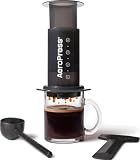
This is another listing for the same Original-style brewer. The product name matches the one above, so the same brewing approach applies: a short steep, a gentle press, and a cup that is cleaner than a French press because paper catches sediment and some oils. Compare the two listings for included accessories, bundle contents and seller before choosing. If you only want one manual brewer that handles both strong and diluted cups, either listing covers that job.
AeroPress Steel Coffee Press

The Steel version is built from stainless steel, and the manufacturer lists a larger 12 ounce capacity and a double-wall insulated chamber. That makes it a sturdier option for travel and daily carrying. It uses standard-size paper filters rather than XL, according to the maker, so check filter compatibility on the listing. It suits someone who likes the AeroPress method but wants a more durable body.
YMMIND 34 Ounce French Press

The YMMIND press is a 34 ounce model with a stainless plunger and a four-filter system, according to its listing. At that size it is aimed at filling several mugs from one brew, so it fits a household that shares a pot. Larger presses lose heat faster, so pour promptly and consider pre-warming the beaker with hot water. Check the listing for materials and the filter layout before buying.
Sivaphe 12 Ounce Single-Cup French Press
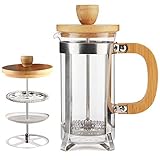
The Sivaphe is a small 12 ounce press with a stainless steel filter and a borosilicate carafe, about 0.35 liters per the listing. It is the right scale for one person and works well on a desk or in a small kitchen. A single-serve press is also a low-commitment way to find out whether you enjoy immersion coffee before moving to a larger model.
Bialetti Coffeepress Preziosa 8 Cup

The Bialetti Preziosa is an 8 cup stainless steel press. The cup rating is a manufacturer measure, not a standard mug, so expect fewer full mugs than the number suggests. A stainless exterior holds heat better than bare glass and is less fragile. It suits households that want a mid-size press with a more durable build, and it can be a quiet upgrade over a basic glass model.
Questions
Is French press stronger than espresso?
Espresso is more concentrated per ounce, but a mug of French press has far more total liquid. Strength depends on ratio, and “strong” can mean flavor intensity, concentration or total caffeine. Compare by ratio and volume, not by method name alone.
Can you make espresso in a French press?
Not true espresso. A press cannot reach the pressure that produces crema. You can brew a strong, concentrated batch by using less water, but it will taste like strong immersion coffee. An AeroPress comes closer for an espresso-style drink.
What grind size works for each?
Use a coarse grind for a French press and a fine, carefully adjusted grind for espresso. Espresso-fine grounds in a press lead to a muddy, bitter cup and a hard plunge. Buy whole beans if you can and grind just before brewing.
Which is easier to clean?
A press is easier: dump the grounds, rinse and wash a few parts. Espresso machines need group-head cleaning, drip tray emptying, milk system rinsing and periodic descaling. Always follow the manufacturer instructions for your specific model.
Is a French press or espresso machine better for milk drinks?
Espresso is better. The concentrated shot stands up to milk, and many machines include a steam wand or automatic frother. A press can work with a separate frother if you accept a milder drink.
Is a good grinder needed for either one?
Yes, but espresso is far more sensitive to grind quality. A press tolerates a decent burr grinder at a coarse setting. Espresso benefits from a grinder with fine, repeatable adjustments.
Update History
- October 21, 2026 – Initial publication; specifications checked against manufacturer documentation where available.
- Check the product page for current specifications and availability before buying.
Sources
- Manufacturer product pages for AeroPress Original and AeroPress Steel
- Specialty Coffee Association brewing guidance for filter and espresso parameters
- Product listing titles and descriptions for the presses mentioned
- General coffee brewing references on immersion and pressure extraction



Write Your Review
No reviews yet. Be the first to share your experience!