

Key takeaways
- Moka pot vs espresso machine: pressure, grind, brew time, crema and milk drinks compared, with a verdict on which one fits your kitchen.
A moka pot wins for buyers who want strong, rich coffee from a small, simple, long-lasting stovetop or electric brewer. An espresso machine wins for anyone who wants true espresso with crema, milk drinks made at home, and room to refine technique. The gap comes down to pressure: a moka pot works at roughly 1 to 2 bar, while espresso is defined around 9 bar. This guide lays out the differences in plain numbers, then points you to the moka pots on the shelf and explains when stepping up to a machine is worth it.
Quick Verdict
| Choose a moka pot if… | Choose an espresso machine if… |
|---|---|
| You want strong black coffee or a base for a milk drink, with minimal gear | You want true espresso with crema, or you drink cappuccinos and lattes every day |
| You have limited counter space or want something portable | You have counter space and a power outlet to spare |
| You like a simple, low-maintenance routine | You enjoy dialing in grind, dose, and timing |
| You are comfortable with a medium-fine grind from a basic grinder | You are willing to own or buy a grinder that can go fine and make small adjustments |
| You want something you can use while camping or traveling | You want a repeatable café-style workflow at home |
Specs Side by Side
The numbers below are typical ranges drawn from manufacturer instructions and widely used reference descriptions of each method. Individual machines and pots vary, so treat them as guides rather than guarantees.
| Factor | Moka pot | Espresso machine |
|---|---|---|
| Brewing pressure | About 1 to 2 bar | About 9 bar at the coffee |
| Heat source | Stovetop flame, hob, or an electric base | Built-in electric heater and pump |
| Grind size | Medium-fine, finer than drip, coarser than espresso | Fine, powder-like |
| Tamping | Do not tamp; fill loosely and level | Tamp firmly and evenly |
| Brew time | Roughly 3 to 6 minutes on the heat | Roughly 25 to 30 seconds for a typical shot |
| Crema | Little to none; sometimes a thin foam layer | Stable crema when the shot is dialed in |
| Cup size | A 3-cup pot makes about 4.3 oz (130 ml) in total | Single shot about 1 oz; double about 2 oz |
| Milk steaming | Not included; add a frother or heat milk separately | Often includes a steam wand or automatic frother |
| Learning curve | Low | Moderate to high |
| Maintenance | Rinse, dry, replace gasket occasionally | Backflush or clean the group, descale, replace parts over time |
Key Differences That Matter
Pressure decides what ends up in the cup
Espresso is defined by high pressure, around 9 bar, forcing water through a tightly packed bed in under half a minute. That pressure emulsifies oils and traps gas, which creates the crema on top. A moka pot builds steam pressure in the lower chamber of only about 1 to 2 bar, which pushes water up through a looser bed of coffee over several minutes. The result is a concentrated, full-bodied coffee that is strong and bold, but it is not espresso and it will not form a thick crema. Many people enjoy it for what it is rather than as an imitation.
Grind and preparation are different jobs
Because the moka pot is gentler, it wants a medium-fine grind, about the texture of fine sand. A store-bought espresso-fine grind packs tightly and can clog the basket or build too much pressure, producing bitter coffee. You do not tamp: fill the basket loosely, level the surface, and wipe the rim so the pot seals. An espresso machine asks for the opposite: a fine grind, a consistent dose, and a firm, level tamp. A common starting recipe is about 1 part coffee to 2 parts liquid espresso by weight, such as 18 g in and 36 g out in 25 to 30 seconds, adjusted to taste.
Time and attention
A moka pot takes a few minutes, but you must watch it. Fill the base with water to just below the safety valve, use low to medium heat, and take the pot off the heat once the top chamber fills; leaving it on can scorch the coffee. An espresso machine takes warm-up time before the first shot, then roughly half a minute per drink, and it needs cleaning after each session. If you want to walk away while it brews, an electric moka pot with an automatic shut-off is a closer match, though listings differ on shut-off features.
Milk drinks and versatility
If lattes and cappuccinos are your goal, an espresso machine with a steam wand or automatic frother is the more natural fit. Moka coffee works fine as a base for a latte-style drink, especially with warm milk from a handheld frother, but the texture and foam will differ from a steamed-milk drink. For black coffee, americano-style drinks with hot water, and iced coffee concentrate, a moka pot is perfectly capable.
Durability and upkeep
A basic moka pot has few parts: a base, a funnel, a gasket, a filter plate, and a top chamber. It can last for years with a rinse and an occasional gasket swap. Wash it by hand and dry it thoroughly; manufacturers generally advise against dishwashers for aluminum pots. An espresso machine has pumps, heaters, valves, and seals, so it needs descaling and periodic maintenance. It does more, but it also asks for more care.
A simple moka routine, step by step
- Fill the base with water to just below the safety valve. Starting with hot water shortens the time the pot spends on the heat.
- Fill the funnel with medium-fine coffee, level it without tamping, and wipe any grounds from the rim.
- Screw the top chamber on firmly, using a cloth if the base is hot.
- Heat on low to medium and leave the lid open so you can see the flow.
- When the stream turns pale and the pot starts to sputter, remove it from the heat and cool the base briefly under cold water or on a damp cloth to stop extraction.
- Stir the coffee in the top chamber and serve.
Pros and Cons
Moka pot
Pros
- Compact and portable, with very few moving parts
- Strong, bold coffee with a simple routine
- Low cost of ownership, with parts such as gaskets easy to replace
- Works on a gas or electric hob (check the pot for induction compatibility)
Cons
- Not true espresso and no thick crema
- Needs attention while brewing to avoid scorching
- No built-in milk steaming
- Small batch sizes; a 3-cup pot makes about 4.3 oz
Espresso machine
Pros
- Produces true espresso with crema when dialed in
- Built-in steaming for milk drinks on most models
- Faster per drink after warm-up
- Room to grow in technique and equipment
Cons
- Larger footprint and more cleaning and descaling
- Needs a good grinder to deliver on its potential
- Steeper learning curve for shot quality and milk
- More parts that can wear out or need service
Which One Should You Buy?
If you want bold coffee at the lowest complexity, buy a moka pot. A 3-cup or 6-cup stovetop pot covers most households, and an electric version suits people without a suitable hob or who prefer a detachable base. If you plan to make milk drinks daily, want crema, or enjoy the process of refining a recipe, buy an espresso machine and set aside budget for a grinder. Some households keep both: a moka pot for quick weekday coffee and a machine for weekends. If you are undecided, start with a moka pot; it is quick to learn, and you will know within a few weeks whether you want to step up.
Gear Mentioned
Bialetti Moka Express
As an Amazon Associate we earn from qualifying purchases at no extra cost to you.

The Moka Express is the classic octagonal aluminum pot. The listing describes a 3-shot size at about 4.3 oz (130 ml) of coffee. Bialetti’s own instructions call for a medium-fine grind, a loose fill without tamping, water to just below the safety valve, and low to medium heat. Aluminum models generally need an induction plate on induction hobs, so check the listing if you cook on induction. It suits someone who wants the reference design and does not mind a small batch.
Primula Classic Stovetop Espresso and Coffee Maker

The Primula Classic is a stovetop moka-style maker described for Italian and Cuban café brewing, and the listing presents a 6-cup size. It is a straightforward pot for people who want more coffee per batch than a 3-cup pot gives. Cup sizes on moka pots refer to small espresso cups, not mugs, so a 6-cup pot makes a modest amount. Check the listing for materials and hob compatibility, especially if you use an electric coil or induction.
IMUSA Aluminum Stovetop 6-Cup Espresso Maker
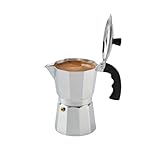
This IMUSA pot is a silver aluminum stovetop maker in a 6-cup size, listed under model B120-43V. It follows the same design as other moka pots: a base for water, a filter basket for coffee, and a top chamber that collects the brew. It fits households that make Cuban-style or strong black coffee and want a simple pot. As with other aluminum pots, hand washing and thorough drying help the finish last, and induction use depends on the pot’s compatibility.
Mongdio Stovetop Espresso Maker
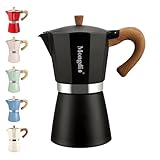
The Mongdio listing positions this as a stovetop moka pot and Cuban-style coffee maker. The title does not state the capacity or material in the portion used here, so check the product page for both, and for which hobs it supports, before comparing it with other pots. It is a candidate for shoppers who want a straightforward stovetop brewer. Look for a clear spec table, a replaceable gasket, and care instructions that match your cleaning habits.
Gourmia Electric Moka Pot

The Gourmia is an electric moka pot with a 550 W base that detaches and swivels 360 degrees, an aluminum body, and a beechwood handle. The listing describes a 6-shot size, with a reduction sieve for 3-shot batches, and brew times near five minutes. It suits people who do not want an open flame or lack a suitable stove. One comparison source notes it relies on a manual switch rather than an automatic shut-off, so watch the pot while it runs and confirm the details on the listing.
IMUSA Electric Espresso Maker, 6 or 3 Cup

This IMUSA electric maker uses a detachable base with a cool-touch handle and a cast aluminum body, and it brews 6 or 3 cups, with each cup listed at about 1.5 oz. The red version of a similar IMUSA model lists 480 W, but the black listing’s wattage is not stated in the sources used, so confirm it. It is a fit for dorm rooms, offices, and kitchens where a stovetop is inconvenient. As with any electric moka pot, keep the base dry and let the pot cool before washing.
Questions
Does a moka pot make espresso?
Not by the usual definition. Moka pots work at about 1 to 2 bar, while espresso is made around 9 bar, so a moka pot makes a strong, concentrated coffee instead. It can serve as a base for a latte-style drink, but it will not produce the same crema or texture.
What grind should I use in a moka pot?
Medium-fine, finer than drip and coarser than espresso. Do not tamp, and wipe stray grounds from the rim so the pot seals properly.
Can I use a moka pot on an induction hob?
Only if the pot is induction compatible. Aluminum pots such as the classic Moka Express generally need an induction plate. Electric moka pots avoid the question because they heat on their own base.
Why does my moka pot coffee taste bitter?
The usual causes are a grind that is too fine, too much heat, or leaving the pot on the burner after the top chamber has filled. Use low to medium heat, keep the water level below the valve, and take the pot off the heat when the flow turns pale.
Is an electric moka pot better than a stovetop one?
It is more convenient when you lack a suitable hob or want a detachable base, but it adds an electrical part and depends on the shut-off features of the specific model. A stovetop pot is simpler and lasts a long time with basic care.
Should I buy a grinder for either one?
Fresh coffee ground just before brewing improves both methods. For a moka pot a basic burr grinder that can reach medium-fine is enough, while an espresso machine rewards a grinder that can make fine, repeatable adjustments.
Update History
- October 21, 2026 – Initial publication; specifications checked against manufacturer documentation where available.
- Check the product page for current specifications and availability before buying.
Sources
- Bialetti manufacturer instructions and product information for the Moka Express
- General reference descriptions of moka pot and espresso brewing pressure
- Retailer listing titles and specification fields for the pots named above


Write Your Review
No reviews yet. Be the first to share your experience!