

Key takeaways
- Saeco PicoBaristo review: 15 bar pump, ceramic grinder, 1.8 L tank and milk carafe, with who it suits, drawbacks and alternatives.
The Saeco PicoBaristo is a compact super-automatic espresso machine that grinds beans, brews at 15 bar and, on the carafe version, froths milk into a removable jug with one touch. It suits households of one to four people who want a cappuccino or latte without learning to steam milk, and who have counter space measured in inches rather than feet. It is a poor fit if you want to pull manual shots, want a steam wand, or need a large hopper for a busy office. This review covers what the published specifications say, where the machine shines, where it frustrates, and which alternatives and maintenance items deserve a look.
Quick Verdict
- Best for: small kitchens, couples and families who drink a mix of espresso, coffee and milk drinks and want the machine to do the work.
- Standout: a ceramic grinder with 10 settings, a 1.8-liter water tank and a slim body, with 11 one-touch drinks on the carafe model.
- Watch out: two PicoBaristo versions exist (an integrated milk carafe and an automatic milk frother), so confirm which you are buying.
- Upkeep: it needs regular rinsing, descaling and brew-group care; the optional water filter stretches the time between descaling.
- Skip it if: you want a manual steam wand, a high-volume hopper or full control over extraction.
Key Specs
These figures come from the manufacturer’s published documentation and retailer spec sheets for the carafe version (model number HD8927). Variants differ, so confirm each line on the listing for the exact model number you are looking at.
| Spec | Published detail |
|---|---|
| Type | Super-automatic bean-to-cup espresso machine |
| Pump pressure | 15 bar |
| Grinder | Ceramic, 10 grind settings; rated by the maker for at least 20,000 cups |
| Bean hopper | 250 g |
| Water tank | 1.8 liters (roughly 61 fl oz) |
| Milk system | 0.5-liter integrated milk carafe with quick-clean function (HD8927); automatic milk frother on the HD8924 variant |
| Drinks | 11 one-touch drinks |
| Strength / temperature | 5 aroma strength levels; 3 temperature levels |
| Power | 1850 W |
| Grounds container | Holds about 15 servings |
| Dimensions (W x D x H) | About 215 x 429 x 330 mm |
| Water filter | Works with the AquaClean filter, which the maker says allows up to 5,000 cups without descaling (confirm compatibility for your model) |
| Cord length | About 1.2 m |
One caution before the details: the interface, drink menu and some accessories differ between the carafe version and the automatic frother version. Where this review refers to milk behavior, it describes the carafe approach; confirm what ships with your version on the listing.
Who It Is For (and Who Should Skip It)
A good match
- Small households. A body about 21.5 cm wide and a 1.8-liter tank keep refills infrequent without eating counter space.
- Milk-drink fans who want consistency. The carafe froths and dispenses a cappuccino or latte macchiato without you touching a steam wand.
- People who value ceramic grinders for quiet, low-heat grinding and long life.
- Anyone who will use the filter and descale on time. A compact machine rewards disciplined maintenance.
A weaker match
- Enthusiasts who want to adjust dose, pre-infusion, pressure profile or shot weight. Super-automatics hide those controls.
- Households that drink several cups at once. A 250 g hopper and a 0.5-liter carafe suit a handful of drinks, not a gathering.
- Drinkers who love thick, textured milk for latte art. Automated froth is consistent, but it is not the same as hand-steamed microfoam.
- Anyone who dislikes cleaning a milk system. Even a quick-clean carafe has to be rinsed after use.
What It Does Well
Compact footprint with a real grinder
Small bean-to-cup machines often cut corners on the grinder. The PicoBaristo’s ceramic burrs and ten settings let you tune from a fine grind for a stronger espresso to a coarser grind for a milder cup. Ceramic burrs run cooler than many steel designs and are valued for staying sharp through heavy use; the maker quotes a figure of 20,000 cups, which you should treat as a rating rather than a guarantee.
One-touch convenience
The drink list covers the usual set: espresso, coffee, cappuccino, latte macchiato, and other milk drinks, for eleven in total on the carafe model. After setting strength, temperature and cup volume to your taste, the daily routine becomes press, wait and drink. That matters on weekday mornings more than any spec table.
Practical capacity for its size
A 1.8-liter tank is generous for a body this narrow. Two people drinking a few cups a day can go several days between top-ups. The waste container holds about fifteen servings, so you will empty it more often than you fill the tank, but it is easy to slide out.
Adjustable to household taste
Five strength levels and three temperature levels give you enough control to cover family differences: a stronger setting for one person, a milder one for another. It will not please someone who wants to adjust ratio to the gram, but it covers the range most households need.
Water filter support
The maker positions the AquaClean filter as a way to avoid descaling for up to 5,000 cups. Whether you reach that number depends on your water hardness and how often you run the machine, but a filter reduces scale risk and is worth fitting from day one if your model supports it.
Where It Falls Short
No manual steam wand
The carafe system froths milk automatically. If you love steaming a small pitcher and pouring latte art, you will find the machine limiting. The milk it produces is serviceable and consistent but not tunable in the same way.
Milk-path upkeep is non-negotiable
Any machine that moves milk through tubing or a carafe lid needs rinsing. Skipping it leads to residue, odor and off flavors. The quick-clean function helps, but you are still responsible for removing and washing the carafe parts at the intervals the manual specifies.
Small hopper and small carafe
A 250 g hopper empties quickly if you drink many cups a day, and the 0.5-liter carafe limits how many milk drinks you can make before refilling. For a household of two this is fine. For a family of five who all want lattes each morning, expect to refill.
Limited tuning for espresso purists
Five strength levels and ten grinder steps cover a wide range, but you cannot weigh the shot, set a custom ratio or choose a pressure profile. If you are trying to match a specific café recipe, a semi-automatic machine and a separate grinder will give you more control.
Model confusion
Because the carafe version and the automatic frother version share a name and look similar, listings can be ambiguous. Check the model number (HD8927 for the carafe, HD8924 for the frother), and confirm what is included before you order. Also check whether a listing is new, refurbished or open-box and what warranty applies.
Cup clearance and drink size
Compact machines can restrict cup height. Measure your tallest travel mug against the published dimensions and confirm clearance on the listing; the machine’s overall height is about 330 mm, and the spout area is lower than that.
How It Compares
The comparison below uses published information for the PicoBaristo and general descriptions of the other machines on the list. Verify each current spec on the listing.
| Machine | Milk system | Grinder | Best for |
|---|---|---|---|
| Saeco PicoBaristo (HD8927) | Integrated 0.5-liter carafe | Ceramic, 10 settings | Compact kitchens, one-touch milk drinks |
| Philips 5500 Series with LatteGo | LatteGo two-part milk system, no tubes | Ceramic (confirm settings on the listing) | Households that want a bigger drink menu and the easiest milk cleanup |
| De’Longhi Magnifica Evo Next | Frother (confirm type on the listing) | Steel burr (confirm on the listing) | Buyers who want a simple interface and a rich espresso |
| De’Longhi Magnifica Evo | Frother (confirm type on the listing) | Steel conical burr; 13 settings are commonly published | Buyers who want a traditional-style frothing option |
The simple read: the PicoBaristo wins on size, the Philips 5500 wins on menu and milk cleanup, and the De’Longhi machines compete on grinder type and froth style. If counter width is your biggest constraint, the PicoBaristo’s narrow body is its strongest selling point.
Alternatives Worth Considering
Philips 5500 Series Fully Automatic Espresso Machine with LatteGo – why consider it
As an Amazon Associate we earn from qualifying purchases at no extra cost to you.

The Philips 5500 Series is the step-up choice if the PicoBaristo’s drink menu feels limited. Its listing highlights the LatteGo milk system, a two-piece design with no internal milk tubing, plus a menu that covers hot and iced coffee drinks. Fewer parts in the milk path generally means faster cleanup, which is the biggest daily chore on any milk-capable super-automatic. Consider it if you have more counter space, more drinkers with different tastes, or want to save the time you would spend rinsing a carafe. Check the listing for the grinder settings, tank size and dimensions, since this machine is larger than the PicoBaristo.
De’Longhi Magnifica Evo Next Automatic Espresso Machine – why consider it

The Magnifica Evo Next is a newer take on De’Longhi’s best-known super-automatic line. It is a reasonable alternative if you want a straightforward interface and a frother for milk drinks, and it comes from a maker with a long track record in home espresso. The grinder uses steel burrs in the Magnifica family, which some buyers prefer for their cutting action. Confirm the milk system type, tank capacity and drink list on the listing, because De’Longhi has offered several frothing designs across the line.
De’Longhi Magnifica Evo Automatic Espresso Machine – why consider it

The original Magnifica Evo is the machine to look at if you like the idea of a steel-burr grinder and a conventional frothing approach. Published comparisons commonly describe 13 grind settings and a manual-style frothing option on some versions, though this varies by model, so verify on the listing. It tends to attract buyers who put espresso richness ahead of milk-system convenience. Compared with the PicoBaristo, check cup clearance, tank size and how the frother is cleaned, because those daily details decide whether you will enjoy using it.
Maintenance Gear That Suits This Machine
Philips CA6700 Universal Liquid Descaler – keeps scale under control

Scale is the main enemy of any machine with a boiler or thermoblock. The CA6700 is a liquid descaler sold for Philips, Saeco and other fully automatic machines. Follow the descaling steps in your manual exactly, use the dosage the machine’s prompts call for, and never mix descalers. If your water is hard, descaling will be a regular task, so keep a bottle on hand rather than waiting for the warning light. Confirm that the product suits your exact model before use.
Philips AquaClean Original Calc and Water Filter – fewer descaling cycles

The AquaClean filter fits inside the water tank and reduces scale formation. The maker’s literature says that, with the filter replaced on schedule, you can brew up to 5,000 cups without descaling. That number depends on your water supply and on replacing the filter at the recommended interval. If you have hard water, a filter pays for itself in convenience. Confirm on the listing that this filter version works with your PicoBaristo variant before ordering.
Philips Saeco Coffee Oil Remover CA6704 – for the brew group
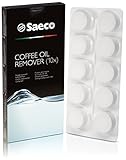
Coffee oils build up on the brew group and the internal passages, and over time they turn rancid and flatten flavors. This oil remover is sold in tablets for use in a cleaning cycle on compatible Philips and Saeco machines. Use it as the manual directs, typically on a monthly schedule. It will not replace descaling or rinsing the milk path, but it handles a different problem and helps keep drinks tasting clean.
Questions
Is the PicoBaristo a good machine for beginners?
Yes, for beginners who want convenience. You choose a drink, the machine grinds, brews and froths, and the settings let you tweak strength and temperature without learning technique. It is less suited to someone who wants to learn espresso skills.
What is the difference between the HD8927 and HD8924?
Published specs describe the HD8927 as the version with an integrated milk carafe and the HD8924 as the version with an automatic milk frother. The core machine, with a 15 bar pump, ceramic grinder and 1.8-liter tank, is similar. Confirm the milk system and included accessories on the listing.
How often should I descale it?
Follow the machine’s own prompts and the manual. The maker says that with the AquaClean filter you can brew up to 5,000 cups between descaling, but actual intervals depend on water hardness and filter replacement.
Can I use pre-ground coffee?
Many super-automatics include a bypass chute for ground coffee, but check the manual for your model. Confirm on the listing before you buy if this matters to you, as some drinkers use it for decaf.
Are oily beans a problem?
Very oily dark roasts can leave residue in the grinder and the brew group. Keep to the maker’s guidance on beans and use an oil remover cycle on a schedule. If the hopper clogs, switch to a drier roast.
Is the milk carafe dishwasher-safe?
Check the manual for your version. Many carafe parts are top-rack safe, but some seals and tubes are not. Rinse the carafe after milk drinks regardless.
Update History
- October 21, 2026 – Initial publication; specifications checked against manufacturer documentation where available.
- Check the product page for current specifications and availability before buying.
Sources
- Manufacturer product sheet and user manual for the Saeco PicoBaristo
- Retailer specification listings for the HD8927 and HD8924 variants
- Published comparisons of De’Longhi Magnifica Evo and Philips LatteGo machines
- Maker documentation for AquaClean filters, descaler and oil remover products
Write Your Review
No reviews yet. Be the first to share your experience!