

Key takeaways
- Our best pre ground coffee guide compares six medium roasts, from canisters to specialty bags, with freshness math and storage tips for drip.
Stumptown Holler Mountain is the best pre ground coffee in this group for flavor and clarity: a 100 percent Arabica, USDA organic medium roast blend, pre-ground at the roastery for automatic drip. Pre ground coffee is simply coffee that has already been milled to a standard grind, trading some freshness for convenience. If you drink a lot and want volume, the Dunkin’ and Maxwell House canisters win on quantity, and Lavazza is a strong middle option. This guide ranks six listed options and explains how fast each size will go stale for your household.
Quick List
- Retailer Colombia Ground Coffee, 32 oz – best for large households that want a single-origin-labeled medium roast in bulk
- Retailer Colombia Ground Coffee, 12 oz – best for trying the same Colombia medium roast in a smaller bag
- Dunkin’ Original Blend, 30 oz canister – best for a familiar, mild morning cup in a resealable canister
- Maxwell House Original Roast, 27.5 oz canister – best for an everyday diner-style pot at large volume
- Stumptown Holler Mountain, 12 oz – best for flavor depth and organic sourcing
- Lavazza House Blend Perfetto, 12 oz – best for a smooth, caramel-leaning 100 percent Arabica blend
Which One Is Right for You?
| If you… | Choose |
|---|---|
| want the most interesting flavor and organic certification | Stumptown Holler Mountain |
| prefer a smooth, balanced blend and drink a few cups a week | Lavazza House Blend Perfetto |
| drink a pot a day and want a canister that reseals | Dunkin’ Original Blend |
| brew for a family or office and want the biggest pour for the least fuss | Maxwell House Original Roast |
| want a Colombia-labeled medium roast in bulk | Colombia Ground Coffee, 32 oz |
| want to sample that Colombia roast before committing | Colombia Ground Coffee, 12 oz |
The bigger the container, the more important storage becomes. A large canister that outlasts the freshness window is no bargain if the last third tastes flat, so match the size to how quickly you drink.
All 6 Picks in Detail
1. Colombia Ground Coffee, Medium Roast, 32 oz – Best Bulk Colombia Medium Roast
As an Amazon Associate we earn from qualifying purchases at no extra cost to you.
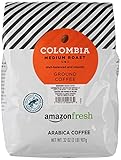
This is a retailer store-brand Colombia ground coffee in a 32 oz bag, labeled medium roast. It is the largest container in the group, about 907 grams, and the listing gives few extra details, so confirm bean type, roast date, and grind on the package.
It suits households of three or more, offices, and anyone who brews several pots a week and wants to buy once. A Colombia label points to the growing country rather than a specific farm or lot, and it should not be read as a promise of specialty-grade cup quality.
- Size: 32 oz bag
- Roast: medium, per the listing
- Origin label: Colombia
- Grind: ground; style not stated on the listing, confirm for drip suitability
- Bean type: confirm on the package
- Best use: automatic drip and pour-over cones
Pros:
- Lots of coffee per container
- Medium roast is a safe fit for most drip machines
- Single-country origin label
Cons:
- Large bag goes stale before light drinkers finish it unless you portion and seal it
- Limited tasting detail on the listing
- No roast date shown in the listing information
Choose it over the 12 oz bag only if you will truly finish it within a few weeks.
2. Colombia Ground Coffee, Medium Roast, 12 oz – Best for a Small-Batch Trial
This is the same store-brand Colombia medium roast in a 12 oz bag, about 340 grams. It is the sensible way to find out whether the flavor suits you before buying the bigger size, and it keeps your opened coffee closer to a one-to-two-week window.
It suits solo drinkers, new households, and anyone who rotates coffees. For a once-a-day drinker brewing a 12 oz mug at the commonly cited 55 grams per liter, a 340 gram bag makes roughly 17 mugs.
- Size: 12 oz bag
- Roast: medium
- Origin label: Colombia
- Grind: ground; confirm on the package
- Approximate yield: about 17 mugs of 12 oz at the SCA reference ratio
- Best use: drip machines and pour-over
Pros:
- Right-sized for freshness
- Same flavor profile as the bulk bag, so it works as a test
- Easy to store in a small airtight container
Cons:
- Less value per ounce when the bulk size is the same coffee
- Resealable features are not described in the listing
- Same limited tasting detail
It is the low-commitment version of pick one, and a good partner for the Lavazza or Stumptown 12 oz bags in a taste comparison.
3. Dunkin’ Original Blend Medium Roast, 30 oz Canister – Best Familiar Canister Coffee

Dunkin’ Original Blend is a mild, widely recognized medium roast sold here in a 30 oz canister. The listing describes Arabica beans, a rich and smooth flavor, and a stay-fresh canister. Some retailer pages describe it as 100 percent Arabica, but you should confirm that on the package.
It suits people who want a consistent, easy cup that tastes close to a coffee-shop drip pot and who go through a canister in two or three weeks. The mild profile pairs well with milk and sweetener.
- Size: 30 oz canister, about 850 grams
- Roast: medium
- Beans: Arabica per the listing
- Container: resealable canister, per retailer descriptions
- Ingredients: coffee only, per retailer pages
- Best use: automatic drip
Pros:
- Canister is easier to reseal and scoop than a bag
- Smooth and low in bitterness for a mainstream coffee
- Large but not oversized for a family
Cons:
- Large container can outlast freshness for a one- or two-cup household
- Mild flavor may seem flat to people who like complexity
- Roast date not stated on the listing
Compared with Maxwell House, it is the milder and slightly smoother of the two canister coffees.
4. Maxwell House Original Roast, 27.5 oz Canister – Best High-Volume Everyday Pot

Maxwell House Original Roast is a classic medium roast that the brand describes as smooth and full-bodied. The canister holds 27.5 oz, about 780 grams, and the company suggests roughly one tablespoon of coffee per 6 fluid ounces of water for each serving.
It suits big households, workplaces, and anyone who drinks coffee all day and wants a familiar flavor. Whether it is 100 percent Arabica is stated on some retailer pages and not others, so check the label if that matters.
- Size: 27.5 oz canister
- Roast: medium
- Ingredients: coffee, per retailer pages
- Brand ratio: 1 tablespoon per 6 fl oz of water
- Grind: ground for automatic drip, per retailer descriptions
- Certification: kosher per one retailer; confirm on the container
Pros:
- Familiar full-bodied cup with mild acidity
- Large volume, easy to scoop
- Works with standard drip machines
Cons:
- Basic flavor, little nuance
- Bean type not stated everywhere
- Bulk size demands careful storage
It is plainer than Dunkin’ and far plainer than Stumptown, which is exactly the point for many drip-pot households.
5. Stumptown Holler Mountain, Ground Medium Roast, 12 oz – Best for Flavor and Sourcing

Holler Mountain is Stumptown’s signature blend. Retailer listings describe it as a 100 percent Arabica, USDA organic medium roast with flavor notes of citrus zest, caramel, and hazelnut, and the company says it is sourced through its Direct Trade program. It is a blend rather than a single origin, described in retailer copy as chocolatey Latin American coffees with the brightness of East African beans.
It suits drinkers who want a coffee-shop-style cup at home and will finish a 12 oz bag in about two weeks. The pre-ground format is listed as set for just about any drip brewer, with versatility for other methods.
- Size: 12 oz bag, about 340 grams
- Roast: medium
- Beans: 100 percent Arabica, USDA organic, per the listing
- Flavor notes: citrus zest, caramel, hazelnut per retailer titles
- Type: blend, not single origin
- Grind: pre-ground for drip
Pros:
- Most nuanced flavor in the group
- Organic certification and sourcing statement
- Bag size aligns with the freshness window
Cons:
- Specialty-roaster coffee usually carries a premium over mainstream canisters
- Pre-ground format gives up some freshness compared with whole bean
- Bright notes may be too lively for those who like dark and bold coffee
Next to Lavazza, it is brighter and fruitier, while Lavazza is rounder and sweeter.
6. Lavazza House Blend Perfetto, Ground Medium Roast, 12 oz – Best Smooth Arabica Blend
Lavazza House Blend Perfetto is a 100 percent Arabica medium roast with a stated intensity of 3 out of 5 and a caramel aromatic note. Retailer copy describes beans from Central and South America and a full-bodied, velvety cup that suits drip brewers, a Chemex, French press, or cold brew.
It suits readers who want a soft, balanced cup that is richer than a mainstream canister coffee but less lively than a bright specialty roast. The listing title mentions a pack option, so check the pack count before ordering.
- Size: 12 oz bag
- Roast: medium, intensity 3/5
- Beans: 100 percent Arabica
- Aromatic note: caramel, per retailer copy
- Origin: Central and South America per retailers
- Intended use: drip brewers; other methods mentioned by retailers
Pros:
- Smooth, low-acid-tasting profile that works with milk
- Arabica-only blend
- Bag size suits fresh drinking
Cons:
- Some retailer pages label the roast inconsistently, calling it dark or espresso; trust the medium-roast labeling on the product title
- Pre-ground only in this listing
- Not organic or certified in the listing
It is the easiest-drinking of the 12 oz bags, while Stumptown is the most distinctive.
Specs Compared
| Product | Size | Roast | Beans (as listed) | Container | Approx. 12 oz mugs per package |
|---|---|---|---|---|---|
| Colombia Ground Coffee, 32 oz | 32 oz | Medium | Confirm on package | Bag | About 46 |
| Colombia Ground Coffee, 12 oz | 12 oz | Medium | Confirm on package | Bag | About 17 |
| Dunkin’ Original Blend | 30 oz | Medium | Arabica | Canister | About 43 |
| Maxwell House Original Roast | 27.5 oz | Medium | Confirm on container | Canister | About 40 |
| Stumptown Holler Mountain | 12 oz | Medium | 100% Arabica, organic | Bag | About 17 |
| Lavazza House Blend Perfetto | 12 oz | Medium, intensity 3/5 | 100% Arabica | Bag | About 17 |
The mug estimates assume the SCA reference ratio of about 55 grams of coffee per liter of water, or roughly 19.5 grams for a 12 oz mug. Adjust for stronger or weaker brewing.
How We Chose These
This ranking draws on listing titles, retailer descriptions, and roaster or brand pages, not on tasting panels or brewing sessions. We looked at roast level, bean type, stated sourcing or certification, container design, and package size relative to a realistic freshness window. Where listings disagreed or went silent, such as bean type on the store-brand and Maxwell House products, we pointed to the label rather than guessing. Package size was weighed against how quickly typical households finish a bag.
What to Look For
Roast level and bean type
Medium roast is the safest pre-ground choice because it tolerates the wide range of drip machines, brewing temperatures, and water that home users have. Light roasts taste fruity and can seem sour if brewed too cool; dark roasts taste bold and smoky and can turn bitter if over-extracted. Arabica generally gives a smoother, sweeter cup; blends with robusta add body and bitterness. Look for a label that states the bean type rather than only the roast.
Package size versus freshness
Ground coffee stales faster than whole beans because more surface area meets oxygen. Published guidance typically puts opened, airtight-stored ground coffee at about one to two weeks of good flavor, with the strongest aroma fading in the first week. A worked example: a 30 oz canister holds about 850 grams. At two 12 oz mugs per day, using roughly 19.5 grams each, that is about 39 grams a day, so the canister lasts around 22 days, well past the freshness window. A 12 oz bag, about 340 grams, lasts about 9 days at the same rate, which is a much better match for a light drinker.
Grind suitability
Pre-ground coffee in this category is usually milled to a medium grind for automatic drip and cone pour-over. It is a poor match for espresso machines, which need a much finer and consistent grind, and for French press, which needs coarse grounds. Moka pots need something between. If your brewer is not a drip machine, check whether the listing names a grind style, or consider buying whole bean and grinding at home.
Certifications and sourcing
A USDA organic label, as on Stumptown, tells you about farming standards. A Direct Trade claim describes the company’s buying relationships and is not a third-party certification. “Colombia” on a label is an origin country, not a grade. These distinctions help you read the packaging without assuming a bag is better because it sounds better.
Reading the label before you buy
Three details on a package tell you more than the front-of-bag marketing. First, a roast date or best-by date: a date stamped months ahead means the coffee was packed some time ago, and a roast date, when printed, is the better freshness signal. Second, the grind description: words such as “drip,” “all-purpose,” or “fine” indicate what machine the grounds were milled for. Third, the ingredient line: it should read simply coffee, with no flavorings or fillers. Several of the listings here do not show a roast date, which is why this guide asks you to confirm on the package.
Choosing between a bag and a canister
Canisters are easy to scoop and usually reseal, but they hold a lot of coffee and tempt you to leave it open on the counter. Bags with a one-way valve and a zipper or fold-over seal are lighter and smaller. Either way, the container the coffee ships in is not the best long-term home once opened; moving a week’s supply into a small airtight jar is a cheap fix that does more for the flavor than switching brands.
Storage and brewing basics
Keep opened coffee in an airtight, opaque container in a cool, dry cupboard away from the stove. Avoid repeatedly opening a large container; portion a week’s worth into a small jar and keep the rest sealed. For drip, use water at about 195 to 205 degrees Fahrenheit and start near the SCA reference of about 1 gram per 18 grams of water, then adjust to taste. Use fresh, filtered water, since tap water with strong chlorine or high mineral content changes the cup noticeably.
Questions
Is pre ground coffee worse than whole bean?
It loses aroma and flavor faster, so fresh whole bean ground just before brewing usually tastes better. Pre-ground wins on convenience and works well when you use it within a week or two of opening.
How long does pre ground coffee stay fresh?
Opened and stored airtight, it generally stays at its best for about one to two weeks, with noticeable fading after that. Unopened bags and canisters last much longer, commonly several months.
Should I store ground coffee in the fridge or freezer?
Most guidance recommends an airtight container in a cool, dark cupboard. Repeated cold-to-warm cycles can introduce moisture, which hurts the coffee.
Which of these is best for a drip machine?
All six are described as medium roast and suitable for drip brewing. Stumptown and Lavazza are the most flavorful, while Dunkin’ and Maxwell House are the most economical to run in volume.
Can I use pre ground coffee in an espresso machine?
You can, but results are usually poor because drip-grade grounds are too coarse for espresso pressure. Look for a product labeled for espresso, or grind whole beans fine yourself.
Can I mix two of these coffees?
Yes. Blending a smooth medium roast with a brighter one, such as Lavazza with Stumptown, can balance sweetness and acidity. Mix only what you will use within a week so the blend stays fresh.
Does a bigger canister save money?
Per ounce, usually yes, but only if you finish it while it is still fresh. If the last third tastes stale, the saving is hollow, so portion the canister into smaller airtight containers.
Update History
- October 20, 2026 – Initial publication; product set drawn from current catalog listings.
- Check the product page for current specifications and availability before buying.
Sources
- Roaster and brand product pages, including Stumptown and Lavazza
- Retailer listing titles and specification fields for each package
- Published guidance on ground coffee shelf life and storage from coffee roasters and food publications
- Specialty Coffee Association brewing-standard summaries for ratio and temperature ranges



Write Your Review
No reviews yet. Be the first to share your experience!