

Key takeaways
- Compare 8 portable espresso makers for travel, from hand-pump Wacaco models to battery-powered capsule units, with pros, cons and a trip checklist.
If you want the closest thing to a real shot on the road, the two Wacaco Minipresso models are the safest starting point, because they are manual, battery-free and built around the idea of travel. If you would rather press a button, several battery-powered units on this list heat their own water. This page covers eight listings, explains what each one claims in its title, and flags where a product is not strictly an espresso machine at all. Pressure and battery figures below are seller claims taken from listing titles, so check the full product page before you buy.
Quick picks
Our top picks


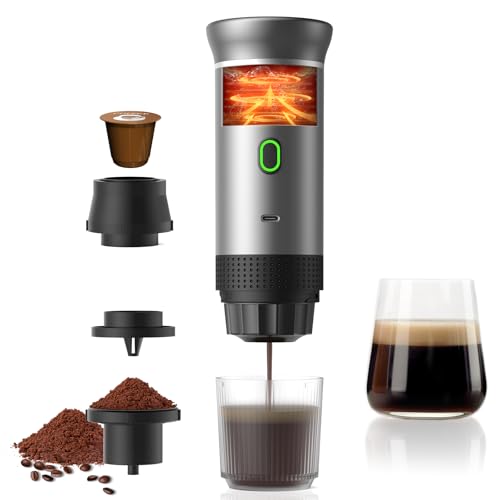


As an Amazon Associate we earn from qualifying purchases at no extra cost to you.
- Best no-battery choice: Wacaco Minipresso GR, for ground coffee and a manual pump.
- Best manual option for pod fans: Wacaco Minipresso NS, which takes NS capsules.
- Best for tinkerers who want options: AeroPress Original, a press brewer that can make espresso-style coffee.
- Best for group trips: AeroPress Original XL, the larger version.
- Best for a hands-off morning: the self-heating battery models from Safashy, zxfcfo, BLUBERY and Havato.
Comparison table
| Model | Key point from the listing | Best for |
|---|---|---|
| Wacaco Minipresso GR | Manually operated, ground coffee | Camping and hiking without power |
| AeroPress Original | Press brewer, 2-minute brew | Flexible coffee styles in one tool |
| zxfcfo Portable Coffee Maker | 20-bar claim, 7500mAh battery, grounds and capsules | Car, RV and office use |
| Safashy Portable Coffee Maker | Self-heating, 20-bar claim, 7800mAh, USB-C | Hands-off brewing on the move |
| BLUBERY LED Screen Espresso Maker | LED screen, USB-C, NS capsules and grounds | Car trips and desks |
| Wacaco Minipresso NS | Manual, original NS capsules, up to 45 ml | Pod users who want no battery |
| AeroPress Original XL | Larger manual brewer | Two people sharing a trip |
| Havato Portable Espresso Machine | Self-heating, 15-bar claim, LCD, USB-C | Office and camping with capsules |
The eight listings, one by one
Wacaco Minipresso GR
The title describes a manually operated portable espresso machine that works with ground coffee, aimed at camping and hiking. That makes it the simplest design here: you add hot water, pump by hand and there is no battery to charge or to declare at an airport. The trade-off is effort, because you supply the pressure, and results will vary with your grind and your pumping rhythm. Because the design relies on your own hot water, pair it with a small flask on hiking days. Check the listing for what comes in the box, such as a scoop or case, since the title does not say.
- Pros: No battery or cable needed; works with any ground coffee you like.
- Cons: You must bring a source of hot water; takes practice to get consistent shots.
Who it’s for: hikers and campers who want a lightweight, battery-free setup.
AeroPress Original
This is not a pressurised espresso machine, and the title is honest about it: it lists French press, pour-over and espresso style as options, with a 2-minute brew. You get a concentrated cup, not true espresso. Its appeal for travel is that it is a single, portable, manual tool, and you can brew many styles with it. Check the listing for what is in the box, because filters and accessories can differ. It is also forgiving to beginners, since a rushed pour still gives drinkable coffee, which cannot always be said of manual pump machines.
- Pros: Versatile, manual and easy to rinse.
- Cons: Espresso-style only, so expect no crema; needs filters and a separate hot-water source.
Who it’s for: travellers who want good coffee in several styles from one cheap, simple tool.
zxfcfo Portable Coffee Maker
The listing calls it a 3-in-1 travel machine with a 20-bar claim and a 7500mAh battery, compatible with ground coffee and capsules, for camping, RV, hiking, car and office. The bar figure is the seller’s number, not something confirmed here. The brand name is unfamiliar, so read the listing for capsule format, warranty and how the heating works before you rely on it for a long trip. Because it lists camping, RV, hiking, car and office, it is clearly pitched at people who want one device in many places, which is useful but also means the title tells you little about any single use.
- Pros: Battery-powered and takes both grounds and capsules.
- Cons: Lesser-known brand; unclear from the title which capsule type it accepts.
Who it’s for: RV and car travellers who want one device that handles grounds and pods.
Safashy Portable Coffee Maker
This is a self-heating electric espresso machine with a 20-bar claim, a 7800mAh battery and USB-C, described as 2-in-1 for ground coffee and NS capsules. Self-heating means you should not need to carry a kettle, which is the main convenience gain over manual models. As with similar units, treat the pressure number as marketing until you see how the shots taste. The title’s mention of NS capsules is shorthand, so confirm whether your preferred pods fit before ordering a stack of them. A power bank with USB-C output is a sensible companion.
- Pros: Heats its own water; USB-C charging is easy to top up from a power bank.
- Cons: Battery drains with each brew; the NS capsule wording needs a check against your pods.
Who it’s for: hotel, hike and office users who want a one-button brew.
BLUBERY LED Screen Portable Espresso Maker
The title mentions an LED screen, a USB-C car coffee maker format, and compatibility with NS capsules and ground coffee, for camping, RV, hiking and office. The punctuation in the title is messy, which is a mild warning sign about listing quality. The display may help you see status, but the title does not say what it shows, so check the images and description. The car-coffee wording suggests it can work from a vehicle’s USB-C source, but the title does not give wattage, so check the description rather than assuming. Confirm the screen shows what you need, such as charge level, before treating it as a selling point.
- Pros: Display for status; takes both capsules and grounds; USB-C.
- Cons: Sloppy title copy; little detail on capacity or heating time in the title.
Who it’s for: car-trip drinkers who like to see what the machine is doing.
Wacaco Minipresso NS
Built for original NS capsules, this manual unit promises up to 45 ml of espresso, is described as easy to use and clean, and comes in black. Because it is operated by hand there is no battery, and pods remove the grinding step. The compromise is that you are tied to a capsule format and still need hot water. The 45 ml figure is the listing’s stated maximum, so think of it as a single small shot rather than a mug. If you brew for two, plan on two rounds, and remember that each round needs fresh hot water and a fresh capsule.
- Pros: No battery; fast prep with capsules; easy cleanup.
- Cons: Capsule-only; confirm the compatible pod type before ordering.
Who it’s for: pod drinkers who want manual reliability on camping trips.
AeroPress Original XL
The XL is the larger sibling of the original, described as a large manual brewer with a 2-minute brew and the same range of styles, including espresso-style. Bigger capacity suits sharing, and it stays portable. It is heavier and bulkier than the standard model, so it eats more space in a small bag. Like the original, it does not create true espresso pressure. Check whether the XL uses the same filters as the original, since the title does not say, and buy spare filters so a trip does not end early. The larger body also needs a bigger mug or a second cup to catch the full brew.
- Pros: Larger batches for two; same flexible method.
- Cons: Bulkier to pack; still espresso-style, not true espresso.
Who it’s for: couples or small groups who want to brew more per press.
Havato Portable Espresso Machine
This white, USB-C rechargeable unit is described as self-heating with an LCD display and a 15-bar claim, taking capsules and ground coffee, for camping, RV, hiking and office. The lower bar figure than rivals does not by itself say anything about taste, since pressure ratings in listings are rarely comparable. Look for the capsule type and tank size in the full description. Its white finish will show coffee stains over time, which is a cosmetic point but worth knowing for a travel kit that gets tossed in a bag. Read the description for tank size and charge time, because the title gives neither.
- Pros: Self-heating with a display; rechargeable over USB-C.
- Cons: Unfamiliar brand; capsule standard is not spelled out in the title.
Who it’s for: office and camping users who want a tidy, rechargeable pod-and-grounds option.
How we picked these
We built this list from published specifications, manufacturer documentation and buyer reviews, then sorted listings by how they power the brew: manual, press, or battery-heated. Where a title makes a claim, such as a bar rating or battery size, we pass it along as the seller’s claim. Nobody on the team used or measured these units. Treat our notes as a shortlist to compare against the full listing, and look for photos and questions from buyers that show the unit next to everyday objects, which tells you more about real size than a spec line does.
What to look for in a travel espresso maker
Power source: manual, battery or neither
Manual units like the Minipresso pair need only hot water, so nothing can go flat. Battery models such as Safashy, zxfcfo, BLUBERY and Havato heat and pump on their own but depend on charge. For multi-day trips away from outlets, the battery size in the title (7500mAh and 7800mAh appear here) matters, but you should still ask how many cups one charge gives, which is usually in the description.
Ground coffee, capsules or both
Ground coffee gives you control over roast and dose, and it costs less per cup. Capsules are faster and tidier. Models that accept both keep your options open. If a listing says NS capsules, confirm exactly which pod format that abbreviation covers before you buy a sleeve of them.
Hot water logistics
Manual machines and the AeroPress need hot water from somewhere else. That may be a camp stove, a hotel kettle or a flask. Self-heating machines remove that step, which matters more than any pressure number if your hotel room has no kettle.
Pack size and cleaning
Smaller is not always better. A tiny unit with fiddly parts is annoying to clean in a hotel sink. Prefer designs with few pieces and wide openings, and plan to rinse immediately. Think about the case too: a hard shell protects a pump mechanism, while a soft pouch saves space but leaves seals exposed to knocks.
Safety basics
Hot water under pressure is a burn risk, so never point the outlet at yourself and let hot parts cool before you handle them. Keep battery units away from heat and charge them on a non-flammable surface, following the maker’s guidance.
Worked example: a five-day trip
Say you drink two shots a day, so ten shots in all. With a manual unit you need ten doses of ground coffee, a way to heat water and a rinse routine. With a battery unit, check whether one charge covers ten brews; if the listing is vague, bring a power bank and a USB-C cable. With capsules, count out ten pods plus two spares, and carry a bag for the empty ones.
Mistakes buyers make
The first is treating bar ratings as a quality ranking. A listing that says 20 bar is a sales claim, not a promise of better coffee. The second is forgetting hot water, then discovering that a manual machine is only half a system. Third, buyers order capsules before confirming the compatible format. Fourth, they ignore battery rules for flights, which can differ by airline. Finally, many leave the unit damp in a closed case, which invites mould. Rinse, dry, and store it open for a few hours before packing. A last mistake is buying the most feature-packed unit for a trip where you will only brew twice, when a simple manual tool would have done the job.
Verdict
For a no-fuss, battery-free trip, pick a Wacaco Minipresso, GR for grounds or NS for capsules. If you want one flexible tool and do not need true espresso, the AeroPress family is hard to beat for packing and cleanup. If you want a one-button brew, a self-heating battery model is the pick, but read the full listing for capsule type and runtime first. Whichever you choose, pack a spare cup, a small brush for the grounds and a towel for drips.
Related guides
- Breville Barista Express Vs Delonghi La Specialista
- Compact Espresso Machines For Small Kitchens
- Small Electric Coffee Percolators
Frequently asked questions
Can a portable espresso maker make real espresso?
Hand-pump and battery-powered units can build pressure and push hot water through a small puck of fine coffee, which is the same basic idea as a countertop machine. Results depend on grind size, dose, water temperature and how steadily you pump. Expect a small, strong shot rather than the volume and crema of a full-size machine, and read each listing’s claims about pressure as manufacturer figures.
Do I need electricity or batteries to use one on a trip?
Not always. Manual models such as the Wacaco Minipresso pair need only hot water and your own arm. Battery models heat and pump for you, but you must charge them before you leave and keep a USB-C cable in your bag. If you will be far from outlets for several days, a manual unit or the AeroPress has less to go wrong.
Can I take one on a plane?
Manual units without batteries are normally treated like any other small kitchen gadget, though security staff have the final say. Anything with a built-in lithium battery is subject to airline rules on batteries, which differ by carrier, so check your airline’s current guidance before you pack. Empty the water tank and dry every part before you travel.
What is the difference between ground coffee and capsule compatibility?
Ground-coffee models let you choose any roast and grind, which gives more control and usually lower cost per cup. Capsule models trade that flexibility for speed and less mess, because you drop in a pod and press go. Several listings here accept both, which is handy if you want pods on busy mornings and fresh grounds on slower ones.
How do I clean a travel espresso maker on the road?
Rinse every part that touched coffee with clean water right after brewing, knock out the spent puck or capsule, and let the pieces air dry before closing the case. A damp, sealed kit can grow mould in a hot car. Follow the maker’s own instructions for descaling and for which parts are dishwasher safe.
Write Your Review
No reviews yet. Be the first to share your experience!