

Key takeaways
- Find the best cold drip coffee makers for smooth, low-acid coffee, from Yama towers to Hario and Nispira drippers, with tips on drip rate and capacity.
Cold drip coffee makers work differently from a pitcher of grounds left to steep in the fridge. Instead of immersion, cold water sits in an upper chamber and falls, drop by drop, through a bed of coffee over several hours. Each drop extracts a little flavour on its way through, and the finished coffee collects below, ready to pour over ice or dilute to taste, with a clean, sweet flavour that suits single origin coffees.
That slow, visible process is also part of the appeal. A glass tower becomes a small ritual: fill the top chamber, set the valve, and watch the drip settle into a steady rhythm. This guide covers five drip-style brewers only, from a large Yama tower suited to gatherings to a compact Hario design that needs no adjustment at all. The buying guide below explains drip rate, capacity, filters, and footprint so you can match a tower to your kitchen and routine.
As an Amazon Associate, we earn from qualifying purchases.
What to look for in cold drip coffee makers
Start with drip control, because drip rate shapes the whole brew. An adjustable valve lets you aim for roughly one drop per second, then fine tune for your grind. Too fast and water channels through the bed, leaving coffee thin and under extracted. Too slow and a batch can take most of a day, with flavours turning heavy. Some brewers, such as the Hario Shizuku below, regulate flow themselves, removing guesswork for beginners but also removing the freedom to experiment.
Capacity deserves a realistic look. A cold drip batch is often concentrated enough to dilute, so a modest tower can still serve several glasses. A 25 cup tower is a statement piece for parties and small cafes, yet it demands storage, a generous coffee dose, and real headroom. A 600 millilitre brewer fits a household that drinks cold coffee daily without committing the whole counter.
Glass quality and frame construction matter because these brewers live on display and get handled while wet. Borosilicate glass handles temperature changes well and stays clear, while a sturdy wood or metal frame keeps tall stacks stable.
Filters are the other running consideration. Some towers use a permanent ceramic or metal filter, others use paper discs on top of the bed to spread water evenly, and many recipes use both. Paper helps distribute the drip and keeps fines out of the carafe, giving a cleaner cup, but it is a consumable to keep in stock. A filter that sits flat and covers the whole bed reduces channeling, the most common cause of a disappointing batch.
1. Yama Glass 6-8 Cup Cold Drip Maker Straight Black Wood Frame

The Yama 6-8 cup tower is the classic Kyoto style design many people picture when they think of cold drip. Three glass chambers stack in a straight black wood frame: water and ice at the top, coffee in the middle, and a carafe below. A valve dripper between the top chamber and the coffee lets you set the pace, and the shaped glassware slows the coffee on its final path, which looks striking while a batch runs.
With a batch of about 32 ounces, this size suits a household or small gathering without taking over the room. The straight frame has a smaller footprint than curved designs, and the black finish pairs easily with modern kitchens. The permanent ceramic filter means no paper is needed for main filtration, although many recipes still add a paper disc on top of the grounds to spread the drip evenly across the bed. Clean the glass and valve promptly after each batch to keep flavours fresh.
Specs
| Spec | Detail |
|---|---|
| Capacity | 6-8 cups, about 32 ounces |
| Frame | Straight black wood frame |
| Glass | Borosilicate glass chambers |
| Filter | Permanent ceramic filter |
| Drip control | Adjustable valve dripper |
| Style | Kyoto style drip tower |
2. Yama Glass 25 Cup Cold Drip Maker Straight Black Wood Frame
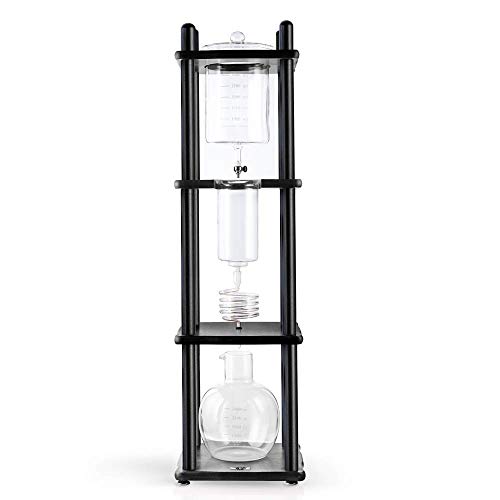
Everything about the 25 cup Yama is scaled up. The tower stands well over three feet tall, holds enough water and coffee for about 100 ounces of finished brew, and turns cold drip into a centrepiece for a party, a studio, or a small cafe counter. The layout follows the same proven pattern as its smaller sibling, with an upper reservoir, a central coffee chamber with a permanent ceramic filter, and a large vessel below, all held in a straight black wood frame.
That scale changes how you plan a brew. The coffee dose is generous, the drip needs checking over a longer window, and the finished batch is best thought of as drinks for a crowd or a week of diluted servings stored in the fridge. One large batch is also more efficient than running a small tower repeatedly, and the visual effect of a tall tower slowly filling a big carafe is hard to match. Assemble it where it will brew, on a level counter with room to spare.
Specs
| Spec | Detail |
|---|---|
| Capacity | 25 cups, about 100 ounces |
| Frame | Straight black wood frame |
| Glass | Borosilicate glass chambers |
| Filter | Permanent ceramic filter |
| Drip control | Adjustable valve dripper |
| Style | Large Kyoto style drip tower |
3. Hario Shizuku Slow Drip Brewer SBS-5B

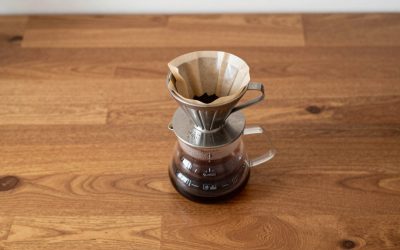
The Hario Shizuku takes the opposite approach to a tower full of valves. Its name refers to a drop of water, and the design is built around a simple promise: add coffee and water, and the brewer regulates the drip itself. Water in the upper bowl flows through a dripper with fine slits, falling onto the grounds at a steady pace with no speed adjustment, and the full batch finishes in about one to two hours, fast for this style.
At 600 millilitres, the Shizuku suits one or two people who want cold drip as a regular habit rather than an event. The stacked glass design is compact, with an upper bowl, a pot below, silicone holders, and a stainless steel strainer, plus paper filters included in the box. Because there is no valve to set, the variables you control are dose, grind, and water, which makes early batches easier to judge. If a result tastes thin or heavy, the grind is the first thing to change. Its small footprint also makes it the easiest tower here to store.
Specs
| Spec | Detail |
|---|---|
| Capacity | 600 millilitres |
| Model | SBS-5B Shizuku |
| Materials | Heatproof glass, silicone, stainless steel strainer |
| Drip control | Self regulating, no adjustment needed |
| Brew time | About 1 to 2 hours |
| Style | Compact slow drip brewer |
4. Nispira Iced Coffee Cold Brew Drip Tower 6-8 Cup Wooden
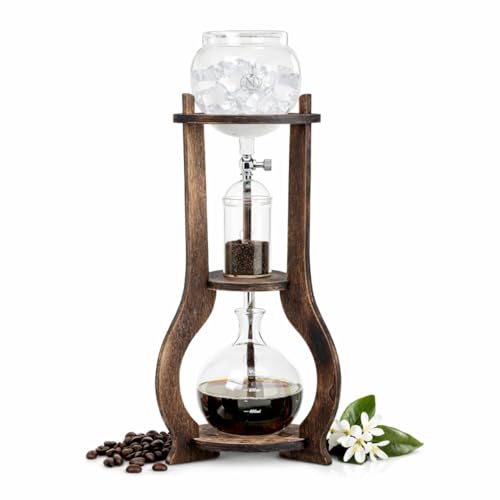
The Nispira wooden drip tower offers the framed tower format with a warm, furniture like look. Borosilicate glass chambers sit in a wood frame, an adjustable valve sets the drip, and finished coffee collects in the carafe below, in a layout familiar to anyone who has watched a cafe tower brew. The batch size of six to eight cups matches daily household use and small gatherings, much like the smaller Yama above.
Where this Nispira earns its place is in giving shoppers a second, distinct take on that classic format, with its own frame proportions and glassware. The same good habits apply: saturate the grounds evenly at the start, aim for a slow steady drip, and recheck the rate once the bed has settled, because drip speed can drift as water pressure in the top chamber falls. A paper disc on the bed, where a recipe calls for one, helps each drop spread instead of drilling a single channel through the coffee. Rinse the glass after each batch and dry the wood frame rather than soaking it.
Specs
| Spec | Detail |
|---|---|
| Capacity | 6-8 cups |
| Frame | Wooden tower frame |
| Glass | Borosilicate glass |
| Filter | Filter for the coffee chamber |
| Drip control | Adjustable valve |
| Style | Kyoto style drip tower |
5. Nispira Luxury Ice Cold Brew Dripper 600 ml Stainless Steel

The second Nispira in this guide swaps the wooden frame for stainless steel and borosilicate glass, giving the drip tower a cleaner, more modern profile. At 600 millilitres it is a personal sized brewer, closer in spirit to the Hario Shizuku than to the big framed towers, but it keeps the adjustable drip format, so you set the pace yourself and can slow a batch down or speed it up at the valve.
That combination suits a desk, a small apartment counter, or a coffee corner where a tall wood tower would look out of place. The steel and glass construction wipes clean easily, the parts stack into a compact column, and the smaller dose means experimenting costs less coffee. Try a finer grind with a slower drip for a richer cup, or a coarser grind with a brisker pace for something lighter, and note the settings that work, because at this size you can run a comparison batch the next day without waste. Start the flow gently, let the bed saturate, then leave the valve alone so results stay repeatable.
Specs
| Spec | Detail |
|---|---|
| Capacity | 600 millilitres |
| Materials | Stainless steel and borosilicate glass |
| Colour | Silver |
| Drip control | Adjustable drip valve |
| Filter | Dripper filter for the coffee chamber |
| Style | Compact drip tower |
FAQ
How long does a cold drip brew usually take?
Most towers here finish in roughly three to eight hours, depending on batch size and drip rate. The Hario Shizuku is the exception, completing its smaller batch in about one to two hours because its dripper is self regulating. A slower drip generally gives a richer extraction, while a faster drip tastes lighter, so let taste, dose, and grind guide your adjustments from batch to batch.
What grind size works best for cold drip coffee makers?
A medium coarse grind is the usual starting point. It lets water pass through the bed steadily without choking the filter or rushing through and under extracting. If a batch tastes thin, grind a little finer or slow the drip. If it tastes heavy and dull, grind a little coarser or speed the drip slightly. Change one variable at a time so you can tell what helped.
How should cold drip coffee be stored and served?
Pour finished coffee into a clean, sealed bottle or jar and keep it in the fridge, where it generally stays fresh for several days. Serve it over ice as it is, or dilute it with cold water or milk, since many batches are brewed concentrated.
How do you clean a glass cold drip tower?
Empty the grounds, rinse every glass chamber with warm water, and wash the valve, dripper, and filter parts so coffee oils do not build up and turn stale. Cleaning straight after a batch is far easier than removing dried coffee later.
Final verdict
Choose the Yama 6-8 cup tower for the classic framed experience at household scale, or its 25 cup sibling when you brew for crowds and have room for a centrepiece. Pick the Hario Shizuku for the simplest route, with a self regulating drip and a fast, compact batch. The wooden Nispira suits the traditional ritual in a warm wood frame, while the stainless Nispira fits smaller, modern spaces with adjustable control. Whichever you choose, steady drip, even saturation, and clean glassware matter more than any single feature.
Product and ASIN Reference
| Product | ASIN |
|---|---|
| Yama Glass 6-8 Cup Cold Drip Maker Straight Black Wood Frame | B004EBUZ1A |
| Yama Glass 25 Cup Cold Drip Maker Straight Black Wood Frame | B004EBUZ2E |
| Hario Shizuku Slow Drip Brewer SBS-5B | B01HYUE8VU |
| Nispira Iced Coffee Cold Brew Drip Tower 6-8 Cup Wooden | B00N4OXD7G |
| Nispira Luxury Ice Cold Brew Dripper 600 ml Stainless Steel | B00BN27Z7U |
More from Amazon
Programs that pair well with the guide above. Offers and eligibility are set by Amazon and may change.
Set up recurring deliveries of everyday items on eligible products. Terms and savings are set by Amazon.
Explore Subscribe & SaveCollect the home and kitchen items you want in one registry that guests can shop from.
Create a wedding registryFree shipping on eligible items, Prime Video and more. Eligible new members can start with a free trial.
Start a Prime free trialAudiobooks and podcasts to listen to on the go. Eligible new members can start with a free trial.
Try Audible freeAs an Amazon Associate we earn from qualifying purchases.

Write Your Review
No reviews yet. Be the first to share your experience!