

Key takeaways
- A commercial grinder, ideally two: one for espresso and one for decaf or a second blend.
- Water filtration or softening, sized for your daily volume.
- Electrical work and a dedicated circuit, plus plumbing with a drain.
- Knock box, tamping station, milk pitchers, thermometers and cleaning supplies.
- A service contract or at least a relationship with a local technician.
- Daily and weekly cleaning chemicals for backflushing group heads.
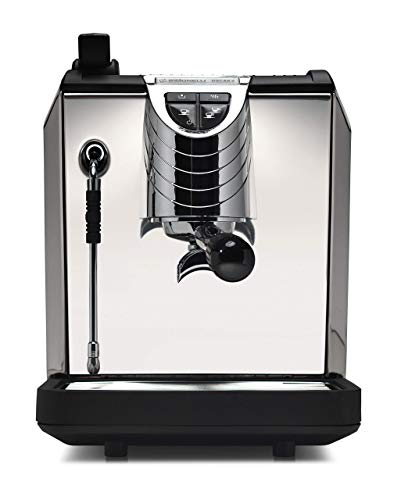
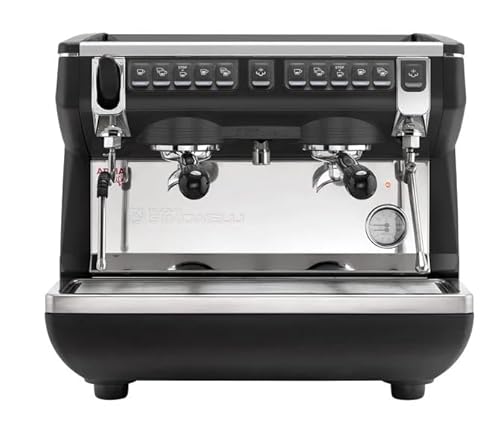
For most new coffee shops, the best commercial espresso machine is a two-group heat exchanger such as the Nuova Simonelli Appia Life, which handles a steady daytime rush at a sensible running cost. Shops that serve specialty coffee, change recipes often or expect very long queues should look at a dual-boiler or multi-boiler machine such as the La Marzocco Linea Classic S, Linea PB or Synesso S200. This guide compares seven machines by boiler design, group count and electrical demand, then shows how to size a machine to your actual drink volume.
Our top picks


As an Amazon Associate we earn from qualifying purchases at no extra cost to you.
Quick Comparison of the Seven Picks
| Machine | Best for | Groups | Boiler design | Power requirement | Price tier |
|---|---|---|---|---|---|
| Nuova Simonelli Appia Life | Best overall for new shops | 2 (3-group available) | Heat exchanger, volumetric dosing | Dedicated 220-240 V circuit | Mid-range commercial |
| Rancilio Classe 5 USB | Best for restaurants and mixed staff | 2 (3-group available) | Heat exchanger, volumetric dosing | 220-240 V, about 4.3 kW class | Mid-range commercial |
| La Marzocco Linea Classic S | Best for reliability | 2 (3-group available) | Dual boiler with saturated groups | 208-240 V single phase, about 30 A | Premium |
| La Marzocco Linea PB | Best for recipe control | 2 (3-group available) | Dual boiler, digital display, shot timers | 208-240 V single phase, about 30 A | Premium |
| Synesso S200 | Best for specialty bars | 2 (3-group available) | Independent brew tanks plus steam boiler | 220 V single phase, up to about 28 A | Premium |
| Slayer Steam EP | Best for flavour-forward menus | 2 | Independent brew tanks, programmable pre-wet | 200-260 V, roughly 4.7-5.6 kW | Top premium |
| La Spaziale S2 Spazio | Best for limited electrical supply | 2 | Single boiler, roughly 5 L | 110 V or 220 V versions | Mid-range commercial |
Boiler and electrical figures follow distributor and manufacturer listings; installation requirements differ by region and configuration, so have an electrician confirm the exact circuit before you order.
What a Coffee Shop Needs That a Home Machine Does Not
A commercial machine is defined by recovery, not by shot quality alone. A good home machine can pull an excellent shot, but it cannot pull forty in a row while steaming milk for a queue. Commercial machines solve this with larger boilers, higher wattage, multiple groups and plumbed water supply, so the temperature does not collapse when the tenth latte is ordered.
They also differ in how they are built to be maintained. Parts are modular, group heads and gaskets are replaced as routine service, and technician networks stock the components. When your machine is your revenue stream, local service coverage matters as much as the specification sheet.
Best Overall: Nuova Simonelli Appia Life
The Appia Life is the most common starting point for small and mid-volume cafes. It is a heat exchanger design with volumetric dosing, a compact body and a cool-touch steam wand, and it is sold in two- and three-group versions. Roundups cite it as a dependable workhorse for operations pouring roughly 150 to 300 espresso drinks a day.
The heat exchanger layout means one boiler provides steam while a tube passes brew water through it, so the system recovers quickly and costs less to run than a dual-boiler. The trade-off is less independent control: brew temperature is tied to steam pressure, so it responds to rushes less precisely than a dual-boiler does.
Who it is for: new cafes, kiosks and restaurants that need dependable output and straightforward training.
Pros: volumetric controls, compact footprint, widely serviced, lower running cost than multi-boiler machines.
Cons: less independent temperature control, brewing and steam are coupled, and it offers few programmable features for recipe tuning.
Best for Mixed Staff: Rancilio Classe 5 USB
The Classe 5 is a conventional heat exchanger machine with volumetric dosing, aimed at restaurants and cafes where the people on the machine change from shift to shift. Its layout is familiar to technicians, and its controls are easy to teach. Distributor specifications put the power class at roughly 4.3 kW for the two-group version.
It is a sensible pick when the business serves coffee as part of a wider menu and needs an espresso machine that behaves predictably in untrained hands. Evidence for its long-term reliability is thinner than for the La Marzocco or Nuova Simonelli names in some regions, so dealer support is the deciding factor.
Who it is for: restaurants, hotels and casual cafes with mixed-skill staff.
Pros: volumetric dosing, conventional design, approachable operation.
Cons: heat exchanger limits, service quality depends heavily on the local dealer.
Best for Reliability: La Marzocco Linea Classic S
The Linea Classic S is widely treated as a benchmark for reliability in specialty cafes. It uses a dual-boiler layout, with a dedicated brew boiler and a separate steam boiler, saturated group heads that keep temperature stable, and dual PID control. It is UL and NSF certified, and its half-turn steam valves give baristas fine control over milk texture.
Because brew and steam are independent, a busy bar can steam constantly without affecting extraction. The machine’s simple mechanics and strong parts supply are why many shops keep them for ten years or more.
Who it is for: specialty cafes, roasters’ coffee bars and any shop that values uptime above all.
Pros: dual-boiler stability, saturated groups, durable build, strong technician network.
Cons: premium tier, needs a dedicated high-amperage circuit and plumbing, and takes up counter space.
Best for Recipe Control: La Marzocco Linea PB
The Linea PB builds on the same dual-boiler foundation with a digital display, shot timers, auto-backflush and optional brew-by-weight scales. Those features let a shop standardise recipes across staff, which reduces the variability that happens when five different baristas dial in the same coffee.
It suits businesses where consistent output is a brand promise: multi-site cafes, chains in the making and shops with rotating guest coffees. If your volume is moderate and your staff experienced, the added controls may be more than you need.
Who it is for: shops that want repeatable, trackable shots and lower training burden for recipes.
Pros: digital controls, shot timers, auto-backflush, optional brew-by-weight scales.
Cons: premium tier, more electronics to service, and extra complexity if you only want basic repeatability.
Best for Specialty Bars: Synesso S200
The Synesso S200 uses independent brew tanks for each group alongside a larger steam boiler, which allows each group to be set to its own temperature. A bar can run a light-roast single origin on one group and a darker blend on another without compromise.
The low-profile body is friendly to customer-facing bars where the barista and guest talk across the machine, and the ambidextrous steam actuation helps ergonomics. The cost of this flexibility is the premium tier and the need for local Synesso service support, since parts availability depends on the regional dealer.
Who it is for: high-end specialty bars with trained baristas and menus that rotate frequently.
Pros: per-group temperature control, ergonomic low body, strong thermal stability.
Cons: premium tier, service depends on a regional dealer, and it needs a trained team to use fully.
Best for Flavour-Forward Menus: Slayer Steam EP
The Slayer Steam EP uses independent brew tanks with a programmable pre-wet system, volumetric dosing and a gravity-drainage design. The pre-wet stage lets a barista soften the puck before full pressure, which can reduce channeling on light roasts and make sweetness and acidity more forgiving.
The machine is heavy, with a filled weight cited around 220 lb, and demands a robust counter. It draws roughly 4.7 to 5.6 kW and typically needs a NEMA 6-50 receptacle. It is aimed at premium specialty operations producing 150 or more drinks per hour at peak.
Who it is for: flagship cafes where flavour clarity is the identity of the brand.
Pros: programmable pre-wet, volumetric dosing, distinctive workflow.
Cons: very high capital cost, heavy, complex installation, and not a fit for casual cafes.
Best for Limited Electrical Supply: La Spaziale S2 Spazio
The S2 Spazio is a single-boiler design with a boiler of roughly 5 litres, offered in 110 V and 220 V versions. The 110 V option is rare in commercial machines, which makes it valuable for kiosks, food trucks, small retail corners and leased spaces where upgrading the electrical service is not practical.
The trade-off is power. At the lower voltage, steam recovery during concentrated rushes is limited, and the proprietary 53 mm portafilter narrows accessory choices. It is best suited to modest volumes and shops that value an easy install over maximum throughput.
Who it is for: small kiosks, mobile carts and leased spaces with limited power.
Pros: 110 V option, compact, lower electrical burden.
Cons: limited steam recovery in rushes, proprietary 53 mm basket size, not suited to high volume.
How to Size a Machine: A Worked Example
Start with your busiest hour, not your daily average. Suppose you expect 220 drinks on a normal day, and 20 percent of them arrive in the 8 a.m. hour. That is 44 drinks in 60 minutes. If 70 percent of those drinks contain milk, you need about 31 steamed pitchers and 44 shots, often more than 44 when drinks use doubles.
A skilled barista can complete a milk drink in roughly 90 seconds from grind to hand-off. One barista on one group therefore makes about 40 drinks per hour. With two groups, two baristas could double that throughput if the grinder, steam wand and workflow keep pace. The result is a rule of thumb: plan one group for every 30 to 40 peak-hour drinks, and add a margin of 25 percent for growth.
In our example, 44 drinks per hour with a 25 percent margin is 55, which points to a two-group machine and two baristas. A three-group machine only makes sense when peak demand passes about 80 to 100 drinks per hour or when you intend to run high-ticket specialty menus with slower prep.
Electricity and Running Cost Example
A two-group machine with a 4.6 kW element does not draw full power all day. Heat-up draws the most, then the elements cycle to maintain temperature. If the machine averages about 1.2 kW over a 12-hour day, that is 14.4 kWh. Across 30 days that is about 432 kWh a month; multiply it by your local rate per kWh to see the monthly electricity bill. Switching the machine off between service periods and using a timer for pre-heat reduces that figure.
Water adds cost in another way. Poor water scales the boiler and group heads, so a commercial filtration system is not optional. Plan for filter cartridges, a softener or reverse osmosis system with remineralisation, and regular descaling schedules. These ongoing items often cost more across five years than the electricity.
Decision Matrix by Situation
| Your situation | Choose | Reason |
|---|---|---|
| New cafe, 100-250 drinks a day | Nuova Simonelli Appia Life | Volumetric, affordable, widely serviced |
| Restaurant with rotating staff | Rancilio Classe 5 USB | Simple, conventional operation |
| Specialty cafe, long-term reliability | La Marzocco Linea Classic S | Dual boiler, durable |
| Multi-site standard recipes | La Marzocco Linea PB | Digital controls, shot timers |
| Rotating single origins | Synesso S200 | Per-group temperature |
| Flavour-led flagship | Slayer Steam EP | Programmable pre-wet |
| Kiosk with 110 V supply | La Spaziale S2 Spazio | 110 V version available |
Heat Exchanger Versus Dual Boiler Versus Multi-Boiler
A heat exchanger machine has one large steam boiler. Brew water passes through a tube in that boiler on its way to the group, and a small amount of cooling water flush is sometimes needed to avoid overheated first shots. It is simple, strong at steaming and cost-effective.
A dual boiler gives brew water its own boiler with its own temperature setting, so extraction stays stable no matter how much steam you draw. A multi-boiler design, such as the Synesso, goes further by giving each group its own small boiler. Each step up adds control and cost, and also adds parts to service.
The right choice depends on the menu. A café that sells mostly milk drinks with a consistent house blend gets very little extra from a multi-boiler. A shop that serves black espresso from rotating coffees gets much more.
What Else You Must Budget For
- A commercial grinder, ideally two: one for espresso and one for decaf or a second blend.
- Water filtration or softening, sized for your daily volume.
- Electrical work and a dedicated circuit, plus plumbing with a drain.
- Knock box, tamping station, milk pitchers, thermometers and cleaning supplies.
- A service contract or at least a relationship with a local technician.
- Daily and weekly cleaning chemicals for backflushing group heads.
The machine sticker price is only part of the cost. Over five years, installation, filtration, maintenance and repairs can add a significant share to the purchase.
Ownership Realities and Daily Maintenance
Commercial machines reward routine. Backflush each group at close with a detergent made for espresso machines, soak portafilters and baskets in cleaning solution, and wipe steam wands immediately after use so milk does not bake on. Replace group gaskets and shower screens on the schedule your technician recommends, typically every six to twelve months in a busy shop.
Test your water hardness regularly and change filters on time. Scale is the leading cause of premature boiler and valve failure. Keep a log of cleaning, filter changes and service visits; it makes warranty claims easier and helps new staff follow the routine.
Finally, train every barista on opening and closing procedures. A pressure gauge that reads high, a group that drips or a steam wand that loses power are warning signs that should be reported early, not discovered during a rush.
Layout, Workflow and Counter Planning
Before you pick a machine, draw the bar. A two-group machine is typically between 70 and 85 cm wide, and it needs clearance above for a tall pitcher and to the side for the grinder and knock box. Keep the grinder within one arm’s reach of the group heads, put the milk fridge under the counter on the steam-wand side, and leave a clean path for the barista to hand drinks to the customer without crossing another worker.
Height matters for specialty bars. Low-profile machines such as the Synesso let a customer see the barista, while taller machines can block sightlines. If your concept depends on conversation across the counter, choose a machine that fits the sightline you want.
Plumbing is the other constraint. A plumbed machine needs a water inlet with a filter and a drain close enough for the drip tray and group wastewater. If you are leasing a space, ask the landlord about drain location before you commit to a layout. Moving a drain after construction costs far more than choosing a machine that fits the existing one.
Questions to Ask a Dealer Before You Buy
- How quickly can a technician reach my location after a breakdown, and is a loaner machine available?
- Which wear parts do you keep in stock, and what is the typical lead time for boilers and pumps?
- Does the warranty cover labour as well as parts, and what maintenance does it require?
- Can you provide a startup visit that sets pressures, dosing and temperatures for my water?
- Do you offer barista training for the controls and cleaning routine?
A dealer who answers these clearly is worth more than a small difference in the machine’s purchase tier. When two machines are close in quality, choose the one with the better local support.
Frequently Asked Questions
How many groups does a small coffee shop need?
Most small shops need two groups. One group can produce roughly 30 to 40 milk drinks an hour with a skilled barista, so a two-group machine covers a peak of 55 to 70 drinks with room for growth. A third group helps only when peak demand regularly exceeds that.
Is a heat exchanger or dual boiler better for a coffee shop?
A heat exchanger is simpler and lower in cost and suits milk-heavy menus with one blend. A dual boiler offers more stable extraction and suits specialty shops that dial in often. Both are used in successful cafes, so base the choice on menu, staff skill and service availability.
Do commercial espresso machines need special electrical work?
Almost always. Many two-group machines need a dedicated 208-240 V circuit at around 30 A, and some need a specific receptacle type. A licensed electrician should confirm the requirement for your exact model and location before you order.
Should I buy new or used?
New machines come with a warranty and current parts support. Used machines can be sound if they come from a reputable refurbisher with a service history, but rebuilt boilers and worn groups can add cost. Ask for the maintenance record and confirm that replacement parts are still available.
How long does a commercial espresso machine last?
With good water treatment and regular service, well-built commercial machines commonly run for a decade or more. Wear parts such as gaskets, valves and pumps are replaced along the way. The main enemy is scale, followed by skipped maintenance.
Can I run a commercial machine on a standard household outlet?
Typically no. Most commercial machines need higher voltage or amperage than a standard outlet provides. A few models, such as the La Spaziale S2 Spazio in its 110 V version, are designed for limited electrical supply, but power still limits steam recovery.


Write Your Review
No reviews yet. Be the first to share your experience!