

Key takeaways
- Looking for the best glass percolator coffee pots? Compare six stovetop and electric picks by size, glass type, filters and features.
For most households, the JUKOOE 10-cup electric glass percolator is the most balanced pick in this group: borosilicate glass, a reusable stainless steel filter and a 600W heater that is built for quick brewing. Anyone who wants to brew on a burner instead of a wall outlet should look at the NONNA 2.0 stovetop model. A glass percolator cycles hot water up a center tube and over the grounds again and again, and the clear body lets you watch that cycle, which is the whole appeal. Below are six listed options, how they differ, and what to confirm before you buy.
Quick List
- JUKOOE 10-Cup – best for a balanced everyday electric glass percolator with a reusable filter
- NONNA 2.0 – best for stovetop brewing and a retro look
- Yeeke 6-Cup – best for one or two drinkers who want selectable brew modes
- ADIVO 11-Cup – best for people who care about a plastic-free brewing path
- FUNLAVIE 12-Cup – best for larger batches with strength settings and delayed start
- Generic 8-Cup Glass Percolator – best for a plain, no-frills 8-cup glass pot (confirm type on the listing)
Which One Is Right for You?
| If you… | Choose |
|---|---|
| want one electric pot that suits a small family and a typical morning routine | JUKOOE 10-Cup |
| brew on a stove, camp kitchen or burner and like a vintage look | NONNA 2.0 |
| make coffee for yourself and one guest | Yeeke 6-Cup |
| want a larger electric pot and care about limiting plastic around the brew | ADIVO 11-Cup |
| host brunch or need a morning timer | FUNLAVIE 12-Cup |
| just want a simple 8-cup glass pot and are willing to read the listing closely | Generic 8-Cup Glass Percolator |
Start with how you heat: stovetop pots and electric pots are different appliances with different safety rules. Then pick a capacity close to what you actually pour, because a percolator that is barely filled tends to brew poorly. If you are undecided, the 10-cup electric model is the easiest default.
All 6 Picks in Detail
1. NONNA 2.0 – Best for Stovetop Brewing and a Retro Look
As an Amazon Associate we earn from qualifying purchases at no extra cost to you.
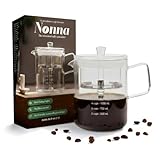
The NONNA 2.0 is the only clearly stovetop-oriented pot in this group. The listing calls it a borosilicate glass and stainless steel retro percolator and mentions a BPA-free build, which makes it the pick for anyone who wants the classic percolator ritual without plugging anything in. Stovetop percolators put you in charge of heat, so you set the pace of the perk and decide when to pull it off the burner. That control is also the risk: a pot left on a flame will over-extract quickly and turn bitter.
Stovetop percolators suit people who already own a gas or electric range, enjoy an involved brewing routine, or want a backup pot that does not depend on a countertop appliance. They also make sense for cabins and campers with an approved heat source. If you have never used one, plan on a few batches to find your timing: start by watching for the first bubbles in the glass knob, then count from there and adjust by a minute at a time.
- Type: stovetop percolator
- Materials: borosilicate glass with stainless steel parts
- Capacity: confirm on the listing
- Heat sources: confirm which stove types the manufacturer approves, including any diffuser requirement
- Style: retro design, often bought as a coffee gift
Pros:
- Works without an outlet when you have a burner
- Clear walls let you judge the color of the brew
Cons:
- No automatic shut-off, so you must watch it
- Heat-source compatibility needs checking before first use
Next to the JUKOOE, it offers more control and less convenience.
2. FUNLAVIE 12-Cup – Best for Larger Batches with Strength Settings

The FUNLAVIE is the feature-rich option. Its listing mentions a 12-cup capacity, three brew strength settings, a 24-hour delay brew and one-touch brewing, with a BPA-free build. A delay timer means you can set it up the night before, and strength settings are handy when different people in the house want different cups. The listing text visible here does not state the carafe material, so confirm that it is glass before buying if a glass pot is your reason for shopping this category.
If you often serve eight or more mugs, the extra capacity is the main reason to choose this model. Check the footprint and the cord length against your counter and outlet before you order, since a 12-cup glass pot is tall. Also look for the keep-warm behavior in the manual, because holding a full pot hot for a long stretch can make percolator coffee taste stale and harsh.
- Capacity: 12 cups as listed
- Strength settings: three
- Delay brew: up to 24 hours as listed
- Operation: one-touch
- Carafe material: confirm on the listing
Pros:
- Best fit for hosting or busy mornings
- Timer and strength options add flexibility
Cons:
- Bigger footprint on the counter
- Glass status not clear from the title alone
It is the programmable counterpart to the ADIVO.
3. Yeeke 6-Cup – Best for One or Two Drinkers with Brew Modes

Six cups is a sensible size when only one or two people drink coffee. The Yeeke listing pairs that capacity with three custom brew modes, a borosilicate glass carafe and an auto keep-warm function. The modes matter because percolators have a reputation for strong, sometimes harsh coffee, and a selector gives you a way to dial that back. Smaller batches also mean the pot is used closer to its intended fill level, which is where percolators behave best.
Think of this as the kitchen-counter pot for a couple, a home office or a dorm. The three modes are worth reading about in the manual before you buy, because manufacturers often vary brew time or heating pattern between modes rather than changing the actual strength. Even so, a selector is a useful way to learn how your grind and dose behave in this style of brewer, and the smaller volume keeps leftovers from sitting on the warming plate.
- Capacity: 6 cups as listed
- Carafe: borosilicate glass
- Brew modes: three custom modes as listed; confirm what each one changes
- Keep warm: automatic, as listed
- Type: electric
Pros:
- Compact for small kitchens
- Brew modes give some strength control
Cons:
- Too small for guests or families
- Long keep-warm periods can dull the flavor of the coffee
It is the smaller sibling of the JUKOOE, trading capacity for mode selection.
4. JUKOOE 10-Cup – Best for a Balanced Everyday Electric Pot

The JUKOOE is the one to start with if you want an electric percolator and have no strong reason to go bigger or smaller. The listing describes a 10-cup borosilicate glass coffee maker with a reusable stainless steel filter and a 600W “fast brew” heater. That combination means no paper filters to buy and a body that can see the percolating action through the glass. Ten cups on a coffee-maker label is a small-family size, which suits two to four people at breakfast.
Who should look elsewhere? Anyone who wants to program a timer or pour a very large pot for a crowd will find the 10-cup size limiting. Cleaning is also part of the decision. Glass and a stainless filter rinse easily, but you still need to take apart the stem and basket regularly so oils do not build up and turn the coffee flat. Treat the listing’s “fast brew” language as a claim to check against the manual rather than a promised brew time.
- Capacity: 10 cups as listed (labeled cups are commonly 5 to 6 fluid ounces)
- Carafe: borosilicate glass
- Filter: reusable stainless steel
- Power: 600W as listed
- Extra features: confirm automatic keep-warm and shut-off details on the listing
Pros:
- Reusable filter means no paper to restock
- Mid-size capacity fits most households
Cons:
- Electric glass pots need careful handling and a stable counter spot
- Features beyond the title vary, so read the full listing
Compared with the FUNLAVIE 12-cup, it gives up a little capacity and the delayed start but keeps a simpler, more compact design.
5. ADIVO 11-Cup – Best for a Plastic-Free Brewing Path

The ADIVO leans on a specific promise: its listing advertises plastic-free brewing, an integrated knob and an 11-cup capacity. Anyone who is wary of hot water touching plastic will like that framing, but it is worth confirming exactly which components the claim covers, since lids, handles and the base often still use plastic that never touches the coffee. The 11-cup size sits between the JUKOOE and FUNLAVIE and works for a household that regularly fills a few mugs.
This pot also fits people who simply find knobs easier than menus. There is little to learn, which matters in a household where several people make the coffee. On the other hand, if you rely on a delayed start to have coffee ready at sunrise, you will want the FUNLAVIE instead, because nothing in the ADIVO listing suggests a timer.
- Capacity: 11 cups as listed
- Type: electric glass percolator
- Brew path: advertised as plastic-free; confirm the details on the listing
- Control: integrated knob rather than a digital panel
- Visibility: the listing highlights seeing the brew in action
Pros:
- Simple knob control is easy to learn
- Plastic-free brew path appeals to cautious buyers
Cons:
- No programmable features are listed
- Odd capacity makes batch math less tidy
Compared with the FUNLAVIE, it is simpler and more focused on materials than on programming.
6. Generic 8-Cup Glass Percolator – Best for a Plain 8-Cup Glass Pot
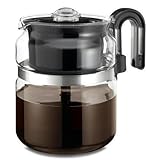
The final listing is titled only “Percolator 8 Cup Glass,” with no brand and almost no detail. That makes it hard to recommend with confidence, so it sits last. It may suit a shopper who wants a straightforward 8-cup glass percolator and is happy to read the product page before committing. The big unknown is whether it is a stovetop or an electric unit, and what the lid, basket and stem are made from.
A practical way to use this entry: compare its product page against the NONNA 2.0 and the JUKOOE. If it shows a clear manufacturer name, a stovetop or electric statement, a material list and a care manual, it may be a fair low-key option. If it does not, skip it. A glass percolator that comes with no usage guidance is hard to use safely, especially on a burner.
- Capacity: 8 cups as titled
- Material: glass, as titled; confirm whether it is borosilicate
- Type: confirm stovetop or electric on the listing
- Filter: confirm what comes with it
- Safety information: look for the manufacturer’s heat-source guidance
Pros:
- Straightforward size for small groups
- Simple concept with few moving parts
Cons:
- Sparse listing information
- Unknown brand support and warranty terms
Next to the NONNA 2.0, which states its materials and style, it asks the buyer to do more homework.
Specs Compared
| Model | Type | Capacity | Glass | Filter or extras |
|---|---|---|---|---|
| JUKOOE 10-Cup | Electric | 10 cups | Borosilicate | Reusable stainless steel filter, 600W |
| NONNA 2.0 | Stovetop | confirm on listing | Borosilicate with stainless steel | Retro design, BPA-free |
| Yeeke 6-Cup | Electric | 6 cups | Borosilicate carafe | Three brew modes, auto keep warm |
| ADIVO 11-Cup | Electric | 11 cups | Glass (confirm grade) | Integrated knob, plastic-free brewing claim |
| FUNLAVIE 12-Cup | Electric | 12 cups | confirm on listing | Three strengths, 24-hour delay, one-touch |
| Generic 8-Cup | confirm on listing | 8 cups | Glass (confirm grade) | confirm on listing |
How We Chose These
This list is built from research, not bench work. We looked at listing titles and specification fields for each product, compared stated capacity, heat source, glass material and filter type, and checked general manufacturer guidance on how percolators work and how glass cookware should be handled. Products whose titles stated clear materials and features ranked higher than listings with little detail. Where a detail was missing, we say so and tell you to confirm it on the product page rather than guess.
What to Look For
Stovetop or Electric
This is the first decision. A stovetop percolator sits directly on a burner, so you manage heat and timing. Many stovetop guides suggest roughly 7 to 10 minutes of perking once it starts, but follow your manual because pot shape and burner strength change the answer. An electric percolator has its own heater and usually an automatic keep-warm function. It is easier to live with and safer to leave unattended for a moment, but it still contains a hot element and should sit on a dry, stable, heat-resistant surface.
Glass Type and Handling
Borosilicate glass resists thermal shock better than ordinary glass, which is why it is used for laboratory glassware and stovetop pots. It is not unbreakable. Do not heat an empty pot, do not move a hot carafe to a cold or wet surface, and do not use it if it has chips or cracks. If a listing does not name the glass, treat that as a gap to close before purchase. For stovetop use, ask which heat sources the maker approves. Some manufacturers require a diffuser or forbid certain burner types, and that guidance belongs in the manual.
Capacity and the “Cup” Problem
A cup on a coffee maker label is commonly about 5 to 6 fluid ounces, not the 8 ounces of a measuring cup. A 10-cup percolator therefore yields roughly 50 to 60 ounces, which is about four large mugs. Percolators also have a minimum fill: below the marked minimum the pump tube may not circulate properly. As a rule of thumb, pick a size where your usual batch fills at least about two-thirds of the pot.
Grind, Dose and Flavor
Because percolators recirculate hot water through the grounds, they extract aggressively. Use a coarse grind, similar to what you would use for a French press, so fine particles do not slip through the basket and the coffee does not over-extract. A common starting dose is about one tablespoon of grounds per 6 ounces of water, adjusted to taste. A worked example: for a 6-cup batch of roughly 36 ounces, begin with about 6 tablespoons and change by one tablespoon at a time. Stop the brew once the color looks right instead of letting it perk on indefinitely.
Safety Basics for Glass and Electric Pots
Inspect the carafe before every use for chips, hairline cracks and loose handles. Fill the pot with water before switching on an electric unit and never run it dry. Keep the cord out of walkways and away from the hot surfaces, and unplug it before cleaning. For stovetop pots, use the burner size the maker recommends and keep the pot centered. If the glass makes ticking sounds, let it cool naturally and do not rinse it with cold water while hot. Replace any pot that has been dropped, even if it looks fine.
Reading a Listing Critically
Percolator listings are often written in a hurry, and the same words can mean different things. “Glass” may refer to the carafe only, while the lid, stem and basket are metal or plastic. “Fast brew” and wattage figures describe the heater, not the finished taste. “Plastic-free” may apply only to the part touching the coffee. Before buying, look for four items: the glass grade, the heat source, the true capacity in ounces or milliliters, and what is included in the box. If a listing leaves any of those blank, ask the seller or choose a model that answers them.
Cleaning and Parts
Glass pots show residue, which is useful: you can see when oils build up. Look for removable stems and baskets, a reusable filter or compatible paper, and dishwasher guidance for the carafe. Electric bases should never be submerged. Descaling matters too: hard water leaves mineral buildup on the heating element and the inside of the stem, which slows brewing and dulls flavor. A periodic rinse with a mix of water and white vinegar, followed by two plain-water cycles, is a common maintenance habit, but follow your own manual first.
Questions
Is a glass percolator better than a metal one?
Not necessarily. Glass lets you watch the brew and avoids metal taste concerns, but it is more fragile. Stainless models are tougher for camping and daily abuse.
Why does percolator coffee taste strong or bitter?
The same water passes over the grounds many times, so extraction can run high. A coarser grind, a shorter brew and a correct dose usually tame the bitterness.
Can I use paper filters in a percolator?
Some models accept paper discs in the basket, while others rely on a metal filter alone. Check the manual for your model, and keep fine grounds out of the water either way.
Can any glass percolator go on a stove?
No. Only pots described as stovetop-safe by the manufacturer should be put over a burner, and the maker may limit which burner types are allowed. Electric percolators must never be placed on a burner.
How full should I fill it?
Fill to at least the minimum line and never past the maximum. Underfilling can stop circulation and overfilling can spill from the spout.
Is percolator coffee the same as drip coffee?
No. A drip machine passes water over the grounds once, while a percolator circulates it repeatedly. The result is usually a bolder, hotter cup with less delicate flavor, which many drinkers prefer for a classic diner-style taste.
How long does a glass percolator last?
That depends on the build and how it is handled. Avoid thermal shock, replace worn gaskets and check cords on electric units. Confirm warranty terms on the listing.
Update History
- October 21, 2026 – Initial publication; product set drawn from current catalog listings.
- Check the product page for current specifications and availability before buying.
Sources
- Retailer listing titles and specification fields for each listed product
- General manufacturer guidance on percolator operation and glass cookware care
- Coffee-maker labeling conventions for cup sizes


Write Your Review
No reviews yet. Be the first to share your experience!