

Key takeaways
- Compare five manual espresso makers on basket size, dose, gauge and heat control, from the Flair NEO Flex to the Flair 58 Plus 2 and the ROK EspressoGC.
Quick answer: The best manual espresso maker for most people is the Flair Classic in its updated form, because it pairs the line’s standard brew head with two portafilters, one flow-control basket for pre-ground coffee and one bottomless basket for a proper grinder, plus an integrated pressure gauge, so it teaches the skill while forgiving the learning curve. The Flair NEO Flex is the budget entry, the same brew head in a lightweight polymer frame with the gauge still included. The Wacaco Picopresso is the travel pick, a 350 gram hand pump with a 52 millimetre basket and a naked portafilter that fits in a jacket pocket. The ROK EspressoGC is the countertop ritual pick, a twin-arm lever press with the longest warranty in this group. The Flair 58 Plus 2 is the flagship, the only manual maker here with a heated brew head and a full commercial 58 millimetre portafilter.
As an Amazon Associate, we earn from qualifying purchases.
Table of Contents
- Why a Manual Maker Is a Specification Sheet With a Lever
- How to Choose a Manual Espresso Maker
- Quick Comparison
- 1. Flair Classic (Updated)
- 2. Flair NEO Flex
- 3. Wacaco Picopresso
- 4. ROK EspressoGC
- 5. Flair 58 Plus 2
- Safety, Identity and Care Checks
- Frequently Asked Questions
- Conclusion
Why a Manual Maker Is a Specification Sheet With a Lever
A manual espresso maker looks like the least specified machine in the coffee aisle, a lever, a cylinder and a basket with no pump, no boiler and, on four of these five, no plug at all. It is actually the most honestly specified one, because everything an electric machine hides behind a pump curve and a thermostat, the manual maker prints as a dimension or leaves visibly in the buyer’s hands. There is no pump to rate, so the pressure question becomes a question about the basket’s resistance and the operator’s arm, and the makers who take the category seriously publish the working window rather than a maximum. There is no boiler, so the temperature question becomes a question about preheating metal, and only one machine in this roundup heats any part of itself. What is left to compare is exactly what the listings publish: basket diameter, dose range, water capacity, whether a gauge turns pressure into a readable specification, and what the frame is made of and guaranteed for. That is why this roundup reads manual makers the way this site reads machines, on their published specifications first.
Scope needs stating before the picks, because the hand-powered shelf wears one name across three different products. Every pick here is a true manual espresso maker, a machine that extracts genuine espresso through a coffee puck at espresso pressure generated by the operator, either by a direct lever or by a hand pump. Four are countertop levers and one, the Picopresso, is a palm-sized pump that brews through a naked portafilter. None of the five heats its own water: a kettle is part of every setup, and none steams milk, a boundary the questions section takes up in full. Outside the scope sit the stovetop makers, which brew at far lower pressure and are a different product this site covers separately, and the pod-fed hand pumps, which trade the puck for a capsule and are excluded for the same reason a capsule machine would be. Two boundaries follow from the drop rule this roundup always applies: a maker whose Amazon identifier cannot be confirmed from listing data is dropped rather than guessed, and the checks section records the category’s most famous absence, a lever machine with a devoted following that is simply not sold through an Amazon listing this roundup could pin, and a product with a recall history in this exact category is excluded rather than explained away. The checks section also records the recall search for this category, including the one espresso recall on the books that belongs to an electric product class none of these machines belongs to.
One more framing point, because it shapes the whole comparison. A manual maker is not a cheaper electric machine with the motor missing. It is a different allocation of the same work: the machine’s share shrinks to a frame, a sealed cylinder and a basket, and the drinker’s share grows to cover water temperature, preheating and pressure, the three variables an electric machine manages internally. That is the category’s appeal and its filter. The buyer who wants those variables visible and adjustable, shot by shot, gets more control here than any comparably priced pump machine offers; the buyer who wants the variables handled gets a chore. The specifications below are graded with that split in mind, because on a manual maker the paperwork is not describing what the machine does for you, it is describing what the machine lets you do, and how much of it you must do yourself.
How to Choose a Manual Espresso Maker
Start with the pressure number, and read it the way this category requires, as two different figures wearing one unit. The first figure is a ceiling: the Picopresso’s maker rates its hand pump at a maximum of 18 bar, which describes what the pump mechanism can generate against a fully resistant puck, not what the coffee should extract at. The second figure is a working window: Flair publishes its brewing guidance in the 6 to 9 bar range for its lever machines, the span in which espresso actually extracts, and fits most of its models with a pressure gauge so the operator can hold the shot inside it. A ceiling without a gauge is a hope; a window with a gauge is a specification. Four of the five picks carry a gauge or are built by a maker whose line centres on one, and the two that do not, the Picopresso and the ROK, are honest about it: the Picopresso is a travel tool whose puck resistance is set by grind and dose, and the ROK is a fixed-geometry press whose twin arms deliver a repeatable stroke. Buy the gauge if you intend to learn pressure profiling; accept its absence only where the format, pocket size or countertop ritual, is the point of the purchase.
Next, read the basket, because basket diameter decides both the dose ceiling and the accessory ecosystem the machine joins. The Flair 58 Plus 2 takes a full commercial 58 millimetre portafilter, the same fitting as a cafe machine, so every tamper, basket and distribution tool made for the commercial shelf fits it, and its published dose range runs from 16 to 20 grams. The Picopresso’s 52 millimetre stainless basket holds 18 grams, a full double dose in a proprietary but generously sized format. The ROK’s portafilter sits in the roughly 50 millimetre class with published dose guidance up to about 20 grams. The two smaller Flairs share the line’s standard brew head, a roughly 40 millimetre format with a published dose range of 12 to 18 grams, which is a genuine double at the top of the range and a smaller drink at the bottom. Diameter is not a quality ranking, the small Flair head is the design the line was built on, but it is a commitment: accessories, spare baskets and upgrades exist inside each maker’s own system, and only the 58 millimetre pick escapes that boundary.
Then face the temperature problem, because it is the variable this category manages worst and the listings discuss least. None of the five heats water. Four of the five do not heat anything: the brew cylinder arrives at room temperature, and the operator preheats it with boiling water, sometimes through more than one fill, before the shot water goes in, and the metal still takes its tax from the brew temperature on the way through. The Flair 58 Plus 2 is the exception, with an electric preheat controller in its base offering three settings, published at 85, 90 and 95 degrees Celsius and matched by the maker to dark, medium and light roasts, so the brew head waits at temperature instead of cooling from it. Published thermocouple measurements by an independent long-term reviewer add the honest qualification: even on the flagship, the bottom of the chamber measured several degrees cooler than the top on the standard routine, and light roasts wanted the highest setting and a longer wait. Temperature discipline, a kettle with a readable temperature, a preheat routine, patience, is the operating cost of every pick here; the flagship reduces it and does not abolish it.
Then weigh the format against the counter and the suitcase. The Picopresso weighs 350 grams and measures roughly 71 by 78 by 106 millimetres; it is not a small machine, it is a large pocket tool. The NEO Flex and Classic are countertop frames that break down and pack into cases, the travelling lever format Flair built its name on. The ROK is a piece of countertop furniture, a twin-arm press whose arms sweep wide and rise high as they work, and it should be bought for a permanent station. The Flair 58 Plus 2 is the heaviest pick at 12 pounds, and its raised lever needs roughly 25 inches of vertical clearance by published measurements, which is a specification that decides kitchens: under-cabinet counters can exclude it outright. Portability in this category is a published number, weight and packed size, and it should be checked against the actual counter or bag before the order, not after.
Finally, read the warranty and the brew path, because on a machine with no pump and no electronics the guarantee is nearly the whole ownership proposition. The ROK carries the longest cover here, a ten year guarantee on its metal parts. The Flair 58 Plus 2 carries a five year limited warranty on its frame and non-electrical brew head metalwork, with shorter published terms on its preheat electronics and its gauge. The Classic’s published cover runs to three years on the stand and brewing cylinder. The brew path question runs alongside: the 58 Plus 2 and the Picopresso route water through stainless steel, the Classic’s standard piston and portafilter parts include polymer components the maker answers with an optional stainless brew system upgrade, and the ROK’s chamber is the glass-composite design its GC name records. Neither line is a defect; both are printed specifications, and the buyer who cares about either should buy on the printed version.
Quick Comparison
All five picks are hand-powered espresso makers with no pump and no boiler; they split first by format, then by basket size and dose, then by how each one handles pressure feedback and heat.
| Product | Format | Basket and dose | Pressure feedback | Heat handling | Tier |
|---|---|---|---|---|---|
| Flair Classic (Updated) | Countertop direct lever | Standard Flair head, 12 to 18 g | Integrated pressure gauge | Kettle water, manual preheat | Mid-range |
| Flair NEO Flex | Countertop direct lever | Standard Flair head, 12 to 18 g | Pressure gauge included | Kettle water, manual preheat | Budget |
| Wacaco Picopresso | Hand pump, pocket format | 52 mm basket, 18 g | No gauge; pump rated to 18 bar maximum | Kettle water, manual preheat | Mid-range |
| ROK EspressoGC | Twin-arm countertop lever | Roughly 50 mm class, up to about 20 g | No gauge | Kettle water, manual preheat | Mid-range |
| Flair 58 Plus 2 | Countertop direct lever | 58 mm commercial, 16 to 20 g | Integrated pressure gauge | Electric brew head preheat, three settings | Premium |


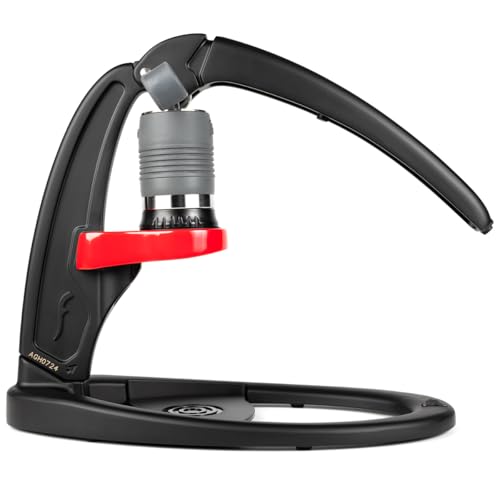
1. Flair Classic (Updated)
The Flair Classic in its updated form is the lead pick because it is the category’s reference machine at its most forgiving: the listing for the pinned identifier describes the current build, updated in 2025, shipping with two portafilters, one for beginner and one for advanced brewers, an integrated pressure gauge and a heat-efficient brew cylinder. The two-portafilter bundle is the specification that matters most in this group. The beginner portafilter carries a flow-control basket, which builds pressure against a restriction of its own and so produces a creditable shot from pre-ground coffee or an imperfect grind; the advanced portafilter is the bottomless build, which shows the extraction as it runs and demands a grinder that can go fine and even. A first-time manual buyer can therefore start on the forgiving basket and graduate to the demanding one without buying a second machine, and the gauge, standard on this build, teaches the pressure window the whole category runs on while they do it.
The case for the Classic is that it is the balanced centre of the manual shelf: a metal-framed countertop lever with the line’s standard brew head, a published dose range of 12 to 18 grams and a yield the maker’s guidance puts at up to about 40 millilitres, which covers the single and the standard double. It packs down for travel in the line’s established format, it has the deepest accessory and spare-parts shelf of any proprietary format here because it is the machine the manual category’s modern revival was built around, and its published warranty cover, three years on the stand and brewing cylinder per the maker’s coverage summaries, is a real term printed against named parts. For the buyer who wants the manual ritual in its considered, mainstream form, with an upgrade path that runs through technique rather than replacement, this is the machine the rest of the roundup is measured against.
The limits are the ones its paperwork states, and they are recorded here at full strength. The first is a listing trap with a specific shape: Flair sells the Classic under more than one Amazon listing, and an older bundle, the Classic with a pressure kit and carrying case first listed years before the update, still circulates beside this one under its own identifier. The table pins the updated listing, the one whose own copy describes the two portafilters and the heat-efficient cylinder; a buyer who wants the older kit’s case and tamper bundle should order that listing by its own identifier and know it is the earlier configuration. The second limit is the brew path: the Classic’s standard piston and portafilter parts include polymer components, and the maker’s answer is an optional stainless steel brew system sold separately, a fact printed plainly in independent coverage of the model. The third is scope: this listing’s own product information names the model as the Classic Solo configuration, and buyers should confirm the box contents on the listing at ordering, because the line’s bundles have changed contents across its revisions. Choose the Classic for the two-basket graduation path, the standard gauge, and the deepest support shelf in the category.
Specs
- Brand: Flair
- Format: Countertop direct lever press; 100 percent human-powered per the maker
- Listing build: Updated Classic; two portafilters included, one for beginner and one for advanced brewers, per the listing copy
- Pressure feedback: Integrated pressure gauge per the listing
- Brew head: Heat-efficient brew cylinder per the listing; the line’s standard head, roughly 40 mm class
- Dose: 12 to 18 g per the maker’s published guidance for this head
- Yield: Up to about 40 ml per the maker’s buyer guidance
- Brew path: Standard piston and portafilter parts include polymer components; a stainless steel brew system is sold separately by the maker
- Water heating: None; kettle required
- Milk steaming: None
- Warranty: 3 years on the stand and brewing cylinder per published coverage of the maker’s terms
- Box contents note: The listing names the configuration Classic Solo; confirm contents on the listing at ordering
- Tier: Mid-range
2. Flair NEO Flex
The Flair NEO Flex is the budget pick and the category’s front door, the machine that puts a gauged lever, two portafilters and the line’s standard brew head at the lowest commitment in this roundup. Its listing specification mirrors the Classic’s where it counts: a 100 percent human-powered direct lever, two portafilters covering the same graduation path, a flow-control basket that forgives pre-ground coffee and a bottomless 2-in-1 basket that rewards a real grinder, and a pressure gauge in the box, a feature this price tier of manual makers usually omits and the reason this pick can teach the same lessons as its sibling. Published coverage of the model adds a pressure relief valve to the design, a small safety and consistency feature the earlier entry Flairs did not carry. The brew head is the same standard head the Classic uses, so the dose range, the technique and the upgrade parts are shared across the two machines; what the lower tier buys down is the frame, not the extraction.
The case for the NEO Flex is that it isolates the one variable a new manual buyer actually needs to test, which is whether they enjoy the ritual at all. The frame is a lightweight polymer build rather than the Classic’s metal stand, and published reviews of the model are consistent about the trade: the press works and the shots are the brew head’s shots, but the lightweight stand feels less permanent on the counter than the metal-framed models, and it asks to be held steady with the free hand in a way the heavier machines do not. For a first machine, a travel machine or a second machine for an office or a cabin, that trade is correctly priced into the tier. The NEO Flex is also the pick most likely to be bought as a gift or a trial, and its forgiving basket is the one that makes that safe: the recipient who owns no grinder can still make espresso on day one.
The limits follow the frame. Buyers who already know they want the ritual daily, on a fixed counter, for years, are buying the Classic’s metal stand sooner or later, and the NEO Flex’s own maker positions it as the entry to that path rather than its end. The second limit is a sibling-listing note: the NEO Flex is also sold in a bundle with a carrying case under a separate listing and a separate identifier, and the table pins the home listing, the one whose title specifies the pressure gauge and two portafilters; a buyer who wants the case in the box should order the case bundle by its own identifier rather than assume it is included here. The third is the shared one: like the Classic, the brew path in standard form is not an all-metal path, and the same optional stainless upgrade applies. Choose the NEO Flex for the gauged, two-basket entry point at the budget tier, and for the lightest countertop frame in the group.
Specs
- Brand: Flair
- Format: Countertop direct lever press; 100 percent human-powered per the maker
- Portafilters: Two included per the listing; flow-control basket and bottomless 2-in-1 basket per published coverage of the model
- Pressure feedback: Pressure gauge included per the listing
- Safety feature: Pressure relief valve per published coverage of the model
- Brew head: The line’s standard head, shared with the Classic; roughly 40 mm class
- Dose: 12 to 18 g per the maker’s published guidance for this head
- Frame: Lightweight polymer build per published coverage of the model
- Water heating: None; kettle required
- Milk steaming: None
- Case note: A bundle with a carrying case is sold under a separate listing; not the pinned listing
- Tier: Budget
3. Wacaco Picopresso
The Wacaco Picopresso is the travel pick and the only hand pump in the roundup, a machine that reduces manual espresso to a cylinder the size of a water bottle’s cap end: 350 grams, roughly 71 by 78 by 106 millimetres, that brews through a naked portafilter with a 52 millimetre stainless steel basket holding a full 18 gram dose. The Amazon product information for the pinned listing is specific about the build: Picopresso model, sold by the maker’s own company storefront, bundled with its protective case. The specification that separates it from the pocket pumps that came before it is the basket: where travel pumps historically used small pressurized baskets that faked crema from pre-ground coffee, the Picopresso’s basket is a genuine non-pressurized filter basket in a near-commercial diameter, and the maker’s own copy states the consequence plainly, that commercial pre-ground coffee will not work well in it and an ultra-fine grind from a real espresso grinder is required. This is a pro-level tool that happens to be small, not a small tool that approximates espresso.
The case for the Picopresso is that it is the only pick whose portability is total. The levers in this roundup travel in cases, in the sense that they can be packed; the Picopresso travels in a pocket, in a camera bag, in the corner of a carry-on, and asks for nothing but hot water and ground coffee at the other end. Its water tank holds 80 millilitres, enough for its full double with headroom, its pump is rated by the maker at a maximum of 18 bar, comfortably above the working window the puck sets, and its brew path is metal, a stainless basket in a metal body, which at this size is a build decision rather than a default. The maker’s published warranty for the model runs to two years. For the traveller, the camper and the office drawer, it is not the compromise pick; it is the only pick in the group designed for the job.
The limits are the format’s physics. There is no pressure gauge, and there is no room for one: pressure is set by grind, dose and pumping rhythm, and the feedback loop that the Flair gauges make visible has to be read from the flow through the naked portafilter instead, which is a real skill and a slower teacher. The pumping itself is hand work at close quarters, a repeated short stroke rather than a lever’s long pull, and back-to-back shots for a group are a slower production than any countertop pick here. Preheat discipline matters more, not less, at this size, because the small metal body is quick to heat and quick to cool. And the sibling trap applies in miniature: Wacaco also sells a bundle pairing the Picopresso with a protective sleeve under a separate identifier, beside this listing’s case bundle, and the table pins the case bundle; the sleeve bundle is a different box and should be ordered by its own identifier if it is the one wanted. Choose the Picopresso for genuine espresso at 350 grams, the 18 gram basket, and the metal build.
Specs
- Brand: Wacaco
- Format: Hand pump; manual operation only, no battery or electricity per the maker
- Basket: 52 mm stainless steel, 18 g capacity per the maker; naked portafilter
- Grind requirement: Ultra-fine grind required; commercial pre-ground coffee will not work well per the maker’s listing copy
- Pressure: Pump rated to a maximum of 18 bar per the maker; no pressure gauge
- Water capacity: 80 ml per the maker
- Weight: 350 g per the maker
- Dimensions: 71 x 78 x 106 mm per the maker
- Bundle: Protective case included in the pinned listing per the listing title; sold by the maker’s company storefront per the listing data
- Warranty: 2 years per the maker
- Tier: Mid-range
4. ROK EspressoGC
The ROK EspressoGC is the countertop ritual pick, the machine in this group that is bought as an object as much as a tool: a twin-arm lever press in polished metal alloy, operated by raising both arms and pressing them down together, with no gauge, no heater and no electricity anywhere in the design. The Amazon product information for the pinned listing names the model directly, EspressoGC, the GC recording the glass-composite brew chamber that replaced the original design’s chamber material in this generation of the press. Its portafilter is stainless steel in the roughly 50 millimetre class, with published dose guidance running up to about 20 grams, and its warranty is the headline specification of the whole roundup: the maker guarantees the machine’s metal parts for ten years, the longest cover on any pick here by a factor of two, printed against a machine with almost nothing in it that can wear out electronically because there are no electronics.
The case for the ROK is permanence and theatre in equal measure. The twin-arm stroke is a different physical experience from a single lever: symmetrical, two-handed, and repeatable in a way that suits a fixed morning station, and the press is built to be left out, a die-cast frame that reads as kitchen equipment from an earlier, heavier era of kitchen equipment. The absence of a gauge, which counts against it as a learning tool, counts for it as a ritual object: the ROK’s published proposition is that grind, dose and a practised stroke are the controls, and its long production run in essentially this form is the market evidence that the proposition has a durable audience. Current published roundups of the model direct buyers to its Explorer Edition bundle as the kitted version, with additional baskets and a second portafilter, which tells a buyer where the line’s value sits: the base machine is the press; the editions are the wardrobe.
The limits are stated as plainly as the strengths. As a teacher, this is the weakest pick in the group: no gauge means no visible pressure window, and a beginner’s feedback is the cup and the stroke alone. Temperature is entirely the operator’s problem, kettle water into a room-temperature chamber with no preheat assistance of any kind, and published reviews of the model consistently name heat management as its demanding side. The editions are also a genuine trap, and the checks section names it in full: the base EspressoGC in the table, the Explorer Edition, the Black PLUS package and the separate Presso Smartshot model, a spring-assisted sibling built around a pressurized basket, are four different purchases wearing one brand, and only the first is the pick here. Finally, the pinned listing is the model’s long-running Amazon listing, and its product information block is correspondingly mature; the model is current in the maker’s line and in current roundups, and the listing’s identity fields, model name, manufacturer and trade numbers, are consistent across the record. Choose the ROK for the ten year metal guarantee, the twin-arm ritual, and a press built to be furniture.
Specs
- Brand: ROK
- Format: Twin-arm countertop lever press; 100 percent manual, no electricity
- Brew chamber: Glass-composite chamber, the GC design, per the maker’s model description
- Portafilter: Stainless steel, roughly 50 mm class; published dose guidance up to about 20 g
- Pressure feedback: No pressure gauge
- Body: Metal alloy frame per the maker
- Water heating: None; kettle required
- Milk steaming: None on the base machine; a manual frother appears in some edition bundles
- Warranty: 10 years on the metal parts per the maker, the longest cover in this group
- Editions note: Explorer Edition, Black PLUS and Presso Smartshot are separate packages and models, not the pinned base listing
- Tier: Mid-range
5. Flair 58 Plus 2
The Flair 58 Plus 2 is the flagship pick and the ceiling of the manual category, the machine that closes the two gaps every other pick leaves open. The first gap is the basket: its portafilter is a full commercial 58 millimetre fitting, so the dose range, published at 16 to 20 grams, is a cafe double, and the entire commercial accessory shelf, precision baskets, tampers, distribution tools, puck screens, fits it without an adapter or a proprietary detour, including the baskets and bottomless portafilters this site has covered as separate roundups. The second gap is heat: the Plus 2 is the only pick with an electric preheat controller, integrated into its base in this generation, offering three settings published at 85, 90 and 95 degrees Celsius and matched by the maker to dark, medium and light roasts, so the brew head holds a chosen temperature instead of borrowing one from the kettle water and cooling through the shot. An integrated pressure gauge is standard, and the published box contents run to three baskets across the flow range, a puck screen and an articulated shot mirror.
The case for the 58 Plus 2 is that it is the manual maker for the drinker who has stopped experimenting with whether they like manual espresso and started optimising it. The workflow it publishes is the commercial workflow, 58 millimetre puck preparation with the same tools a cafe uses, extracted by a lever whose gauge reads in real time, through an all-stainless brew path, on a frame the maker covers for five years on its metalwork. Published specifications put the machine at 12 pounds and roughly 11 by 7.5 by 13.5 inches, a permanent countertop footprint, and the published yield, up to 55 millilitres from a 90 millilitre fill, is the largest in this group. Independent long-term coverage of the model is unusually detailed, and this roundup prints its two findings rather than smoothing them over, in the limits below and the checks section, because they are exactly the kind of published evidence a buyer at this tier is paying to know about.
The limits are real and they are printed at full strength. The first is thermal honesty: published thermocouple measurements of the chamber found a gradient, the bottom of the brew water measuring several degrees below the top on the standard preheat routine, narrowing with the highest setting and a longer wait, so the controller reduces the category’s temperature problem to a manageable size rather than eliminating it. The second is mechanical: the same long-term coverage measured slight frame flex at higher pressures, a behaviour the buyer manages by brewing in the published window rather than leaning on the lever. The third is fit: the raised lever needs roughly 25 inches of vertical clearance by published measurements, which excludes some under-cabinet counters outright, and at 12 pounds with a power cord for the preheat, this is the least portable machine in the group. The fourth is the generation trap, the sharpest on this shelf and named in full in the checks section: the 58 line has been sold in three configurations under near-identical names, and the pinned identifier is the line’s long-running Amazon listing, which the maker has updated across those generations, so the listing’s current title and configuration, not any review of an earlier 58, are what the table pins. Choose the 58 Plus 2 for the commercial basket, the heated brew head, and the most complete specification in the category.
Specs
- Brand: Flair
- Format: Countertop direct lever press; manual extraction, electric preheat only
- Portafilter: 58 mm commercial fitting per the maker
- Dose: 16 to 20 g per the maker
- Water capacity: 90 ml; yield up to 55 ml per the maker
- Preheat: Integrated controller, three settings published at 85, 90 and 95 degrees Celsius, matched to dark, medium and light roasts per the maker
- Pressure feedback: Integrated pressure gauge
- Included per published contents: Three baskets across the flow range, puck screen and articulated shot mirror
- Brew path: All-stainless per the maker
- Weight: 12 lb per published specifications
- Dimensions: 11.0 x 7.5 x 13.5 in per published specifications; raised lever needs roughly 25 in of clearance per published measurements
- Warranty: 5 year limited on the frame and non-electrical metal brew head per the maker; shorter published terms on the preheat electronics and gauge
- Tier: Premium
Safety, Identity and Care Checks
Three identity traps run through this category, and each pick was checked against them. The first is the Flair generation ladder, and it is the sharpest trap on the shelf. Flair has revised its line continuously: the original 58 became the 58 Plus and then the Plus 2 that the maker currently sells, with the preheat controller moving from an accessory to an integrated fitting across those generations, while the Classic was updated in 2025 with the two-portafilter bundle its current listing describes, and the maker’s PRO line changed outright in 2026, when a new 49 millimetre model replaced the discontinued PRO 2 and PRO 3 in the maker’s own store. The Amazon consequence is grafting: the maker’s current models ride on listings that predate them, updated in place, so a listing’s review history and even its older descriptions can belong to an earlier configuration of the same line. That is why this roundup pins identifiers and current listing titles rather than model names alone, and it is also why no PRO-line machine appears in the table: the current model’s Amazon identity could not be separated cleanly from the discontinued models’ listings through the records available, and rather than guess which grafted listing sells which machine, the roundup took its premium lever picks from the two lines whose listings are unambiguous, and flags the gap here so a buyer set on the 49 millimetre model buys it from the maker’s own store or a named retailer instead.
The second trap is the sibling bundle, and every pick touches it. The NEO Flex is sold with and without a carrying case under separate listings; the Classic circulates as the updated two-portafilter listing pinned here and as an older pressure-kit bundle under its own identifier; the Picopresso ships in a case bundle, the pinned listing, and in a sleeve bundle under a different identifier; the ROK’s base machine, Explorer Edition and Black PLUS package are three boxes at three levels of kit, and its Presso Smartshot sibling is a different, spring-assisted model built around a pressurized basket, not an edition of this pick at all. In every case the discipline is the same: the identifier in the table is the product, and siblings are ordered by their own identifiers or not at all.
The third item is an absence, recorded because a buyer researching this category will meet the name within minutes. The Cafelat Robot, a manual lever machine with a devoted following and published specifications that would place it in this roundup’s premium half, is not sold through an Amazon listing this roundup could pin: its distribution runs through the maker’s own channels and specialty retailers, where published checks found it sold out in both trims. Under the drop rule, an unpinnable identifier means exclusion, and the Robot is excluded on that ground alone, with the gap stated here rather than filled with a guessed code. The same rule, applied quietly, removed two further names during research whose Amazon presence could not be confirmed to listing standard.
The recall record for this product area was checked pick by pick, and no recall covers any of the five picks, any of the three makers’ manual lines, or manual espresso makers as a class. One espresso recall does exist on the books and is named here with its scope because it is the record a careful buyer may meet: the 2025 recall of Sensio’s Bella Pro Series and Cooks steam espresso machines, roughly twelve thousand units, covering electric steam-driven machines whose brew boilers could force open a safety valve and expel hot water. That record belongs to a powered product class with a pressurised boiler, a component none of the five machines in this roundup has, and it is printed because it teaches the category’s standing lesson in reverse: the manual makers’ safety profile is structural, since a machine that cannot heat or pressurise water on its own has no boiler failure mode, and its real hazards are the ordinary ones of any kettle-fed device, scalding water, hot preheated metal, and a lever that should never be forced against a choked basket. Care follows from the same structure. Rinse the brew head and basket after use, descale nothing because there is no boiler to scale, keep seals and gaskets on the maker’s replacement schedule since a perished gasket is the one wear failure these machines have, and store the Picopresso dry in its case. None of that changes the purchase; it simply belongs in the same paperwork as the identifier.
Frequently Asked Questions
Can a manual espresso maker really reach espresso pressure?
Yes, and the published figures show how to read the claim. Espresso extracts in a working window that Flair publishes for its lever machines as roughly 6 to 9 bar, and a lever or a hand pump multiplies the operator’s force well past that window, which is why the Flairs carry gauges: the skill is holding the shot inside the window, not reaching it. A headline maximum, such as the Picopresso pump’s 18 bar rating, is the mechanism’s ceiling against a blocked puck, not a brewing target, and a maker that publishes a window and a gauge is giving the buyer the more honest specification of the two.
Do any of these machines steam milk?
No. None of the five has a boiler, a steam wand or any way to heat milk, and the 58 Plus 2’s electric element preheats its brew head only and cannot steam. Milk drinks from a manual setup come from a separate device, a stovetop steamer or a standalone frother, which is a second purchase and a second specification sheet. Buyers whose daily drink is a latte should price that addition into any pick here, and buyers who drink espresso straight are the category’s natural audience.
What else do I need before the first shot?
A kettle and a grinder, in that order of urgency. Every pick brews from kettle water, and a temperature-readable kettle makes the preheat routine repeatable. The grinder is the decisive purchase: the bottomless and non-pressurized baskets in this roundup, the Picopresso’s above all, require an espresso-capable grind, and the makers say so in their own copy. The forgiving exception is the flow-control basket shipped with the NEO Flex and the updated Classic, which is built to produce a creditable shot from pre-ground coffee while the grinder is still on the shopping list.
Why does basket size matter if all five make espresso?
Because the basket decides the dose ceiling and the accessory shelf in one number. The 58 Plus 2’s commercial 58 millimetre fitting takes cafe doses of 16 to 20 grams and accepts the whole commercial ecosystem of precision baskets, tampers and tools. The Picopresso’s 52 millimetre basket holds a full 18 gram dose inside Wacaco’s own system. The smaller Flair head doses 12 to 18 grams inside Flair’s system, which is a genuine double at the top of its range and a smaller drink below it. None of the three is a defect; they are three commitments, and the buyer is choosing which shelf of parts they want to live on.
Conclusion
A manual espresso maker should be bought the way its specifications ask to be read: pressure window before pressure ceiling, basket before brand, heat discipline before everything. The Flair Classic in its updated form is the default, the gauged two-basket machine that teaches the skill on forgiving settings and keeps teaching it on demanding ones. The NEO Flex is the same lesson at the budget tier in a lighter frame, the Picopresso is the genuine article at 350 grams for the road, the ROK EspressoGC is the ten year countertop ritual, and the Flair 58 Plus 2 is the flagship that closes the category’s two open gaps with a commercial basket and a heated brew head. Match the format to the counter or the suitcase, pin the exact listing in the table rather than the model name on the shelf, budget for the kettle and the grinder the listings assume, and the lever becomes the most predictable machine in the kitchen.
More from Amazon
Programs that pair well with the guide above. Offers and eligibility are set by Amazon and may change.
Set up recurring deliveries of everyday items on eligible products. Terms and savings are set by Amazon.
Explore Subscribe & SaveCollect the home and kitchen items you want in one registry that guests can shop from.
Create a wedding registryFree shipping on eligible items, Prime Video and more. Eligible new members can start with a free trial.
Start a Prime free trialAudiobooks and podcasts to listen to on the go. Eligible new members can start with a free trial.
Try Audible freeAs an Amazon Associate we earn from qualifying purchases.





Write Your Review
No reviews yet. Be the first to share your experience!