

The best battery-powered coffee maker is the OutIn Nano if you want a self-heating portable espresso maker, and a hand-pumped Wacaco Nanopresso if you would rather skip the battery and carry hot water yourself. True battery coffee makers are small: they brew one short shot or one cup at a time, so decide whether you need that portability or a larger USB-powered drip brewer. Battery life, shot size and compatible coffee format decide which one fits.
Our top picks



As an Amazon Associate we earn from qualifying purchases at no extra cost to you.
Quick Comparison of the Picks
| Pick | Best for | Power | Output per brew | Coffee format | Approx. weight |
|---|---|---|---|---|---|
| OutIn Nano | Best battery-powered overall | Rechargeable, USB-C | Up to about 50 ml shot | Ground coffee and Nespresso Original capsules | About 670 g (1.5 lb) |
| Wacaco Nanopresso | Best no-battery option | Hand pump, up to 18 bar | About 80 ml reservoir | Ground coffee, optional NS adapter | Light, pocket size |
| Wacaco Minipresso GR | Best budget | Hand pump, up to 8 bar | About 70 ml | Ground coffee | Very light |
| Wacaco Minipresso NS | Best for capsule fans | Hand pump | One capsule shot | Nespresso Original capsules | Very light |
| Wacaco Pixapresso | Best balance of features | Hand pump | Single shot | Ground coffee | Light |
| USB-C rechargeable portable drip/pour-over kettle setups | Larger cup volume | Rechargeable battery | 250-350 ml | Ground coffee with filter | Varies |
Best Overall: OutIn Nano
The OutIn Nano is the main option that heats water and brews from its own rechargeable battery, so you do not need a stove or kettle. Reviewers describe it heating a small amount of room-temperature water to around 198 degrees F in about three minutes, then pushing it through the coffee at up to 20 bar. It charges over USB-C and accepts both ground coffee and Nespresso Original capsules.
The limits are real. Each shot is small, at about 50 ml, and heating drains the battery quickly, with some reviewers reporting around five hot shots per charge. The ground coffee basket benefits from the optional upgraded basket kit for better extraction. It is the pick for car trips, office desks and hikes where you have power banks but no stove.
Best No-Battery Option: Wacaco Nanopresso
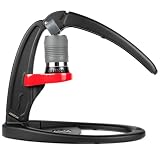
This hand-pumped espresso maker reaches around 18 bar and has an 80 ml water reservoir. Because there is no battery, it never runs out mid-trip, but you must supply hot water from a kettle, thermos or camp stove. It is lighter than the OutIn Nano and often the cheaper of the two in the portable espresso category. Pumping takes effort, and cleaning after each shot is a must.
Best Budget: Wacaco Minipresso GR
The Minipresso GR is the entry-level hand-pump unit. It builds up to around 8 bar and makes a shot closer to strong concentrated coffee than true espresso. It suits occasional use and packs tiny.
Best for Capsules: Wacaco Minipresso NS
The NS version brews Nespresso Original capsules with hand pressure. If you already stock capsules and want zero grinding, this is the simplest option. Be aware that Nespresso Vertuo capsules are a different format and do not fit.
Best Balance: Wacaco Pixapresso
Some testers favor the Pixapresso for balance of features, flavor and price. It sits between the basic Minipresso and the Nanopresso for those who want a cleaner extraction without the highest pressure.
Battery Runtime: A Worked Example
Heating water takes the most energy. Warming 50 g of water by 70 degrees C needs about 4.18 J per gram per degree x 50 g x 70 = 14,630 J, which is roughly 4.1 Wh before losses. A small battery pack in the 7 to 10 Wh range therefore tops out at about one to two shots on paper, and reviewers who report around five shots per charge are describing units with larger cells or lower starting temperatures. The practical rule is to plan on a few shots per charge and carry a 10,000 mAh power bank (about 37 Wh), which can recharge a unit several times on a long day.
| Trip type | Shots per day | Best pick | Extra gear |
|---|---|---|---|
| Day hike | 1-2 | OutIn Nano | Power bank, small cup |
| Weekend camping | 3-4 | Nanopresso plus thermos | Insulated flask of hot water |
| Office desk | 2-3 | OutIn Nano | USB-C charger |
| Travel, hotel room | 1-2 | Minipresso NS | Capsules, hot water from room kettle |
How to Choose
- Need to heat water too? Only the OutIn Nano style self-heats. Everything else needs hot water.
- Coffee format. Ground gives flavor choice; capsules give speed with no grinder.
- Output volume. All portable espresso makers deliver one small shot. For a full mug, use pour-over or an Americano-style top up with hot water.
- Weight and cleaning. The more parts, the more cleaning at camp.
Ownership Realities
Seals and gaskets wear first, so keep spare O-rings if the maker sells them. Rinse after every use, because dried coffee oils clog small channels. Lithium batteries should not be left fully drained for weeks or kept in a hot car. Manufacturers state the battery and brewing specs on their spec sheets; always check them for current numbers, since models are updated.
How to Choose a Portable Coffee Maker Step by Step
Portable brewers look similar in photos, yet they solve different problems. Working through a short sequence of questions saves you from buying a gadget that sits in a drawer after the first trip. Start with the situation, not the product.
Step one: decide where the hot water comes from. This single question splits the field in two. If you will be somewhere with no kettle, no stove and no thermos, only a self-heating unit such as the OutIn Nano can work. If you will always have access to a kettle, a flask or a camp stove, the hand-pumped Wacaco models become far more attractive because they have nothing to charge and nothing to run flat.
Step two: pick the coffee format you will actually use. Ground coffee rewards you with more flavor choice, but it needs a fine grind, a way to carry it and a way to tamp it. Capsules remove all of that. Many buyers say they prefer ground coffee, then end up reaching for capsules on the road because the process is quicker. Be honest about your morning patience.
Step three: think about volume. Every device in this guide makes a small, concentrated drink. If your habit is a large mug, plan on diluting the shot with hot water to make an Americano-style cup, or choose a different category of brewer entirely. A portable espresso maker is a shot machine first and a mug machine only by dilution.
Step four: count the shots in a day. One or two shots a day is easy for any option here. Four or five shots for a group is a different job, because the pumping effort or the battery drain multiplies. Match the device to your busiest day, not your quietest.
Step five: check what else you need to carry. A hand-pump model plus a flask plus a small cup plus a scoop of coffee is a kit, not a single item. A self-heating unit plus a power bank is also a kit. Add up the whole bundle before deciding which one is truly lighter.
Who Should Skip a Portable Battery Coffee Maker
These devices are clever, but they are not for everyone. Several kinds of buyers would be happier with something else.
- Households that want several mugs at once. Small shots mean repeated brewing. If two people want a drink at the same moment, someone waits.
- People who dislike cleaning small parts. Every portable espresso device has channels, baskets and seals that need a rinse after each use. If a quick rinse feels like a chore, the habit will not last.
- Anyone expecting café-grade espresso. The pressure is lower than a full machine and the shot is short. It tastes good for a trip, and it can be surprisingly pleasant, but it is a different experience from a grinder and a proper group head.
- Buyers who rarely leave the house. If you would use it twice a year, a simple instant or a flask of coffee made at home may serve you better.
- Those who forget to charge things. A battery-dependent brewer that is flat on the morning you need it is worse than a hand-pump model that always works. Be realistic about your charging habits.
If you recognize yourself in this list, the no-battery Wacaco Nanopresso or the capsule-friendly Minipresso NS is usually the lower-risk route, because it removes the most failure-prone part of the equation.
Scenario-Based Picks From This Guide
Instead of ranking by features, it can help to match the device to the moment. The table below points to products already covered above.
| Situation | Suggested pick | Why it fits |
|---|---|---|
| Desk at a shared office with a USB-C charger nearby | OutIn Nano | Heats its own water, so no kettle is needed |
| Long weekend with a flask of hot water | Wacaco Nanopresso | No battery to run down, higher pressure |
| Occasional trips on a tight budget | Wacaco Minipresso GR | Simple, light, easy to pack |
| Hotel room with a kettle and a stash of capsules | Wacaco Minipresso NS | No grinding, minimal mess |
| Someone who wants a middle path | Wacaco Pixapresso | Balanced features without the top-end pressure |
None of these is a perfect all-rounder. The right answer depends on whether your main limit is hot water, patience or luggage space.
Getting Better Shots From a Small Device
A portable brewer has fewer adjustments than a countertop machine, which makes the few variables you control matter more.
- Grind fine, but not powder. Too coarse and the water rushes through, giving a thin, sour shot. Too fine and the puck chokes, which makes pumping painful or stalls the heater. Aim for a texture finer than drip coffee and slightly coarser than flour.
- Use fresh coffee. Because the volume is so small, stale beans show up immediately. A small bag of recently roasted beans ground just before brewing makes a bigger difference than any accessory.
- Preheat the cup and the device. A cold metal body steals heat from a tiny volume of water. Running a little hot water through or around the unit before brewing keeps the temperature up.
- Tamp evenly and lightly. Uneven pressure invites channeling, where water bores a path through one part of the puck and ignores the rest. A flat, level surface is the goal.
- Do not rush the pump. With a hand-pump model, steady, smooth strokes build pressure better than frantic ones. If you feel strong resistance, ease off and let the pressure settle.
- Use the right water. Very hard water leaves scale on a heater, and very soft water can taste flat. Filtered tap water is a safe middle ground.
Treat the first few shots as calibration. Change only one thing at a time, such as grind size, so you can tell what helped.
Maintenance, Battery Care and Lifespan
Most portable espresso gadgets fail from neglect rather than from a defect. A few habits keep them working for years.
Rinse every time. Coffee oils dry into a film that clogs small channels and goes rancid. A quick flush with clean water after each use is more effective than an occasional deep clean.
Dry the parts before storing. Packing a damp unit into a bag invites mildew and a stale smell. Let the pieces air dry, then reassemble loosely.
Treat seals as consumables. Rubber rings harden and crack. If a hand-pump unit starts leaking or loses pressure, the seal is the first suspect. Follow the maker’s manual on lubricant and replacement rather than guessing.
Descale occasionally on heated units. If you use a self-heating brewer with hard water, mineral buildup reduces performance over time. Follow the maker’s descaling advice, and use mild food-safe descalers only.
Look after the lithium battery. Avoid leaving it fully empty for weeks, avoid heat such as a closed car in summer, and store it with a partial charge rather than at either extreme. Cold weather temporarily shortens runtime, so keep the unit inside a jacket pocket before use on a chilly morning.
Know the realistic lifespan. A hand-pump unit can last many years with seal replacements. A battery-based unit is usually limited by the battery, which loses capacity gradually. If the maker offers replacement parts, that is a strong point in its favor.
Common Problems and Quick Fixes
- Weak or watery shot: the grind is likely too coarse, the dose too small, or the water not hot enough. Tighten the grind first.
- Pump feels impossibly stiff: the grind is too fine or the basket is overpacked. Loosen the tamp and try a slightly coarser setting.
- Leaking around the lid or piston: check that the seal is seated and clean. Grit on a rubber ring is a common cause.
- Heater stops early: the battery may be cold, partly charged or aging. Warm the unit up and start with a full charge.
- Bitter, harsh taste: over-extraction from water that is too hot or a grind that is too fine. Let boiling water rest briefly before pouring.
- Capsule will not fit: check the format. The Nespresso Original style works with the capsule-friendly models mentioned above, while the Vertuo style does not.
- Sour or sharp taste: usually under-extraction. Use hotter water or a slightly finer grind.
Travel and Safety Notes
Packing a lithium-battery device deserves a little thought. Airlines generally require devices with lithium cells to travel in carry-on luggage rather than checked bags, and rules differ by country, so read your carrier’s current guidance before you fly. Keep any heated unit switched off and, where possible, with its brew head disconnected so it cannot start heating inside a bag.
Hot water under pressure deserves respect. Never remove a lid while the system is still pressurized, hold the device away from your face when releasing pressure, and keep it on a stable surface. Children should not operate heated or pressurized units without an adult.
Finally, use clean water and clean hands when handling coffee kit outdoors. Rinsing with untreated stream water risks leaving contaminants in tiny channels where they are hard to flush out.
More Questions Buyers Ask
Can I use a power bank to run a self-heating coffee maker?
Generally yes, provided the power bank can deliver the output the device needs over USB-C. A power bank that only supports slow charging may charge the device but struggle to keep up during heating. Check the output rating on the bank and the input rating on the brewer, and carry a short, good-quality cable.
Is a hand-pump model easier to live with than a battery one?
For reliability, yes, because nothing needs charging. For convenience, it depends. You must supply hot water and physically pump, which some people enjoy and others find tiring after a few shots. If you are away from power and have a flask, the hand-pump route is the more dependable one.
What grind setting should I use?
Start slightly coarser than a traditional espresso grind if you are hand-pumping, since you cannot generate the pressure of a large machine. Adjust in small steps until the shot flows steadily without stalling. Pre-ground espresso coffee is a reasonable shortcut when you are traveling.
Why does my shot taste different from one day to the next?
Small devices are sensitive to water temperature, dose, grind and even outside air. A cold morning can drop the water temperature noticeably. Keep your routine consistent, preheat everything and change one variable at a time.
How should I store the device between trips?
Rinse and dry every part, leave the lid slightly open or separate, and keep it somewhere cool and dry. If it has a battery, store it with a partial charge rather than empty. Check the seals before the next trip so you are not troubleshooting a leak at the campsite.
Frequently Asked Questions
Are battery-powered coffee makers actually worth it?
For travel, camping and offices without a kitchen, yes. They are not a replacement for a home machine because each brew is small and battery life limits shots per charge.
Can a portable espresso maker heat its own water?
Only some can. The OutIn Nano includes a heater and battery. Hand-pump models need hot water poured in.
How many shots can I get per charge?
Reviewers report around five hot shots on a full charge for the OutIn Nano, though results depend on water temperature and ambient cold. Bring a power bank for longer trips.
Do I need a grinder?
You need finely ground coffee for ground-coffee models. If you do not want a grinder, choose a capsule-compatible model or buy pre-ground espresso.
Is portable espresso real espresso?
The pressure rating is lower than a full machine and shot quality varies, but models around 18 to 20 bar can produce a concentrated shot with crema-like foam. Treat it as strong, small-volume coffee rather than a café replica.
More from Amazon
Programs that pair well with the guide above. Offers and eligibility are set by Amazon and may change.
Set up recurring deliveries of everyday items on eligible products. Terms and savings are set by Amazon.
Explore Subscribe & SaveCollect the home and kitchen items you want in one registry that guests can shop from.
Create a wedding registryFree shipping on eligible items, Prime Video and more. Eligible new members can start with a free trial.
Start a Prime free trialAudiobooks and podcasts to listen to on the go. Eligible new members can start with a free trial.
Try Audible freeAs an Amazon Associate we earn from qualifying purchases.
Write Your Review
No reviews yet. Be the first to share your experience!