

Key takeaways
- The best hydraulic patient lifts for caregiver assisted transfers: compare capacity, base width, slings, and controls to choose a safer home lift.
Moving a loved one from a bed to a wheelchair, a wheelchair to a commode, or the floor back up to a chair is one of the hardest physical jobs a family caregiver faces. The best hydraulic patient lifts for caregiver assisted transfers take the lifting force out of the caregiver’s arms and back and put it into a hand-operated hydraulic pump, so one person can raise and lower another person in a smooth, controlled motion. These manual lifts need no battery, no wall outlet, and no charging routine, which makes them a practical fit for bedrooms, living rooms, and other home spaces where a powered lift would be less convenient.
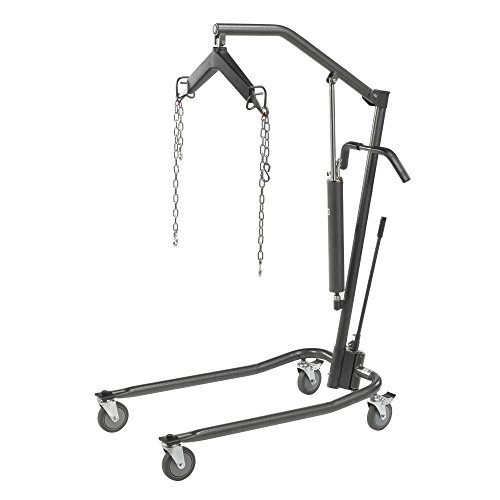

This guide compares three hydraulic patient lifts that are widely available for home use, explains what to look for before you buy, and helps you match a lift to the person you care for and the layout of your home. A patient lift is a piece of medical equipment, not a general-purpose household tool. Before choosing one, talk with the person’s doctor, physical therapist, or occupational therapist about whether a manual hydraulic lift is appropriate, what weight capacity is needed, and what kind of sling fits the person’s body and condition. A clinician can also show you safe transfer technique, which matters at least as much as the equipment itself.
How to Choose
Weight Capacity
Weight capacity is the first number to check, and it should leave a comfortable margin above the weight of the person being lifted. Most home hydraulic lifts support 400 or 450 pounds. If the person you care for is close to a lift’s stated limit, choose the higher-capacity model rather than the one that just barely covers it. Capacity also interacts with the sling: the sling itself has its own weight limit, and the lower of the two limits is the one that governs the transfer. Check both figures, and re-check them if the person’s weight changes over time.
Lift Range
Lift range describes how low and how high the boom can travel. A low minimum height matters when the person needs to be picked up from the floor after a fall, or lifted from a low bed or a floor-level mattress. A high maximum matters when the person needs to clear a tall bed rail, a deep wheelchair seat, or a raised commode. Compare the range against the actual furniture in your home, measured with a tape measure, rather than guessing. A lift that cannot reach low enough for a floor pickup loses much of its value in an emergency, while one that cannot rise high enough will leave you struggling to clear the destination surface.
Base Width and Clearance
A patient lift rolls on a U-shaped base that slides around the destination furniture, and that base must fit the spaces in your home. Measure the width of every doorway on the transfer route, the clearance under the bed, and the space beside the wheelchair and commode. Many lifts have an adjustable base that opens wide for stability around a chair and narrows to pass through doorways. Note the narrowest width as well as the widest, and confirm that the base can close enough to get through your tightest doorway while still opening wide enough to fit around the furniture at each end of the transfer.
Cradle and Sling Compatibility
The cradle, also called the spreader bar, is the part at the end of the boom that the sling hangs from. Six-point cradles are the most common on home hydraulic lifts, and they accept a wide range of sling styles, including full-body slings, toileting slings, and split-leg slings. Before you buy, confirm which sling styles fit the cradle, whether a sling is included in the box, and what size sling the person needs. A sling that is too large lets the person slide, while one that is too small pinches and supports the body unevenly. If the person needs toileting transfers, a dedicated toileting sling is a separate purchase worth planning for, and it must be compatible with the cradle you choose.
Hydraulic Pump and Controls
The hydraulic pump is what the caregiver operates, so its placement and feel matter. Look for a pump handle that can be reached comfortably from the caregiver’s normal standing position, with a release valve that lowers the person slowly and predictably rather than in a sudden drop. Dual-sided pump access lets a second person help from either side. The pump should move smoothly through its full stroke without sticking or jerking, and the release control should be easy to operate with one hand while the other hand steadies the person. Because the caregiver supplies the pumping effort, a well-placed pump reduces fatigue across repeated transfers during the day.
Frame, Casters, and Storage
A steel frame gives a hydraulic lift its strength, and a corrosion-resistant finish helps it last in bathrooms and other humid rooms. Casters determine how easily the lift rolls across carpet, tile, and thresholds, and locking casters keep the lift still while the sling is being attached. Also consider the lift’s own weight and whether it can be partly disassembled for transport or storage. A lift that lives in a small home needs to tuck against a wall or into a closet between uses, and one that travels to a relative’s house needs to break down without special tools.
Sling Included or Separate
Some lifts ship with a full-body sling in the box, and some do not. An included sling saves a separate purchase and guarantees compatibility, but it may not be the right size or style for the person you care for. Budget for a correctly sized sling if the included one does not fit, and remember that slings wear out and need periodic replacement. Check the sling’s material as well: breathable mesh dries quickly and suits bathing and toileting transfers, while padded fabric can be more comfortable for longer seated transfers.
Top Picks
Drive Medical 13023SV Hydraulic Patient Lift
Drive Medical 13023SV Hydraulic Patient Lift
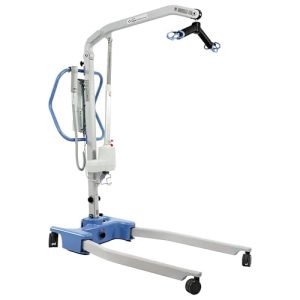
The Drive Medical 13023SV is a long-standing home hydraulic lift built around a steel frame and a six-point cradle, with a stated weight capacity of 450 pounds. That capacity gives it an edge for households where the person being lifted is heavier, or where the caregiver wants extra margin above the person’s current weight. The six-point cradle accepts a broad range of sling styles, so caregivers can switch between a full-body sling for bed-to-chair transfers and a different sling style for toileting without changing the lift itself.
The lift raises and lowers through its hydraulic pump, and the base adjusts to fit around wheelchairs and other furniture. Five casters spread the load and help the unit roll, and the steel construction is aimed at daily use rather than occasional duty. At a stated weight in the region of 72 pounds, it is a substantial piece of equipment, so moving it between rooms takes some effort, and it is best kept where most transfers happen rather than carried up and down stairs.
Who it is for: households that need the higher 450-pound capacity, caregivers who want the flexibility of a six-point cradle with many sling options, and homes where the lift can stay in one main transfer area.
Caveats: no sling is guaranteed in every listing of this model, so confirm what is included before ordering and budget for a correctly sized sling if needed. The unit’s weight and footprint make it less suited to very small rooms or to homes where the lift must be folded away after every use. As with any lift, have a clinician confirm the capacity and sling choice for the person being transferred.
Invacare 9805P Hydraulic Patient Lift
Invacare 9805P Hydraulic Patient Lift
The Invacare 9805P is a lightweight hydraulic lift, at around 68 pounds, with a bent-mast design that sets it apart from straight-mast lifts. The bent mast brings the boom closer to the caregiver and the person being lifted, which can make positioning easier in tight bedrooms. It carries a stated capacity of 450 pounds and a lift range that runs from roughly 20 inches at the low end to 64 inches at the high end, which covers floor-level pickups as well as transfers onto taller beds and chairs.
The padded six-point swivel bar rotates a full 360 degrees, letting the caregiver turn the person toward the destination without moving the whole lift. The base adjusts from about 22 inches to about 42.5 inches wide, so it can narrow for doorways and open wide around a wheelchair. A push handle and dual-side pump access let the caregiver work from either side of the unit, which helps when a second person is assisting or when furniture blocks one side.
Who it is for: caregivers who need floor-to-bed recovery capability, homes with tight doorways that need an adjustable base, and anyone who values the lighter frame and the bent-mast geometry for easier positioning.
Caveats: some users note that the casters do not lock, so the lift must be held steady by the caregiver during sling attachment and transfers. The lighter frame is easier to move, but it still needs a clear, level path, and it performs best on hard floors and low carpet. Confirm the sling separately, since the right size and style depend on the person’s body and transfer needs, and ask a clinician to confirm the choice.
Vive Hydraulic Patient Lift

The Vive Hydraulic Patient Lift is a home-oriented hydraulic lift with a stated capacity of 400 pounds and an included mesh sling. The sling has four anchor points and three positioning handles, and it is machine washable, which simplifies cleaning after bathing or toileting transfers. The hydraulic pump is heavy duty and operated by hand, giving the caregiver control over the speed of the raise and the lowering without any battery or power cord.
The steel frame is corrosion resistant, the base adjusts to fit different rooms and furniture, and the frame disassembles for transport or storage. Its lift range runs from about 31 inches to about 68 inches, which suits bed, wheelchair, and chair transfers, though it does not reach as low as some competing lifts for floor pickups. The included sling is a genuine advantage for a first-time buyer, since it removes the guesswork of finding a compatible sling and keeps the whole setup ready to use on arrival.
Who it is for: first-time home caregivers who want a complete setup with a sling included, households doing mostly bed-to-wheelchair and chair-to-chair transfers, and anyone who prefers a lift that can be taken apart for storage or transport.
Caveats: the 400-pound capacity is lower than the 450-pound models here, so it is not the right choice when the person being lifted is close to or above that limit. The minimum lift height of about 31 inches means floor pickups after a fall may not be possible with this lift alone, so have a plan for that situation and discuss it with a clinician. Doorway clearance of at least 28 inches is recommended, so measure your narrowest doorway before ordering.
Comparison Table
| Feature | Drive Medical 13023SV | Invacare 9805P | Vive Hydraulic Patient Lift |
|---|---|---|---|
| Weight capacity | 450 pounds | 450 pounds | 400 pounds |
| Lift type | Manual hydraulic | Manual hydraulic | Manual hydraulic |
| Cradle | Six-point | Six-point padded swivel bar | Four anchor points on sling |
| Lift range | Full-body range for bed, chair, and floor transfers | About 20 to 64 inches | About 31 to 68 inches |
| Base | Adjustable | Adjustable, about 22 to 42.5 inches | Adjustable |
| Frame | Steel | Steel, bent mast | Corrosion-resistant steel |
| Unit weight | About 72 pounds | About 68 pounds | Lighter, disassembles for transport |
| Sling included | Confirm before ordering | Confirm before ordering | Mesh sling included |
| Pump access | Single-side pump | Dual-side pump access | Hand-operated hydraulic pump |
| Best for | Higher capacity needs | Floor-to-bed recovery | First-time home setup |
Which One Is Right for You?
Start with weight capacity and lift range, because those two numbers decide whether a lift can do the job at all. If the person you care for weighs close to 400 pounds, or their weight may rise, the 450-pound Drive Medical 13023SV and Invacare 9805P give you the margin that the 400-pound Vive does not. If floor pickups matter, the Invacare 9805P stands out, since its range reaches down to about 20 inches while the Vive stops at about 31 inches.
Next, walk the transfer route with a tape measure. Note the narrowest doorway, the clearance under the bed, and the space beside the wheelchair and commode. All three lifts have adjustable bases, but the Invacare publishes the widest adjustment range, and the Vive calls for at least 28 inches of doorway clearance, so a home with narrow doors may rule the Vive out. If the lift must be moved between rooms often or taken apart for storage, the lighter Invacare and the disassembling Vive are easier to live with than the heavier Drive Medical unit.
Then consider the sling. The Vive includes a machine-washable mesh sling, which makes it the simplest first purchase. The Drive Medical and Invacare lifts use six-point cradles that accept a wider range of sling styles, which matters if the person needs a toileting sling or a specialized sling that the included Vive sling cannot replace. In that case, budget for the right sling separately and confirm its fit with a clinician or a home medical equipment supplier.
Finally, think about who operates the lift. A single caregiver working alone benefits from the Invacare’s dual-side pump access and lighter frame, and from a lift whose release valve lowers the person gently with one hand. If two people usually handle transfers, pump placement matters less and capacity and range matter more. Whatever you choose, ask the person’s doctor or therapist to watch a transfer and confirm the technique, the sling size, and the lift’s settings before the lift becomes part of the daily routine.
Frequently Asked Questions
What is a hydraulic patient lift, and how is it different from an electric lift?
A hydraulic patient lift raises and lowers a person using a hand-operated hydraulic pump, with the person supported in a sling that hangs from a boom. An electric lift does the same job with a motor and a battery. A hydraulic lift needs no charging, no outlet, and no battery replacement, and it keeps working during a power outage. The trade-off is that the caregiver supplies the pumping effort, so each transfer takes a little more physical work than pressing a button on an electric model. For many home caregivers, the simplicity and reliability of a hydraulic lift outweigh the extra effort.
Do I need a sling, and how do I choose the right size?
Yes, a sling is required: the lift cannot support a person without one. Slings come in sizes, materials, and styles, including full-body slings, toileting slings, and split-leg slings, and the right choice depends on the person’s size, body shape, and the kind of transfers being done. A sling that is too large can let the person slip, and one that is too small can pinch or support the body unevenly. Measure the person according to the sling maker’s sizing guide, and ask a clinician, physical therapist, or home medical equipment supplier to confirm the size and style before the first transfer.
Can one caregiver operate a hydraulic patient lift alone?
Many home caregivers do operate hydraulic lifts alone, and these lifts are designed with that in mind, but it depends on the caregiver’s strength, the person’s weight, and the layout of the home. The caregiver pumps the handle to raise the person, rolls the lift to the destination, and opens the release valve to lower them. Before doing this alone, have a clinician or therapist watch a practice transfer and confirm that the caregiver can manage it safely. Never attempt a transfer when the caregiver feels unsure, and never exceed the lift’s stated weight capacity or the sling’s stated limit.
How do I keep a hydraulic patient lift in good working order?
Inspect the lift before each use: check that the casters roll freely, the base adjustment locks in place, the pump moves smoothly, and the sling shows no fraying, torn stitching, or worn straps. Keep the hydraulic pump clean and follow the maker’s instructions for lubrication and for checking the fluid level. Replace a sling at the first sign of wear, and have the lift serviced by a qualified technician if the pump sticks, the release valve lowers the boom too quickly, or any part feels loose. A lift that is not holding pressure or that lowers unevenly should not be used until it has been inspected.
Disclosure: As an Amazon Associate, we may earn from qualifying purchases.
More from Amazon
Programs that pair well with the guide above. Offers and eligibility are set by Amazon and may change.
Set up recurring deliveries of everyday items on eligible products. Terms and savings are set by Amazon.
Explore Subscribe & SaveCollect the home and kitchen items you want in one registry that guests can shop from.
Create a wedding registryFree shipping on eligible items, Prime Video and more. Eligible new members can start with a free trial.
Start a Prime free trialAudiobooks and podcasts to listen to on the go. Eligible new members can start with a free trial.
Try Audible freeAs an Amazon Associate we earn from qualifying purchases.
Write Your Review
No reviews yet. Be the first to share your experience!