

Key takeaways
- Compare single boiler espresso machines with preinfusion settings, from a programmable LCC control to E61 and solenoid preinfusion, and find the right fit.
Single boiler machines force one honest trade: one boiler does the brewing and the steaming, so you wait between the shot and the milk. Preinfusion is what decides how forgiving the shot itself is. A short, gentle soak at low pressure lets the puck saturate evenly before full pressure arrives, which helps most with lighter roasts. The catch is that the word covers three different things: a setting you switch on in a menu, a fixed pause built into the brew group, and a manual trick with the brew switch.

This guide is for home baristas who already own a capable grinder and want some control over the start of the shot, for buyers stepping up from a basic pump machine, and for small-kitchen owners who want a compact machine. The three machines below were chosen from the names and specifications shown on their Amazon product pages, and each one brings a different kind of preinfusion to a single boiler.
Quick Picks
As an Amazon Associate we earn from qualifying purchases.
| Product | Best for | Key spec from title |
|---|---|---|
| Lelit Victoria PL91T | Switching preinfusion on or off from the menu | LCC display with programmable preinfusion |
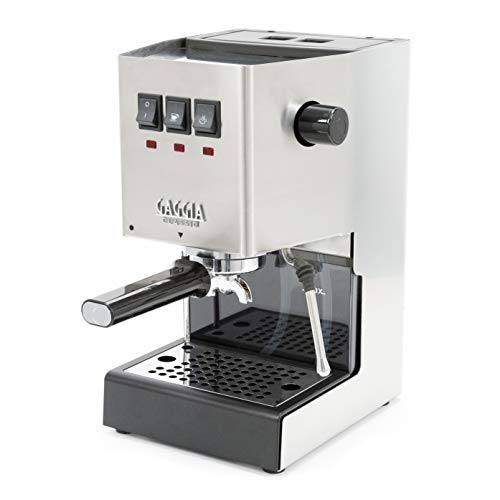
| Gaggia Classic Evo Pro | Passive preinfusion on a tight budget | 58 mm commercial portafilter with 9-bar extraction |
| ECM Classika PID | E61 preinfusion with PID temperature control | E61 group with PID-controlled boiler |
How to Choose
What kind of preinfusion you actually get
Preinfusion is not one feature. On the Lelit Victoria it is a setting in the LCC menu that you switch on or off, so you decide per coffee whether the puck gets a soak. On the ECM Classika PID it comes from the E61 group itself, where a pre-infusion cylinder wets the puck as the lever opens, with no menu or timer to set. On the Gaggia Classic Evo Pro it is passive, a short soak through the three-way solenoid valve that you control by hand with the brew switch. Ask which of the three a listing means before you buy: a machine with a menu setting behaves very differently from one where preinfusion simply happens every time.
How the single boiler shapes your routine
Every machine here uses one boiler for brewing and steaming, so you cannot pull a shot and steam milk at the same time. The practical question is how long the switch takes and how much it interrupts you. If you drink straight espresso or Americanos, the wait barely matters. If you make two milk drinks in a row, you will feel it: brew, wait for the boiler to reach steam temperature, steam, then wait again while the boiler cools and refills before the next shot. A small boiler heats and cools faster, which is one reason the compact machines in this guide suit one or two drinks better than a household queue.
Temperature control and the grinder it demands
Preinfusion only helps if the rest of the shot is under control, and that starts with temperature and grind. A PID controller holds the boiler at the temperature you set instead of letting a thermostat swing past it, which is why the Victoria and the Classika PID suit buyers who change beans often and want to match temperature to the roast. The Gaggia has no PID from the factory, so temperature control means learning its rhythm or adding an aftermarket kit later. Whichever machine you pick, budget for a grinder that can hold a fine, consistent dose, because preinfusion cannot rescue a puck ground too coarse or dosed unevenly.
Group size, accessories and the upgrade path
A 58 mm commercial group is the standard to aim for, because it opens up the widest choice of baskets, tampers, distribution tools and bottomless portafilters. All three machines here use a 58 mm group, which is part of why they last: you can improve the workflow around them instead of replacing them. Check what comes in the box, since a single basket, a double basket, a blind basket and a tamper save a separate order on day one. Also consider the upgrade path. The Gaggia is famous for aftermarket PID kits and OPV changes, while the Classika PID is sold in a version with flow control for buyers who later want to shape pressure through the shot.
The 3 Best Options
Lelit Victoria PL91T
The Victoria is the only machine in this guide with a preinfusion setting you can switch on or off from a menu, and that single difference makes it the natural first pick. Its LCC display manages brew and steam temperature and the preinfusion setting, and it counts down the extraction time so you can see how the soak changes the shot. The 300 ml brass boiler heats quickly and the 58 mm commercial group takes standard accessories, so the machine feels like a prosumer tool in a body nine inches wide. It suits a buyer who wants to experiment with preinfusion rather than accept whatever the group does by default.
Specs
- 300 ml brass coffee boiler
- 2.5 L water tank
- LELIT58 commercial group, 58 mm
- LCC with high-resolution OLED graphic display
- Preinfusion can be activated from the LCC menu
- Back-lit manometer for coffee pressure
- 3-way solenoid valve to dry the coffee puck
- Dimensions 23 x 38 x 38 cm; weight 11.3 kg
Best for: home baristas who want menu-level control of preinfusion in a compact single-boiler machine.
Watch out for: check that the listing is the 120 V US model PL91T-120 before ordering, since 230 V versions of the same machine are also sold.
Gaggia Classic Evo Pro
The Gaggia is the entry point into this guide and the machine most buyers will recognise. Its preinfusion is passive rather than programmable: the three-way solenoid valve gives the puck a short soak before full pressure, and you control it by hand with the brew switch, running the pump briefly and then pausing. There is no display, no timer and no temperature control from the factory, which keeps the machine simple, repairable and easy to modify. The 58 mm commercial portafilter, the solid steel housing and the made-in-Italy build have kept this design in home kitchens for decades, and the large water tank means fewer refills between sessions.
Specs
- 58 mm stainless steel commercial portafilter
- 9-bar extraction
- Solid steel housing, made in Italy
- 3-way solenoid valve
- Brass boiler
- 2.1 L water tank
Best for: first-time buyers who want a repairable, modifiable single-boiler machine at the lowest entry point in this guide.
Watch out for: check the exact model revision on the listing, since Classic Pro, Evo Pro and E24 names, titles and photos are sometimes mixed across sellers.
ECM Classika PID
The Classika PID is the buy-once machine in this guide. Its preinfusion comes from the E61 brew group, where a pre-infusion cylinder soaks the puck as the shot begins, and its PID display holds the boiler temperature you set while doubling as a shot timer. The 0.75 L stainless steel boiler and the heavy stainless body give it a very different feel from the compact machines above, and the externally accessible OPV lets you adjust brew pressure without opening the case. It is still a single boiler, so milk drinks mean switching modes and waiting, but for straight espresso it is the most deliberate and most durable machine here.
Specs
- 0.75 L stainless steel boiler, single-boiler design
- 2.8 L water reservoir
- E61 brew group with pre-infusion cylinder
- PID display for boiler temperature and shot timing
- Vibration pump with adjustable OPV
- Pump pressure gauge
- No-burn steam wand
Best for: buyers who want E61 build quality and PID temperature control and plan to keep the machine for years.
Watch out for: confirm the listing is the PID version and whether flow control is included, since the Classika PID is sold with and without it.
Which One Fits Your Situation
You want a real preinfusion setting you can change
Pick the Lelit Victoria PL91T. It is the only machine here where preinfusion is a setting in the menu rather than a fixed behaviour of the group, so you can turn it on for a light roast that needs a gentle soak and off for a dark roast that does not. The LCC display also shows the extraction countdown, which helps you see what the soak is doing to the shot.
You are buying your first prosumer machine on a tight budget
Pick the Gaggia Classic Evo Pro. Its passive preinfusion is basic and its controls are manual, but the 58 mm group, the steel housing and the huge aftermarket for parts and PID kits mean you can learn on it and improve it instead of replacing it. Just be honest with yourself about the grinder: this machine needs one that can grind fine and hold a dose.
You want to buy once and keep the machine for years
Pick the ECM Classika PID. The E61 group, the PID temperature control, the adjustable OPV and the heavy stainless construction are the combination buyers keep coming back to, and the machine is built from parts a technician can still service years from now. The trade is size and warm-up time, since the E61 group needs longer to come fully up to temperature.
You want to shape pressure later, not just preinfusion now
Pick the ECM Classika PID in its flow-control version. Flow control adds a valve on the E61 group that lets you change pressure during the shot, which is the natural next step once you have learned what preinfusion does. Confirm the variant on the listing before ordering, because the flow-control version and the standard version are sold side by side.
Common Mistakes
- Treating every kind of preinfusion as the same: a menu setting, an E61 pause and a manual switch trick behave differently and suit different buyers.
- Buying the machine before owning a grinder that can grind fine enough for espresso, since preinfusion cannot fix a coarse or uneven puck.
- Expecting to brew and steam at the same time on a single boiler, then being frustrated by the wait between the shot and the milk.
- Leaving preinfusion switched on for every coffee without tasting the difference, instead of comparing the same beans with it on and off.
- Starting the shot before the machine is fully warm, especially on the E61 group, which needs time for its thermal mass to stabilise.
Frequently Asked Questions
What is preinfusion on an espresso machine?
Preinfusion is a short, low-pressure soak at the start of the shot. Water wets the coffee puck gently before full pressure arrives, which lets the puck saturate evenly and helps water flow through it without carving a channel. It is most useful with lighter roasts and finer grinds, where an even start makes the difference between a balanced shot and a sour, uneven one.
Can I adjust preinfusion on a single boiler machine?
It depends on the machine. The Lelit Victoria lets you switch preinfusion on or off from its LCC menu, so it is a genuine setting. On the ECM Classika PID and the Gaggia Classic Evo Pro, preinfusion is built into the group or the solenoid and cannot be timed from a menu, though you can shape it by hand on the Gaggia by running the pump briefly and pausing.
Does preinfusion replace a good grinder?
No. Preinfusion helps an even puck extract evenly, but it cannot fix a puck that is ground too coarse, dosed unevenly or tamped at an angle. A grinder that holds a fine, consistent dose matters far more than any preinfusion setting, and it is the purchase to make first if you only have budget for one upgrade.
Do single boiler machines steam milk well?
Yes, but one drink at a time. A single boiler steams well once it reaches steam temperature, and the steam wands on the machines in this guide will texture milk for latte art. The limit is workflow, not steam quality: you brew first, wait for the boiler to heat for steam, then wait again while it cools before the next shot.
More from Amazon
Programs that pair well with the guide above. Offers and eligibility are set by Amazon and may change.
Set up recurring deliveries of everyday items on eligible products. Terms and savings are set by Amazon.
Explore Subscribe & SaveCollect the home and kitchen items you want in one registry that guests can shop from.
Create a wedding registryFree shipping on eligible items, Prime Video and more. Eligible new members can start with a free trial.
Start a Prime free trialAudiobooks and podcasts to listen to on the go. Eligible new members can start with a free trial.
Try Audible freeAs an Amazon Associate we earn from qualifying purchases.
Write Your Review
No reviews yet. Be the first to share your experience!