

Key takeaways
- Our best espresso beans guide compares six whole bean bags by roast, blend, bag size and flavor notes, with dosing tips for a double shot.
For most home espresso setups, Lavazza Espresso (the 100% Arabica medium roast) is the safest all-around bag in this group: balanced, forgiving and widely available. If you drink mostly milk drinks and want thick crema, Lavazza Super Crema or Crema e Aroma, both Arabica and Robusta blends, lean that way. Prefer something darker and bolder? The Starbucks Espresso Roast and Blue Bottle Organic Espresso are the dark picks, and Gavina Old Havana sits in the medium-dark middle. Every bag here is whole bean, so you will need a burr grinder set to a fine setting for a portafilter.
Quick List
- Lavazza Espresso – best for a balanced, all-Arabica medium roast
- Lavazza Super Crema – best for a smooth, hazelnut-leaning blend with heavy crema
- Starbucks Espresso Roast – best for a familiar dark roast in a smaller bag
- Lavazza Crema e Aroma – best for a stronger, chocolate-toned shot in milk drinks
- Blue Bottle Organic Espresso – best for organic beans with dark chocolate notes
- Gavina Old Havana Espresso – best for a big 32 oz bag of medium-dark, nutty espresso
Which One Is Right for You?
| If you… | Choose |
|---|---|
| drink mostly lattes and flat whites with a thick crema | Lavazza Crema e Aroma |
| want a mellow shot you can sip straight | Lavazza Espresso |
| like dark, roasty shots and want a smaller bag to stay fresh | Starbucks Espresso Roast |
| prefer certified organic beans | Blue Bottle Organic Espresso |
| go through a lot of coffee and want a 32 oz bag | Gavina Old Havana Espresso |
| want hazelnut and brown sugar notes with a creamy body | Lavazza Super Crema |
Start with the all-Arabica Lavazza Espresso if you are unsure, then move to a Robusta-blend bag only if your milk drinks taste thin. Blends with Robusta usually pull thicker crema but can taste harsher straight.
All 6 Picks in Detail
1. Lavazza Espresso – Best Balanced Medium Roast
As an Amazon Associate we earn from qualifying purchases at no extra cost to you.

This 2.2 lb bag is a 100% Arabica medium roast, which makes it one of the easier beans to dial in. Lavazza and retailer pages describe fruity and floral aromatics, and the brand’s own scale places it around the middle of its intensity range. It suits drinkers who want a forgiving espresso that works straight, with a splash of milk or as a base for an Americano.
- Roast: medium
- Blend: 100% Arabica per the listing name
- Bag size: 2.2 lb whole bean
- Tasting notes: fruity and floral per retailer descriptions
- Intensity: about 5 on Lavazza’s 10-point scale per retail pages; confirm on the bag
- Origins: described by Lavazza as Central and South America
Pros:
- Forgiving to dial in on most machines
- Works well in both straight shots and milk drinks
Cons:
- Crema is lighter than on Robusta blends
- Some drinkers find the roast darker and more bitter than the “medium” label suggests
Who it suits: beginners and anyone who wants a neutral house espresso. Buy a smaller bag if you only pull a shot or two a day, since 2.2 lb takes weeks to finish. Compared with Super Crema, it is lighter in body and a bit brighter.
In practice, a medium all-Arabica bag like this one tolerates small grind mistakes better than a bold Robusta blend, so a first-time home barista can learn the dose, grind and time relationship without fighting harshness. Expect a shot that is lively rather than heavy, and consider pairing it with a splash of milk if you find it bright.
2. Lavazza Super Crema – Best for Smooth Crema
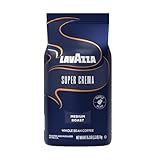
Super Crema blends Arabica and Robusta in a medium espresso roast, and the Lavazza listing leans on hazelnut and brown sugar flavors with a full body. Some retailers and review sites put the blend at roughly 60 percent Arabica and 40 percent Robusta, though Lavazza’s US page does not state percentages, so treat the split as approximate. The listing notes that the package may vary.
- Roast: medium espresso roast
- Blend: Arabica and Robusta; the exact ratio is not stated by Lavazza’s US page
- Bag size: 2.2 lb whole bean
- Tasting notes: roasted hazelnut and brown sugar per the brand
- Strength: described as creamy and mild-to-medium
- Packaging may vary per the listing name
Pros:
- Thick crema from the Robusta share
- Smooth in milk drinks
Cons:
- Some reviewers report a bitter edge in aggressive shots
- Batch-to-batch variation is possible
Who it suits: latte drinkers who care about a creamy mouthfeel more than origin character. Compared with Crema e Aroma, it reads softer and sweeter.
The Robusta share is what builds the dense, persistent foam on top of the shot, which many people associate with traditional Italian cafe espresso. If you tend to over-extract, this style of blend can tip bitter, so keep shot times near the shorter end of the usual window and taste before adding milk.
3. Starbucks Espresso Roast – Best Familiar Dark Roast

This 18 oz bag is a 100% Arabica dark roast labeled for espresso. The dark roast level means oils on the surface of the beans and a roasty, low-acidity flavor profile that many people already know from cafes. It is a practical choice if you want the same flavor at home and prefer a bag small enough to finish while it is still fresh.
- Roast: dark
- Blend: 100% Arabica per the listing
- Bag size: 18 oz whole bean
- Flavor direction: roasty, caramelly sweetness is the roaster’s usual description; confirm on the bag
- Best use: milk drinks and Americanos
- Oily surface: common on dark roasts and a reason to clean the grinder more often
Pros:
- Familiar flavor and a manageable bag size
- Stands up to milk well
Cons:
- Dark roasting masks origin character
- Oily beans can clog some hopper designs
Who it suits: drinkers who like bold, roasty flavor and mostly make milk drinks. Compared with Blue Bottle’s organic dark roast, it is the more conventional choice.
Because dark roasts dissolve readily, this bag can taste burnt if the shot runs too long or the water is too hot. Aim for the shorter side of the typical shot-time window, and lower the dose slightly if the cup tastes ashy. In an Americano, the roasty character stays recognizable even when diluted.
4. Lavazza Crema e Aroma – Best for Strong Milk Drinks
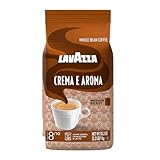
Crema e Aroma is a medium roast Arabica and Robusta blend. Lavazza lists it at an intensity of 8 out of 10, which is higher than the all-Arabica espresso in the same brand line, and describes chocolate notes with a creamy finish. The listing text mentions a balanced medium roast with intense, earthy flavor and long-lasting crema.
- Roast: medium
- Blend: Arabica and Robusta per the brand
- Bag size: 2.2 lb whole bean
- Flavor direction: chocolate and a creamy finish
- Intensity: 8 of 10 per Lavazza; confirm on the bag
- Typical use: espresso, moka pot and milk-based drinks
Pros:
- Strong enough to cut through milk
- Long-lasting crema
Cons:
- Robusta adds a firmer, more bitter edge
- Less nuanced when sipped alone
Who it suits: people whose daily drink is a cappuccino or a latte. It sits one step stronger than Super Crema.
This is a blend designed to cut through milk, so it can seem heavy when sipped as a straight shot. If your machine has a pressure or temperature option, a slightly cooler brew can soften the bitterness. It also suits stovetop moka pots, which the brand lists as a typical use.
5. Blue Bottle Organic Espresso – Best Organic Dark Roast

Blue Bottle’s organic espresso is a 12 oz dark roast whole bean bag. Retailer copy describes chocolate, nougat and brown sugar flavors and says the beans come from Latin America and Central Africa. This is a different bag from the brand’s cafe blend, Hayes Valley, so avoid mixing up tasting notes.
- Roast: dark
- Certification: organic per the listing name
- Bag size: 12 oz whole bean
- Flavor direction: chocolate, nougat and brown sugar per retail copy
- Origins: Latin America and Central Africa per retailer text; confirm on the bag
- Pairing: described as a good partner for milk
Pros:
- Organic option in a smaller, fresher-friendly bag
- Sweet-leaning dark roast
Cons:
- Fewer ounces per bag than the 2.2 lb options
- Dark roast can overshadow subtle flavors
Who it suits: buyers who want organic beans and a sweeter dark roast. Compared with the Starbucks bag, it is the more specialty-leaning choice.
Because the bag is only 12 oz, it is easy to finish while the beans are fresh, which matters more for a dark roast than people expect. Dark roasts shed oil as they age, so a smaller bag helps avoid a stale, greasy cup. Pull a few trial shots to settle the grind, then keep notes.
6. Gavina Old Havana Espresso – Best Large Medium-Dark Bag

Gavina’s Old Havana Espresso is a medium-dark roast in a 32 oz bag. Retailer descriptions highlight a nutty, sweet profile with subtle citrus notes and a smooth, balanced finish, inspired by Cuban coffee traditions. The listing says it is suited to espresso machines, French press and drip makers, so it doubles as an everyday bean.
- Roast: medium-dark per the listing name
- Bag size: 32 oz whole bean
- Flavor direction: nutty and sweet with light citrus per retailer descriptions
- Roasted and packed in Los Angeles per retail pages; confirm on the bag
- Versatility: listed for espresso, French press and drip
- Origin countries are not named in the listing text
Pros:
- Most coffee per bag in the group
- Works across several brew methods
Cons:
- Large bag can go stale before you finish it
- Origin details are limited on the listing
Who it suits: households with several coffee drinkers. Split the bag into small airtight portions as soon as it arrives. It is the middle ground between Lavazza Espresso and the darker bags.
A bag this size works best if you freeze or portion it. Split it into several airtight containers on day one and open one at a time. Medium-dark roasts like this one are a safe daily driver: strong enough for lattes, gentle enough that an Americano does not turn harsh.
Specs Compared
| Bean | Roast | Blend | Bag size | Flavor direction | Organic |
|---|---|---|---|---|---|
| Lavazza Espresso | Medium | 100% Arabica | 2.2 lb | Fruity, floral | Confirm on listing |
| Lavazza Super Crema | Medium espresso roast | Arabica and Robusta | 2.2 lb | Hazelnut, brown sugar | Confirm on listing |
| Starbucks Espresso Roast | Dark | 100% Arabica | 18 oz | Roasty, caramelly | Confirm on listing |
| Lavazza Crema e Aroma | Medium | Arabica and Robusta | 2.2 lb | Chocolate, creamy | Confirm on listing |
| Blue Bottle Organic Espresso | Dark | Confirm on listing | 12 oz | Chocolate, nougat, brown sugar | Yes (organic in name) |
| Gavina Old Havana Espresso | Medium-dark | Confirm on listing | 32 oz | Nutty, sweet, light citrus | Confirm on listing |
How We Chose These
This is a research-based roundup. We compared roast level, blend composition, bag size and the flavor notes each roaster publishes, using manufacturer and roaster product pages plus the retailer listing fields. Preference went to bags clearly labeled for espresso, a spread of roast levels, and a range of bag sizes so that both light and heavy drinkers have an option. Where a roaster does not state a figure, such as the exact Arabica share or origin countries, we say so and point you to the bag. We have not scored flavor, because taste is personal and depends on your grinder, machine and water.
What to Look For
Roast level and what it does in the cup
Light roasts keep more origin character and brightness, medium roasts balance sweetness and acidity, and dark roasts bring bittersweet, roasty flavor and lower acidity. Espresso traditionally leans medium to dark because the short, pressurized extraction highlights acidity, and darker roasts soften it. Dark roasts also dissolve faster, so they tend to extract more readily, while lighter roasts often need a finer grind or a longer shot. If you mostly make milk drinks, medium-dark or dark roasts hold their flavor against the milk. If you drink straight shots, a medium roast is gentler on the palate.
Arabica, Robusta and blends
Arabica generally brings sweetness, acidity and aroma. Robusta adds body, bitterness and a thick, long-lasting crema. A bag with Robusta is not lower quality by default; many traditional Italian espresso blends include it on purpose. Still, the ratio matters. If a roaster does not publish the split, taste a small bag first. Adding Robusta tends to suit milk drinks, while a pure Arabica bag is usually nicer for sipping.
Freshness and bag size
Whole bean coffee is at its best within a few weeks of roasting, and many roasters suggest using beans within roughly four to six weeks of the roast date. Look for a roast date or best-by date on the bag. Here is a worked example. A double shot commonly uses about 18 g of beans. A 2.2 lb bag holds about 998 g, which is around 55 doubles. If you pull one a day, that bag lasts almost two months. A 12 oz bag (about 340 g) gives around 19 doubles, and a 32 oz bag (about 907 g) around 50. Match the bag to your pace, or portion large bags into airtight containers and keep them away from heat and light.
Dialing in a new bag
A common starting recipe is a 1:2 ratio: 18 g of ground coffee in, about 36 g of liquid espresso out, in roughly 25 to 30 seconds. If the shot runs fast and tastes sour or thin, grind finer. If it runs slow and tastes bitter or harsh, grind coarser. Change one variable at a time and keep notes. Switching bags usually requires a small grind adjustment, and dark roasts typically need a coarser setting than light ones to hit the same time.
Reading a bag label
Marketing words such as “bold,” “smooth” and “premium” carry no standard meaning, so look for hard facts instead: roast level, a roast or best-by date, bean species and, ideally, origin countries. Terms such as “organic” are certification claims and should appear on the packaging with the certifier’s name. A bag labeled “espresso” is a recommendation by the roaster, not a regulated category, so you can still brew it in a drip machine or French press. If a label offers an intensity number, as Lavazza does, treat it as that brand’s own scale and not a universal measure.
Grind size and brew method
Espresso grind is fine, roughly between table salt and powdered sugar, though the exact setting depends on your grinder. The same beans can go into a moka pot with a slightly coarser grind, into a drip machine at a medium grind, or into a French press at a coarse grind. Bags marked for espresso can work in each of these, and a medium-dark roast such as the Gavina is the most flexible across them.
Grinder and storage matter as much as the bag
Even the best beans taste flat if you grind them far too coarse or too unevenly. Use a burr grinder, grind just before brewing and keep beans in an opaque, airtight container at room temperature. Oily dark roasts leave residue in hoppers, so wipe the container and clean the burrs regularly to avoid rancid buildup.
Questions
Can I use any whole bean coffee for espresso?
Yes, any whole bean coffee can be ground fine and pulled as espresso. Bags labeled for espresso are blended and roasted to taste good in a short, pressurized extraction, which usually makes them easier to dial in.
Is a darker roast better for espresso?
Not necessarily. Dark roasts are forgiving and work well in milk drinks, but medium roasts keep more sweetness and fruit. Choose by taste, not by the label alone.
Does Robusta make espresso worse?
It changes it rather than ruins it. Robusta adds crema and body but also a more bitter edge. Many classic Italian blends use it, so the right amount depends on your taste.
How much coffee do I need for a double shot?
About 18 g of ground coffee is a common starting dose for a double basket, yielding around 36 g of espresso. Check your basket size and adjust from there.
How should I store espresso beans?
Keep them in an airtight, opaque container at room temperature, away from heat, light and moisture. Buy a size you can finish in a month or so, and portion larger bags rather than opening them all at once.
Do I need a special grinder for espresso?
You need one that can grind fine and evenly with small adjustment steps. A burr grinder suits that job, while blade grinders produce uneven particles that cause inconsistent shots.
Update History
- October 20, 2026 – Initial publication; product set drawn from current catalog listings.
- Check the product page for current specifications and availability before buying.
Sources
- Manufacturer and roaster product pages for Lavazza, Blue Bottle and Gavina
- Retailer listing titles and specification fields for each bag
- Published roaster tasting-note descriptions and independent roast-profile write-ups

Write Your Review
No reviews yet. Be the first to share your experience!