

Key takeaways
- Best built in coffee machines compared: a wall-recessed system, espresso machines with grinders and countertop picks, with install notes.
If you mean a true built-in coffee machine, the Brew Express 10-cup built-in-the-wall system is the only pick here that recesses into a wall and fills itself from a water line, so it is the best overall choice for a permanent installation. If “built in” to you means a machine with a grinder or frother inside it, the EUHOMY and XIXUBX espresso machines fit that definition better. The rest are countertop machines that suit a coffee bar. Each section says plainly which meaning a machine satisfies.
Quick List
- Brew Express 10-Cup Built-In-The-Wall – best for a plumbed, recessed installation
- Chefman Espresso and Coffee Combo – best for a countertop station that makes drip coffee and espresso drinks
- Cuisinart DCC-3200 14-Cup – best for a freestanding, programmable pot of drip coffee
- EUHOMY Automatic Espresso Machine – best for a grinder and milk frother inside one machine
- 10-Cup Programmable Drip Coffee Maker – best for a simple, budget-minded household pot
- XIXUBX Espresso Machine with Grinder – best for manual shot control with a built-in grinder and PID
Which One Is Right for You?
| If you… | Choose |
|---|---|
| are remodeling and want a machine recessed in the wall with its own water supply | Brew Express 10-Cup Built-In-The-Wall |
| want grinding, brewing and frothing without separate appliances | EUHOMY Automatic Espresso Machine |
| like to pull espresso shots yourself but still want a grinder on board | XIXUBX Espresso Machine with Grinder |
| need both a full pot of coffee and espresso drinks from one footprint | Chefman Espresso and Coffee Combo |
| want a familiar, programmable drip pot with a large capacity | Cuisinart DCC-3200 14-Cup |
| just need a straightforward drip machine without extras | 10-Cup Programmable Drip Coffee Maker |
Decide first whether you want a permanent installation or an appliance with parts built into it. The first path involves plumbing, wall cutting and professional help. The second is plug-and-play, but it takes counter space and regular cleaning of the internal grinder.
All 6 Picks in Detail
Keep in mind that only the first pick requires construction. Everything else plugs into an ordinary outlet, which makes those machines easy to replace if your needs change. If you are torn, list what you would do on a normal weekday morning and see which machine removes the most steps without adding maintenance you will skip.
1. Brew Express 10-Cup Built-In-The-Wall – Best for a Plumbed, Recessed Installation
As an Amazon Associate we earn from qualifying purchases at no extra cost to you.
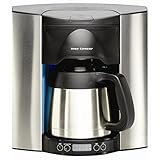
This is the one genuine built-in on the list. The listing describes a 10-cup built-in-the-wall, self-filling coffee system. Brew Express spec sheets for its 10-cup in-wall model describe a unit fed by a water line, so you never pour water from a pitcher. Confirm that the sheet you read matches this listing before you plan a remodel.
- Water supply: a 1/4 inch outside-diameter line, with the manufacturer listing 30 to 90 psi of cold potable water
- Electrical: 120 volts, 60 Hz and 1,400 watts, per the manufacturer
- Overall faceplate about 12.25 by 13.375 inches, with a rough-in box about 11.5 by 10 by 4 inches
- Fully automatic and programmable, with a reusable filter and a carafe, per the manufacturer
- A water jug can substitute for a plumbed line if running a line is not practical
Pros
- No manual water filling and a clean, flush look
- Frees countertop space entirely
Cons
- Needs wall opening, a water line and an electrical connection, and the manufacturer advises hiring a qualified professional
- Harder to replace or service than a countertop unit
Next to the Cuisinart, it trades convenience in installation for permanence and counter space.
Who it suits: kitchen or office remodels where a plumber and an electrician are already involved, and where the same coffee will be brewed daily. If you rent or may move, a countertop machine is a safer bet.
2. Chefman Espresso and Coffee Combo – Best for a Drip and Espresso Station

This countertop combo pairs a drip coffee maker with an espresso machine and an automatic milk frother, which the listing calls an 8-in-1 coffee station. It is not recessed into a wall, so it is “built in” only in the sense that several functions share one body. It suits households where one person wants a latte and another wants a plain cup.
- Combines coffee and espresso functions in one unit, per the listing
- Automatic milk frother for lattes, cappuccinos and macchiatos, per the listing
- 20-bar pump, as stated in the listing name
- Water tank size, wattage and drip capacity: confirm on listing
- Control layout and cup sizes: confirm on listing
Pros
- One footprint for two kinds of coffee
- Automatic frothing lowers the learning curve
Cons
- Combination machines usually compromise on both functions compared with dedicated ones
- More parts to descale and clean
Compared with the EUHOMY, it handles drip coffee as well but leaves grinding to you.
Who it suits: families with mixed preferences and limited counter space. If you only drink espresso drinks, one of the grinder-equipped machines below is a more focused choice.
3. Cuisinart DCC-3200 14-Cup – Best for a Freestanding Programmable Pot

The listing names a 14-cup programmable machine with a glass carafe, PerfecTemp and a 1 to 4 cup setting. It is freestanding, so it does not fit the “recessed in the wall” meaning, and we place it here as a countertop alternative that is easy to live with. Cuisinart’s manual describes a brew-pause feature, a water window and a 24-hour program.
- 14-cup capacity with a glass carafe; Cuisinart counts a cup as 5 ounces
- Water tank about 70 ounces, per third-party sources
- 1 to 4 cup setting for small batches, per the listing
- Brew pause lets you pour a cup mid-brew for a short window, per the manual
- Auto shut-off adjustable from 0 to 4 hours, with a charcoal water filter and gold-tone filter, per the manual
Pros
- Large capacity and a familiar interface
- Three-year limited warranty, as described in third-party summaries
Cons
- Takes countertop space
- Pausing mid-brew can weaken the finished pot, according to the manual
Against the generic 10-cup pot, it offers a larger carafe and a more detailed feature set.
Who it suits: people who brew for a group and want programming without built-in plumbing. Confirm the wattage on the nameplate or the product page, since sources differ.
4. EUHOMY Automatic Espresso Machine – Best for a Grinder and Frother in One Body

The listing describes an automatic espresso machine with a built-in grinder and milk frother, 20-bar pump, 15 grind settings, touch screen and auto self-cleaning. It is the clearest example of a machine that is “built in” through its grinder and frother rather than through its mounting.
- Built-in grinder with 15 grind settings, per the listing
- Milk frother included; frothing style (manual wand or automatic): confirm on listing
- 20-bar pump, per the listing
- Touch screen controls, per the listing
- Auto self-clean function named in the listing; water tank size and wattage: confirm on listing
Pros
- Fewer separate appliances
- Touch controls make drinks repeatable
Cons
- Built-in grinders need regular cleaning to avoid stale grounds
- Repair is harder because the grinder is not a separate item
Compared with the XIXUBX, it leans toward automation, where the XIXUBX leans toward manual control.
Who it suits: beginners who want espresso-based drinks from whole beans without buying a grinder. Check whether it is truly bean-to-cup automatic or semi-automatic, because that determines how much effort each drink takes.
5. 10-Cup Programmable Drip Coffee Maker – Best for a Simple Household Pot

The listing describes a 10-cup programmable machine with regular and strong brew options, pause and serve, keep warm and a heat-resistant glass carafe. The brand is not named in the listing, so verify the maker and warranty on the product page. It is a plain countertop appliance, not a built-in.
- 10-cup capacity with a glass carafe, per the listing
- Regular and strong brew settings, per the listing
- Pause and serve plus a keep-warm function, per the listing
- Permanent filter, as named in the listing; wattage and dimensions: confirm on listing
- Programming window and auto shut-off timing: confirm on listing
Pros
- Familiar operation and easy cleanup
- Strong-brew option for those who like bolder coffee
Cons
- Brand and warranty are not clear from the listing name
- No grinder or milk system
Next to the Cuisinart, it is the plainer option with fewer documented features.
Who it suits: a household that wants coffee on a timer and has no interest in espresso. Keep a descaling routine, since hard water builds up in any heated reservoir.
6. XIXUBX Espresso Machine with Grinder – Best for Shot Control and a Built-In Grinder

This listing names an espresso machine with a grinder, PID temperature control and programmable settings, a 20-bar pump, a cold coffee mode, a 51 mm portafilter and an adjustable steam wand. The portafilter and steam wand suggest manual involvement, so it suits someone who wants to learn.
- Built-in grinder, per the listing
- PID and programmable settings, per the listing
- 20-bar pump and a 51 mm portafilter, per the listing
- Cold coffee mode and adjustable steam, per the listing
- Tank capacity, wattage and grind settings count: confirm on listing
Pros
- Room to improve technique with a portafilter and steam wand
- PID aims for steadier brew temperature
Cons
- More skill required than a push-button machine
- The grinder and brew group need regular cleaning
Compared with the EUHOMY, it asks more of you in return for more control.
Who it suits: hobbyists who want a single machine on the counter and are willing to dial in grind and dose. Read the manual for the intended grind range and maintenance schedule.
Specs Compared
| Product | Type | Built-in meaning | Grinder | Milk system | Capacity |
|---|---|---|---|---|---|
| Brew Express 10-Cup Built-In-The-Wall | Drip, in-wall | Recessed in wall, self-filling | No | No | 10 cups |
| Chefman Espresso and Coffee Combo | Drip plus espresso | Multi-function body | Confirm on listing | Automatic frother | Confirm on listing |
| Cuisinart DCC-3200 14-Cup | Drip, countertop | Not built in | No | No | 14 cups |
| EUHOMY Automatic Espresso Machine | Espresso, automatic | Built-in grinder and frother | Yes, 15 settings | Frother | Confirm on listing |
| 10-Cup Programmable Drip Coffee Maker | Drip, countertop | Not built in | No | No | 10 cups |
| XIXUBX Espresso Machine with Grinder | Espresso, semi-automatic | Built-in grinder | Yes | Steam wand | Confirm on listing |
How We Chose These
This list is built from research into the product listings, manufacturer installation guides and specification sheets, and independent articles about plumbed coffee systems. We separated machines by what “built in” can mean: recessed into a wall, or equipped with an internal grinder or frother. We kept one clear in-wall option, then added countertop machines that cover the other meanings. Anything the listing names did not state is marked for you to confirm on the product page.
What to Look For
Decide which kind of built-in you want
There are three common meanings. A recessed system sits in the wall with a faceplate. A cabinet-integrated or fully plumbed espresso machine is installed into a cabinet and connected to water. A machine with a built-in grinder or frother is just a normal countertop appliance with extra parts. Matching the meaning to the project saves you from buying something that cannot be installed the way you imagined.
Water line and plumbing basics
For the in-wall system listed here, the manufacturer’s sheets call for a 1/4 inch outside-diameter water line, cold potable water and a supply pressure in the 30 to 90 psi range. Typical sources are a cold line under a sink or a refrigerator ice-maker line. If a line is not practical, a water jug can be used. A professional should confirm that the wall cavity is clear of plumbing and wiring before any cutting, and that the shutoff valve is accessible for future service.
Electrical safety
The in-wall unit is listed at 120 volts and 1,400 watts, which is a substantial load for a coffee maker. Check that the circuit can carry it along with other appliances, and follow local electrical code for outlets near water. Never run a heating appliance without water in the reservoir, and unplug countertop machines before cleaning. If you are unsure, hire a licensed electrician rather than guessing.
Grinders, frothers and upkeep
A built-in grinder is convenient, but it needs a routine: empty old beans, brush out grounds and clean the brew group on the schedule in the manual. Milk systems need to be rinsed after every use. Descale on the interval the manufacturer gives, since schedules vary by model. A rule of thumb for planning: the more functions in one body, the more cleaning each week, so pick the fewest functions you will actually use. Water quality matters too. Hard water speeds up scale in any heated reservoir, so a charcoal filter, filtered water or a more frequent descaling cycle can save you from slow flow, weak heat and eventual repairs. Wipe the faceplate, drip tray and carafe lid weekly, and keep the carafe dry between uses so no stale film builds up on the glass or in the spout.
Counter space, cabinets and ventilation
Every heating appliance needs clearance. Steam from a drip machine can stain or swell the underside of a cabinet, so slide a countertop pot forward when it brews or choose a spot with open air above it. Espresso machines add a second concern, which is the weight and width of the water tank and the room needed to pull the tank out for refilling. For the recessed unit, plan for the carafe to slide in and out without hitting a countertop or a backsplash, and leave space for a person to reach the faceplate controls comfortably.
Capacity versus real mugs
Drip makers count a cup as roughly 5 ounces, so a 10-cup machine produces about 50 ounces, and a 14-cup machine about 70 ounces. A large mug holds 10 to 12 ounces, which means a 10-cup pot fills about four or five big mugs. Espresso machines work the other way: a single shot is a small volume, and milk drinks are built from shots plus steamed milk. Match the capacity to the number of people drinking, not the number printed on the box.
Worked example
Suppose you plan a remodel with a dedicated coffee nook. Mark the faceplate size of about 12.25 by 13.375 inches and the rough-in box of about 11.5 by 10 by 4 inches on the wall, add room for the carafe to slide out, and ask your plumber where the water line will come from. If any of those fail, a countertop machine is a better fit.
Questions
What is a built-in coffee machine?
It can mean a unit recessed into a wall or cabinet and connected to a water supply, or a machine with a grinder or frother inside it. The listings here include both meanings, and each section says which one applies.
Do built-in coffee makers need a water line?
The in-wall system on this list is designed to fill from a line, though the manufacturer says a water jug can substitute. Countertop machines are filled by hand from a tank or a pitcher.
Can I install a built-in coffee maker myself?
The manufacturer advises hiring a qualified professional for the in-wall system. Cutting a wall, connecting water and wiring a circuit all carry risk if done incorrectly.
Is a built-in grinder worth it?
It saves space and ensures fresh grounds, but it adds cleaning and makes repairs harder. If you already own a good grinder, a machine without one may be the simpler choice.
Should I choose drip or espresso?
Choose drip if you want volume with little effort, and espresso if you mostly drink lattes and cappuccinos. A combo machine covers both, though usually with some compromise.
Is a plumbed system better than a countertop machine?
It is better if you value convenience and a clean look and you are already doing construction work. It is worse if you might move, if you want to change machines often, or if service access would be difficult once the unit is behind the wall.
Update History
- October 20, 2026 – Initial publication; product set drawn from current catalog listings.
- Check the product page for current specifications and availability before buying.
Sources
- Manufacturer installation guides and specification sheets from Brew Express
- Manufacturer instruction booklet for the Cuisinart DCC-3200
- Retailer listing titles and specification fields
- Independent articles on plumbed and built-in coffee makers


Write Your Review
No reviews yet. Be the first to share your experience!