

Key takeaways
- Best cafe style coffee makers for home: six moka, drip, steam and 20-bar espresso options compared, with honest notes on pressure and capacity.
The Chefman 8-in-1 coffee and espresso combo is the best all-around pick for a home cafe setup, because it puts a regular brew mode, a 20-bar espresso pump and an automatic milk frother into one footprint. “Cafe style” can mean two different things, though: coffeehouse drinks such as lattes and cappuccinos, or the big-batch drip you see behind a diner counter. This guide covers both ends, from a classic stovetop moka pot to a commercial-style 12-cup brewer, and says plainly which listings reach espresso-level pressure and which only borrow the look.
Quick List
- Primula Classic Stovetop Espresso Maker – best for strong, Cuban-style stovetop coffee on a tight budget
- BLACK+DECKER 12-Cup Vortex Drip Coffee Maker – best for everyday family drip coffee with a programmable start
- SECPOEDR 20 Bar Espresso Machine – best for touch-screen control and temperature-managed lattes
- HBN 3.5 Bar Espresso and Cappuccino Maker – best for small kitchens and occasional milky drinks
- VEVOR 12-Cup Commercial Drip Brewer – best for hosting, home offices and diner-style volume
- Chefman 8-in-1 Coffee and Espresso Station – best for households that want drip and espresso drinks from one machine
Which One Is Right for You?
| If you… | Choose |
|---|---|
| want lattes and plain coffee without owning two machines | Chefman 8-in-1 Coffee and Espresso Station |
| want a lower-cost way into espresso-style drinks and have only a stove | Primula Classic Stovetop Espresso Maker |
| drink several mugs of drip each morning and like a timer | BLACK+DECKER 12-Cup Vortex Drip Coffee Maker |
| want pump pressure with a touch panel and a milk wand | SECPOEDR 20 Bar Espresso Machine |
| need a compact machine for one or two small cups | HBN 3.5 Bar Espresso and Cappuccino Maker |
| serve guests or a small team and want two carafes warming at once | VEVOR 12-Cup Commercial Drip Brewer |
The deciding question is whether you want espresso or simply strong, hot coffee. If real espresso drinks matter, start with the Chefman or the SECPOEDR. If you mostly pour mugs of drip and only want a cafe-like carafe setup, the BLACK+DECKER or the VEVOR is the more honest fit. The stovetop and 3.5-bar picks are budget-friendly detours that make strong coffee but not true espresso.
All 6 Picks in Detail
1. Primula Classic Stovetop Espresso Maker – Best for Strong Stovetop Coffee
As an Amazon Associate we earn from qualifying purchases at no extra cost to you.

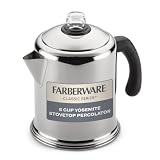
This is a moka pot, the Italian and Cuban stovetop design that pushes steam-heated water up through a basket of fine grounds. The listing calls it a 6 espresso cup size in silver, and it is sold for Italian and Cuban-style brewing. A moka pot does not make true espresso, because it works at roughly 1 to 2 bar rather than the 9 bar that espresso machines target, but the result is a concentrated, bold coffee that suits milk drinks and sugary cafecito.
- Stovetop design, so no electricity or tank to refill
- Listed as a 6 espresso cup pot; moka “cups” are small, so confirm the ounce capacity on the listing
- Silver finish, with a body that is typically aluminum in this style; confirm on the listing
- Fits gas and electric coils; confirm induction compatibility before buying, since many aluminum pots do not work on induction
- Greca-style layout with a spout and a side handle
The learning curve is real: use a medium-fine grind, stop the flame when the stream turns pale and cool the base under tap water to prevent a bitter finish. Cleaning is simple, but never put an aluminum pot in the dishwasher.
Pros:
- No electrical parts to fail or cleaning cycles to run
- Pairs well with steamed or heated milk for a quick cortado-style cup
Cons:
- No crema, no pressure control and no milk frothing
- Needs attention at the stove for the few minutes it brews
Compared with the HBN steam machine below, the Primula needs more attention but gives you a repeatable manual method with no plug required.
2. BLACK+DECKER 12-Cup Vortex Drip Coffee Maker – Best for Everyday Family Drip

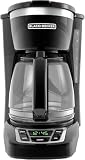
If your idea of cafe style is a big, reliably hot carafe at breakfast, this 12-cup drip brewer is the straightforward answer. The listing highlights Vortex brewing, a showerhead-style water path meant to wet the grounds evenly, and the name indicates programmable operation. Drip machines like this do not make espresso, but they handle a full household’s morning demand.
- 12-cup glass carafe; marked drip “cups” are typically 5 ounces, so expect about 60 ounces (confirm on listing)
- Vortex brewing water distribution, per the listing name
- Programmable start, per the listing name; confirm the exact timer features
- Basket-style filter; confirm whether it takes paper or permanent filters
- Warming plate for holding a finished pot
The practical advice is to use a standard ratio near 1:16 coffee to water by weight (about 60 grams of grounds per liter is the usual starting point) and to adjust from there. Brewing less than a half pot often gives weaker, uneven coffee, so choose this model if you usually brew a full carafe.
Pros:
- Simple controls and a familiar, easy-to-clean basket
- Large capacity for families and guests
Cons:
- A warming plate can dull flavor if a pot sits for hours
- No milk frothing and no espresso mode
Next to the VEVOR, this model suits a home counter better, while the VEVOR is built for continuous service with two carafes.
3. SECPOEDR 20 Bar Espresso Machine – Best for Touch-Screen Latte Making

This silver machine is marketed as a barista-style home espresso maker, with a touch screen, PID control, fast heat-up, cold brew and a milk frother. PID, in plain terms, is a controller that holds water temperature steadier than a simple on/off thermostat, which can help consistency from shot to shot. Treat the 20 bar figure as a pump maximum: espresso extraction usually targets about 9 bar at the coffee, and that number only describes the maximum the pump can produce.
- 20 bar pump, per the listing name
- Touch-screen operation with PID temperature control
- Milk frother for lattes and cappuccinos; confirm whether it is a steam wand
- Cold brew function, per the listing
- Water tank size, wattage and portafilter size: confirm on listing
Machines in this category reward a modest learning curve. You will need a decent grinder, since pre-ground coffee often runs too fast or too slow, and a tamper that actually fits the basket. Expect to dial in grind size over several shots and to wipe the steam wand after each use.
Pros:
- Pump pressure and a milk wand cover the full latte and cappuccino menu
- Digital temperature control is a step above basic dial machines
Cons:
- Needs a separate grinder for best results
- Specs such as tank size and weight are not stated in the listing name
Compared with the Chefman, this one is the choice if you prefer manual shot control, while the Chefman wins on versatility.
4. HBN 3.5 Bar Espresso and Cappuccino Maker – Best for Small Kitchens

The HBN is a compact stainless-steel machine rated for 2 to 4 cups, with an 800W heater, a steamer and a milk frother. Its 3.5 bar figure is the detail to understand: that is well below the roughly 9 bar used for true espresso, so the output is closer to a strong moka-style coffee than to a cafe shot with thick crema. For people who want a small cup of concentrated coffee to stir into steamed milk, that may be enough.
- 3.5 bar pressure, per the listing name
- 800W heating, per the listing name
- 2 to 4 cup capacity; confirm the ounce volume on the listing
- Stainless steel body with steam wand and milk frother
- Compact enough for a home or office counter
Steam-driven machines of this type usually need a cool-down between brews and a careful release of pressure before opening anything. Follow the manual closely, because the boiler is hot and the lid must stay locked while pressurized.
Who it suits: a student, an office desk or a small apartment where a full espresso machine would never earn its space. Set expectations at the start, because the cup you get is a hot, strong coffee with some steamed or frothed milk on top, which is a perfectly pleasant drink as long as nobody expects a thick golden crema.
Pros:
- Small footprint and an easy path to milk drinks
- Lower-cost entry into the cappuccino format
Cons:
- Pressure is too low for true espresso extraction
- Small batch size limits entertaining
It sits closer to the Primula than to the SECPOEDR in actual extraction, so pick it for convenience rather than for authentic espresso.
5. VEVOR 12-Cup Commercial Drip Brewer – Best for Hosting and Volume

The VEVOR is the literal diner-counter answer: a stainless-steel commercial-style brewer with two glass carafes and two warmer plates, listed for restaurant, office and home use. Two carafes mean you can brew a second batch while the first stays warm, which is the real advantage over a single-carafe home machine.
- 12-cup capacity, per the listing name
- Two glass carafes, per the listing name
- Two decanter warmer plates, per the listing name
- Stainless steel brewer body
- Wattage and voltage: confirm on listing, and make sure the circuit can handle it
Commercial-style brewers draw a lot of power when heating, so avoid plugging them into the same circuit as a microwave or toaster oven. Think about where the carafes will sit too: glass carafes are less forgiving on a busy counter than thermal ones.
Who it suits: a host who regularly feeds a crowd, a home office with visiting clients or a family that drinks coffee all morning. Fill the reservoir with fresh cold water for each batch, and let the machine rest between pots so the heater can recover. Rinse both carafes right after service, since stainless and glass alike hold onto stale oils.
Pros:
- Two warmers support back-to-back batches
- Looks and works like a coffee-shop brewer
Cons:
- Glass carafes and warmer plates can cook coffee if left too long
- Larger footprint than a standard home drip machine
Choose it over the BLACK+DECKER only when you regularly brew more than one pot; for a household of two or three, the smaller unit is plenty.
6. Chefman 8-in-1 Coffee and Espresso Station – Best for One-Machine Versatility

The Chefman is the pick that most closely matches what people picture when they say cafe style at home. The listing describes an 8-in-1 coffee station that combines a coffee maker and an espresso machine, with an automatic milk frother for lattes, cappuccinos and macchiatos and a 20-bar pump. One appliance can serve a person who wants a mug of drip and a person who wants a flat white.
- Combination drip and espresso design, per the listing name
- 20-bar pump, per the listing name
- Automatic milk frother for milk drinks
- 8-in-1 functions; confirm the exact list on the listing
- Tank sizes, wattage and carafe capacity: confirm on listing
Combination machines trade depth for breadth. The drip side is usually a smaller carafe than a dedicated 12-cup brewer, and the espresso side is often less adjustable than a standalone machine. In return, you save counter space and get an easy way to serve mixed households.
Who it suits: mixed households, such as one tea-and-drip drinker and one flat-white fan, and anyone who is tired of two appliances fighting for counter space. Read the manual’s cleaning schedule before your first brew, because both the drip path and the milk frother need regular attention to stay pleasant tasting.
Pros:
- Covers drip, espresso and milk drinks in one footprint
- Automatic frothing lowers the skill barrier
Cons:
- Two functions mean two sets of parts to clean
- Carafe size is probably smaller than a dedicated drip machine
Against the SECPOEDR, it trades some manual control for convenience, which is the right swap for most busy kitchens.
Specs Compared
| Product | Type | Pressure / method | Capacity | Milk frothing | Power |
|---|---|---|---|---|---|
| Primula Classic Stovetop Espresso Maker | Stovetop moka pot | Steam-driven, roughly 1 to 2 bar | 6 espresso cups (confirm ounces on listing) | None | Stove heat |
| BLACK+DECKER 12-Cup Vortex Drip | Drip | Gravity drip with Vortex brewing | 12 cups | None | Confirm on listing |
| SECPOEDR 20 Bar Espresso Machine | Pump espresso | 20 bar pump, PID control | Confirm on listing | Frother (confirm type) | Confirm on listing |
| HBN 3.5 Bar Espresso Maker | Steam espresso-style | 3.5 bar | 2 to 4 cups | Steamer and frother | 800W |
| VEVOR 12-Cup Commercial Drip | Commercial drip | Gravity drip | 12 cups, two carafes | None | Confirm on listing |
| Chefman 8-in-1 Coffee and Espresso Station | Drip plus pump espresso | 20 bar pump | Confirm on listing | Automatic frother | Confirm on listing |
How We Chose These
This guide is a research roundup built from the product set in the current catalog. We read each listing name, compared the stated brew method and capacity, and checked what the manufacturer-style claims actually mean for the finished cup, especially the difference between a pump maximum and extraction pressure. We favored a spread of formats so a reader can match a machine to a real routine: stovetop, drip, steam, pump and combination. Where a listing did not state a specification, such as wattage or tank size, we left it as “confirm on listing” rather than guess. The picks are ordered by how well each one answers what most buyers mean by cafe style, not by popularity.
What to Look For
Match the Machine to the Drink You Actually Make
The biggest mistake is buying an espresso-looking machine when you drink drip, or the reverse. Think of it as four tiers. A stovetop moka pot builds roughly 1 to 2 bar and makes a bold, concentrated coffee. A small steam-driven machine, like a 3.5-bar model, lands in a similar place with a milk wand attached. A pump machine aims for about 9 bar at the coffee and can produce real espresso with crema. A drip brewer uses no pressure at all and is designed for volume. Be honest about your routine. If you drink two large mugs of milky coffee, a pump machine or a combo unit makes sense; if you want a hot pot waiting for guests, drip wins.
Read Pressure Numbers Carefully
Many listings headline 15 or 20 bar. That figure usually describes the maximum pressure of the pump, not the pressure at the grounds. Most espresso recipes target about 9 bar during extraction, and machines regulate down to that. A 20-bar pump is not twice as good as a 9-bar one; it simply has headroom. What matters more is temperature stability, a portafilter basket that suits your dose and a grinder that can produce a fine, consistent grind. A 3.5-bar steam machine cannot reach espresso pressure at all, so judge it as a strong-coffee maker.
Capacity, Cup Size and Counter Space
Capacity labels are slippery. Drip makers count a “cup” as about 5 ounces, so a 12-cup carafe holds roughly 60 ounces, enough for four large 15-ounce mugs. Moka pots count tiny espresso servings. Espresso machines usually list the water tank in ounces or liters, and a single shot is about 1 ounce while a double is about 2. A worked example: a household that makes four lattes each morning uses about eight ounces of espresso water and four small cups of milk, so a modest tank is fine, but a household making a dozen drinks for guests will want a larger reservoir or a drip brewer.
Milk Frothing and Cleanup
Automatic frothers are easier; steam wands give more control and need practice. Either way, milk residue is the biggest maintenance item. Rinse or purge the frother right after each use, and descale on the schedule in the manual, which depends on how hard your water is. A combination machine has more parts to wash, so the convenience is real but the routine is longer.
Beans, Water and Ratios Matter as Much as the Machine
A good machine cannot rescue stale beans. Buy whole beans with a roast date, use them within a few weeks and grind just before brewing. For drip, start near 1:16 coffee to water by weight and nudge it stronger or weaker by taste; for espresso, a common starting point is roughly 1:2, such as 18 grams of grounds producing about 36 grams of liquid, then adjust grind size until the shot takes around 25 to 30 seconds. A moka pot has no timer, so watch the stream instead. Filtered water also protects every machine on this list from scale, which is the most common reason heating elements and valves fail early.
Power and Placement
Brewers that heat quickly pull significant current. As a rule of thumb, keep a heavy appliance off the same circuit as a microwave or toaster oven, and leave space above the machine for steam to escape. Put glass carafes where they cannot be knocked, and leave room to remove the water tank without sliding the whole machine.
Questions
What does “cafe style” coffee maker actually mean?
It has no formal definition. Shoppers use it for machines that make coffeehouse drinks such as lattes, or for commercial-style brewers that mimic diner service. Check the brew method in the listing rather than the label.
Is a 20-bar espresso machine better than a 15-bar one?
Not necessarily. Espresso extraction targets roughly 9 bar, and the pump number is its maximum capability. Temperature control, grind quality and a good basket matter far more than the bar figure.
Can a moka pot replace an espresso machine?
It can stand in for strong coffee and milk drinks, but it cannot reproduce true espresso, because it works at much lower pressure and produces no crema in the usual sense. Many people enjoy it for what it is.
Do I need a separate grinder?
For the pump-style machines here, usually yes. Fresh, evenly ground beans make the largest difference in the cup, and pre-ground coffee often extracts too quickly or too slowly. Drip makers are more forgiving of a medium grind.
Is a commercial-style brewer too much for a home kitchen?
Not if you brew full pots often. Check the wattage and voltage on the listing, give the machine its own outlet and be ready for a bigger footprint. For one or two drinkers, a smaller drip maker is a better fit.
How often should I descale these machines?
Follow the manufacturer’s schedule, which usually depends on your water hardness and how often you brew. Pump and steam machines need it most; a stovetop moka pot only needs regular rinsing and a deep clean for mineral spots.
Update History
- October 21, 2026 – Initial publication; product set drawn from current catalog listings.
- Check the product page for current specifications and availability before buying.
Sources
- Retailer listing titles and specification fields for each product covered
- General brewing references on moka pot, steam-driven and pump-driven extraction pressure
- Standard drip-brewer cup sizing conventions used on appliance labels


Write Your Review
No reviews yet. Be the first to share your experience!