

Key takeaways
- Looking for the best no electric coffee makers? See which pour-over and moka pot brew without power, and which picks still plug in.
If you want to brew with no electricity at all, the Bodum 34oz Pour Over is the best overall pick here: borosilicate glass, a reusable stainless steel filter, and nothing to plug in, only hot water from a stovetop kettle or camp stove. The Primula stovetop moka pot is the other genuinely non-electric option. The other four products in this set are plug-in percolators, so they do not fit the phrase “no electric” literally; we place them after the two manual brewers and say what each one is. That honesty matters, because a coffee maker that needs an outlet is the wrong answer to a power-free search.
Quick List
- Bodum 34oz Pour Over – best for brewing with no electricity, using any heat source for the water
- Primula Classic Stovetop Moka Pot – best for strong, espresso-style coffee on a gas or camp stove
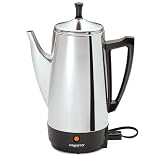
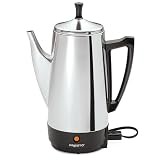
- Presto 02811 12-Cup – runner-up for a classic percolator, but it plugs in
- FUNLAVIE 12-Cup – runner-up for programmable convenience, but electric
- Yeeke 6-Cup Glass – runner-up for a small glass percolator, but electric
- ADIVO Electric Glass Percolator – runner-up for a glass-and-metal look, but electric
Which One Is Right for You?
| If you… | Choose |
|---|---|
| Need coffee during an outage and can heat water on a gas flame or camp stove | Bodum 34oz Pour Over |
| Want a strong, concentrated cup from a pot that sits on the burner | Primula Classic Stovetop Moka Pot |
| Would accept a plug-in pot that looks and brews like the old-school kind | Presto 02811 12-Cup |
| Want a plug-in 12-cup pot with brew-strength settings and a delay start | FUNLAVIE 12-Cup |
| Brew for one or two and like a glass carafe | Yeeke 6-Cup Glass |
| Prefer a glass percolator with an integrated knob | ADIVO Electric Glass Percolator |
Think of “no electric” in two layers. Layer one is the brewer: does the device itself need power? The Bodum and Primula do not. Layer two is the heat source: both still need hot water or a burner, so a gas range, a camp stove, or a fire is part of the system. An electric stovetop works too, but then you are using electricity indirectly.
All 6 Picks in Detail
1. Bodum 34oz Pour Over Coffee Maker – Best for brewing with no electricity
As an Amazon Associate we earn from qualifying purchases at no extra cost to you.

The Bodum is a glass carafe with a cone-shaped steel filter that sits on top. You pour hot water over the grounds, and the coffee drips into the carafe. It is the cleanest answer to a power-free search and suits campers, apartment dwellers with a gas stove, and anyone who likes a slow, attentive morning ritual.
- Capacity: 34 ounces (about 1 liter) on the carafe; plan on a bit less in practice for headspace
- High-heat borosilicate glass carafe with a cork grip
- Reusable stainless steel filter, so no paper filters required
- Listing notes it is made in Portugal; brew time is described as roughly 3 to 4 minutes
- Needs hot water from a kettle or pot, so confirm your heat source
The process is simple: heat water, moisten the grounds, then pour in stages. A permanent steel filter lets more oils through than paper, which gives a fuller body and a bit of sediment. If you prefer a cleaner cup, you can use a finer filter over it or rinse the carafe thoroughly after each brew. Place the carafe on a stable surface, because glass does not survive drops.
Pour-over rewards a little routine. Boil water, let it rest for about half a minute, and use a gooseneck or steady pour so the grounds stay evenly wet. The permanent filter means you only need a scoop and a scale or a tablespoon. For outages, store the carafe in a padded spot, keep a small supply of whole beans or ground coffee, and keep a manual grinder if you buy whole beans. The brewer will still work if the lights go out, and it is easy to clean with just water and a brush.
Pros
- No electricity, no pods, minimal parts
- Reusable filter reduces waste
Cons
- You need a way to heat water and to pour it with care
- Glass can break; the carafe does not keep coffee hot on its own
Compared with the Primula, it makes more coffee at a gentler strength and needs a separate kettle.
2. Primula Classic Stovetop Espresso and Coffee Maker – Best for strong stovetop coffee

The Primula is a moka pot, sometimes called a greca or Cuban-style coffee maker. Water in the base heats on a burner, steam pressure pushes it up through the grounds, and the coffee collects in the top. It fits people who like a small, strong cup and who cook on gas, a camp stove, or a conventional range.
- Type: stovetop moka pot for Italian and Cuban style coffee, per the listing title
- Size: six espresso cups, which in a pot like this typically means roughly 9 to 10 fluid ounces; confirm on the listing
- No cord, no outlet; heat comes from the burner
- Material: pots of this classic style are often aluminum; confirm on the product page, especially for induction use
- Hand-washing is the usual guidance for aluminum pots; check the care card
A moka pot makes concentrated coffee, but it does not generate the pressure of an espresso machine, so describe the result as espresso-style rather than true espresso. The method is forgiving once you learn it: fill the base to the valve, fill the basket with a medium-fine grind without tamping, and heat gently. Remove the pot from the burner when you hear gurgling and the top fills.
The classic Cuban-style serving habit with a pot like this is to make a small, sweet, strong cup to share, though you can also dilute the concentrate with hot water for a longer drink. Because the pot sits directly on the heat, stay close and lift it off as soon as the stream turns pale. Cool the base under a tap only if the maker says it is safe, and otherwise let it cool on a trivet.
Pros
- Fully non-electric
- Compact and durable
Cons
- Small yield per brew
- Needs attention at the burner to avoid bitter, scorched coffee
Against the Bodum, the Primula makes less coffee but at a much higher strength.
3. Presto 02811 12-Cup Electric Percolator – Runner-up (plugs in)

This is an electric percolator, as its title says. It appears here as a runner-up for readers whose real goal is a simple, no-programming coffee pot, not a power-free one. It does not meet the literal “no electric” requirement.
- Capacity: 12 cups; retailers list a 2 or 4 cup minimum, so confirm
- Power: listed at 800 watts, 120 volts
- Stainless steel body with a perk tube and filter basket
- Signal light, stay-cool handle and knob, and a detachable cord
- Automatic keep-warm after brewing
The appeal is minimalism. There is no touch screen and no app; you add water and grounds, plug it in, and the pot cycles. If a power outage is the worry, this is not your solution, but if your concern is avoiding pods or complex machines, it is a reasonable plug-in alternative.
If you are drawn to the idea of a percolator but not the plug, a stovetop percolator is the non-electric version; none are in this product set. This plug-in pot is the nearest relative of that style, and it shares the same brewing principle of cycling hot water over the grounds. Use a coarse grind and shut off the pot soon after the ready light to avoid bitterness.
Pros
- Simple operation
- Large batch size
Cons
- Needs an outlet
- Hand-washing is the safe choice because retailer care notes differ
It is the plainest electric option here, and the better pick than the FUNLAVIE if you do not want settings.
4. FUNLAVIE 12-Cup Electric Percolator – Runner-up (plugs in)

The FUNLAVIE is an electric 12-cup percolator with brew-strength settings and a delay timer. It is listed as an electric coffee pot, so it does not suit a no-electric search; it is included as a runner-up for plug-in convenience.
- Capacity: 12 cups
- Three brew-strength settings, per the listing title
- 24-hour delay brew and one-touch brewing, per the listing title
- Materials: the title mentions a BPA-free component; confirm the rest of the materials on the listing
- Power rating, dimensions, and keep-warm details: confirm on listing
The delay timer is useful if you want coffee ready when you wake up, but it depends on a working outlet and a clock. Set it in the evening, and double-check the water level and basket before leaving it unattended.
Delay-start timers are useful on busy mornings but need care: grounds and water sit in the pot overnight, so clean the basket and rinse the carafe before you set it. Confirm the specifications on the listing, since the title does not list wattage or materials. If your search was for a way to make coffee without any power, set this pot aside and look at the two manual brewers above.
Pros
- Delay brew and strength settings
- Large capacity
Cons
- Not a power-free brewer
- Key specs are not in the title
Pick it over the Presto only if you value programming.
5. Yeeke 6-Cup Electric Percolator – Runner-up (plugs in)

The Yeeke is a six-cup electric percolator with a borosilicate glass carafe. It does not meet the “no electric” requirement, but it is a compact plug-in for one or two people.
- Capacity: 6 cups, or about 30 fluid ounces at five ounces per cup
- Three custom brew modes, per the listing title
- Borosilicate glass carafe and an automatic keep-warm function
- Power, materials of the lid and base, and dimensions: confirm on listing
- Check whether the glass can be washed with the rest of the parts
Glass lets you watch the cycle, which many people enjoy. It also means more care when handling and cleaning. Keep it away from sudden temperature changes.
A six-cup pot suits a small household, and its glass carafe lets you judge strength by color. Because it is electric, it is not a fit for camping or outages. Keep an eye on the cord and place it away from the counter edge, and let the glass cool before washing it with cold water.
Pros
- Small size
- Glass carafe
Cons
- Electric
- Glass is more breakable than steel
Compared with the ADIVO, it is smaller and simpler.
6. ADIVO Electric Glass Coffee Percolator – Runner-up (plugs in)

The ADIVO is described as an electric glass percolator with an integrated knob and an 11-cup capacity. Like the others in this group, it needs an outlet.
- Capacity: 11 cups, about 55 fluid ounces at five ounces per cup
- Glass percolator with an integrated knob, per the listing title
- The listing text refers to plastic-free brewing; confirm which parts touch hot water
- Wattage, base material, and keep-warm behavior: confirm on listing
- Check cleaning guidance for the glass and knob
The look is the draw, with the brew visible through the glass. As with any glass vessel, preheat gently and avoid thermal shock.
Visible brewing is the main attraction of a glass percolator, and the integrated knob keeps the design clean. As with the Yeeke, glass and heat call for gentle handling. If plastic-free brewing is a priority, read the full listing to see which parts touch hot water, since the title alone does not say.
Pros
- Visible brewing
- Large for a glass pot
Cons
- Not suitable for power-free use
- Specs thin in the title
It is the largest glass option here, ahead of the Yeeke for bigger groups.
Specs Compared
| Model | Needs electricity? | Heat source | Capacity | Main material | Brew style | Notes |
|---|---|---|---|---|---|---|
| Bodum 34oz Pour Over | No | Any way to heat water | 34 oz carafe | Borosilicate glass, steel filter, cork grip | Pour-over | Reusable filter |
| Primula Stovetop Moka | No | Stove burner or camp stove | 6 espresso cups; confirm ounces | Confirm on listing | Stovetop moka | Espresso-style, not true espresso |
| Presto 02811 | Yes | Plug-in, 800 W listed | 12 cups | Stainless steel | Percolator | Keep-warm |
| FUNLAVIE 12-Cup | Yes | Plug-in | 12 cups | Confirm on listing | Percolator | Delay brew, 3 strengths |
| Yeeke 6-Cup | Yes | Plug-in | 6 cups | Borosilicate glass carafe | Percolator | 3 brew modes, keep-warm |
| ADIVO Glass Percolator | Yes | Plug-in | 11 cups | Glass; confirm other parts | Percolator | Integrated knob |
How We Chose These
We began with the six listed products, then sorted them by the one question that matters for this topic: does the brewer itself need electricity? Two do not, and they lead the page. Four do, and we say so plainly while still describing what each offers. We read listing titles, manufacturer pages where available, and retailer specification fields, and we mark unknown values as “confirm on listing.” We did not rely on lab runs or personal ownership.
What to Look For
What “no electric” really requires
A brewer that needs no power still needs heat. A pour-over needs hot water, and a moka pot needs a burner. Gas ranges, camp stoves, and fires work during an outage. A conventional electric range does not. If power loss is your concern, confirm that you have a non-electric heat source and a way to light it, and think about keeping a manual grinder or pre-ground coffee on hand.
Pour-over basics
Pour-over works best with water just off the boil, a medium grind, and a slow, even pour. A starting ratio is about 1 part coffee to 16 parts water by weight, which means roughly 60 grams of coffee for a liter. Wet the grounds first, wait about 30 seconds, then pour in stages. Total time near 3 to 4 minutes is typical, matching the figure on the Bodum listing.
Moka pot basics
Fill the base with water to just below the safety valve, add medium-fine grounds to the basket without pressing them down, and screw the top on firmly. Use low to medium heat and take the pot off when the flow turns pale and sputters. Cool the base before opening, because the pot holds pressure and the metal is very hot.
Glass, steel, and aluminum
Glass is neutral in flavor but fragile. Stainless steel is rugged and easy to clean. Aluminum is lightweight and heats fast, which suits moka pots, but it generally should not go in the dishwasher and may not work on induction. Check the listing for your pot.
Filters and sediment
Permanent metal filters let oils and fine particles through, which adds body and some sediment. Paper filters give a cleaner cup. Many pour-over fans pick based on taste, so the reusable filter on the Bodum is a trade-off, not a flaw.
Preparing for outages
If your real reason for searching is a power cut, assemble a small kit: a manual brewer, a heat source and fuel you can safely use, a kettle or pot, a manual grinder or ground coffee, and a few filters if your brewer uses them. Use gas appliances and camp stoves only where ventilation is adequate, and never run a camp stove indoors unless the maker approves it. Check your supplies once or twice a year.
Taste differences between the methods
Pour-over with a metal filter tends to taste full-bodied and slightly oily. A moka pot is strong, rich, and concentrated. A percolator cycles water repeatedly and can taste bolder, and sometimes harsher, if left to run. Which you prefer is personal, so choose by flavor and routine as much as by features.
A worked example
Suppose you plan for two people during an outage and each wants a 10-ounce mug. That is about 20 ounces of coffee. The Bodum can make that in one pour, while a six-cup moka pot yields roughly 9 to 10 ounces of concentrate per run, so you would brew twice or dilute with hot water.
Questions
Can I make coffee without electricity at all?
Yes, using a manual brewer such as a pour-over or stovetop moka pot with a non-electric heat source. The brewer does not need power, but you still need a flame or stove for the water.
Are percolators electric?
Some are and some are not. The four percolators in this set are plug-in models; stovetop percolators exist, but they are not in this product set.
Is a moka pot the same as an espresso machine?
No. A moka pot uses steam pressure at a lower level than an espresso machine, so the coffee is strong but not true espresso.
What grind should I use?
Medium for pour-over and medium-fine for a moka pot. Adjust to taste if the cup is sour or bitter.
Can I use these on induction or an electric stove?
Electric coil and glass-ceramic ranges work with most stovetop pots, but induction needs a compatible base. Confirm the Primula’s material on the listing before using it on induction.
Is the Bodum dishwasher safe?
Retailer information for related Bodum pour-over listings mentions dishwasher-safe features on a different color version. Confirm on your listing and hand-wash the cork grip.
Update History
- October 21, 2026 – Initial publication; product set drawn from current catalog listings.
- Check the product page for current specifications and availability before buying.
Sources
- Manufacturer product and specification pages for Presto and Bodum where available
- Retailer listing titles and specification fields for each product


Write Your Review
No reviews yet. Be the first to share your experience!