

The best camping coffee maker for most people is the AeroPress Go: it brews in under two minutes, packs inside its own mug, weighs about 318 grams and needs only hot water. For groups at a campsite, an enamelware or stainless percolator from GSI Outdoors makes six to twelve cups over a fire or stove, and ultralight backpackers can drop to a simple drip cone like the GSI Ultralight Java Drip. The right choice depends on group size, how far you carry it and what heat source you have.
Our top picks



As an Amazon Associate we earn from qualifying purchases at no extra cost to you.
Quick Comparison of the Picks
| Pick | Best for | Servings | Weight | Needs | Price tier |
|---|---|---|---|---|---|
| AeroPress Go | Best overall, solo or pair | 1 per press (about 8 oz) | About 318 g | Paper filters, hot water | Mid |
| GSI Outdoors Enamelware Percolator | Best for groups and campfires | 8 or 12 cups | Heavy, enameled steel | Coarse grounds, fire or stove | Budget |
| GSI Glacier Stainless 6-Cup Percolator | Best stainless percolator | 6 cups (0.9 L) | About 1 lb 4 oz | Coarse grounds, any heat source | Mid |
| Stanley Classic Stay Hot French Press | Best car-camping press | About 6 cups | About 2.5 lb | Coarse grounds, hot water | Mid |
| Jetboil Coffee Press or MSR Windburner Coffee Press | Best for owners of those stoves | Matches stove pot | About 1.3 oz | Compatible stove | Low |
| MSR MugMate | Best single-cup steeper | 1 mug | About 0.98 oz | Hot water, any mug | Low |
| GSI Ultralight Java Drip | Best ultralight | 1 cup | About 0.3-0.4 oz | Paper or no filter, hot water | Budget |
Best Overall: AeroPress Go
The AeroPress Go makes one cup at a time with a smooth, low-acid brew, and it cleans by popping the puck out of the chamber. It can make concentrated coffee that you top up with hot water, plus cold brew or press-style coffee, which is why outdoor review sites rank it first for versatility. It is unbreakable plastic, so it travels well. The trade-off is volume: for more than two people, you will press repeatedly while the group waits.
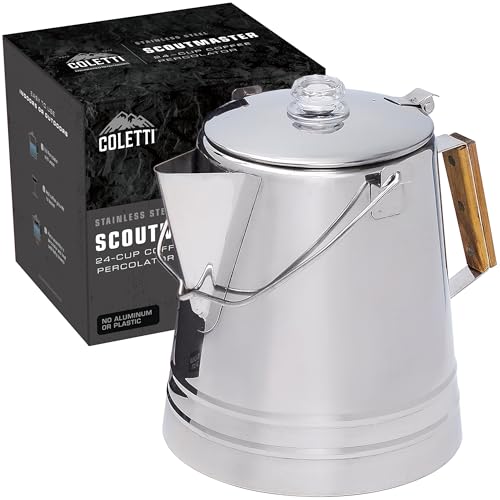
Best for Groups: GSI Outdoors Percolator
A percolator cycles hot water up through grounds until the coffee is as strong as you like, which suits campfires because the heat does not need to be precise. The enamelware version in 8 and 12 cup sizes is cheap and durable but bulky and hard to clean; the stainless Glacier version is lighter. Percolation tends toward a bold cup, and over-perking turns bitter. Use coarse grounds and stop after 7 to 10 minutes.
Best Stainless Percolator: GSI Glacier 6-Cup
The 6-cup Glacier weighs roughly 1 lb 4 oz and holds about 0.9 L. It works on a backpacking stove, a grill or a fire, and avoids the chipping risk of enamel. It is a good compromise for a family of three or four at a campsite.
Best Car-Camping Press: Stanley Classic Stay Hot French Press
A stainless French press keeps coffee warm while everyone wakes up, and it makes about six cups. It weighs around 2.5 lb, which is fine for a car but not a backpack. The downside is cleanup, since wet grounds are messy in a campsite. Dump them away from water sources and pack out filters.
Best for Stove Owners: Jetboil and MSR Press Accessories
If you already own a compatible Jetboil or an MSR Windburner, a coffee press accessory lets you brew in the same pot you boil water in, at about 1.3 oz extra weight. It is the lightest way to make a bigger cup without extra pots.
Best Single-Cup Steeper: MSR MugMate
The MugMate is a stainless basket that sits in a mug, weighing under an ounce. Add grounds, pour hot water and wait. It makes a sediment-light cup without a filter, but you need patience and a lid to hold heat.
Best Ultralight: GSI Ultralight Java Drip
This collapsible cone drips coffee through a filter into your cup for a few ounces of weight at most. It is the pick for thru-hikers who count grams, though it brews slowly in cold wind.
Worked Calculation: Fuel and Water per Pot
Coffee strength is usually measured by the brew ratio. A common range is 1:15 to 1:17 coffee to water by weight.
- For a 12 oz (355 g) camp mug at 1:16, you need 22 g of coffee, about 3 tablespoons.
- For four mugs, 88 g of coffee and 1.42 L of water.
- A 12-cup percolator at 5 oz per cup holds about 1.8 L, so it needs about 112 g of coffee.
- Boiling 1.4 L of water on a canister stove uses roughly 10 to 15 g of fuel, according to common stove manufacturer guidance.
| Group | Water needed | Coffee (1:16) | Best tool |
|---|---|---|---|
| 1 person, 1 mug | 355 ml | 22 g | AeroPress Go or MugMate |
| 2 people | 710 ml | 44 g | AeroPress Go (two presses) or stove press |
| 4 people | 1.4 L | 88 g | 6-cup percolator or Stanley press |
| 8 people | 2.8 L | 175 g | 12-cup percolator |
How to Choose
- Backpacking or car camping? Under 10 oz total, choose AeroPress Go, MugMate or Java Drip. For car camps, go bigger.
- Fire or stove? Percolators tolerate uneven heat; presses and pour-over cones need a separate boil.
- Cleanup tolerance. Filters and AeroPress pucks are tidy; French presses and percolators leave wet grounds.
- Grinder. Pre-ground or a hand grinder is needed; coarse for percolators and presses, medium-fine for AeroPress.
Durability and Camp Realities
Enamelware chips if dropped, and chips can rust. Glass-bodied presses are a poor idea in a pack. Percolator baskets need a rinse right away or oils turn rancid. At altitude, water boils below 100 C, which means slightly weaker extraction, so use a bit more coffee. Follow Leave No Trace by packing out grounds or scattering them well away from camp and water.
How to Choose a Camp Coffee Maker in Five Steps
Camp coffee is a balancing act between weight, speed, cleanup and the number of mouths to feed. Rather than starting with a favorite product, work through the decision in order and the right tool usually becomes obvious.
Step one: how will you get to camp? If the car parks beside the tent, weight barely matters and a Stanley Classic Stay Hot French Press or an enamelware percolator is perfectly reasonable. If you carry everything on your back, every ounce counts and the AeroPress Go, MSR MugMate or GSI Ultralight Java Drip move to the front of the line.
Step two: how many people drink coffee at once? One or two drinkers can happily rotate through a single-cup brewer. Four or more people waiting for a hot drink on a cold morning will lose patience after the second press. A percolator solves that by brewing a whole pot in one go.
Step three: what heat source do you have? A fire, a gas stove and a vehicle-based burner all behave differently. Percolators tolerate uneven, direct heat. Presses and drip cones only need a pot of boiled water, so they pair well with a stove you already carry for cooking.
Step four: how much cleanup can you tolerate? Wet grounds are the enemy of a tidy camp. A paper filter in a cone or an AeroPress puck is easy to pack out. A percolator basket or a French press full of sludge needs a bit more effort and a place to dump grounds responsibly.
Step five: how picky are you about taste? A percolator gives a bold, hearty cup. An AeroPress gives a smooth, clean one. A French press gives a full-bodied cup with some sediment. Choose the profile you would be happy to drink every morning for a week.
Who Should Skip Certain Camp Coffee Makers
Every design has an audience, and every design has people who will regret buying it.
- Solo backpackers should skip the enamelware percolator. It is heavy, bulky and built for groups. The weight penalty is not worth it for one mug.
- Large groups should skip single-cup steepers as their main brewer. The MugMate is brilliant for one person, but running eight separate steeps is a slow way to start the day.
- Anyone who hates cleaning should be wary of the French press. Grounds in the bottom of the carafe need to be scooped out and packed away, which is awkward in the dark with cold hands.
- Glass-lovers should skip glass carafes altogether. A dropped glass pot ends the trip for your coffee habit. Stainless and plastic forgive far more.
- People without a grinder should think twice about presses and percolators. Both prefer a coarse grind, and pre-ground coffee is often too fine, leading to muddy cups or over-extraction.
Scenario-Based Picks From This Guide
| Scenario | Best match | Reason |
|---|---|---|
| Thru-hike, counting every gram | GSI Ultralight Java Drip | Collapsible and almost weightless |
| Weekend backpacking trip for two | AeroPress Go | Packs into its own mug, fast to clean |
| Family car camp, four people | GSI Glacier 6-Cup | Stainless, handles stove or fire |
| Scout troop or large reunion | GSI Outdoors enamelware percolator | Large capacity, tolerant of campfire heat |
| You already own a compatible stove pot | Jetboil or MSR press accessory | Brew in the pot you already boil in |
| Slow morning at a cabin site | Stanley Classic Stay Hot French Press | Keeps coffee warm while people wake up |
| Minimalist day hiker with a thermos | MSR MugMate | Almost no weight, no filter to buy |
Grind, Water and Technique in the Field
Good camp coffee is mostly about controlling a few simple variables when conditions are not ideal.
Match the grind to the method. Coarse suits percolators and presses, because fine particles slip through baskets and turn the cup gritty. Medium to medium-fine suits the AeroPress. Drip cones like a medium grind. If you cannot carry a hand grinder, grind at home and seal the coffee in a small airtight container.
Mind the water temperature. Water straight off a rolling boil can scorch grounds and taste bitter. Let it sit for a short moment before pouring. At altitude water boils at a lower temperature, so a slightly longer steep or a little more coffee compensates.
Use clean water. If you are drawing from a stream or lake, treat or filter it first. Boiling is a reliable method, so make sure it reaches a proper boil for the time recommended by local health guidance before you brew.
Watch the clock. A percolator left too long goes bitter, and a press left too long keeps extracting. A small watch or phone timer prevents ruined pots. For a percolator, listen for the gentle rhythm of bubbling and pull it off the heat when the color matches your preference.
Protect your gear from wind. Wind steals heat from stoves and slows boiling. A simple windscreen, or positioning the stove behind a pack or a log, can save fuel and time.
Pre-measure at home. Portion coffee into small bags or a dosing container before the trip. It removes guesswork at the picnic table and keeps your supplies tidy.
Cleaning, Leave No Trace and Waste
Grounds are organic, but that does not make them harmless at a campsite. They can attract wildlife and linger on the ground for a long time, particularly in dry or alpine places.
- Pack out used filters and pucks in a sealable bag, and carry your trash to a proper disposal point.
- Where local rules allow it, scatter grounds thinly well away from trails, camp and water. Where rules prohibit that, pack them out.
- Wash dishes at least a good distance from streams and lakes, and use only a small amount of biodegradable soap if you need soap at all.
- Wipe oils off the percolator basket and tube soon after use, because dried coffee oil turns rancid and tastes bad in the next pot.
- Strain wash water to catch food particles before dispersing it, and pack those particles out.
The easiest cleanup comes from single-cup systems with paper filters, which is part of why the AeroPress Go and the Java Drip are favorites with people who travel light and leave little behind.
Maintenance, Durability and Lifespan
Camp gear takes abuse, and coffee gear is no exception. A few habits let it last for many seasons.
Stainless percolators like the Glacier are tough, but the glass or plastic knob on the lid can crack if it is knocked. Keep a spare or pack the pot where it will not be crushed. Enamelware looks charming and cooks evenly, yet chips will rust once the metal underneath is exposed. Retire a badly chipped pot rather than risk flaking.
The rubber seal on an AeroPress plunger wears slowly and can harden with age. If the plunger starts to leak or feels loose, replace the seal. Keep the parts dry before storing so mildew does not develop in a closed mug.
French press filters can bend if they are packed under heavy items. Store them upright or in the press body, and check the mesh for tears before each trip.
Finally, dry everything fully before packing it away at the end of the season. Moisture trapped in a sealed container is the main reason camp coffee gear smells musty by the time spring arrives.
Common Camp Coffee Problems and Fixes
- Gritty cup: the grind is too fine for the filter. Use a coarser grind or add a paper filter to a steeper.
- Bitter percolator coffee: the pot perked too long or the heat was too high. Reduce the heat to a gentle bubble and shorten the time.
- Weak coffee: too little coffee for the water volume. Revisit the ratio from the earlier worked example and weigh or measure more carefully.
- Cold coffee in a cold wind: pre-warm the mug, use a lid, or choose an insulated press that keeps the brew hot.
- Slow drip: the grind is too fine or the filter is clogged. Stir gently and pour in smaller amounts.
- Burnt taste from a campfire: the pot sat in open flame. Move it to coals or the edge of the grate for gentler heat.
More Questions Buyers Ask
Do I need a separate kettle for camp coffee?
Not necessarily. If you cook with a pot, you can heat water in it first and make coffee before cooking. A percolator heats its own water, so it needs no kettle at all. A dedicated small kettle is only worth the weight if you make hot drinks very often.
Can I use instant coffee instead?
Yes, and it is the lightest option of all. The trade-off is flavor. Many campers keep a few instant sachets as a backup for mornings when wind, rain or a low fuel supply makes a full brew impractical.
What is the best way to keep coffee hot for a group?
Brew a larger batch and pour it into a pre-warmed insulated container, or choose a double-walled stainless press. Keeping the lid closed and the container out of the wind makes the biggest difference.
How should I store coffee on a multi-day trip?
Use an airtight container or a resealable bag with the air pressed out, and keep it away from heat and direct sun. Odor-proof storage matters in bear country, so follow local food storage rules for coffee just as you would for any scented item.
Is cold brew a good option for camping?
It can be, especially in hot weather with no fuel to spare. Combine coarse grounds and cold water in a sealed bottle, let it sit for many hours, then strain through a filter. It takes planning and a strainer, so it suits relaxed base camps better than fast-moving trips.
Frequently Asked Questions
What is the easiest way to make coffee while camping?
A single-serve AeroPress or a steeper like the MSR MugMate is the simplest, since you only need hot water and a mug. A percolator is easiest if you are cooking over a fire and feeding a group.
Can I use a percolator on a campfire?
Yes. Percolators are designed for uneven direct heat, so set them on the grate or near coals rather than in flames. Watch the clear knob on the lid for color and stop once the coffee darkens.
What grind should I take camping?
Coarse for percolators and French presses, medium to medium-fine for AeroPress. Pre-ground packed in a small jar works; fresh grinding with a hand mill gives better flavor but adds weight.
Is instant coffee better for backpacking?
It is lighter and faster, but flavor is usually weaker. Many hikers carry single-serve pour-over bags or a Java Drip cone as a compromise.
How do I clean coffee gear at camp?
Scrape grounds into a trash bag, rinse with a small amount of water, and wipe with a cloth. Wash with biodegradable soap well away from streams, and dry fully before packing.
More from Amazon
Programs that pair well with the guide above. Offers and eligibility are set by Amazon and may change.
Set up recurring deliveries of everyday items on eligible products. Terms and savings are set by Amazon.
Explore Subscribe & SaveCollect the home and kitchen items you want in one registry that guests can shop from.
Create a wedding registryFree shipping on eligible items, Prime Video and more. Eligible new members can start with a free trial.
Start a Prime free trialAudiobooks and podcasts to listen to on the go. Eligible new members can start with a free trial.
Try Audible freeAs an Amazon Associate we earn from qualifying purchases.
Write Your Review
No reviews yet. Be the first to share your experience!