

Key takeaways
- Compare the best commercial milk frothers and steamers: wattage, steam pressure, boiler size and electrical needs for cafes and tea shops.
The 2000-watt steam frother with the 8-liter stainless boiler and instant hot water tap is the best overall pick in this group for a busy cafe or tea shop, because its large boiler and digital temperature display are aimed at repeated, back-to-back drinks. These are electric steam machines that heat and foam milk with a steam wand, not handheld whisks or single-cup countertop frothers. All six listings are high-wattage, so the electrical load and steam safety matter as much as the foam. We call out which listings need a closer look before you buy.
Quick List
- WantJoin 1800W Frother and Beverage Heater (LED panel) – best for a small cafe that wants a documented steam spec on a modest electrical load
- 2500W 110V Commercial Milk Frother – best for shops that want the highest listed power, if their wiring can support it
- VorChef 2200W Commercial Milk Frother – best for mid-volume milk-tea and latte service
- WantJoin 1800W Frother with Hot Water Dispenser – best for a counter that also needs hot water for tea
- Commercial Steam Frother with Instant Hot Water Tap (8L boiler) – best overall for high-volume service
- WantJoin 2200W Frother and Beverage Warmer – best for shops that want a higher-power WantJoin with a warmer function
Which One Is Right for You?
| If you… | Choose |
|---|---|
| serve lots of lattes and milk teas back to back | Commercial Steam Frother with 8L boiler and hot water tap |
| need a mid-power machine with a ready LED panel | WantJoin 1800W Frother and Beverage Heater |
| want hot water and steam from one unit on a modest circuit | WantJoin 1800W Frother with Hot Water Dispenser |
| want more steam power and have a 20-amp circuit | VorChef 2200W or WantJoin 2200W |
| want the highest listed wattage | 2500W 110V Commercial Milk Frother, after an electrical check |
| run a small shop and want to start with the lowest electrical load | Either WantJoin 1800W model |
The practical decision is electrical, not cosmetic. A standard 120-volt, 15-amp circuit tops out around 1,800 watts, and an 1,800-watt machine sits exactly at that ceiling. Anything higher needs a 20-amp circuit or a dedicated line. Decide where the machine will plug in before you decide which one to buy.
All 6 Picks in Detail
1. WantJoin 1800W Frother and Beverage Heater (LED Panel) – Best for a Modest Electrical Load
As an Amazon Associate we earn from qualifying purchases at no extra cost to you.
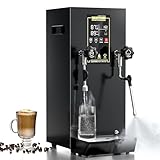
This WantJoin model is a multifunction milk steamer and beverage heater with an LED display panel, aimed at latte, cappuccino, milk tea and hot water use. Product pages for the 1800W WantJoin line describe 110-to-120-volt operation, 1.25 bar steam pressure, a claim of dense foam in about 20 seconds, a 304 stainless-steel tank with insulation, auto-refill from a water source, a digital pressure gauge and a removable drip tray. One listing gives the capacity as 4 liters. Because the WantJoin pages are not identical to each other, confirm the details on this exact listing.
It suits a small cafe, a bubble-tea counter or a bakery where milk drinks are a side line rather than the main menu. Give it a dedicated outlet, a level surface and a spot where the wand can be reached without leaning over hot equipment, and plan to wipe the wand after each drink.
- Power: 1,800 watts at 110 to 120 volts, per the title and maker pages
- Steam pressure: 1.25 bar, per related WantJoin pages
- Display: LED panel showing water and cup temperature
- Tank: 304 stainless steel; capacity, confirm on listing
- Extras: hot water dispenser function and drip tray
Pros
- Documented, mid-level specification set
- Draw is workable on a dedicated 20-amp circuit
Cons
- Sits at the limit of a 15-amp circuit
- Details vary between sibling listings
Compared with the other 1800W WantJoin below, the difference is mostly in naming and layout, so read both pages before choosing.
2. 2500W 110V Commercial Milk Frother – Best for Maximum Listed Power, With a Warning

This listing describes a 2,500-watt, 110-volt automatic steam machine for boiling water, steaming and frothing milk and making foam for espresso drinks. The name of the maker is not stated in the listing excerpt we reviewed. The figure matters: 2,500 watts at 110 volts is nearly 23 amps, and even at 120 volts it is about 21 amps, which is more than a standard 20-amp circuit supplies. Confirm the actual electrical requirement, plug type and any dedicated-circuit advice on the product page before you buy.
If you are drawn to this one because of the number, ask the seller for the plug type, the amperage on the nameplate and whether the unit is meant for a 240-volt supply. A mismatch between the outlet and the machine is a common reason high-wattage appliances trip breakers or overheat cords.
- Power: 2,500 watts at 110 volts, per the title
- Function: steam, boiling water and milk foam
- Maker, tank size and steam pressure: confirm on listing
- Electrical: likely beyond a standard 20-amp outlet; verify
- Safety features: confirm on listing
Pros
- Highest listed wattage in the group
- Multi-function steam and hot water
Cons
- Electrical requirements may exceed a typical outlet
- Little documented detail in the listing excerpt
It offers the most power of the six, but it is the one where a pre-purchase call to the seller and an electrician is most important.
3. VorChef 2200W Commercial Milk Frother – Best for Mid-Volume Service

VorChef’s listing describes a 2,200-watt, 110-volt automatic electric steam machine for frothing milk and making foam for coffee. At 120 volts, 2,200 watts is about 18 amps, which is above what a 15-amp circuit can supply and close to the limit of a 20-amp circuit, so plan for a dedicated 20-amp line. It is a reasonable fit for a cafe or tea counter with steady midday demand where an 1,800-watt unit might feel slow.
Think of it as the pick for a counter with steady demand: a morning rush, a lunch rush and a long tail of milk drinks in between. The automatic operation helps staff who rotate in and out, because the machine does the heat management and they handle the pitcher.
- Power: 2,200 watts at 110 volts, per the title
- Function: automatic electric steam and milk foam
- Tank size and steam pressure: confirm on listing
- Intended use: commercial counters, per the title
- Safety features: confirm on listing
Pros
- More steam capacity than the 1800W models
- Automatic operation suits busy staff
Cons
- Needs a robust circuit
- Limited detail in the title
It sits above the 1800W WantJoin units and below the 2500W machine, which makes it a middle path on power.
4. WantJoin 1800W Frother with Hot Water Dispenser – Best for Tea and Milk on One Counter

This WantJoin listing puts the hot water dispenser front and center, along with the milk steamer and beverage heater functions for latte, cappuccino, coffee and milk tea. It shares the 1,800-watt figure with the first WantJoin on the list and, by the sibling pages, a similar steam setup and LED display. If your menu includes tea or hot chocolate, a hot water outlet on the same machine saves counter space and a separate kettle.
The hot water outlet earns its keep on a menu with tea, hot chocolate or americanos. Keep in mind that every cup drawn for hot water draws down the same tank, so the first drink after a rush may take a little longer while the machine recovers.
- Power: 1,800 watts, per the title
- Functions: milk steamer, hot water dispenser and beverage heater
- Display: LED, per the title
- Steam pressure and tank: confirm on listing
- Color: confirm on listing
Pros
- Combines hot water and steam
- Same modest wattage as the first WantJoin
Cons
- Easy to confuse with sibling WantJoin listings
- Hot water and steam draw from the same boiler
It is nearly a twin of the first WantJoin, so the choice depends on which page gives you the clearer specification set.
5. Commercial Steam Frother with Instant Hot Water Tap (8L Boiler) – Best Overall

This listing stands out because it spells out its core numbers: 1.6 bar steam pressure, a claim of about 15-second frothing, 2,000 watts of heating power, an 8-liter SUS304 stainless boiler, a digital temperature display and an instant hot water tap. An 8-liter boiler holds more water than the 4-liter figure seen on WantJoin pages, which should help during a rush because the machine has more reserve to draw on. At 120 volts, 2,000 watts is about 17 amps, so a 20-amp circuit is the safe assumption.
The larger boiler and tap make it the natural centerpiece for a small tea shop or a coffee kiosk, where steam and hot water are used all day. Check the footprint and the weight on the product page, because an 8-liter unit needs a sturdy counter and clearance for the wand.
- Power: 2,000 watts, per the title
- Steam pressure: 1.6 bar, per the title
- Boiler: 8 liters, SUS304 stainless steel
- Display: digital temperature readout
- Hot water: instant tap, per the title
Pros
- Larger boiler and clearly stated pressure
- Separate hot water tap for tea and americanos
Cons
- Larger and heavier than the countertop WantJoin units
- Still needs a 20-amp circuit
Compared with the 2200W machines, it gives up some wattage for a bigger boiler and a better-documented feature set.
6. WantJoin 2200W Frother and Beverage Warmer – Best Higher-Power WantJoin

The 2200W WantJoin adds more power to the line and, on the sibling pages we saw, a two-wand design, 1.6 bar pressure, four preset temperatures, a timer for programmable on/off and a smart LED panel. The listing describes a professional milk steamer and beverage warmer for latte and cappuccino. The sibling pages did not state a tank capacity, so look for it on the exact listing. Plan the same dedicated-circuit approach as for the VorChef at 2,200 watts.
The preset temperatures and timer are the useful parts for a team that includes new staff, since presets reduce guesswork and a timer can start the machine before opening. Confirm the number of wands and the tank size, which vary across WantJoin pages.
- Power: 2,200 watts, per the title
- Steam pressure: 1.6 bar on a sibling 2200W page; confirm
- Panel: LED display, per the title
- Presets and timer: four temperature presets on a sibling page; confirm
- Wands and tank: confirm on listing
Pros
- More power than the 1800W WantJoin units
- Presets and timer help standardize service
Cons
- Details differ across WantJoin pages
- Needs a dedicated circuit
Next to the VorChef at the same wattage, the WantJoin trades a plainer feature set for a more detailed LED interface.
Specs Compared
| Product | Power | Steam pressure | Tank / boiler | Display or controls | Extras |
|---|---|---|---|---|---|
| WantJoin 1800W (LED) | 1,800 W | 1.25 bar (related pages) | 4 L on one listing; confirm | LED panel, pressure gauge | Hot water, drip tray |
| 2500W 110V Frother | 2,500 W | Confirm on listing | Confirm on listing | Confirm on listing | Steam and boiling water |
| VorChef 2200W | 2,200 W | Confirm on listing | Confirm on listing | Automatic operation | Steam and foam |
| WantJoin 1800W Hot Water | 1,800 W | Confirm on listing | Confirm on listing | LED display | Hot water dispenser |
| Steam Frother with Tap | 2,000 W | 1.6 bar | 8 L SUS304 boiler | Digital temperature display | Instant hot water tap |
| WantJoin 2200W | 2,200 W | 1.6 bar (sibling page) | Confirm on listing | LED panel, presets | Beverage warmer |
How We Chose These
This guide is based on desk research. We compared the six listings’ titles and specification fields, then looked for maker pages and sibling listings to fill in steam pressure, tank size and controls. We ranked units higher when their key numbers were stated clearly and lower when the listing left electrical or pressure details open. Because these machines run at high wattage, we gave extra weight to documented electrical and safety information. Nothing here comes from using the machines, and every unstated value is marked for you to confirm.
What to Look For
Electrical load comes first
Divide watts by volts to get amps. At 120 volts, 1,800 watts is 15 amps, 2,000 watts is about 17 amps, 2,200 watts is about 18 amps and 2,500 watts is about 21 amps. A standard 15-amp circuit supplies 1,800 watts at most, and continuous loads are normally kept to 80 percent of that. A 20-amp circuit supplies 2,400 watts at most. So every machine here needs a circuit that matches its listed draw, and the 2,500-watt unit may exceed even a 20-amp line. Do not use extension cords or power strips, and have an electrician check the outlet if you are unsure.
Steam pressure and boiler size
Steam pressure, expressed in bar, determines how fast the wand foams milk. Listings in this group cite 1.25 and 1.6 bar. Boiler size determines how long you can keep going before the machine needs to recover or refill. An 8-liter boiler gives more reserve than a 4-liter tank, which helps in a rush. For a shop making a few drinks an hour, either is fine, but for dozens an hour the bigger boiler is the safer choice.
Milk temperature and foam
Steamed milk is commonly served at roughly 140 to 160 degrees Fahrenheit. Beyond that, milk starts to taste cooked and loses sweetness. A digital temperature display or a cup-temperature readout helps staff stop at the right point. Use cold milk in a cold pitcher, keep the wand tip just under the surface at the start to add air and then lower it to swirl, and purge the wand before and after each use.
Safety features and handling
Steam machines are pressure vessels and the wand gets hot. Look for a pressure relief valve, a cool-touch wand cover, an automatic shutoff and a clearly marked fill and drain system. Keep the vent clear, never block the pressure gauge and never open the cap while the tank is hot. Wipe the wand with a damp cloth after every use so milk does not bake onto it, and place the machine where staff will not brush against it.
Cleaning and descaling
Milk residue inside the wand affects both flavor and hygiene if left, so purge and wipe after every drink. Mineral scale builds up in the boiler over time, and a filtered water source slows it. Follow the maker’s descaling interval and use a product that the manual allows for stainless-steel boilers.
A worked example
Suppose a tea shop sells 30 steamed-milk drinks in its busiest hour. Each drink uses about 8 ounces of milk and a few seconds of steam, so the wand is in use for a small part of the hour, but it is used in bursts. A machine with a larger boiler recovers pressure between bursts more easily than one with a small tank. In that case the 8-liter unit is the safer pick, while a 1,800-watt unit would suit a cafe selling a dozen milk drinks an hour.
Where to put it
Place the machine on a level, heat-resistant counter near a power outlet and a water source if it auto-fills. Leave clearance around the vent and the pressure gauge, keep the cord out of walkways and put a drip tray or towel under the wand. Staff should be able to see the display and reach the pitcher without crossing hot surfaces.
Questions
Do I need a 20-amp circuit for these machines?
For anything above 1,800 watts, yes, and even 1,800 watts is at the limit of a 15-amp line. Check the exact listed wattage, plug type and the manual, and have an electrician confirm the outlet.
Is a steam frother the same as an espresso machine steam wand?
It does the same job but with its own boiler, so it can run independently of an espresso machine. That is useful for milk tea shops and for cafes that want to steam milk without tying up the espresso boiler.
What temperature should I steam milk to?
Many baristas aim for around 140 to 160 degrees Fahrenheit. Go lower for a sweeter taste and higher only if customers ask for extra hot. Use a thermometer or the machine’s display to stay consistent.
Can these machines also make hot water for tea?
Several listings advertise a hot water dispenser or tap. Using it draws from the same boiler as the steam, so allow recovery time during a rush.
How often should I descale?
Follow the manufacturer’s schedule. Hard water calls for more frequent descaling, and filtered water extends the interval. Always rinse after descaling and run water through before steaming milk.
Can I use plant milks?
Yes, though results vary by brand. Barista-style oat and soy blends generally steam more reliably than thin versions. Keep the pitcher clean and purge the wand between dairy and non-dairy drinks so flavors do not carry over.
Is a commercial steam machine worth it for a home?
Only if you entertain often or make many milk drinks. The high wattage, size and electrical needs make these machines a better fit for a shop than a household kitchen.
What should I check on arrival?
Inspect the unit for shipping damage, confirm that the plug matches your outlet, read the manual’s first-use steps and run a water-only cycle before steaming milk. Check that the pressure gauge, wand and drip tray are present and that there are no leaks at the fittings.
Update History
- October 21, 2026 – Initial publication; product set drawn from current catalog listings.
- Check the product page for current specifications and availability before buying.
Sources
- Manufacturer product and specification pages for WantJoin
- Retailer listing titles and specification fields
- Common electrical code guidance on circuit loading for 15-amp and 20-amp circuits


Write Your Review
No reviews yet. Be the first to share your experience!