

Key takeaways
- The best compact espresso machines with steam wands, compared by size, tank, pressure rating and milk frothing, with specs checked and honest limits.
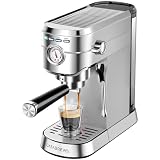
The CASABREWS CM5418 is the best all-around choice here for most small kitchens: it is about 6 inches wide, has a built-in pressure gauge, and includes a manual steam wand for milk. “Compact” in this guide means a pump-style or steam-style machine with a slim footprint that still gives you a wand for texturing milk, so cappuccinos and lattes stay possible on a crowded counter. If you want more water capacity without a bigger body, the CASABREWS 3700 Essential is the step-up pick. One listed machine uses a very low-pressure steam design, and we flag it plainly so you do not buy it expecting true espresso.
Quick List
- CASABREWS CM5418 – best for narrow counters that still want a gauge and a steam wand
- CASABREWS 3700 Essential – best for fewer refills thanks to a larger removable tank
- CASABREWS CM5418 (second listing) – best if the first listing is out of stock or you want the same model in another variant
- XIXUBX 3.5 Bar – best for casual strong-coffee drinks, not for true espresso
- NEWBULIG 20 Bar – best for a no-frills 20-bar machine with a wand
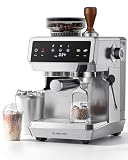
- BYESHOP 20 Bar – best for people who like a touchscreen and temperature readout
Which One Is Right for You?
| If you… | Choose |
|---|---|
| want the narrowest well-documented machine with a gauge | CASABREWS CM5418 |
| make several milk drinks in a row and hate refilling | CASABREWS 3700 Essential |
| find the first CM5418 listing unavailable | CASABREWS CM5418 (second listing) |
| only want a hot, strong coffee-style drink and a wand for foam, and accept it is not 9-bar espresso | XIXUBX 3.5 Bar |
| want a plain 20-bar machine and will confirm details on the listing first | NEWBULIG 20 Bar |
| want a screen and live temperature or pressure readouts | BYESHOP 20 Bar |
Start with the CM5418 if you are unsure; it has the clearest published specifications of the group. Move to the 3700 Essential when your household drinks more than two cups at a sitting. Treat the 3.5-bar model as a different category of appliance, and read the listing for the two lesser-documented 20-bar machines line by line before buying.
All 6 Picks in Detail
1. CASABREWS CM5418 – Best for Narrow Counters With a Gauge
As an Amazon Associate we earn from qualifying purchases at no extra cost to you.

This is the model most small-kitchen shoppers end up comparing everything else against. It suits someone who wants a stainless-steel look, a visible pressure gauge and a manual steam wand without giving up more than a sliver of counter space. Beginners get single and double shot presets; people who like to adjust will appreciate the manual steam valve for controlling milk texture.
- 20-bar pump rating and 1350W power, according to the manufacturer and retailer pages
- Removable water tank of about 34 oz
- 51mm portafilter, with a built-in pressure gauge
- Footprint listed around 12.3 in deep, 5.9 in wide and 12 in tall
- Weight listed around 8.6 lb on retailer pages (confirm on listing)
- Single thermoblock-style heating, as described by independent write-ups; confirm on listing
Pros
- Slim body and a clear gauge for learning how your puck behaves
- Steam wand gives real milk-drink capability
Cons
- Independent write-ups mention pressurized baskets only, which limits grind-size experimentation
- Thermoblock heating means you wait between brewing and steaming
Compared with the 3700 Essential, it gives up tank volume for a narrower stance.
In practical terms, a 34 oz tank and a 12-inch depth make this a machine you can park under a standard upper cabinet only if you slide it forward to fill. Because the portafilter is 51mm, accessories such as baskets and tampers are sized smaller than the 58mm commercial standard, so check fit before buying add-ons. The included gauge is the feature that most separates it from bare-bones competitors: it lets you see whether the machine builds pressure during a shot and helps you spot a grind that is too coarse or too fine.
2. CASABREWS 3700 Essential – Best for Bigger Tank, Same Small Footprint Class

The 3700 Essential targets households that drink several cups at once or share the machine. Its biggest practical difference from the CM5418 is the water reservoir, listed at 43.9 oz, which means fewer trips to the sink on a morning when everyone wants a latte.
- 20-bar pump rating and 1350W, per the manual and manufacturer page
- Removable tank listed at 43.9 oz (about 1.3 L in the manual)
- 51mm stainless portafilter with one-cup and two-cup filters in the box
- Preset volumes of roughly 30 ml for a single and 60 ml for a double
- Footprint around 12.6 in deep, 5.7 in wide and 12.5 in tall on the retailer page
- Descaling reminder and automatic shut-off listed
Pros
- Larger tank for multi-drink mornings
- Slightly narrower than the CM5418 on paper, with a clear preset system
Cons
- Thermoblock-style heating, so back-to-back milk drinks need patience
- Gauge and extras differ by variant; confirm on the listing
Pick it over the CM5418 mainly for the extra water capacity.
The 3700 Essential fits the buyer who values convenience over tinkering. Preset single and double volumes remove the need to time shots by hand, and the descaling reminder takes some of the guesswork out of upkeep. The trade-off is the same one every entry-level thermoblock machine makes: you get consistent, easy espresso-style drinks, but you will not get the temperature stability or basket choice of a prosumer machine. For a first machine, a dorm, an office corner or a small apartment, that trade is usually fine.
3. CASABREWS CM5418 (Second Listing) – Best as a Backup Option for the Same Model

This second entry carries the same CM5418 name, the same stainless-steel build, a 20-bar pump rating, a built-in pressure gauge and a milk frother wand. Catalog listings for one model are often split by color, bundle or seller, so it makes sense as a fallback when the first listing is unavailable. We cannot tell from the title which finish or accessory set applies, so confirm that before ordering.
- Same CM5418 model family as pick one, so core specifications should match (confirm on listing)
- 20-bar pump rating and built-in pressure gauge named in the title
- Manual steam wand for milk drinks
- Color, accessory bundle and seller can differ from the first listing
- Tank, wattage and size should follow the model data above; confirm on listing
Pros
- Same slim-footprint appeal as the first listing
- Gives you a second route to the same machine
Cons
- Title does not explain how it differs from the first listing
- Same pressurized-basket limitation reported for the model
Choose between the two listings on availability and included extras, not on the machine itself.
A sensible way to use this listing is as a cross-check. Compare the accessory list, color and shipped contents against the first entry, and note whether the tamper, measuring spoon and filter baskets are included. If both are available and the details match, pick whichever has the clearer return terms or faster delivery. If the details differ, the one that includes the pressure gauge and more accessories is the better fit for a beginner.
4. XIXUBX 3.5 Bar – Best for Casual Strong Coffee, Not True Espresso

The listing states 3.5 bar, 800W, a steam wand, a Tritan cup, a safety lock and one-touch four-cup brewing. A rating that low means steam pressure does the pushing rather than a pump, and it sits well below the roughly 9 bar commonly cited for extracting espresso. That makes it a concentrated-coffee maker with a frothing wand rather than a true espresso machine.
- 3.5 bar rating stated in the listing name
- 800W with fast heating, per the listing
- Steam wand for milk foam
- Safety lock and Tritan cup named in the title
- One-touch brewing of up to four cups, per the listing
- Tank size and dimensions: confirm on listing
Pros
- Simple operation and a wand for foam
- Likely very compact, though size should be confirmed
Cons
- Pressure is far below a pump machine, so crema and body will differ from true espresso
- Little room to dial in shots
If you want pump-style espresso, any of the 20-bar machines above is the better fit.
Its place on this list is as a low-commitment option for people who mostly want a warm, strong cup with a frothed top and do not need true espresso. The safety lock and one-touch operation suit a household where several people share the appliance. Treat all performance expectations as modest, keep the wand clean, and follow the manual for filling and releasing steam so the unit is never opened while pressurized.
5. NEWBULIG 20 Bar – Best for a Plain 20-Bar Machine With a Wand

The listing title is short: a compact espresso coffee machine, 20 bar, with a steam wand. That is enough to tell you the category, but not tank size, wattage, heating type or portafilter diameter. It suits shoppers who already know what they want and will read the full specification fields before ordering.
- 20-bar pump rating named in the title
- Steam wand named in the title
- Compact format, as described by the listing
- Tank size, wattage, portafilter size and gauge: confirm on listing
- Heating system type not stated in the title
Pros
- Fits the familiar 20-bar, wand-equipped compact layout
- Straightforward feature set from the listing name
Cons
- Sparse title leaves most key specifications unconfirmed
- Less published detail than the CASABREWS models
Next to the CM5418 it is the less documented option, so choose it only if the full listing answers your questions.
Before buying, read the product page for three items the title leaves out: how large the tank is, whether the portafilter is 51mm or something else, and whether the heating is a thermoblock or a small boiler. Check the manual or Q&A section for how the wand is controlled and whether a pressure gauge is present. If those answers match your counter and routine, it can be a workable compact machine; if not, the better-documented CASABREWS models are safer.
6. BYESHOP 20 Bar – Best for a Touchscreen and Live Readouts

This is the screen-forward option. The listing mentions a 20-bar compact build, a milk frother, a dual display showing pressure and temperature, and an LED touchscreen for drink selection. It suits people who enjoy watching numbers while they brew and want touch controls over mechanical buttons.
- 20-bar pump rating and compact build in the title
- Dual display for pressure gauge and temperature
- LED touchscreen controls
- Milk frother or steam wand for cappuccino-style drinks
- Tank size, wattage and dimensions: confirm on listing
Pros
- Live temperature and pressure information is useful for learning
- Touch controls can be quick to use
Cons
- Electronic panels add something that can fail on a budget-class machine
- Specification detail in the title is limited
Against the CM5418 it adds a screen but offers less independently documented detail.
A touchscreen can make single and double shot selection quick, and a temperature readout helps you notice when the machine has not finished warming up. The caution is that screen-driven appliances have more electronics to go wrong, so keep the receipt, read the warranty terms on the listing, and avoid splashing the panel when cleaning. If the listing confirms tank capacity and a 51mm or larger portafilter, it becomes a more attractive option for tinkerers.
Specs Compared
| Model | Pressure rating | Power | Tank | Steam wand | Display or gauge |
|---|---|---|---|---|---|
| CASABREWS CM5418 | 20 bar | 1350W | About 34 oz | Yes, manual | Built-in pressure gauge |
| CASABREWS 3700 Essential | 20 bar | 1350W | 43.9 oz | Yes, manual | Confirm on listing |
| CASABREWS CM5418 (second listing) | 20 bar | Confirm on listing | Confirm on listing | Yes | Built-in pressure gauge |
| XIXUBX 3.5 Bar | 3.5 bar | 800W | Confirm on listing | Yes | Confirm on listing |
| NEWBULIG 20 Bar | 20 bar | Confirm on listing | Confirm on listing | Yes | Confirm on listing |
| BYESHOP 20 Bar | 20 bar | Confirm on listing | Confirm on listing | Frother named | Dual pressure and temperature display, touchscreen |
How We Chose These
This list is built from catalog listings, manufacturer product and specification pages, and the published manuals available for the models. We kept machines that advertise both a compact format and a steam wand, then ranked them by how much verifiable detail exists, how well the pressure rating matches real espresso, and how practical the tank and footprint look for a small kitchen. Where a listing title gives no figure, we left the value as “confirm on listing” instead of guessing. We make no claims about shot quality from personal use.
What to Look For
Footprint That Truly Fits
Measure the width, depth and height of the space, then add clearance for the wand and for lifting the water tank out. A machine around 6 inches wide can slide beside a toaster or kettle, but a 12-inch depth still needs room behind it. Under cabinets, check height with the lid open; some tanks lift straight up, others slide out the back. A good rule of thumb is to leave at least 2 inches of free space above the machine and 1 inch on each side for heat and handling.
Pump Ratings Versus Real Espresso Pressure
A “20 bar” label describes the pump’s peak capability, not the pressure at the coffee puck. Espresso is commonly brewed near 9 bar at the puck, and many home machines use a pressure-limiting valve or pressurized baskets to get a reasonable result. Do not rank machines by the bar number alone; use it as a rough category marker. The 3.5-bar steam-driven design is a different appliance and will not produce the same drink.
Steam Wand Quality
Look for a manual steam valve, a wand that swivels or reaches well into a small pitcher, and a steam tip with enough holes to texture milk. Thermoblock machines usually need a short wait to switch from brewing to steaming, and some will not hold steam for long milk volumes. For a single 6 to 8 oz latte pitcher, almost every compact wand is workable; for two drinks back to back, extra patience or a double-boiler design helps.
Tank Size and Refilling
Tanks in this category run from a few ounces up to the 43.9 oz listed for the 3700 Essential. A 34 oz tank gives roughly eight to ten double shots before a refill, depending on how much you use for steaming and rinsing. Removable tanks are easier to clean and refill than fixed ones.
Grind Size and Basket Type
Machines with pressurized baskets forgive an imperfect grind, which is why they are common on compact models. If a listing lists non-pressurized baskets, you gain control but need a decent burr grinder set fine enough to build resistance; a rough starting point for a double shot is about 14 to 18 grams of coffee for a 28 to 36 second pull, adjusted to taste. Pre-ground espresso works with pressurized baskets, though freshness still matters.
Power and Kitchen Circuits
A 1350W machine draws roughly 11 to 12 amps on a 120V circuit. Avoid sharing the outlet with a kettle, toaster or microwave, and do not use a thin extension cord. If the breaker trips when you start the unit, move it to another circuit instead of forcing it.
Safety and Care
Never open the portafilter while the machine is under pressure, and release steam pressure before removing the portafilter if the manual says to. Keep the wand clean after each use to avoid blockages. Plug the machine into a dedicated outlet where possible, since a 1350W appliance draws a notable current. Descale on the schedule the maker recommends, especially if you have hard water. Worked example: if you make two lattes a day and the tank holds 34 oz, plan to refill every two to three days.
Questions
Is a 20-bar compact machine really making espresso?
It can produce a concentrated, pressurized shot, though the 20 bar figure refers to pump capability rather than the pressure at the coffee. Many of these machines use pressurized baskets that make decent results easier but limit fine-tuning.
Why is the 3.5-bar machine in a list of espresso makers?
It matches the compact and steam-wand parts of your search, but its pressure is far below the roughly 9 bar normally cited for espresso. We include it with a clear label so you can choose it knowingly.
Can I steam milk and brew coffee at the same time?
Not on a single-thermoblock compact machine. You normally brew first, wait for the unit to heat to steam temperature, then froth. A double-boiler model is the usual way around this wait.
How often should I descale a compact espresso machine?
Follow the maker’s schedule, which often depends on water hardness and usage. Machines with a descaling reminder, like the 3700 Essential, tell you when it is time.
Why are there two CM5418 listings?
Catalog listings for the same model are sometimes split by color, bundle or seller. The titles look nearly identical, so check the accessory list and variant before choosing.
What size milk pitcher works with a compact wand?
A small pitcher in the 12 to 20 oz range usually fits under a compact wand and lets the tip stay submerged. Confirm clearance on the listing photos or manual.
Update History
- October 21, 2026 – Initial publication; product set drawn from current catalog listings.
- Check the product page for current specifications and availability before buying.
Sources
- Manufacturer product pages and manuals for CASABREWS models
- Retailer listing titles and specification fields for all six machines
- Independent published write-ups of the CM5418 and 3700 Essential for heating-system and basket details
Write Your Review
No reviews yet. Be the first to share your experience!