

Key takeaways
- Needle and pod holder: Keurig’s piercing needle clogs with grounds. Cleaning it with a paperclip or a needle tool prevents weak, slow brews.
- Scale: Hard water builds deposits in the tubing and heater, reducing flow and cup size. Descale every few months.
- Water reservoirs: Standing water can grow film. Empty and rinse the tank weekly if you do not use it daily.
- Plastic parts: Drip trays and lids crack over time, so handle them gently.
- Lifespan: Single serve machines are generally less repairable than espresso machines. Many households replace them every few years.
The best single serve coffee maker for most people in 2026 is the Keurig K-Elite if you want the widest range of cup sizes and a large reservoir, or a Ninja Pods and Grounds Specialty machine if you want to switch between K-Cup pods and your own ground coffee. Small kitchens do well with the Keurig K-Mini, while people who want espresso-style drinks from a capsule should look at the Nespresso Vertuo Next or the compact Nespresso Essenza Mini.
Single serve means one cup at a time, made from a pod, capsule or scoop of grounds placed in the machine. The appeal is speed and consistency: no carafe to clean, no leftover coffee going stale, and a fresh cup in about a minute. This guide compares seven real machines, explains the differences between pod systems, shows the true cost of a pod versus ground coffee, and covers cleaning and common mistakes. Because model lineups change, confirm current specifications with the manufacturer before you buy.
Our top picks



As an Amazon Associate we earn from qualifying purchases at no extra cost to you.
Quick comparison of the picks
| Pick | Best for | System | Cup sizes | Reservoir | Standout feature | Price tier |
|---|---|---|---|---|---|---|
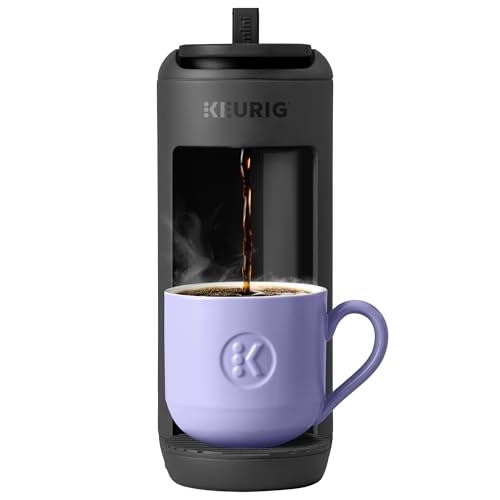
| Keurig K-Elite | Best overall | K-Cup pods | 4 to 12 oz | About 75 oz | Strong brew and iced settings, large reservoir | Mid-range |
| Keurig K-Supreme Plus | Best for even extraction | K-Cup pods | Multiple, including larger travel-mug sizes | Large removable tank | MultiStream water flow | Mid to premium |
| Keurig K-Mini | Best for small spaces | K-Cup pods | 6 to 12 oz | Single-cup fill | Under 5 inches wide | Budget |
| Ninja Pods and Grounds Specialty | Best for pods or grounds | K-Cup pods and ground coffee | Multiple sizes plus concentrated brews | Removable tank | Works with both pods and your own grounds | Mid-range |
| Hamilton Beach FlexBrew | Best flexible budget option | K-Cup pods and ground coffee | Multiple sizes | Removable tank | Brews a single cup or a carafe in some versions | Budget to mid-range |
| Nespresso Vertuo Next | Best for espresso-style drinks | Vertuo capsules | 5 sizes, from 1.35 oz to 14 oz | About 37 oz | Barcode-reading brewing, crema on larger cups | Mid-range |
| Nespresso Essenza Mini | Best compact espresso | Original capsules | Espresso and lungo | About 20 oz | 19 bar pump, very small body | Budget to mid-range |
Cup sizes are listed as rounded ranges. Keurig sizes cover most mug needs, while Nespresso sizes include very small espresso shots up to a 14-ounce mug.
Three single serve systems and what they mean
K-Cup pod machines
Keurig and compatible machines use K-Cup pods, which are small plastic cups of ground coffee sealed with foil. The machine pierces the top and bottom and pushes hot water through. Pod choice is huge: nearly every roaster and grocery brand sells K-Cups. The coffee itself is typically ground ahead of time and sealed for months, so freshness is the limit. Brewing is fast and the cup resembles a drip coffee in strength.
Capsule machines
Nespresso machines use aluminum or plastic capsules. Original line machines like the Essenza Mini use high pressure to make espresso. Vertuo machines spin the capsule at high speed in a method Nespresso calls centrifusion, reading a barcode on the rim to set the water volume, temperature and spin. The result is espresso-style coffee with a layer of crema across a range of cup sizes.
Pods-and-grounds hybrids
Ninja and Hamilton Beach offer machines that take either K-Cup pods or ground coffee in a reusable filter. They solve the biggest complaint about pod machines: if you tire of pods, you can switch to fresh grounds from a bag. Such flexibility lowers the per-cup cost and lets you buy freshly roasted beans.
Best overall: Keurig K-Elite
The K-Elite is a reliable all-rounder in the Keurig lineup. It brews cup sizes from 4 to 12 ounces, has a large reservoir of about 75 ounces that lets you brew many cups between refills, and includes a strong brew setting for a bolder cup and an iced setting that brews a concentrated serving to pour over ice. It also has a hot water on demand function that is handy for tea or oatmeal.
The strong setting works by slowing the water and increasing contact time, which gives a fuller body but cannot add the flavor a pod does not contain. Using a darker or higher-dose pod in strong mode is the way to get the most out of it.
Who it suits: households that want a dependable, easy machine with flexible cup sizes.
Pros: large reservoir, strong and iced options, wide pod compatibility, simple controls.
Cons: pod waste, no way to use fresh grounds without a reusable filter, and the plastic body is not built for long-term repair.
Best for even extraction: Keurig K-Supreme Plus
The K-Supreme Plus uses Keurig’s MultiStream technology, which sprays water in several streams through the pod instead of a single jet. The goal is more even wetting of the grounds, which improves extraction and makes the cup taste less thin. It also adds larger brew sizes suited to travel mugs and a range of strength and temperature options in some versions.
Whether the improvement is large depends on the pod. With a well-packed pod of a quality roast, the difference is noticeable. With a weak pod, no machine can add strength it does not have.
Who it suits: pod drinkers who want a better cup and larger travel-mug sizes.
Pros: improved water distribution, larger sizes, strong build for the line.
Cons: costs more than the K-Elite or K-Mini, and the same pod waste applies.
Best for small spaces: Keurig K-Mini
The K-Mini is a slim machine, under 5 inches wide, that brews 6 to 12 ounce cups. It has a single-cup reservoir, so you fill it with water for each cup. This design saves counter space and suits dorm rooms, offices and small apartments. The lack of a large tank is the main trade-off, since you refill every time.
Who it suits: students, desk setups, guest rooms and anyone with limited counter space.
Pros: narrow footprint, low cost, easy storage.
Cons: manual refill for each cup, limited sizes, fewer features.
Best for pods or grounds: Ninja Pods and Grounds Specialty
This Ninja line brews both K-Cup pods and ground coffee, and adds specialty brew styles that make a concentrated coffee suitable for lattes. The hybrid design is its main selling point. You can use pods when you are in a hurry and ground coffee when you want a better cup or a lower cost. A built-in frother in some versions makes it a one-stop machine for milk drinks.
When you use grounds, a medium grind works best, and the dose is usually printed on the scoop that comes with the machine. A paper filter in the basket keeps sediment out of the cup.
Who it suits: people who like variety, want to reduce pod waste, and enjoy lattes without a full espresso machine.
Pros: pods and grounds, specialty brews, lower per-cup cost with grounds.
Cons: more parts to clean, larger body, and the specialty brews are not true espresso.
Best flexible budget option: Hamilton Beach FlexBrew
The FlexBrew family from Hamilton Beach also takes pods or grounds, and some versions can brew a full carafe as well as a single cup. That flexibility is useful in a household where one person wants a quick mug and another wants a pot. It does not match the polish of the Keurig or Ninja machines, but it delivers practical versatility for less.
Because the FlexBrew lineup includes several variants, check the exact model for carafe capability and reservoir size before buying.
Who it suits: budget-conscious households and those that need both single cups and a pot.
Pros: flexible, economical, pods or grounds.
Cons: variants differ, plastic construction, fewer premium features.
Best for espresso-style drinks: Nespresso Vertuo Next
The Vertuo Next brews five cup sizes: espresso at about 1.35 ounces, double espresso, gran lungo, a mug size and alto at 14 ounces. It reads a barcode on each capsule to set the water volume, temperature and spin speed, so you press one button and it does the rest. The reservoir holds about 37 ounces, and the machine heats quickly.
The result is a cup with a layer of crema and a more concentrated flavor than standard drip. It is a good fit for people who want café-style coffee without learning espresso technique. The trade-off is that capsules are proprietary and available mainly through Nespresso.
Who it suits: people who want convenience and a cafe-like cup, and drink mostly black coffee or add milk after brewing.
Pros: one-button operation, multiple sizes, crema, quick heat-up.
Cons: proprietary capsules, ongoing cost, less variety than K-Cups.
Best compact espresso: Nespresso Essenza Mini
The Essenza Mini is a small Original line machine with a 19 bar pump, a reservoir of about 20 ounces and two programmed sizes: espresso and lungo. It is one of the smallest espresso-style machines available and heats up in under half a minute. It does not have a steam wand, so milk drinks require a separate frother.
Who it suits: small kitchens, offices, and people who drink espresso or lungo.
Pros: very small, fast, simple.
Cons: no frother, only two sizes, capsules are proprietary or require compatible third-party options.
Decision matrix by situation
| Your situation | Choose | Why |
|---|---|---|
| You want the easiest, most common pod system | Keurig K-Elite | Wide pod choice and a big reservoir |
| You have almost no counter space | Keurig K-Mini or Nespresso Essenza Mini | Narrow footprints |
| You want to cut pod waste and cost | Ninja Pods and Grounds or Hamilton Beach FlexBrew | Use your own grounds |
| You drink lattes and cappuccinos | Ninja Pods and Grounds or Nespresso with a frother | Concentrated brews or espresso base |
| You want crema with one button | Nespresso Vertuo Next | Barcode-driven brewing |
| You fill a travel mug daily | Keurig K-Supreme Plus | Larger brew sizes |
The real cost per cup: a worked example
Pod systems cost more per cup than ground coffee. Consider a typical K-Cup holding roughly 9 to 11 grams of coffee, compared with the 12 to 15 grams a standard 10-ounce drip cup needs at a normal ratio. A pod gives you a little less coffee for more money than buying a bag of beans. Over a year, a household drinking two pod cups a day uses about 730 pods. Switching to ground coffee through a reusable filter removes those 730 plastic cups from the trash and usually lowers the annual coffee bill, because bagged coffee costs less per gram.
To compare for yourself, divide the price of a box by the number of pods to get the per-pod cost, then divide the price of a bag of coffee by the number of 10-gram doses it contains. The ratio is often three to five times in favor of grounds. Nespresso capsules cost more per cup than K-Cups but deliver a concentrated espresso-style drink, so the comparison is closer to buying a cafe drink than a standard drip.
Electricity use is small. A machine that heats about 10 ounces of water draws roughly a few hundredths of a kilowatt-hour per cup, which at typical electricity rates is a fraction of a cent. The pods, not the power, are where the money goes.
How to choose: what actually matters
Reservoir size
A large tank, such as the K-Elite’s roughly 75 ounces, means you refill every six or seven cups. A small tank or a manual fill, as on the K-Mini, is fine for one person but tiresome for a household.
Temperature
Brew temperature affects extraction. Many pod machines brew near 192 F, which is lower than the 197 to 205 F range preferred by specialty standards. Models with a strong or temperature setting can help, and using a pre-warmed mug keeps coffee from cooling too fast.
Pod compatibility
K-Cup compatibility is the most flexible, because nearly every brand makes pods. Capsule systems limit you to their own ecosystem, though the range of Nespresso flavors is broad.
Cup sizes
Smaller cups of 6 ounces taste stronger than a 12-ounce cup from the same pod, because the same coffee is extracted into less water. If your coffee tastes weak, brew a smaller size.
Ownership realities: what wears first
- Needle and pod holder: Keurig’s piercing needle clogs with grounds. Cleaning it with a paperclip or a needle tool prevents weak, slow brews.
- Scale: Hard water builds deposits in the tubing and heater, reducing flow and cup size. Descale every few months.
- Water reservoirs: Standing water can grow film. Empty and rinse the tank weekly if you do not use it daily.
- Plastic parts: Drip trays and lids crack over time, so handle them gently.
- Lifespan: Single serve machines are generally less repairable than espresso machines. Many households replace them every few years.
Cleaning routine
- Daily: empty the drip tray and discard the used pod. Wipe the pod holder.
- Weekly: wash the removable reservoir, lid and drip tray with warm soapy water. Rinse well.
- Monthly: clear the needle and the pod holder, and run a hot water cycle with no pod.
- Every 3 months: descale with the manufacturer’s recommended solution or a mix of equal parts white vinegar and water if the manual allows it, then run several rinse cycles.
- After a long pause: run a few cleansing cycles with fresh water before making a cup.
Common mistakes with single serve machines
- Brewing the largest size from one pod. A single pod stretched to 12 ounces tastes weak. Use a smaller size, or two pods for a mug.
- Skipping descaling. Scale slows flow and lowers temperature, and flavor suffers before the machine fails.
- Leaving pods in the machine. A used pod can drip and grow mold. Remove it after brewing.
- Using the wrong grind in a reusable filter. Too fine a grind clogs the basket. Use a medium grind.
- Ignoring pod storage. Keep pods in a cool, dry place. Heat and humidity shorten shelf life.
Frequently Asked Questions
What is the best single serve coffee maker overall?
For most households it is the Keurig K-Elite, thanks to its large reservoir, wide cup size range and compatibility with K-Cup pods. If you want to use fresh grounds as well, a Ninja Pods and Grounds Specialty machine is the stronger choice.
Are single serve coffee makers worse for the environment?
Pods create more packaging waste per cup than ground coffee. Some pods are recyclable, depending on local programs, and reusable filters reduce waste. A pods-and-grounds machine lets you choose based on the day.
Can I use my own coffee in a Keurig?
Yes, with a reusable filter cup that fits the pod holder. Use a medium grind and avoid overfilling. Some machines, such as the Ninja and Hamilton Beach models, include grounds brewing as a built-in option.
Why does my single serve coffee taste weak?
The most common causes are a large cup size, a low brew temperature, scale buildup and a weak pod. Try a smaller cup size, descale the machine, and choose a darker or higher-dose pod. Adding the strong setting can help if the machine has one.
How often should I descale a single serve machine?
Every three months is a common guideline, and more often with hard water. Follow the manufacturer’s instructions, because some warranties specify an approved descaling solution.
Is Nespresso real espresso?
Original line machines like the Essenza Mini use high pressure to extract a small, concentrated shot that resembles espresso. Vertuo machines use a spinning method and produce a crema-topped coffee in larger sizes. Both differ from a traditional espresso machine, which gives you control over grind, dose and extraction.





Write Your Review
No reviews yet. Be the first to share your experience!