

Key takeaways
- Brews and dispenses in the same vessel, so there is less to wash and transfer.
- Insulated walls keep the coffee cold on a counter, a picnic table or a tailgate.
- Regulator cap maintains pressure between pours.
The best nitro cold brew maker for most homes is a small insulated keg that brews, charges and pours from one vessel, with the GrowlerWerks uKeg Nitro Cold Brew as the all-in-one reference point. If you only drink one or two glasses a week, a handheld whipping-siphon style infuser such as the NitroPress is cheaper and takes far less room. Larger households and parties are better served by a 64 or 128 ounce keg like the Royal Brew models, paired with a separate cold brew steeper.
Nitro cold brew is ordinary cold brew that has been infused with nitrogen gas and pushed through a restrictive faucet, which creates a cascade of tiny bubbles, a thick creamy head and a naturally smooth, slightly sweet mouthfeel with no dairy involved. Home systems fall into three groups: single-serve infusers, countertop kegs and full kegerator conversions. This guide covers seven real options across the first two groups, explains the gas choices, walks through the maths of coffee and gas per glass, and lists the maintenance habits that decide whether a nitro system keeps working past its first summer.
Our top picks



As an Amazon Associate we earn from qualifying purchases at no extra cost to you.
Quick Comparison of the Seven Picks
| Pick | Best for | Capacity | Gas / power | Format |
|---|---|---|---|---|
| GrowlerWerks uKeg Nitro Cold Brew | Best overall, brew and dispense in one | 50 oz (about 1.5 L) | 16 g cartridges, sold separately | Insulated stainless keg with faucet |
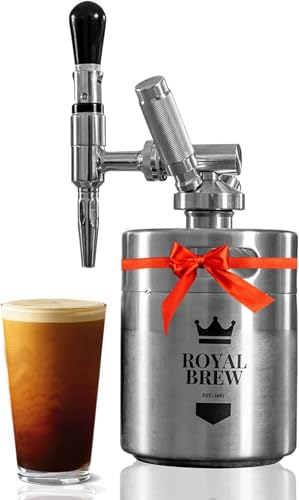
| Royal Brew 64 oz Nitro Keg | Best value keg | 64 oz | 2 g N2 or 8 g N2O cartridges | Countertop keg with stout-style faucet |
| Royal Brew 128 oz Nitro Keg | Best for families and entertaining | 128 oz (one US gallon) | Dual gas compatible | Countertop keg, no-drip faucet |
| NitroPress Original (Hatfields) | Best single-serve and travel | 500 ml | N2 cartridges (best), N2O accepted | Handheld stainless infuser |
| NitroPress DS Electric | Best cartridge-free option | 500 ml | Built-in air pump, about 6 seconds | Electric countertop unit |
| iSi Nitro Whip | Best build quality for occasional use | 1 L (1 US quart) | iSi Nitro Chargers only | Stainless whipping siphon |
| Toddy Cold Brew System | Best brewer to feed a nitro keg | Roughly 12 oz of grounds per batch | None | Steeping system with reusable filter |
Capacities and gas compatibility above come from manufacturer pages and published product listings; sizes are rounded, and the exact consumable your unit takes should be confirmed in its manual before you buy chargers.
How Nitro Cold Brew Works and Why Gas Matters
Nitrogen dissolves poorly in liquid compared with carbon dioxide, which is why nitro coffee does not fizz or taste acidic the way sparkling cold brew does. When the pressurised liquid is forced through a faucet with tiny holes in a restrictor plate, the gas breaks out as microbubbles and forms the cascading effect people associate with café taps. The result is a softer texture and an impression of sweetness, even though no sugar has been added.
Three gases appear in home systems. Pure nitrogen (N2) gives the smallest bubbles and the longest-lasting head, and it is the preferred option in NitroPress guidance and in the iSi Nitro Whip, which accepts only N2 chargers. Nitrous oxide (N2O) is the standard whipped-cream gas; it dissolves more readily and produces a slightly sweeter, thicker foam but a faster-fading head and a faintly different aroma. Air-powered units such as the NitroPress DS draw on the roughly 78 percent nitrogen content of ambient air, trading some foam density for the convenience of never buying a cartridge.
The practical rule: if a keg accepts both gases, N2 is the better-tasting choice and N2O is the cheaper, easier-to-find choice. Never force a gas into a vessel that is not rated for it, and never use carbon dioxide cartridges in a nitro keg unless the maker explicitly says so, because CO2 will carbonate the drink and make it sour.
Best Overall: GrowlerWerks uKeg Nitro Cold Brew
The uKeg Nitro is the most complete home system on this list because it handles the whole job in one double-wall vacuum-insulated stainless steel vessel. You steep coarse grounds in a filter bag with cold water, remove the bag, fit the regulator cap, charge the keg with a 16 gram cartridge and pour through a nitro faucet. According to the manufacturer, the 50 ounce (about 1.5 litre) size is designed to keep the drink cold for hours without a fridge, and the regulator cap holds pressure so a charged keg stays pourable for days.
Who it suits: people who want a single device, a tidy countertop footprint and a pour that looks like a café tap. The kit typically includes the filter bag, funnel and tool needed to get started, which lowers the barrier to a first batch.
Pros:
- Brews and dispenses in the same vessel, so there is less to wash and transfer.
- Insulated walls keep the coffee cold on a counter, a picnic table or a tailgate.
- Regulator cap maintains pressure between pours.
Cons:
- Cartridges are a continuing cost and have to be bought separately.
- One batch tops out near 50 ounces, which is about five generous glasses.
- The faucet and cap need thorough cleaning after every batch to avoid stale coffee oils.
Best Value Keg: Royal Brew 64 oz Nitro Keg
The Royal Brew 64 ounce keg is the sensible middle ground for a household of two or three coffee drinkers. It is a stainless countertop keg with a stout-style creamer faucet, and published specifications list compatibility with both 2 gram nitrogen cartridges and 8 gram nitrous oxide cartridges. That dual-gas support is its main selling point: you can start with cheaper N2O and switch to N2 later when you want a finer head.
Who it suits: buyers who already brew cold brew in a pitcher and want a dispenser, not an all-in-one steeper. You fill the keg with finished cold brew, charge it and pour.
Pros: dual gas compatibility, a faucet designed for a thick cascading pour, and a capacity that lasts several days for light drinkers.
Cons: it is not insulated like the uKeg, so it needs fridge space, and you still need a separate brewing container.
Best for Families and Entertaining: Royal Brew 128 oz Nitro Keg
At one US gallon, the 128 ounce Royal Brew keg is the pick when several people drink nitro every morning or when you host brunch. Reviewers frequently note its capacity-to-build ratio and a no-drip faucet, and it keeps the dual-gas compatibility of the smaller model. A full keg gives roughly twelve 10 ounce servings, so a single weekend batch can cover a gathering without constant recharging.
Who it suits: larger households, office kitchens, small cafés trialling a menu idea and anyone who values volume over portability.
Pros: the largest capacity here, fewer refills, and consistent pours at high volume.
Cons: it is heavy when full, takes up a whole fridge shelf and demands a larger cold brew batch to fill it, which in turn needs a bigger steeping container. Cold brew in a half-full keg also oxidises faster, so only buy this size if you will finish it within a week.
Best Single-Serve and Travel: NitroPress Original
The NitroPress from Hatfields London is a handheld stainless steel infuser built on the whipping-siphon idea. Its 500 millilitre chamber holds about two cups; you pour in chilled cold brew, screw on the head, insert a gas cartridge, shake and dispense into a glass. Maker guidance recommends N2 for the smallest bubbles, though it also accepts N2O.
Who it suits: solo drinkers, apartment dwellers, travellers and anyone testing whether nitro is worth a larger purchase. The stainless body is dishwasher safe and stores in a drawer.
Pros: low entry cost, tiny footprint, no refrigerator space needed, and a serving is ready in under a minute.
Cons: single-serve only, the cascade is gentler than a faucet-based keg, and cartridge use per glass is the highest of any option here.
Best Cartridge-Free Option: NitroPress DS Electric
The NitroPress DS also holds 500 millilitres but swaps the cartridge for an internal air pump. Published reviews describe a charge cycle of around six seconds and one-touch operation; because it uses ambient air, there is nothing to buy, run out of or recycle. The trade-off is foam density: with only about 78 percent nitrogen in the gas mix and some oxygen present, the head is lighter and fades sooner than from a pure N2 charge.
Who it suits: daily drinkers who dislike recurring consumables and are happy with a softer finish, plus gift buyers who want something plug-and-go.
Pros: zero cartridge cost, fast, simple and countertop friendly.
Cons: needs a power outlet, a larger footprint than the handheld version, and the air charge delivers a less pronounced cascade. Oxygen exposure also shortens how long the infused drink stays fresh, so pour what you intend to drink right away.
Best Build Quality for Occasional Use: iSi Nitro Whip
iSi is a long-established maker of professional whipping siphons, and the Nitro Whip adapts that engineering to cold beverages. The 1 litre stainless steel body is dishwasher safe, works only with iSi Nitro Chargers, and operates the same way as other siphons: pour in cold liquid, add the charger, shake and serve. It is the sturdiest handheld option on this list.
Who it suits: people who already own iSi equipment, bartenders and home cooks who want to nitro-infuse cocktails, tea or sauces as well as coffee.
Pros: a litre of capacity in a handheld format, strong construction and versatility beyond coffee.
Cons: proprietary N2 chargers cost more per pour than bulk gas, and the pour is a gentle cascade rather than a faucet-quality one.
Best Brewer to Feed a Keg: Toddy Cold Brew System
Every keg or infuser is only as good as the cold brew you put in it, which makes a reliable steeper part of the setup. The Toddy Cold Brew System is a well-known home design that steeps coarse grounds in a container with a reusable filter and drains a concentrate; retailer descriptions vary on capacity, but the home model handles roughly 12 ounces of grounds per batch and produces a concentrate you dilute. A pitcher-style alternative such as the 2 quart Takeya Deluxe Cold Brew, made of BPA-free Tritan with a fine-mesh filter and airtight lid, suits smaller batches.
Who it suits: anyone buying a Royal Brew keg, an iSi Nitro Whip or a NitroPress, none of which brew coffee.
Pros: smooth, low-sediment concentrate, easy cleanup and reusable filters.
Cons: a 12 to 24 hour steep means planning ahead, and concentrate must be diluted to taste before it goes into a keg.
Decision Matrix by Situation
| Your situation | Best choice | Why |
|---|---|---|
| Live alone, 3 to 4 glasses a week | NitroPress Original | Smallest cost and space, fresh single servings |
| Hate buying cartridges | NitroPress DS Electric | Air pump removes consumables |
| Couple, daily nitro habit | uKeg Nitro or Royal Brew 64 oz | Several glasses per charge, real faucet pour |
| Family or frequent guests | Royal Brew 128 oz | One batch covers a weekend |
| Also use gas for cocktails or sauces | iSi Nitro Whip | Versatile, durable siphon |
| Already own a cold brew pitcher | Any dispenser, skip the all-in-one | Avoid paying twice for steeping |
| No fridge space | uKeg Nitro | Insulated wall keeps brew cold for hours |
Worked Example: Coffee and Gas Per Glass
Running cost is the figure that separates a nitro habit that lasts from one that fades. Use this formula: (coffee per batch + gas per batch) divided by number of servings. A typical ready-to-drink cold brew runs at about 1 part coffee to 8 parts water by weight, so a 10 ounce serving (about 295 grams of liquid) uses roughly 35 to 40 grams of coffee. A 12 ounce bag holds about 340 grams, which covers around nine servings, so a one-glass-a-day drinker goes through a bag in just over a week.
Gas works out differently by system. A 50 to 64 ounce keg that takes one cartridge per fill serves about five or six glasses on that single cartridge, so you use roughly one sixth of a cartridge per glass. A handheld siphon typically uses one cartridge per 500 millilitre charge, which is two cups, so roughly half a cartridge per glass. An air-powered unit has no gas cost at all. Over a year at one glass a day, the handheld cartridge model consumes about 180 cartridges, a keg about 60, and the electric unit none, which is why heavy users should lean toward kegs or the DS even if the up-front price is higher.
Put the two numbers side by side and price them with your local coffee and cartridge costs before buying. For a light drinker making two glasses a week, the handheld cartridge model uses only about 50 cartridges a year, and its low purchase price makes it the cheapest route overall.
Ownership Realities: What Wears First
Nitro systems fail slowly and predictably. The first wear item is the faucet or dispensing head: gaskets and restrictor plates collect coffee oils that go rancid, and a stale-tasting pour is almost always a dirty faucet, not bad coffee. Strip and soak these parts after every batch, and replace rubber seals when they flatten or crack. Second, pressure regulators and charging heads on kegs can leak slowly; if a keg will not hold pressure overnight, check the seal before blaming the cartridge.
Third, cartridges themselves are a logistics issue. Buy only the size and gas the manual specifies, store them dry, and never puncture a partially used cartridge. Fourth, cold brew is perishable. Refrigerate finished brew and aim to consume it within about one to two weeks; once infused with gas, drink within a few days because oxidation dulls flavour. Fifth, stainless parts are dishwasher friendly on some models, but always check the manual before putting valves or silicone in a dishwasher.
A common mistake is overcharging. Adding a second cartridge to chase a thicker head tends to produce gushing pours and wasted coffee. Another is using warm or room-temperature coffee, which will not hold gas; always chill the brew thoroughly before infusing.
How to Choose: Seven Buying Criteria
- Capacity versus consumption. Multiply daily servings by 10 ounces and by seven days; if the total exceeds 50 ounces, step up to a 64 or 128 ounce keg.
- Gas type. Prefer N2 for texture; accept N2O for price; avoid CO2.
- Insulation. If fridge space is tight, an insulated keg saves a shelf.
- Cleaning access. Choose models whose faucet and cap disassemble without tools.
- Power. Electric infusers need an outlet; cartridge units do not.
- Footprint. Handheld units fit in a drawer; kegs need a shelf.
- Brewing method. Decide whether you want brew and dispense together, or separate tools.
Frequently Asked Questions
What is the difference between nitro cold brew and regular cold brew?
Regular cold brew is coffee steeped in cold water and served still. Nitro cold brew is the same drink infused with nitrogen under pressure, which gives it a cascading pour, a creamy head and a smoother mouthfeel without added dairy or sugar.
Can I make nitro cold brew without a keg?
Yes. A handheld whipping-siphon style device such as the NitroPress or iSi Nitro Whip infuses a single serving from chilled cold brew and a gas cartridge in under a minute. The cascade is gentler than a faucet-based keg but the improvement in texture is real.
Is nitrous oxide okay to use instead of nitrogen?
Many kegs and infusers accept nitrous oxide because it is widely sold as whipped-cream gas. It dissolves more readily and produces a sweeter, quicker-fading foam than pure nitrogen. Always use the gas type your manual lists, and use food-grade cartridges only.
How long does nitro cold brew keep in a keg?
Plain cold brew in a clean, sealed container usually stays good for one to two weeks refrigerated. Once gas has been added and the keg has been tapped repeatedly, flavour fades faster, so plan to finish a charged batch within several days.
Do I need a special grind or roast?
Use a coarse grind to avoid sludge and over-extraction during the long cold steep. Medium to dark roasts with chocolate or caramel notes tend to suit nitro best because the creamy texture emphasises sweetness and body, but any roast you enjoy cold will work.
Are electric nitro makers as good as cartridge systems?
Air-powered electric units are convenient and cost nothing to run, but they use air rather than pure nitrogen, so the head is lighter and shorter-lived. If maximum cascade matters, a nitrogen-charged keg is still the stronger performer.





Write Your Review
No reviews yet. Be the first to share your experience!