

Key takeaways
- Bialetti Moka Express review: sizes, brewed volumes, induction limits, brewing steps and how the 3, 6, 12 and 18-cup pots and the Alpina compare.
The Bialetti Moka Express is the stovetop coffee maker most people picture when they hear “moka pot”: an octagonal aluminum pot that brews a concentrated, espresso-style coffee over a gas or electric burner. It is a good fit for anyone who wants strong coffee without a machine, a power outlet or a grinder-heavy routine. It is the wrong tool if you want true pump-pressure espresso with crema, if you cook on an induction hob without an adapter, or if you prefer a hands-off, set-and-forget method.
Quick Verdict
- A proven, simple design: a bottom chamber for water, a funnel filter for grounds and an upper chamber that collects the coffee.
- Sizes are measured in small espresso “cups” of roughly 2 oz, not mugs, so choose a size by the volume you actually drink.
- The classic aluminum version does not work directly on induction hobs; Bialetti sells a separate stainless-steel adapter plate and a dedicated induction line.
- It makes strong, concentrated coffee but at a fraction of the pressure of a real espresso machine, so expect a bold, rich cup rather than crema-topped espresso.
- Results depend on technique: grind size, heat level and when you take it off the burner matter more than which pot size you buy.
Key Specs
| Spec | Bialetti Moka Express |
|---|---|
| Material | Aluminum, octagonal body |
| Parts | Boiler (bottom), funnel filter, collector (top), safety valve and gasket |
| Heat sources | Gas and electric hobs; induction only with a separate adapter plate (confirm size limits on the manufacturer page) |
| Sizes offered | 1 to 18 cups; listed here are 3, 6, 12 and 18 cups plus the Alpina edition |
| Brewed volume (approximate) | 3 cups: about 130 mL; 6 cups: roughly 250 to 270 mL; 12 cups: roughly 595 to 670 mL; 18 cups: about 800 mL (figures vary by source) |
| Cup definition | About 2 oz espresso cup (Bialetti notes that a cup is not a US coffee mug) |
| Pressure | Low steam-driven pressure, well below pump espresso machines |
| Care | Hand wash and dry; confirm care instructions on the manufacturer page |
Who It Is For (and Who Should Skip It)
The Moka Express suits people who like a punchy, small-volume coffee and don’t want to learn a full espresso routine. It works for apartment kitchens, camping setups with a gas burner, and as a second brewer alongside a drip machine. It also travels well because there are no electronics and few parts to lose.
It is especially good if you drink milk-based coffee at home. A small, strong pour from a 3- or 6-cup pot can be topped with hot milk for a latte-style drink, and you can adjust the strength by changing the amount of milk.
Skip it, or pair it with another brewer, if:
- You cook on induction. Standard Bialetti aluminum pots are not designed for induction hobs. Bialetti lists a separate induction plate and a dedicated Moka Induction range with a steel base.
- You want café-style espresso. A moka pot cannot reach the pressure of a pump machine and does not produce the same texture or crema.
- You need exact repeatability. The process depends on your burner, flame height and timing, so it needs attention at the stove.
- You want to avoid aluminum. Some people prefer stainless steel for taste or cleaning preferences; the Venus and induction lines use steel parts.
What It Does Well
Strong, concentrated coffee without a machine
The brewing principle is simple: heated water creates steam pressure in the boiler, pushing water up through the coffee bed into the top chamber. The result is a small, dense coffee that sits between a drip cup and a true espresso. It is a favorite in many Italian households for that reason, and the Moka Express is the model most associated with the method.
Sizes for one person or a table
The range starts with single-cup pots and goes to 18 cups. For one drinker, a 3-cup pot makes roughly 130 mL of coffee; a 6-cup pot makes about 250 to 270 mL, which is a comfortable pour for two small cups or one large one. The 12- and 18-cup sizes are for gatherings. Because the water level and coffee amount are set by the pot, each size repeats the same recipe.
Durability and low maintenance
The parts are few and replaceable. The gasket and filter plate are the wear items, and replacements are widely sold for the common sizes. There is no heating element, pump or circuit board to fail.
Portability and low operating needs
It needs a burner and ground coffee, nothing else. That is valuable for camping, vacation rentals or anywhere you want good coffee without extra equipment.
Where It Falls Short
- Not true espresso. It uses steam pressure far lower than the nine bars typical of espresso machines. The cup is strong and flavorful, but the body and crema are different.
- Burner sensitivity. High heat can scorch coffee and produce a metallic, bitter taste. Too low and the water barely climbs. It takes a few tries to learn your stove.
- Induction limits. The aluminum pot needs an adapter plate on induction hobs, and one manufacturer page notes the plate is intended for smaller sizes. Verify the size limit before buying one for a large pot.
- Cup labels confuse buyers. A “6 cup” pot does not make six mugs. Plan on about 2 oz per labeled cup and buy for the volume you drink.
- Cleaning requires care. Bialetti’s guidance is to let the pot cool, rinse with water and dry; check the manufacturer’s page on soap and dishwashers rather than assuming.
- Metal handles and knobs get hot. Use a cloth or oven mitt, and never leave the pot unattended on a heat source.
How to Brew It Well
- Fill the boiler with water up to just below the safety valve. Using hot water from a kettle shortens time on the burner, which helps avoid overheated coffee.
- Fill the funnel with a medium-fine grind, coarser than espresso and finer than drip. Level it without tamping.
- Screw the top on firmly, holding the base with a cloth if it is hot.
- Heat on a medium setting with the lid open. Use a burner that fits the base so the flame does not extend up the sides.
- When the coffee begins to flow and then turns pale and starts to gurgle, remove the pot from the heat. Running cold water briefly over the base can stop extraction if the coffee tastes bitter.
- Stir and serve immediately.
Choosing a Size and a Coffee
Because the pot is filled to a fixed level, it works best at full capacity. Brewing a half load in a large pot leaves a loosely filled funnel and can give uneven, thin results. If you drink one cup a day, buy the 3-cup size even if it feels small; if you often make coffee for two, the 6-cup is the usual choice. Sizes above that are for groups, and they need a burner large enough to support the wider base.
Bean choice changes the cup as much as the pot does. A medium or medium-dark roast tends to taste balanced in a moka pot, while very light roasts can come across sharp because the brew water is hot and extraction is fast. Pre-ground coffee sold for moka or espresso pots works, but grinding fresh just before brewing gives better aroma. If the cup tastes burnt, lower the heat and take the pot off sooner; if it tastes sour or thin, grind a touch finer or give it slightly more time.
Finally, keep the rubber gasket and the filter plate in good shape. A gasket that has hardened or cracked can leak steam at the joint, and a bent or clogged filter plate will give uneven flow. Replacement parts are sold for the common sizes, so a worn pot rarely needs to be replaced entirely.
How It Compares
| Option | Size | Material | Induction | Best suited to |
|---|---|---|---|---|
| Moka Express 3 cup | About 130 mL | Aluminum | Only with adapter plate | One drinker or a latte base |
| Moka Express 6 cup | About 250 to 270 mL | Aluminum | Only with adapter plate (check size limit) | Two small cups, the everyday choice |
| Moka Express 12 cup | About 595 to 670 mL | Aluminum | Not for the standard plate; confirm | Larger households, guests |
| Moka Express 18 cup | About 800 mL | Aluminum | Not for the standard plate; confirm | Groups, shared kitchens |
| Moka Express Alpina | 3 cups, about 130 mL | Aluminum, green finish | Adapter plate only | Buyers who want the classic pot with a distinct look |
Alternatives Worth Considering
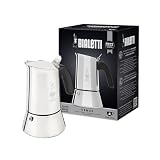
Bialetti Moka Express 6 Cups – the everyday size
As an Amazon Associate we earn from qualifying purchases at no extra cost to you.

The 6-cup pot in natural silver is the middle of the range and the one most households start with. It yields roughly 250 to 270 mL, which suits two people drinking small cups or one person making a latte. It uses the same octagonal aluminum body and three-part design as the rest of the family. If you cook on induction, remember that the adapter plate is the only way to use it; check the manufacturer’s note on supported sizes.
Bialetti Moka Express 3 Cups (listing for 3 espresso cups) – why consider it

This listing is for the small family size, with a brewed volume of about 130 mL. It is the pot to buy if you drink coffee alone and want a strong shot-style cup, or if you will top it up with steamed milk. Small pots use less coffee per brew, and they heat faster. The listing is one of two 3-cup entries, so compare the color and finish details before choosing.
Bialetti Moka Express 3 Cups – why consider it

This second 3-cup listing offers the same compact size, in a pot that makes real Italian-style coffee on a gas or electric burner. It is a useful second pot for a household that wants a travel-size option beside a larger one. The brewing steps and the roughly 130 mL yield match the other 3-cup entry, so the choice often comes down to the finish and which version is available.
Bialetti Moka Express 12 Cups – why consider it

The 12-cup version brews around 595 to 670 mL depending on the source, which is a good fit for a table of four to six who each want a small cup. Large pots take longer to heat and need a burner with enough surface area to support the base. This size is not covered by the usual adapter plate, so it is a poor match for induction cooktops; check the manufacturer’s page before relying on an adapter.
Bialetti Moka Express 18 Cups – why consider it

The 18-cup pot is the largest in the Moka Express line, with roughly 800 mL of finished coffee. It makes sense for offices, big families and gatherings where the same small cup is poured many times. It is heavy when full, so use two hands, and use a stable burner. Because it takes a lot of grounds, make sure you use the correct fill level and avoid tamping.
Bialetti Moka Express Alpina – why consider it

The Alpina is a recreation of the classic octagonal pot with a design that nods to the Alpine Corps hat in the collector. The listing describes a 3-cup aluminum pot in green, with the same brewing method as the standard version. It suits buyers who want the traditional pot with a different look, or a gift. As with the standard aluminum pots, induction use depends on the separate adapter plate.
Questions
Does the Bialetti Moka Express work on induction?
Not directly. Bialetti’s customer support says only stainless-steel moka pots are induction compatible, and the classic aluminum Moka Express needs a stainless-steel adapter plate. Bialetti also sells a Moka Induction line with a steel base for induction hobs.
How many cups does a “6 cup” moka pot make?
It makes roughly 250 to 270 mL, depending on the source. The “cup” is an espresso-size serving of about 2 oz rather than a US mug, so a 6-cup pot fills about two normal coffee cups.
What grind should I use?
Use a medium-fine grind: finer than drip, coarser than espresso. Fill the funnel level without tamping, and adjust the grind slightly if the coffee tastes sour or bitter.
Is moka coffee the same as espresso?
No. A moka pot is often described as espresso-style, but it works at much lower pressure than a pump machine and does not make true espresso crema. It is better thought of as strong, concentrated stovetop coffee.
Can I put it in the dishwasher?
Check the care instructions on Bialetti’s site before doing so. Aluminum can discolor with harsh detergents, and most guidance for these pots favors rinsing and drying by hand.
Which size should I buy?
Match the size to the volume you drink rather than the number on the label. A 3-cup pot gives about 130 mL, a 6-cup about 250 to 270 mL, and larger pots serve groups. Brewing a partial load in a bigger pot is not recommended.
Update History
- October 21, 2026 – Initial publication; specifications checked against manufacturer documentation where available.
- Check the product page for current specifications and availability before buying.
Sources
- Manufacturer and brand product pages and customer-support guidance from Bialetti
- Retailer listing titles and specification fields
- Published moka-pot brewing guides and size charts from coffee retailers

Write Your Review
No reviews yet. Be the first to share your experience!