

Key takeaways
- Porlex Mini review: 20 g ceramic burr hand grinder, Mini II changes, AeroPress fit, limits for espresso, and the Tall JP-30 alternative.
The Porlex Mini is a pocket-sized stainless steel hand grinder with ceramic conical burrs, built in Japan, that holds roughly 20 grams of beans and slips inside an AeroPress for travel. It is a strong pick for campers, travelers and anyone grinding one or two cups of filter, AeroPress or French press coffee at a time. It is the wrong tool for an espresso machine, and it is slow if you brew for a crowd. This review covers the specifications that matter, the difference between the Mini, the Mini II and the taller JP-30, and which of the listed products suits which kind of buyer.
Quick Verdict
- Best for solo travel brewing and small-batch filter coffee: about 20 g per load, stainless body, and it fits inside an AeroPress.
- Ceramic burrs are washable and long-lived, and the whole grinder comes apart for cleaning.
- Not suited to fine espresso grinds, and the narrow handle gets tiring on larger loads.
- If you regularly brew more than two cups, the taller JP-30 holds about 30 g, though it no longer fits in an AeroPress.
- Listings for this grinder use inconsistent names and specs, so confirm the exact model before ordering.
Key Specs
| Spec | Porlex Mini / Mini II (as reported by retailers and editorial sources) |
|---|---|
| Capacity | About 20 g of beans in practice (some sources cite up to 22 to 25 g) |
| Burrs | Ceramic, conical; the Mini II is described as using a newly designed burr set |
| Body | Stainless steel with ceramic and BPA-free plastic parts |
| Weight | About 250 g; one listing states 9.3 oz (267 g); confirm on listing |
| Size | About 47 to 50 mm in diameter and 130 to 135 mm tall; sources vary slightly |
| Adjustment | Click-based; click counts reported vary by source and version (one listing claims 60 levels, another review lists 18 settings) |
| Step size | Roughly 37 microns per click on the Mini II, per one retailer |
| Handle | Removable crank with a silicone band for storage |
| Origin | Made in Japan (Kagoshima), per retailers |
| Travel fit | Fits inside an AeroPress chamber |
| Taller sibling | JP-30 holds about 30 g, around 7.5 in tall; same burr design, no AeroPress fit |
Specifications for this grinder are not perfectly consistent across retailers. If a figure matters to you, such as exact weight or diameter, check the manufacturer’s page or the listing you intend to buy from.
Who It Is For (and Who Should Skip It)
It suits
The Mini is a travel and small-batch grinder first. If you carry an AeroPress, a pour-over cone or a small French press on trips, the Mini packs into the same bag and weighs around 250 g. It also suits a person who brews one cup a day and wants fresh grounds without buying an electric grinder. Because the burrs are ceramic and the construction is plain stainless, it needs no cord, no battery and no counter space. Students and office workers with small desks often fall into this group.
It is also a respectable first hand grinder for someone who wants to learn how grind size changes taste. Click adjustment gives repeatable steps, and the body is simple enough to take apart and reassemble after a single read of the instructions.
Skip it if
Skip the Mini if you pull espresso shots. A published review of the Mini II describes it as excelling at medium to coarse grinds and as not suited to espresso-machine grinds. The narrow crank also becomes uncomfortable as you approach the capacity of the hopper. Skip it if you brew for three or more people at once, because grinding several batches by hand quickly turns into a chore. And skip it if you want a premium workflow with a wide handle, a large grind range indicator and a magnetic catch cup; the Mini keeps things basic.
What It Does Well
Portability with a purpose
Many travel grinders are compact but awkward to carry. The Mini’s cylinder fits inside an AeroPress, so the whole kit takes up the space of one device. The crank removes and a silicone band holds it in place for transport, which helps keep it from rattling. A stainless body shrugs off knocks that would crack plastic.
Ceramic burrs that last
Ceramic burrs do not rust, can be rinsed with water and tend to keep their edge for a long time with household use. For a hand grinder that may be tossed in a bag, that durability is a real advantage. The Mini II description from retailers mentions a redesigned conical burr set that grinds more coffee per rotation than the original, though the exact gain depends on grind setting and bean type.
Easy cleaning and servicing
The grinder comes apart into a few parts, and a published review of the Mini II notes it can be disassembled completely, with washable ceramic burrs. Dry the burrs thoroughly before putting them back together and avoid soaking the stainless parts for long periods. A small brush clears stray grounds from the inside of the body.
Predictable steps
Click adjustment means you can find a setting that works for your brewer, write it down and return to it. That repeatability matters for travel brewing, where you may swap between a morning AeroPress and an evening French press and want to reset quickly.
Reasonable consistency for the category
A review of the Mini II reported a visually consistent medium grind with fewer fines than expected from a hand grinder in this category. Treat that as a good sign rather than a guarantee. Consistency changes with the bean, roast level and how steadily you turn the crank.
Getting a good first cup from the Mini
A hand grinder rewards a little method. Close the burrs gently until they just touch, then back off to a starting point suited to your brewer and adjust one click at a time. Finer settings extract more and taste stronger or more bitter; coarser settings taste lighter and sharper. A sensible sequence is to brew once at your starting point, note whether the cup tastes sour and thin or bitter and heavy, change two or three clicks in the right direction and brew again. Use the same coffee dose and water amount each time, so the grind is the only thing that changes. Grind steadily rather than quickly, hold the body firmly with your other hand, and stop when the crank spins freely. Those habits matter more than any specification on the box, because a hand grinder produces its best results when the user is consistent.
Fresh beans help just as much. A medium roast bought in small bags and used within a few weeks will taste better in any hand grinder than a stale bag in an expensive electric one. For travel, pre-weigh a dose per day into a small container so you do not need a scale on the road.
Where It Falls Short
Small capacity and slow grinding
Twenty grams makes one generous cup or two smaller ones. For a full pour-over carafe you will grind twice. Time depends on the grind setting, bean hardness and your arm, and finer settings take longer. One source suggests that a full load in the taller JP-30 takes closer to three minutes, so expect the Mini to be a few minutes of work at finer settings.
Handle ergonomics
The slim handle is the most common complaint. Reviews describe fatigue when grinding large amounts, and a thin crank gives less leverage than the wider cranks on larger hand grinders. If you have wrist trouble or grind on a counter every morning, a larger grinder with a wider handle may be more comfortable.
Not for espresso
The grind range reaches fine settings, but espresso machines demand very fine, extremely consistent grounds and small adjustments. The Mini is built for filter brewing, and the published review noted it was not suited to espresso-machine grinds. If you want a hand grinder for espresso, look at grinders designed around that purpose.
Confusing listings
The name Porlex Mini appears on listings with different generation labels, model codes and detail pages, including one that calls the product “Unknown Porlex Mini II” and one with a retailer-specific code. Click counts, weights and sizes differ between pages. Read the title and the product description closely, and ask yourself whether the version you are buying matches the one described in the review you read.
How It Compares
| Grinder | Capacity | Burrs | Best for |
|---|---|---|---|
| Porlex Mini / Mini II | About 20 g | Ceramic conical | Travel, AeroPress, one or two cups |
| Porlex JP-30 (Tall) | About 30 g | Ceramic conical, same design | Two cups at home, a bit more leverage |
| 2024 Porlex-style professional mini | Listing states 9.3 oz (267 g) weight; confirm capacity | Confirm on listing | Buyers who want a listing that states a specific adjustment range |
| CEVING mini manual grinder | About 30 g listed | Ceramic conical | Budget-minded buyers who want more settings on paper |
The core trade-off is size against capacity. The Mini is the most travel-friendly in the group. The JP-30 gives you about half again as many beans per load. The other listings try to compete on the number of settings, so check the quality of the listing and read the specification fields carefully.
Alternatives Worth Considering
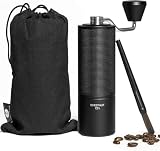
Porlex Mini stainless steel coffee grinder – the baseline
As an Amazon Associate we earn from qualifying purchases at no extra cost to you.
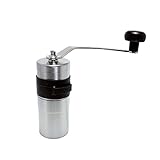
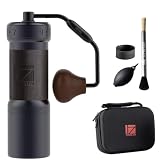
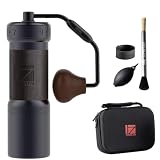
This is the plain Porlex Mini listing: stainless steel body, ceramic burrs and a capacity around 20 g. It suits anyone who wants the original format without extra labels. Check whether the page identifies the first or second generation, because the Mini II is described as using a redesigned burr set. Expect a capacity for one generous cup, a removable crank and a body that fits inside an AeroPress. It is the reference point against which the other listings below should be judged.
Porlex Mini II – the updated burr set

The Mini II is described by retailers as using a newly designed conical ceramic burr set and a grind step of roughly 37 microns per click. It also keeps the same compact body and AeroPress fit. This listing’s title is terse and begins with the word “Unknown”, so confirm the brand and model in the details before ordering. If the product matches, it is the version most reviewers and retailers refer to when they discuss the current Mini.
KT Porlex Mini coffee hand grinder – a distributor listing
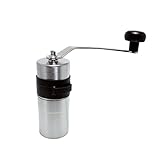
This listing carries a distributor code and describes a metal Porlex Mini hand grinder. It is likely the same core product sold through a different channel. The practical question is whether it is the first or second generation and whether it includes the silicone band and crank in the box. Read the title and image details, and compare them against the baseline listing above before deciding.
2024 Porlex-style professional mini grinder – the listing with explicit numbers

This listing is labeled as a 2024 model with 60 adjustable roughness levels, a weight of 9.3 oz (267 g), lightweight construction and Japanese manufacture. Those are listing claims, and they differ from the click counts reported elsewhere for the Mini line. If you want a hand grinder with a fine adjustment range on paper, it is worth reading the full description. Verify the capacity, burr type and what comes in the box on the product page.
CEVING mini manual coffee grinder – a budget alternative

The CEVING is a different brand, with 40 adjustable settings, ceramic conical burrs and a 30 g capacity according to its listing. It is aimed at buyers who want a portable mill as a budget-minded alternative to the Porlex. Build quality and long-term consistency are less documented than for the Porlex line, so rely on the specification fields and look for details like body material and handle design before ordering.
Porlex JP-30 stainless steel coffee grinder – for larger loads
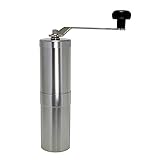
The JP-30, often called the Porlex Tall, holds about 30 g, stands roughly 7.5 inches high and uses the same ceramic burr design as the Mini. It suits a home user who brews two cups at a time and wants fewer refills. It does not fit inside an AeroPress, and sources note it lacks the rubber grip found on the Mini. If portability is your priority, stay with the Mini; if volume matters, this is the sensible step up.
Questions
Can the Porlex Mini grind for espresso?
It is built for filter and immersion brewing, and a published review calls it unsuited to espresso-machine grinds. If you want espresso, choose a grinder designed for fine, repeatable adjustment.
What grind setting should I start with?
One review found a consistent medium grind at about 8 to 10 clicks from closed. Click positions depend on how you set the zero point, so use that as a rough starting point and adjust by taste.
Does the Mini really fit inside an AeroPress?
Retailers and reviewers say yes, which is why many travelers choose it. The taller JP-30 does not fit.
How do I clean it?
Disassemble it, brush out grounds and rinse the ceramic burrs if needed. Dry every part completely before reassembling to avoid moisture problems.
Is the Mini II worth choosing over the original?
Retailers describe a redesigned burr set and faster grinding per rotation, so it is worth choosing when the listings are otherwise similar. Confirm the generation on the listing before you buy.
Mini or JP-30 for home use?
If you brew a single cup, the Mini is enough. If you routinely brew two cups, the JP-30’s larger hopper reduces the number of loads you need to grind.
Update History
- October 21, 2026 – Initial publication; specifications checked against manufacturer documentation where available.
- Check the product page for current specifications and availability before buying.
Sources
- Retailer and distributor product pages for the Porlex Mini, Mini II and JP-30
- Published editorial reviews of the Porlex Mini II and comparison guides covering the Mini and Tall models
- Retailer listing titles and specification fields


Write Your Review
No reviews yet. Be the first to share your experience!