

Key takeaways
- Timemore C2 review: 38 mm steel burr, 25 g capacity, click ranges by brew method, strengths, limits for espresso and newer models.
The Timemore Chestnut C2 is a compact hand grinder with a 38 mm stainless steel conical burr, a 25 g bean capacity and an aluminum body that weighs a little over 400 g. It is a strong pick for pour-over, AeroPress, drip and French press drinkers who want a small, quiet, well-built grinder; it is a weaker pick if your main drink is espresso, because the finest settings leave little room to fine-tune a shot. This review lays out the published specs, what the C2 does well, where it runs out of road, and which newer Timemore models are worth comparing before you commit.
Quick Verdict
- Best for: filter coffee, AeroPress, moka pot and French press at home or on the road.
- Strength: dual-bearing build, smooth turning, and uniform particles for its class, with quiet grinding.
- Limit: 25 g capacity means one to two cups per session, and espresso adjustment is coarse for dialing in.
- Check first: the maker sells several Chestnut generations (C2, C2S, C3S), so match the exact model name to the listing.
- Skip it if: you grind for espresso every day or need to grind more than about 25 g at once.
Key Specs
Published numbers for hand grinders vary slightly between retailers and reviewers. The ranges below reflect the most common figures; confirm on the listing for the exact version.
| Spec | Published detail |
|---|---|
| Burr | 38 mm stainless steel conical (CNC-machined) |
| Capacity | About 25 g of beans |
| Adjustment | Stepped click adjustment under the burr; sources cite about 36 steps overall (confirm on the listing) |
| Bearings | Dual bearings for stability |
| Body | Aluminum alloy, with PCTG plastic parts (stabilizer, adjusting knob, handle knob, hopper lid) |
| Weight | About 430 to 435 g (one retailer lists around 465 g) |
| Dimensions | About 160 mm tall by 60 mm wide |
| Typical starting points | Espresso about 10 to 14 clicks; pour-over about 18 to 24; French press about 25 to 27 (counted from fully closed) |
| Speed (one reviewer’s figure) | Around 30 seconds for 15 g at a medium setting |
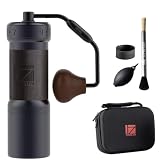
| Included | Cloth travel bag, cleaning brush, manual (confirm on the listing) |
Treat the click numbers as starting points. They change with the way a unit is calibrated, with bean density and roast level, and with how you count from zero. Re-find your own baseline the first time you use it.
Who It Is For (and Who Should Skip It)
It suits
- Pour-over and AeroPress fans who grind one or two cups at a time.
- Travelers and campers, thanks to a body that is small enough for a bag and a carrying pouch.
- Apartment dwellers who want quiet grinding without a motor.
- First-time hand grinder buyers who want a well-built, widely reviewed model with a straightforward click system.
Consider something else if
- You brew espresso daily. The finest settings do not give much room for tiny adjustments, which makes tuning a shot tedious.
- You regularly brew a full carafe. Twenty-five grams yields roughly one large mug or two small cups, so a bigger batch means refilling and extra cranking.
- You want a folding handle. The standard C2 has a fixed crank, which makes it bulkier to pack than newer folding designs.
- You need to fit it inside an AeroPress chamber for a brew-while-grinding trick; reviewers note the body is too wide for that.
What It Does Well
Build quality in your hand
The aluminum body feels solid, and the dual bearings keep the burr shaft steady. In practice that means the handle turns smoothly, the burr stays centered, and the grinder does not wobble or rattle. A steady burr helps produce a tighter particle distribution, which usually translates to a cleaner, sweeter cup at coarse and medium settings.
Grind quality for filter methods
Reviewers consistently describe the C2’s particle distribution as above average for its class. Filter coffee, which tolerates a wider range than espresso, is where that shows. Pour-over and drip brews taste clean, and coarser settings for French press avoid the large boulders that cause bitterness.
Speed and effort
One published figure puts a 15 g dose at about 30 seconds on a medium setting, and nearly a second per gram on coarser French press settings. That is a reasonable pace for a manual grinder with a 38 mm burr, and the handle length gives you leverage so the work does not feel punishing.
Quiet operation
Without a motor, the only noise is the burr crushing beans, which is far quieter than a blade or electric burr grinder. For early mornings in a shared home, that is a real advantage.
Portable size
At roughly 160 by 60 mm and a little over 400 g, it fits in most backpacks and travel kits. Pair it with an AeroPress or a small dripper and you have a full travel coffee setup.
Straightforward adjustment
The internal click ring is easy to understand: turn the knob under the burr to select a setting, and count clicks from fully closed. Keep notes for each brew method and you can return to the same setting reliably.
Where It Falls Short
Limited espresso fine-tuning
Espresso requires small, repeatable changes. The C2’s steps are bigger than ideal for fine adjustment near the espresso range, so you may find a shot too fast on one click and too slow on the next. If you want to pull espresso on a hand grinder, look at models designed for that, which have finer steps.
Small capacity
Twenty-five grams is enough for a single cup of filter coffee or a double shot of espresso, but not for two large mugs. If you brew for guests, grinding in batches adds time and effort.
Fixed handle
The crank handle stays attached, which complicates storage and travel compared with folding handles. It also means the grinder takes more room in a small bag.
Plastic components
The body is metal, but several parts are PCTG plastic, including the stabilizer, adjusting knob, handle knob and lid. That keeps weight down and is a normal choice in this class, but the all-metal versions of newer Chestnut models address it directly.
Some retention and static
All hand grinders retain a small amount of coffee in the burr chamber and can produce static with dry beans. A small brush and a light mist on the beans (the so-called Ross droplet technique) help; check the manual for how to disassemble and clean the burrs.
Model naming confusion
The Chestnut family now includes the original C2, a full-metal C2S, and the C3 series with a different burr geometry. Listing titles differ, and not all published specs agree, so match the name and capacity on the listing with what you intend to buy.
How It Compares
| Model | Burr (as listed) | Capacity (as listed) | Notable points |
|---|---|---|---|
| Chestnut C2 | 38 mm stainless steel, listed as a tapered/conical burr | 25 g | Dual bearings, aluminum body with plastic parts |
| Chestnut C2S (full metal) | Stainless steel conical (S2C wording on some listings) | 25 g | Full-metal body on the listings for the C2S |
| Chestnut C3S | 38 mm S2C conical burr | Sources differ; confirm on the listing | Different burr geometry; all-metal body on the S version |
One published comparison measured the C3 grinding more slowly than the C2 for the same dose, while handling finer settings better. If you mostly brew filter coffee, the speed difference may matter more than the espresso-oriented advantages.
If you brew filter coffee, the C2 already covers your needs, and the newer Chestnut models mainly add burr geometry, an all-metal body or finer adjustment. If you want one grinder for filter coffee and espresso, look at the models built with finer steps and compare the listing details. Buyers who grind only one or two cups at a time will also notice that the extra features of newer models change little in daily use; the cup you brew depends more on fresh beans, a clean burr chamber and a consistent recipe than on the model number. Keep a note of your click setting for each brew method so a change of grinder, if you make one, starts from a known baseline.
Alternatives Worth Considering
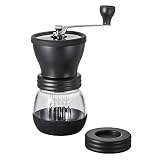
TIMEMORE Chestnut C2 Manual Coffee Grinder – the model reviewed here
As an Amazon Associate we earn from qualifying purchases at no extra cost to you.

This listing is for the original Chestnut C2 with a 25 g capacity, CNC stainless steel burr, internal adjustment and a double-bearing design. It is the version this review focuses on, and it remains a sensible buy for filter brewers who want a quiet, sturdy hand grinder. The listing describes the burr as tapered; other sources call it conical, so look at the product photos and manual if the burr shape matters to you. Confirm the capacity, included accessories and handle design before ordering.
TIMEMORE Chestnut C2S Full Metal Body Grinder – why consider it

The C2S listing emphasizes a full-metal body, 25 g capacity and a CNC stainless steel conical burr with adjustable settings and double bearings. Consider it if the plastic components on the standard C2 bother you or you want a more rigid feel in the hand. It is also useful as a lateral move: the capacity is the same, so you are paying attention to materials rather than output. Confirm exact specifications on the listing because published data for the C2S is thinner than for the C2.
TIMEMORE Chestnut C2S With S2C Conical Burr – why consider it

This C2S listing highlights an S2C burr, a geometry Timemore developed to reduce boulders and fines, along with a 25 g capacity and double bearings. Choose it if you prefer a more recent burr design and mostly brew filter methods. Published comparisons of S2C-style burrs describe a crush-then-slice action, but speed and cup character differ from a standard conical burr, so read the listing details and think about whether your brewing style benefits from the change.
TIMEMORE Chestnut C3S Manual Coffee Grinder – why consider it

The C3S belongs to Timemore’s newer C3 line, which uses a 38 mm S2C burr and, in the S version, an all-metal construction. Published comparisons say the C3 line handles finer grinds better than the C2 but grinds somewhat more slowly. It is the model to consider if you brew a mix of filter coffee and the occasional espresso-style recipe. Capacity figures differ among sources, so check the listing for the exact number before assuming it matches the C2.
TIMEMORE Chestnut C3S With All-Metal Body – why consider it

This C3S listing specifically calls out an all-metal body and adjustable settings for espresso, pour-over and other methods. It suits buyers who want the newest Chestnut feel without moving into a higher grinder tier. As with the other C3S listing, verify capacity, burr details and handle design on the page, and compare the grind-setting range with how you like to brew. If you rarely grind finer than a pour-over setting, the older C2 may already do everything you need.
Questions
Is the Timemore C2 good for espresso?
It can produce a drinkable espresso with careful dosing, but the stepped adjustment makes fine-tuning difficult. If espresso is your main drink, look for a grinder built for fine, incremental adjustment.
How many clicks should I use for pour-over?
A common published starting range is about 18 to 24 clicks from fully closed, with French press around 25 to 27. Adjust by taste: finer if the cup tastes sour or thin, coarser if it tastes bitter or drains slowly.
How many grams can it hold?
About 25 g, enough for one or two cups depending on your recipe. The usable amount may be slightly lower because of how the beans sit in the chamber.
How do I clean it?
Brush out the burr chamber regularly, and unscrew the burr according to the manual for a deeper clean. Avoid water on the burrs and bearings, and never put the grinder in a dishwasher.
What is the difference between the C2 and the C2S?
Listings for the C2S describe a full-metal body and, on some pages, an S2C burr, while the standard C2 has a mix of aluminum and plastic parts. Published detail on the C2S is limited, so rely on the listing and the manufacturer page.
Can I use it for moka pot coffee?
Yes. A medium-fine setting between espresso and pour-over is the usual starting point. Adjust until the moka pot brews steadily without sputtering.
Update History
- October 21, 2026 – Initial publication; specifications checked against manufacturer documentation where available.
- Check the product page for current specifications and availability before buying.
Sources
- Retailer specification pages for the Timemore Chestnut C2, C2S and C3S
- Independent written reviews of the Chestnut C2 covering grind range and build
- Published comparisons of the C2 and C3 grinder lines
- Grind-setting guides by brew method


Write Your Review
No reviews yet. Be the first to share your experience!