

Our Top Picks
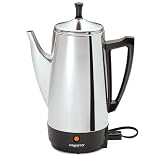
 Presto 02811 Stainless Steel 12-Cup Electric Coffee Percolator12-Cups13.1 x 9.7 x 6.2 Inches2.9 PoundsCheck on Amazon
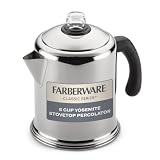
 Farberware Classic Stainless Steel Yosemite Coffee Percolator8 Cup - Clear Knob9.2 x 8.7 x 7 inches2.25 poundsCheck on Amazon

The Presto 02811 12-cup electric percolator is the best overall pick for most households that want a large percolator without fuss: it is a plug-in stainless pot with a classic perk tube, a ready light, and automatic keep-warm. “Large” here means a 10 to 12 cup pot, and in percolator language a cup is roughly 5 fluid ounces, so a 12-cup pot holds about 60 ounces. If you would rather brew on a stove or over a campfire, the COLETTI Bozeman is the better fit. Five of the six picks below are 12-cup pots; the Farberware is a smaller 8-cup runner-up and is labeled that way.
Quick List
- Presto 02811 – best for everyday plug-in batches of up to 12 cups
- VEVOR 12-Cup – best for a detachable power base and a stated keep-warm mode
- West Bend 12-Cup – best for a traditional chrome-look pot with a detachable cord
- Presto 02815 Cordless – best for lift-off serving at the table
- COLETTI Bozeman – best for campfire and stovetop brewing with no plastic or aluminum
- Farberware Yosemite 8-Cup – best for small stovetop batches (runner-up for size)
Which One Is Right for You?
| If you… | Choose |
|---|---|
| Want to fill the pot, plug it in, and walk away until the light comes on | Presto 02811 |
| Need to pour from a pot that lifts off its base and wraps its cord away | Presto 02815 Cordless |
| Camp, cook on a wood fire, or want a stovetop pot with no plastic or aluminum | COLETTI Bozeman |
| Like a split power base and a defined keep-warm wattage | VEVOR 12-Cup |
| Want the old-fashioned look with a level indicator on the handle | West Bend 12-Cup |
| Brew for two to four people on a gas or electric range | Farberware Yosemite 8-Cup |
The fork in the road is power source. Electric pots (Presto, VEVOR, West Bend) manage the heat for you and hold the coffee warm afterward. Stovetop pots (COLETTI, Farberware) work anywhere you have a flame or burner, but you control the timing, and a pot left unattended will over-extract.
All 6 Picks in Detail
1. Presto 02811 12-Cup Electric Percolator – Best for everyday plug-in batches
As an Amazon Associate we earn from qualifying purchases at no extra cost to you.

This is the percolator many people picture when they hear the word: a polished stainless body, a stainless perk tube and filter basket, and a detachable cord. It suits offices, family breakfasts, and anyone who wants a full pot without programming anything.
- Capacity: 12 cups (about 60 fluid ounces); retailers list a minimum brew of 2 or 4 cups, so confirm the low end on the listing
- Power: listed at 800 watts, 120 volts
- Stainless steel filter basket and perk tube; wrap or disc filters are recommended by retailers
- Signal light shows when coffee is ready; automatic keep-warm afterward
- Stay-cool handle and knob; detachable UL-listed cord; one-year limited warranty per retailer pages
In daily use, the appeal of a pot like this is how little there is to think about. You measure water to the interior marks, set the basket with coarse grounds, close the lid, and plug it in. The pot heats, water climbs the perk tube, and you can hear and see the cycle through the lid knob. Because it sits on a fixed base, it works best on a counter near an outlet, which is exactly where most office kitchenettes and family kitchens keep their coffee gear. Treat the stainless basket and stem as the parts to rinse after every pot so old oils do not build up.
Pros
- Simple operation with very few parts to lose
- Brews at a pace retailers describe as about a cup a minute
Cons
- The pot stays on its cord base, so serving across the table means lifting a hot, full pot
- No programmable start; dishwasher guidance varies by retailer, so hand-wash to be safe
Compared with the Presto 02815, this one costs you the lift-off serving base but keeps the classic, familiar layout.
2. VEVOR 12-Cup Electric Percolator – Best for a split power base

The VEVOR pairs a 12-cup (1.8 liter) vessel with a power base that separates from the pot, so you can carry it to the table without dragging a cord. It suits people who want a modern take on the percolator with a keep-warm cycle that is spelled out in watts.
- Capacity: 12 cups, listed as 1.8 liters
- Power: 1000 watts while brewing, 50 watts in keep-warm, per the manufacturer page
- Keep-warm reheats when the temperature drops below roughly 113 degrees Fahrenheit, per the same page
- 304 stainless inner liner with scale marks; transparent fountain lid; removable stainless filter
- Size listed as about 9.45 by 6.2 by 13.4 inches, with a weight near 2.6 pounds
Higher wattage is not automatically better in a percolator. More power gets the water moving sooner, but it also means the pot reaches a boil quickly, and the perk cycle can run hot for longer than you want if you leave it alone. The advantage of a defined keep-warm mode is that the pot should drop to a low holding temperature once the brew finishes, which protects the flavor of the last cups better than leaving a hot element running. Pay attention to the minimum fill mark when you brew small batches, since pots this size can scorch if they run nearly dry.
Pros
- Split base makes pouring and cleanup easier
- Clear lid lets you watch the perk cycle
Cons
- Retailers disagree on the outer shell: some say all stainless, others list a plastic outer layer, so confirm materials if that matters to you
- Higher wattage means a faster boil, which leaves less margin for over-perking
Next to the West Bend, the VEVOR trades a vintage look for a detachable base and a clearer keep-warm spec.
3. West Bend 12-Cup Electric Percolator – Best for a traditional chrome-look pot

West Bend has made this style of pot for decades. The listing describes a mirror-finish stainless body with a stainless stem, basket, and spreader, plus a heat-resistant handle and base. It fits households that like the diner-style look and want a pot that holds a full 12 cups.
- Capacity: 12 cups; retailer pages state a 2 to 12 cup brewing range
- Power: about 950 watts per the manufacturer page
- Detachable cord, ready-to-serve light, and automatic keep-warm
- Level indicator on the handle so you can see how much is left
- Cover, stem, and basket are described as top-rack dishwasher safe; confirm on the listing
The standout trait of this style is familiarity. Parts are interchangeable in spirit with other classic electric percolators, and the mirror finish wipes clean with a soft cloth. The handle level gauge is a small feature that matters at gatherings, because it tells you whether to start another pot before the first runs out. Expect to hand-wash the body, and follow the care card for the basket and cover. As with every electric pot here, keep the base and cord out of the sink and out of standing water.
Pros
- Handle gauge helps when you are pouring for a crowd
- Familiar construction that is easy to replace parts for
Cons
- One buyer comment on a retailer page calls the internal parts light-gauge, so handle the stem and basket gently
- Listing names vary across retailers; verify the model before you order
It is the closest match to the Presto 02811 in the list, with a higher stated wattage and a handle gauge as the main differences.
4. Presto 02815 12-Cup Cordless Percolator – Best for lift-off serving

The 02815 keeps the percolator method but adds a lift-off pot on a separate power base. It suits buffet-style serving, holiday mornings, and tight counters where a trailing cord is a nuisance.
- Capacity: 12 cups; some retailers list a 4 to 12 cup range, others 2 to 12
- Power: 800 watts, 120 volts per most listings
- Black stainless finish with a glass cover to watch the perk cycle
- Easy-pour spout, stay-cool handle, and a cord that wraps into the base for storage
- Roughly 12.5 by 9.5 by 6 inches and about 3.4 pounds per retailer pages; automatic keep-warm
Cordless serving is the main reason to choose this over a fixed-base pot. When the cycle finishes, you lift the pot off its power base and carry it to the table; the base stays put on the counter. That also means the electrical contact stays away from spills and drips at the table. The listing language about easy pour spouts and a stay-cool handle is useful, but give any hot pot a steady grip, and set it on a trivet. Since retailer pages say there is no automatic shut-off, build the habit of unplugging the base once the coffee is poured.
Pros
- Lifts off the base for pouring anywhere
- Compact cord storage
Cons
- Retailer pages state there is no automatic shut-off, so unplug it when you are done
- Black finish shows fingerprints; the glass lid is a part to protect
If the Presto 02811 is the plain workhorse, this is the same brand with a serving upgrade.
5. COLETTI Bozeman 12-Cup Percolator – Best for campfire and stovetop brewing
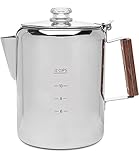
The Bozeman is a non-electric pot built for flame. The listing title promises no aluminum or plastic, and the manufacturer describes 18/8 food-grade stainless steel with a rosewood handle and a glass knob in the lid. It suits campers, cabin owners, and anyone who wants a power-outage backup.
- Capacity: 12 cups, which the manufacturer equates to about 60 fluid ounces
- Works on a campfire, gas range, electric coil, or glass-ceramic cooktop
- Not for induction in the standard version; the maker sells a separate induction model
- Listing dimensions of about 6.78 by 7.2 by 8.26 inches
- Filters are included, per the manufacturer; hand-wash the wood handle
Direct flame changes how you brew. With a campfire, a bed of coals or a steady grate gives gentler heat than open flames, and it is easy to scorch the pot’s finish if the fire is too high. Aim for a slow, steady bubble through the glass knob rather than a rolling boil, and pull the pot to the edge when the color looks right. Bring a pot holder and a flat spot to set it down, because the metal parts conduct heat all the way to the handle collar. At home, the same pot works on gas, electric coil, and glass-ceramic ranges, but not induction in this version.
Pros
- Works without electricity
- No plastic parts to melt near a flame
Cons
- You must watch the pot and pull it from heat on time
- Handle and knob run hot near an open fire, so use a pot holder
Against the Farberware, the COLETTI is the larger, camp-ready option; the Farberware is the lighter, kitchen-first one.
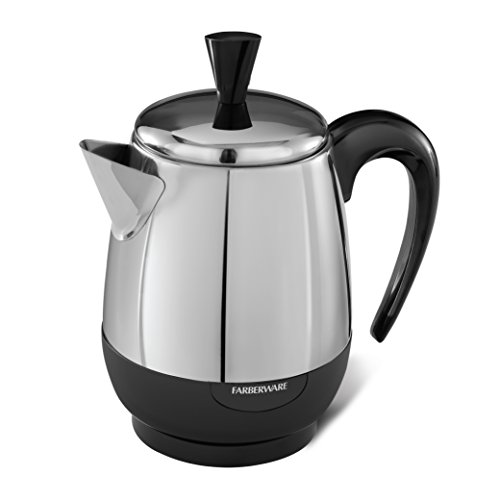
6. Farberware Classic Yosemite 8-Cup Percolator – Best for small stovetop batches (runner-up for size)

This is the smallest pot on the page, and it does not meet the “large” bar the way the 12-cup models do. It earns a place as a runner-up for two to four people who brew on a stovetop and want a mirror-finish stainless pot with a permanent basket.
- Capacity: 8 cups; retailers cite a 4 to 8 cup range and up to 64 fluid ounces, so confirm the volume
- Manual stovetop pot; no cord, no timer
- Polished stainless body with a permanent filter basket (no paper filters needed)
- Glass or clear knob in the lid; retailers differ on the material
- Induction claims conflict between listings, so confirm before using on induction
An 8-cup pot suits a different routine from the 12-cup models above: two or three mugs on a weekday, brewed on the range while you make breakfast. It stores easily in a cabinet and has no cord to coil up. Because the capacity listings differ between retailers, the safest approach is to fill it with a measuring cup of water the first time, note the level, and set your own marks for one, two, and three mugs. That removes any confusion about what a cup means in the listing.
Pros
- Light and easy to store
- No electrical parts to wear out
Cons
- Too small for a group
- Dishwasher guidance conflicts between retailers, so hand-wash the knob and pump tube
If you need to serve more than four, step up to the COLETTI Bozeman, which is also non-electric but holds 12 cups.
Specs Compared
| Model | Type | Capacity | Power | Body | Keep-warm | Cord / base |
|---|---|---|---|---|---|---|
| Presto 02811 | Electric | 12 cups | 800 W listed | Stainless steel | Automatic | Detachable cord |
| VEVOR 12-Cup | Electric | 12 cups (1.8 L) | 1000 W brew, 50 W warm | 304 stainless liner; confirm outer shell | Yes, 50 W | Split power base |
| West Bend 12-Cup | Electric | 12 cups | About 950 W | Stainless, mirror finish | Automatic | Detachable cord |
| Presto 02815 | Electric | 12 cups | 800 W listed | Black stainless | Automatic | Lift-off pot, cord wraps in base |
| COLETTI Bozeman | Stovetop / campfire | 12 cups (about 60 fl oz) | None | 18/8 stainless, wood handle | No | Not applicable |
| Farberware Yosemite | Stovetop | 8 cups | None | Polished stainless | No | Not applicable |
How We Chose These
We started with the six percolators in the current catalog set and read the product titles, manufacturer pages where available, and retailer specification fields. We favored pots that clearly state a 10 to 12 cup capacity, a stainless brewing path, and a clear power or heat-source description. Where retailers disagreed on a detail, such as the minimum brew size or shell materials, we say so instead of picking a side. Nothing here is based on a lab run or personal ownership, and every figure comes from published listings or manufacturer pages.
What to Look For
Cup size is not the size of your mug
Coffee makers count a “cup” as about 5 fluid ounces, not the 8 ounces of a measuring cup. A 12-cup percolator therefore holds roughly 60 ounces, which fills about five 12-ounce mugs. A 6-cup pot, by the same math, gives you only about 30 ounces. When a listing gives fluid ounces or liters, trust that number over the cup count.
Electric versus stovetop
Electric percolators control the heat with a thermostat and switch to a warming mode when the brew finishes. That makes them forgiving. Stovetop and campfire pots depend on you: start timing when the coffee begins to bubble through the glass knob, keep the flame low, and take the pot off the heat when the color reads right. A common rule of thumb is a gentle perk of around six to ten minutes, but follow the manual for your pot.
Materials and what touches the coffee
Stainless steel is the standard for the perk tube and basket because it does not hold flavors. If you avoid aluminum or plastic near hot water, read the listing closely: some pots are stainless inside but use plastic in the outer shell, lid, or base. Glass knobs are fine, but they are the part most likely to chip, so keep spares in mind.
Grind, filters, and basket fit
Percolators like a coarse grind, closer to what you would use for a French press than for a drip machine. A fine grind slips through the basket holes and leaves sludge. Some of these pots work best with disc or wrap filters, which catch fine particles; others use only the stainless basket. Check which your model expects.
Safety basics
Electric pots should only be filled between the minimum and maximum marks, and the base and cord must stay dry, never submerged. Keep the cord clear of countertop edges. For stovetop and campfire pots, use a pot holder on handles and knobs, set the pot on stable ground or a sturdy grate, and never leave it boiling unattended.
Keep-warm, shut-off, and reheating
Electric percolators handle the end of the brew in different ways. Some drop to a low warming mode on their own, and some hold temperature with a stated wattage. None of the listings here should be assumed to turn fully off by themselves unless the product page says so. If you brew in the morning and leave, unplug the pot when you leave. Coffee held for hours on warm turns bitter and flat, so pour leftovers into an insulated carafe if you want them later.
Cleaning and descaling
Percolators trap oils in the perk tube and basket, and mineral scale builds up inside the pot when you use hard water. Rinse parts after each use, wash with warm soapy water, and descale on a regular schedule using the method your manual recommends, often a vinegar-and-water solution run through a cycle followed by clear-water rinses. Never immerse an electric base or cord. For stovetop pots, dry them fully before storing to prevent spotting.
A worked example
Say you host six adults for brunch and plan on two 10-ounce cups each. That is 120 ounces, or about 24 percolator cups. One 12-cup pot will not cover a second round, so plan two batches or pair a pot with an insulated server. If you only brew for two, any of these pots works, but the 8-cup Farberware leaves less waste than filling a 12-cup pot to the bottom mark.
Questions
How much coffee do I put in a large percolator?
Many manufacturers suggest about one level tablespoon of coarse grounds per cup, adjusted to taste. Because brands differ, check the manual for your pot, and start lower rather than higher.
Why does percolator coffee taste stronger or bitter?
A percolator recirculates hot water through the grounds, so a long cycle can pull out more bitterness. Shorten the perk time, use a coarser grind, and stop brewing once the pot is ready rather than letting it keep cycling.
Can I use paper filters in a percolator?
Many pots work with the metal basket alone, and some manufacturers recommend disc or wrap filters to reduce fine sediment. Check the manual for your model, since fit varies.
Which of these can go on an induction cooktop?
Electric percolators do not use a burner at all. For the stovetop pots, the standard COLETTI Bozeman is described by its maker as not induction compatible, and listings for the Farberware conflict, so confirm before you use either on induction.
Do electric percolators turn themselves off?
Most switch to a keep-warm mode after brewing, but that is different from a full shut-off. A retailer page for the Presto 02815 says it has no automatic shut-off, so unplug any of these pots when you finish.
Is a percolator better than a drip machine for large groups?
It depends on the group. A 12-cup percolator makes a full pot with minimal gear and stays warm without a hot plate, but a drip machine gives you more control over extraction. The percolator wins on simplicity and on stovetop or camp use.
Update History
- October 21, 2026 – Initial publication; product set drawn from current catalog listings.
- Check the product page for current specifications and availability before buying.
Sources
- Manufacturer product and specification pages for West Bend, COLETTI, Farberware, and VEVOR
- Retailer listing titles and specification fields for each product
- Published manuals and spec sheets for Presto percolators, as summarized on retailer pages


Write Your Review
No reviews yet. Be the first to share your experience!