

Key takeaways
- Our best vintage style percolators guide sorts true electric percolators from stovetop pots by capacity, materials, safety and brewing tips.
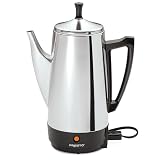
The best vintage style percolator in this group is the West Bend 12-cup electric percolator, a stainless steel pot with a chrome mirror finish, a detachable cord, a ready-to-serve light, and a keep-warm mode. A percolator is a pot that cycles hot water up a center stem and drips it back through a basket of coarse grounds until the thermostat stops the cycle, and that classic look and sound is what “vintage style” usually means. The West Bend suits anyone who wants the diner-era appearance with modern electrical parts. The Corning Ware pick is for collectors, and the remaining four items are stovetop pots or accessories that only partly fit the facet.
Quick List
- West Bend Classic 12-Cup Electric Percolator – best overall for a true electric percolator with a retro look
- Vintage Corning Ware Blue Cornflower 10-Cup Electric Percolator – best for collectors who want the original Blue Cornflower pattern
- SODEF 6-Cup Aluminum Moka Pot – best runner-up for a small stovetop espresso-style brew (not a true percolator)
- Black Stainless Steel Drip Coffee Pot with Port (350 ml) – best runner-up for a compact vintage-look pot at a desk
- Brew Rite Disc Filters, 300 Count – best accessory for cleaner percolator coffee
- Enamel Coffee Pot, 40 oz, Blue Speckled – best for camp-style stovetop coffee with a retro look
Which One Is Right for You?
| If you… | Choose |
|---|---|
| want a plug-in percolator that keeps coffee warm for a crowd | West Bend Classic 12-Cup Electric Percolator |
| collect mid-century kitchenware and accept a pre-owned appliance | Vintage Corning Ware Blue Cornflower 10-Cup |
| like the stovetop ritual and a small, strong cup | SODEF 6-Cup Aluminum Moka Pot |
| need a small retro-look pot for one person at a desk | Black Stainless Steel Drip Coffee Pot with Port |
| already own a percolator and want cleaner coffee with less sediment | Brew Rite Disc Filters, 300 Count |
| brew over a camp stove or fire and like speckled enamelware | Enamel Coffee Pot, 40 oz |
Only two of the six listed items are percolators in the strict sense. That is worth knowing before you shop: if you want the perk-perk-perk sound and the glass knob on the lid, you are choosing between the West Bend and the Corning Ware. The other four are related stovetop or accessory products that serve the same retro taste, and they are labeled as runners-up where they do not match the facet.
All 6 Picks in Detail
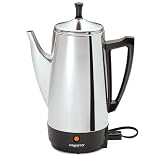
1. West Bend Classic 12-Cup Electric Percolator – Best overall
As an Amazon Associate we earn from qualifying purchases at no extra cost to you.

West Bend has made electric percolators for decades, and this stainless steel model carries the traditional look: a polished body, a ready-to-serve light, and a handle with a coffee level indicator. It plugs into a detachable cord base, so you can lift the pot off for serving at the table. It suits families, church-basement coffee hours, holiday mornings, and anyone who prefers the full-flavored, hot, slightly bolder cup that percolators produce.
- Capacity: 2 to 12 cups, listed as 96 fluid ounces at the top end
- Power: 950 watts according to the West Bend feature list, with an automatic keep-warm mode
- Stainless steel body with a chrome mirror finish; stem, basket, and spreader are stainless steel
- Ready-to-serve indicator light and a coffee level indicator on the handle
- Detachable cord, listed at about 24 inches by one retailer, with a heat-resistant handle and base
- Care: cover, stem, and basket are described as top-rack dishwasher safe; wash the pot by hand and never immerse the base
Pros
- Genuine percolator brewing with an automatic finish and keep-warm
- Removable cord makes it a good table-service pot
Cons
- Availability has varied, so confirm the listing is in stock and current
- A 12-cup pot is large for a single drinker; the brand states a 2-cup minimum
A reasonable batch for two people is 2 to 4 cups, and the pot copes with that better than most 12-cup brewers because a percolator’s small heating element works on whatever water is in the base. For a brunch, fill it to the stated maximum, set it on the table, and let the keep-warm function hold the coffee. Next to the Corning Ware, it is the practical option because it is a current brand design with a standard detachable cord and a published manual.
2. Vintage Corning Ware Blue Cornflower 10-Cup Electric Percolator – Best for collectors

This is an actual vintage piece, the Corning Ware P-80-EP in the famous Blue Cornflower pattern, offered with a replacement cord that the listing describes as UL listed. It is a glass-ceramic body with a lid, basket, and heating element, and it appeals to people who collect mid-century kitchenware or want a conversation piece on the counter. It is not a modern appliance, and the listing is for a pre-owned item.
- Model: P-80-EP, 10-cup electric percolator
- Power: 600 watts at 120 volts according to the listing
- Replacement UL-listed cord noted in the title
- Includes a lid, basket, and heating element per the specification field; confirm every part, including the stem
- Pre-owned condition, so chips, crazing, and wear vary from piece to piece
Pros
- Distinctive pattern that looks like nothing sold in stores today
- Replacement cord removes the most common vintage problem
Cons
- Used appliance with an unknown service history
- Original parts are scarce, so a missing piece can be hard to replace
Because original Corning Ware percolator parts are scarce, ask the seller to confirm that the stem, basket, spreader, and lid are all present and that the pot has no cracks, chips, or crazing in the glaze. Treat it as a display-quality appliance that can be brewed with, and brew small batches first to learn how it behaves. Choose it over the West Bend only if the look matters more than convenience, since parts and a warranty are less certain.
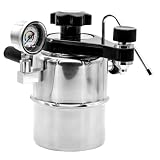
3. SODEF 6-Cup Aluminum Moka Pot – Best runner-up for stovetop espresso-style coffee

This listing calls itself an Italian-style espresso machine percolator, but a moka pot is not a percolator. It pushes water through the grounds once using steam pressure, rather than cycling it repeatedly. It fits the facet only through its retro, stovetop character, so it is a runner-up. It suits anyone who wants a small, strong cup and does not mind a compact, plain aluminum pot.
- Aluminum construction, described as classic black
- Stovetop use; plain aluminum is generally not compatible with induction, so confirm
- Name says 6-cup, but the listing capacity reads 100 to 199 ml, which is closer to two or three small servings
- Moka pots work at about 1 to 2 bar, well below true espresso pressure, with a fine grind and a 3 to 5 minute brew
- Dimensions and weight: confirm on the listing
Pros
- Small footprint and no electricity
- Concentrated cup that works for an Americano-style mug
Cons
- Not a percolator and not a perk-style cup
- Capacity wording is confusing; check the listing carefully
Buyers should read the capacity field closely: a 100 to 199 ml range means each fill yields roughly one to two small cups of concentrate, which you can top up with hot water for an Americano-style drink. Do not tamp the grounds, fill the basket level, and take the pot off the heat as soon as it starts to sputter. Compared with the enamel pot, it makes a stronger, smaller brew and loses the large-batch convenience.
4. Black Stainless Steel Drip Coffee Pot with Port (350 ml) – Best runner-up for a desk

The listing describes a black stainless steel pot with a streamlined spout, a rust-resistant body, a 350 ml capacity, and a compact vintage styling aimed at offices and similar settings. It is not a percolator, and the listing name does not make clear how the “port” works, so treat it as a runner-up. It may suit one person who wants a retro-looking pot at a desk or in a studio apartment.
- 350 ml capacity, which is about 11.8 ounces
- Stainless steel body described as rust resistant
- Streamlined spout for pouring
- Heat source and port function are unclear; confirm whether it is stovetop, pour-over, or a serving pot
- Induction compatibility: confirm on the listing
Pros
- Small size for a single serving
- Stainless body should resist rust and odor
Cons
- Not a percolator and few confirmed details
- Capacity is only about a mug and a half
Because the listing’s wording is vague, the safest approach is to check the product page for a photo of the lid, the port, and the base before buying. If it turns out to be a pour-over style or serving pot, it will still serve as a compact vessel for a single mug, but it will not replace a percolator. It is smaller and simpler than the moka pot, though it offers less clarity about what it actually does.
5. Brew Rite Disc Filters, 300 Count – Best accessory for cleaner percolator coffee

Strictly, this is a consumable rather than a brewer. These are flat paper discs sized for 3 inch and 3.5 inch baskets, sold for percolators and drip makers. Placing a disc over the perforated basket base catches fine particles that would otherwise slip through the holes and settle as sludge in the pot. It suits anyone who already owns a percolator and wants a clearer cup.
- Flat disc style for baskets of about 3 to 3.5 inches
- 300 filters in the pack
- Brand states the crepe-textured paper absorbs oils and cuts gritty sediment
- Measure your basket before buying; the West Bend and Corning basket diameters are not stated in these listings
Pros
- Low-cost way to reduce sediment
- One pack lasts a long time
Cons
- Fit depends on basket size
- Paper can slightly slow the flow and mute oils
Using a disc is optional but handy: set one flat on the bottom of the basket before adding grounds, so it sits between the grounds and the holes. A fresh disc for each batch keeps the pot cleaner, and cleanup is a matter of lifting out the basket and dropping the paper into the trash. It does nothing without a percolator, so pair it with the West Bend or the Corning Ware.
6. Enamel Coffee Pot, 40 oz, Blue Speckled – Best for camp-style coffee

This blue speckled pot holds 40 ounces, has a handle, and offers vintage styling with a spout meant for spill-resistant pouring. The listing also calls it a water kettle, which tells you what it really is: a stovetop or campfire pot, not a percolator. It suits camping, cabins, and anyone who likes the cowboy coffee tradition, where grounds steep directly in hot water.
- Capacity: 40 ounces, about 1.2 liters
- Speckled enamel finish; the listing mentions iron or steel construction, so confirm the material
- Handle and targeted spout
- Stovetop and campfire use; confirm induction compatibility and any lid details
Pros
- Fits camp and rustic kitchens
- Large batch with no electronics
Cons
- No basket, stem, or built-in filtering
- Enamel can chip, so inspect it periodically
Cowboy-style brewing means stirring grounds into hot water, letting them steep for a few minutes, and settling them with a splash of cold water before pouring. That method suits a campsite, but the listing is clear that it is a pot or kettle, so expect to manage the grounds yourself. It makes more coffee than the moka pot but needs a filter or careful pour to keep grounds out of the cup.
Specs Compared
| Item | Type | Capacity as listed | Heat source | Material | Notes |
|---|---|---|---|---|---|
| West Bend Classic 12-Cup | Electric percolator | 2 to 12 cups (96 fl oz) | Electric, 950 W | Stainless steel, chrome finish | Detachable cord, keep-warm, ready light |
| Vintage Corning Ware Cornflower | Electric percolator, pre-owned | 10 cups | Electric, 600 W | Glass-ceramic; confirm | Replacement UL-listed cord; condition varies |
| SODEF 6-Cup Moka Pot | Stovetop moka pot | 100 to 199 ml per listing | Stovetop, confirm induction | Aluminum | Not a percolator |
| Black Stainless Drip Pot with Port | Small pot; function unclear | 350 ml | Confirm on listing | Stainless steel | Not a percolator |
| Brew Rite Disc Filters | Paper filter accessory | 300 filters | Not applicable | Paper | Fits 3 to 3.5 inch baskets |
| Enamel Coffee Pot, 40 oz | Stovetop or camp pot | 40 oz | Stove or fire, confirm induction | Enamel-coated metal; confirm | Listing also calls it a kettle |
How We Chose These
We began with the six items in current catalog listings and asked a single question: how closely does each one deliver the vintage percolator experience? Items that actually perk coffee through a stem and basket rank first. Related stovetop pots and a filter accessory follow, each labeled for what it is. We read listing titles and specification fields, compared them with manufacturer information where it exists, and flagged contradictions, such as the moka pot’s capacity wording. We did not rely on popularity data, ratings, or sales numbers.
What to Look For
True percolator or lookalike
A percolator has a hollow vertical stem, a perforated basket that sits on the stem, and a lid that lets the water fall back over the grounds. Heat from the base forces water up the stem, over the basket, and back into the pot again and again until it is stopped by a thermostat or by you. A moka pot pushes water through the grounds once with steam pressure of roughly 1 to 2 bar. An enamel pot or kettle has no brewing mechanism at all. If the listing lacks a stem and basket, it is not a percolator, however retro it looks.
Electric or stovetop
Electric percolators like the West Bend regulate temperature with a thermostat, so they stop perking and move to a keep-warm mode with no attention. Stovetop pots rely on you to watch the heat and stop at the right moment, which is why electric models are more consistent. Stovetop suits camping and power outages. Choose by where you will brew, not by looks alone.
Materials and induction
Stainless steel is durable and inert, and stainless pots are often induction friendly, though not every stainless pot is magnetic. Aluminum, used in most moka pots, heats evenly but does not work on induction without an adapter plate. Glass-ceramic bodies like Corning Ware look striking but can crack from impact or sudden temperature change. Enamel on steel resists rust but can chip. To check any pot for induction, hold a magnet to the base; if it clings firmly across the whole base, it should work.
Safety with older or used appliances
A vintage electric percolator needs a close look before you plug it in. Inspect the cord for cracks or frayed insulation, confirm that the plug and wiring are UL listed, and check that the heating element is secure and the base has no scorch marks or loose parts. Look for chips or cracks in the body. If anything seems doubtful, do not use the appliance. Always add water before plugging in, never run a percolator dry, and keep the cord away from the burner or counter edge.
How to brew in a percolator
Use cold water, a coarse grind, and about 1 level tablespoon of coffee per 6 fluid ounces of water. Fine grounds slip through the basket holes and leave sludge. Perking time is commonly 5 to 10 minutes, and past 10 minutes the coffee over-extracts and turns bitter. Many guides say to stop when the liquid in the glass knob looks like dark tea instead of black coffee. Remove the basket at once to prevent extra extraction. A worked example: for 16 ounces of coffee, which is two 8-ounce mugs, use about 2.7 tablespoons, so round to 3 level tablespoons, and start timing from the first steady perk.
Capacity and what a cup means
Percolator cups are not standard. The West Bend listing lists 96 fluid ounces for 12 cups, so its cup is 8 ounces, while many coffee makers use 5 or 6 ounces. A 10-cup Corning Ware may use a smaller cup, so confirm the true ounce capacity before planning a batch. Also note the minimum: percolators generally need enough water to cover the bottom of the stem, and the West Bend states a two-cup minimum. Brewing less than the minimum can leave the stem dry and the pot scorching.
Cleaning and care
Take the basket and stem out after every pot, rinse the interior, and dry the pot before putting it away. Wash stainless pots by hand, keep the heating base and cord out of water, and use a soft sponge on mirror finishes. Descale occasionally with a vinegar-and-water cycle if your water is hard. Check enamel for chips and glass-ceramic for cracks, and retire any piece with damage that exposes bare metal or compromises the body.
Filters and basket size
Many percolators brew with no filter, but a paper disc cuts sediment. Measure your basket across the flat bottom to choose between 3 inch and 3.5 inch discs, and confirm that the stem hole is not blocked. Keep a few spare discs near the machine.
Questions
What does vintage style mean for a percolator?
It generally means polished or colored metal, a glass perk knob on the lid, a rounded body, and a classic stem-and-basket brewing method. Some pieces are genuinely vintage, like the Corning Ware, while others are new products built to look old, like the West Bend.
Is a percolator better than drip?
Percolators make a hotter, bolder cup, but they re-circulate the brew, which can make coffee bitter if it perks too long. Drip machines are more precise for flavor, while percolators are better for keeping large batches hot.
Can I use a paper filter in a percolator?
Yes. Flat disc filters sized for the basket are made for this and reduce the sediment that coarse grounds leave. Check the basket diameter before you buy them.
Is a moka pot a percolator?
No. A moka pot forces water through the grounds once under steam pressure, and a percolator circulates water repeatedly. Moka pots use a fine grind and finish in about 3 to 5 minutes, while percolators use a coarse grind and take longer.
Is it safe to use a vintage electric percolator?
It can be, if the cord, plug, and heating element are in good condition and the body has no cracks. A replacement cord that is UL listed helps. When in doubt, have a qualified repair person inspect it or choose a new appliance.
Will these work on an induction cooktop?
Only magnetic bases will. Aluminum moka pots generally do not, and some stainless or enamel pots may or may not. Use a magnet on the base and confirm on the listing.
Update History
- October 21, 2026 – Initial publication; product set drawn from current catalog listings.
- Check the product page for current specifications and availability before buying.
Sources
- Manufacturer product and specification pages for West Bend
- Retailer listing titles and specification fields for each listed item
- Published percolator and moka pot brewing guides covering grind, ratio, and timing


Write Your Review
No reviews yet. Be the first to share your experience!