

Our Top Picks
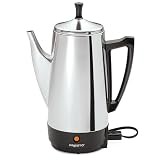
 Presto 02811 Stainless Steel 12-Cup Electric Coffee Percolator12-Cups13.1 x 9.7 x 6.2 Inches2.9 PoundsCheck on Amazon
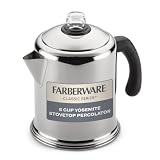
 Farberware Classic Stainless Steel Yosemite Coffee Percolator8 Cup - Clear Knob9.2 x 8.7 x 7 inches2.25 poundsCheck on Amazon
 Presto 02822 Stainless Steel 6-Cup Electric Coffee Percolator6-Cups7.5 x 4 x 10 inches2.65 poundsCheck on Amazon

The Presto 02811 is the best all-round stainless steel percolator in this group: a 12-cup electric pot that perks, shuts down to a warming mode on its own and asks nothing of you but a coarse grind and a wall outlet. If you would rather brew on a stove or over a fire, the COLETTI Bozeman 9-cup is the better fit. A percolator cycles hot water up a center tube and drips it through the grounds again and again, and a stainless steel body means no glass to shatter and no coating to flake. Six models follow, three electric and three that depend on how you heat them, with plain notes on what each listing states.
Quick List
- Presto 02811 12-cup electric – best for an everyday, plug-in pot for a full household
- COLETTI Bozeman 9-cup – best for campfire and stovetop brewing with an all-steel coffee path
- Presto 02815 cordless 12-cup – best for carrying the pot to the table without a cord
- VEVOR 12-cup electric – best for a faster-heating, split-base electric pot, with a caveat about the outer shell
- Farberware Yosemite 8-cup – best for a classic stovetop pot that goes in the dishwasher
- Presto 02822 6-cup electric – best for one or two people who still want an electric percolator
Which One Is Right for You?
| If you… | Choose |
|---|---|
| Brew over a campfire, a camp stove or a gas range and want no plastic in the coffee path | COLETTI Bozeman 9-cup |
| Want a plug-in pot that makes a big batch and keeps it warm without watching it | Presto 02811 12-cup |
| Serve at a table or buffet and hate a cord across the counter | Presto 02815 cordless 12-cup |
| Want a quick-heating electric pot with a lift-off base and can accept a part-plastic exterior | VEVOR 12-cup |
| Own a gas or electric range and want a simple pot with a long-running warranty | Farberware Yosemite 8-cup |
| Brew for yourself or a couple and have limited counter space | Presto 02822 6-cup |
| Cook on an induction cooktop | Any electric model here; both stovetop steel pots are listed as not induction-compatible |
The first question is where the heat comes from. Electric pots manage temperature for you, while stovetop pots hand that job to you in exchange for portability. The second question is size: a percolator “cup” is a small measure, so a 12-cup pot is really a pot for a crowd, not a pot for four.
All 6 Picks in Detail
1. Presto 02811 12-Cup Electric – Best for Everyday Batches
As an Amazon Associate we earn from qualifying purchases at no extra cost to you.

This is the plain, dependable electric percolator. Presto lists it as a stainless steel pot that brews roughly a cup a minute and then holds the coffee warm automatically, with a light that tells you when it is ready. It suits households that make a full pot on weekends, office kitchens and anyone replacing an older electric percolator with the same idea. Listings describe a detachable cord and a stay-cool handle and knob.
- Capacity: 2 to 12 cups, with a cup counted as about 5 ounces
- Power: about 800 watts at 120 volts, per retailer specification fields
- Body, basket and perk tube: stainless steel
- Controls: automatic switch to keep-warm and a ready light
- Cord: detachable; the pot itself is not meant to be submerged
- Warranty: one year limited, per most listings
Pros
- Hands-off brewing and warming
- Large capacity at a modest footprint
- Simple parts that are easy to rinse
Cons
- The pot cannot be carried away from its power connection the way a cordless model can
- Care instructions vary between listings, so follow the manual before washing any part in a dishwasher
In practice the appeal is predictability. Because the thermostat handles the end of the brew, a full pot is a matter of measuring water, adding a coarse scoop of coffee per cup and walking away until the light comes on. A few habits keep it working: fill with cold water to the marked level, set the basket and stem as the manual shows, and let the pot cool before you rinse it. Since listings differ on whether parts can go in a dishwasher, wash by hand if you are unsure.
Compared with the cordless Presto 02815, this model gives up the freedom to carry the pot away from the outlet, but it is the simpler design and the one whose figures agree across the most listings.
2. COLETTI Bozeman 9-Cup – Best for Camp and Stovetop Brewing

The Bozeman is built around one claim: nothing but steel touches your coffee. COLETTI describes 18/8 food-grade stainless steel throughout, with a glass viewing knob on the lid and a hardwood handle that stays cooler than metal. It suits campers, cabin owners and anyone who likes to watch the perk. The 9-cup size holds 45 fluid ounces, about four 12-ounce mugs.
- Capacity: 9 cups, 45 fluid ounces per the manufacturer
- Body, basket and stem: 18/8 stainless steel
- Heat sources: gas, electric coil, glass-ceramic cooktops and open campfire
- Induction: not compatible; COLETTI sells a separate induction model
- Brew time: 7 to 10 minutes over medium-low heat, per the maker
- Warranty: one year limited, per the maker
Pros
- Works on a stove or a fire pit
- Glass knob shows the perk rate
- Filters are included for cleaner coffee
Cons
- You must manage the heat yourself
- The wood handle should be washed by hand
Think of it as the pot you buy once and take everywhere. COLETTI sells the 9-cup alongside a 6-cup and a 12-cup version, so a group can scale up without changing the design. On a campfire, rest it on a grate rather than burying it in coals, keep the heat low once the water starts to bubble up into the glass knob, and use the included filter if you dislike grit. The glass knob and wood handle get hot enough to need a pot holder when you lift the pot, so treat the whole thing with care.
Next to the Farberware Yosemite, it swaps a polished classic look for a wood handle and a stronger camping focus.
3. Presto 02815 Cordless 12-Cup – Best for Serving Without a Cord

This Presto keeps the 12-cup size and adds a power base that the pot lifts off, so you can carry it to a table or across a room without dragging a cord. The listing describes a matte black exterior over a stainless steel pot, with a glass cover that lets you watch the brew and an easy-pour spout. It suits hosts, brunch tables and shared kitchens.
- Capacity: up to 12 cups; the minimum brew size is listed differently across retailers, so confirm on the page
- Power: about 800 watts at 120 volts, per retailer fields
- Design: cordless serving with a separate power base
- Pot, lid and basket: stainless steel; exterior finish is matte black
- Extras: ready light, stay-cool handle, cord that wraps into the base
- Warranty: one year limited, per retailer text
Pros
- Easy to carry and pour
- Compact cord storage
Cons
- The black finish is a coating over the steel, so avoid scouring pads
- Cleaning guidance for the base is stricter than for the pot
The cordless layout is most useful when the coffee is served somewhere other than where it brews. Lift the pot, pour, and set it back on the base to restore heat. Make sure the base and pot contacts are dry before reconnecting, keep the base out of any spill zone, and follow the manual’s instructions for cleaning, because the electrical base should never be immersed. If you are brewing only for yourself, the extra capacity is wasted, so the smaller Presto may suit better.
Compared with the 02811, you give up a little simplicity for the convenience of a lift-off pot.
4. VEVOR 12-Cup Electric – Best for a Fast, Split-Base Pot (With a Caveat)

VEVOR lists this pot at 1,000 watts for brewing and 50 watts for keeping warm, which makes it the most powerful electric option here. It has a split base for cordless serving, a one-touch switch and a transparent lid. The caveat matters for a stainless steel guide: VEVOR describes a 304 stainless steel inner liner, but its page also names a plastic outer shell, so this is not an all-steel pot.
- Capacity: 1.8 liters, listed as 12 cups at 150 milliliters per cup
- Power: 1,000 watts brewing, 50 watts keep-warm
- Liner: 304 stainless steel; outer shell listed as PCTG and PP plastic
- Size: about 9.45 by 6.2 by 13.4 inches
- Weight: about 2.6 pounds
- Keep-warm: reheats automatically when the coffee cools, per retailer text
Pros
- High wattage for quick heating
- Lift-off pot for serving
Cons
- Not an all-steel exterior, so it is a runner-up for strict stainless buyers
- Newer model with a shorter track record
The practical benefit of higher wattage is a shorter wait before the first perk, though VEVOR does not publish a brew time that we can quote, so confirm the stated brew speed on the listing. The split power base works like the Presto cordless design: the pot lifts away for serving. Because the page lists plastic in the outer shell and the lid, anyone who specifically wants steel on every visible surface should read the full materials list before buying.
Choose it over the Presto 02815 only if the higher wattage matters more to you than a fully metal exterior.
5. Farberware Yosemite 8-Cup – Best for a Classic Dishwasher-Friendly Stovetop Pot

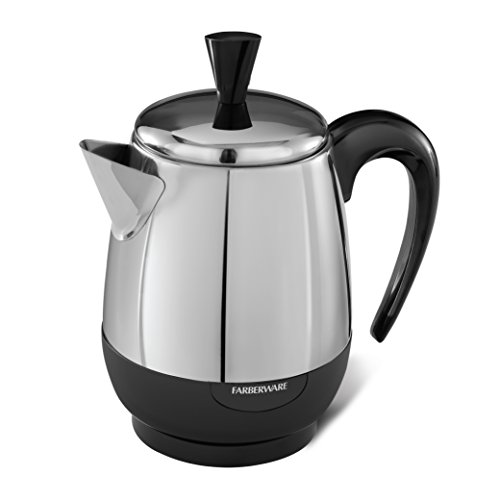
The Yosemite is the pot many people picture when they hear the word percolator: a polished stainless body, a glass knob and a permanent filter basket. Farberware lists a 6.25-inch base, a height of 8.25 inches and a length of about 9.25 inches including the handle. It suits anyone with a gas or electric range who wants a pot that is easy to live with.
- Capacity: 8 cups
- Interior and exterior: stainless steel, with a glass knob
- Filter: permanent basket, so paper is optional
- Dishwasher: safe except for the knob and the pump tube spring, per Farberware
- Induction: Farberware’s own page calls it unsuited to induction
- Warranty: limited lifetime, per the maker
Pros
- Easy cleanup
- Familiar, proven shape
Cons
- No induction support
- Eight cups is small for a crowd
It is a good pot for a kitchen that already has a gas or radiant electric range, and the permanent basket means there is nothing to restock. Fill with cold water, keep the heat moderate, and take the pot off the burner once the coffee reaches the strength you like. The glass knob is the best timer you have, since the color of the perking coffee darkens as the brew proceeds. Wash the pot in the dishwasher if you like, but remove the knob and pump tube spring first, as Farberware advises.
Against the COLETTI Bozeman, it gives you simpler maintenance but less campfire appeal and a less explicit plastic-free promise.
6. Presto 02822 6-Cup Electric – Best for One or Two People

The smallest pot here is a compact electric percolator for small households, dorm rooms and desks. Retailer listings put it at about 500 watts and 120 volts and describe a drip-free spout, a stay-cool bottom and a detachable cord. A 6-cup pot makes about 30 ounces at the standard 5-ounce cup, enough for two large mugs.
- Capacity: 2 to 6 cups
- Power: about 500 watts at 120 volts
- Body, basket and perk tube: stainless steel
- Controls: automatic keep-warm and a ready light
- Dimensions: listings disagree, so confirm on the product page
- Warranty: one year limited, per retailer text
Pros
- Small and light
- Lower power draw than the 12-cup models
Cons
- Too small when guests arrive
- Slower than the higher-wattage pots
Small percolators are easy to overfill, so fill to the marked line, not to the brim, and keep the minimum brew size in mind. At two cups the pot makes about 10 ounces, which is a single mug. The lower wattage means a slower start than the 12-cup models, but it also draws less current, which can matter on a shared outlet in a dorm or office. Wipe the exterior with a damp cloth, keep the cord and base dry, and let the element cool before you move it.
It is the little sibling of the 02811, so pick it over that pot only when you rarely brew more than three or four cups.
Specs Compared
| Pick | Type | Capacity | Power or heat source | Body | Serving and warming | Induction |
|---|---|---|---|---|---|---|
| Presto 02811 | Electric | 2 to 12 cups | About 800 W, 120 V | Stainless steel | Automatic keep-warm | Not applicable |
| COLETTI Bozeman 9-cup | Stovetop or campfire | 9 cups, 45 fl oz | Gas, coil, glass-ceramic, fire | 18/8 stainless steel, wood handle | Manual | No |
| Presto 02815 | Electric, cordless pot | Up to 12 cups | About 800 W, 120 V | Stainless pot, matte black exterior | Lift-off pot, ready light | Not applicable |
| VEVOR 12-cup | Electric, split base | 1.8 L, 12 cups | 1,000 W brewing, 50 W keep-warm | 304 stainless liner, plastic outer shell | Auto keep-warm, lift-off pot | Not applicable |
| Farberware Yosemite 8-cup | Stovetop | 8 cups | Gas or electric range | Stainless steel, glass knob | Manual | No |
| Presto 02822 | Electric | 2 to 6 cups | About 500 W, 120 V | Stainless steel | Automatic keep-warm | Not applicable |
How We Chose These
We started with the stainless steel percolators in the catalog and compared each listing’s stated capacity, wattage, body material and stove compatibility. We then read manufacturer pages where they exist, favored pots with a clear description of what touches the coffee, and checked for conflicting numbers between sources. Where listings disagreed, as they do on the dimensions of the small Presto, we say so rather than choose a figure. We kept a mix of electric and stovetop designs because the buyer’s heat source decides the answer before anything else does. Every pick is described only by what its listing and maker state, and anything a listing leaves out is marked for you to confirm.
What to Look For
Electric or stovetop
An electric percolator contains its own heating element and, once brewing ends, drops to a lower keep-warm setting so the coffee stays hot without boiling. That is the biggest convenience gap between the two types. A stovetop pot has no thermostat at all: you watch the glass knob, lower the heat when the first bubbles appear and take the pot off when time is up. The reward is portability and no dependence on an outlet, which is why campers choose them. If you cook on induction, remember that the two stovetop steel pots here are listed as unsuited to it, so an electric model or a purpose-made induction percolator is the safer path.
What the steel is, and what touches your coffee
Look for named grades. “18/8” and “304” are the same family of austenitic stainless steel and are the common food-contact grades in cookware. A pot sold as stainless can still have a plastic lid, a plastic or aluminum basket or a coating on the outside, so read every component. The VEVOR listing is a good example: the inner liner is steel, but the outer shell is plastic. The knob is usually glass, and handles are plastic, wood or steel. Wood handles are comfortable near a flame but need hand washing.
Capacity and the five-ounce cup
A percolator cup is about 5 fluid ounces, not the 8 ounces of a measuring cup. A 12-cup pot therefore holds about 60 ounces, and a 6-cup pot about 30. Most pots also have a minimum fill: the Presto electric models list a minimum of two cups, and brewing below that leaves the perk tube dry. A worked example: if you drink two 12-ounce mugs, you need about 24 ounces, which is about five percolator cups. A 6-cup pot covers that and a 9-cup pot is already larger than necessary. Use about a tablespoon of coarse coffee per cup of water as a starting point, as COLETTI suggests, and adjust by taste.
Controlling bitterness
Percolators send already-brewed coffee back through the grounds, so they extract more than a drip machine does and can turn harsh if the coffee boils hard or perks too long. The fixes are the same everywhere: coarse grounds, about 7 to 10 minutes on a stove at medium-low heat as COLETTI recommends, and a gentle perk instead of a rolling boil. Electric models take care of timing for you, while a stovetop pot rewards a timer and attention. A permanent basket or a paper filter helps with fine sediment.
Safety and care
Keep the base and cord of any electric pot dry and never submerge them; wash the pot according to the manual. Use a stable, heat-safe surface, keep the cord out of foot traffic, and never run an electric pot dry. For stovetop pots, use a burner no wider than the base, take care with the hot knob and handle, and let the pot cool before washing. Descale occasionally with a vinegar and water solution if mineral buildup shows, and rinse well afterward.
Questions
Does a percolator make strong coffee?
Yes, it tends to make bold coffee because the water passes through the grounds repeatedly. It can also taste harsh if it perks too long or too hard, so use a coarse grind and watch the clock on a stovetop pot.
How long should I percolate coffee?
COLETTI suggests 7 to 10 minutes on medium-low heat for its stovetop pot. Electric models stop on their own, usually at about a cup a minute according to Presto’s listings, so a full pot takes roughly as many minutes as it has cups.
Should I use a paper filter?
You do not need to, because every pot here has a metal basket. A paper disc or filter wrap reduces sediment and cleanup if you find the cup gritty, though a coarser grind often solves the problem.
Can I use a stainless steel percolator on an induction cooktop?
Not the two stovetop pots here. COLETTI and Farberware both state that these particular pots are not made for induction. An electric percolator sidesteps the issue because it has its own heating element.
Is a stainless steel percolator better than an aluminum one?
Steel is heavier and usually more durable, and it resists pitting and staining. Aluminum heats quickly and weighs less. Many buyers simply prefer to have a steel surface in contact with the coffee, which is the point of this guide.
Which size should I buy?
Count the cups you drink in a typical session using the 5-ounce percolator cup and add a little room. Most households do well with 8 or 9 cups, while 12 cups suits groups. Buy the 6-cup only if you usually brew for one or two.
Update History
- October 21, 2026 – Initial publication; specifications checked against manufacturer documentation where available.
- Check the product page for current specifications and availability before buying.
Sources
- Manufacturer product and specification pages for COLETTI and Farberware
- Presto and VEVOR product information as published in retailer specification fields
- Retailer listing titles and specification fields
- General reference material on how stovetop and electric percolators work


Write Your Review
No reviews yet. Be the first to share your experience!