

Our Top Picks
 De’Longhi Dedica Arte Espresso Machine with My LatteArtmedium5.9 x 13 x 12 inches8 PoundsCheck on Amazon
 De’Longhi Dedica Maestro Espresso Machine with Milk Frother13.62 x 8.15 x 12.9 inches12.12 PoundsCheck on Amazon
 De'Longhi Classic Signature Espresso MachineMedium11.22 x 13.98 x 15.94 inches9.28 poundsCheck on Amazon
Short answer: buy the Dedica if you want the easier, more consistent machine: it heats faster, lets you pick a coffee temperature, has preset cup buttons and a descale light, and it is only about 15 cm wide. Buy the Stilosa if you want the cheapest way into real pump espresso and you are happy to learn a manual routine. Both use a 15-bar pump, neither has a grinder, and both reward a decent separate grinder and fresh beans more than they reward any spec on the box.
Disclosure: this page contains affiliate links. If you buy through the product cards we may earn a commission at no extra cost to you. Specs come from listings, De’Longhi documents as summarised by reviewers, and published comparisons, not from our own testing.
The two machines at a glance
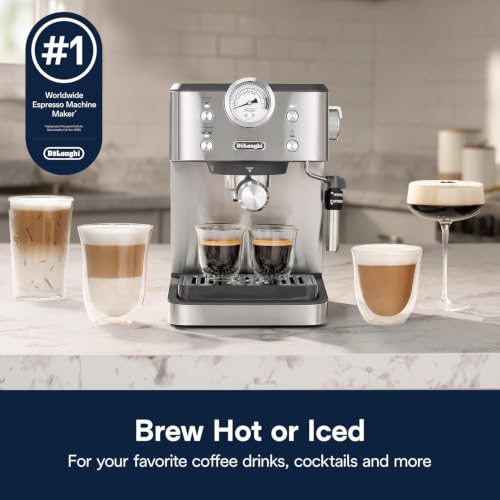
The Stilosa (EC260 line) is De’Longhi’s most basic pump machine, with a stainless steel boiler, a selector knob and a manual steam wand. The Dedica (EC685 line) is the step up, with a thermoblock heater, buttons, temperature settings and a slim stainless body. The card below shows the Stilosa; the Dedica family is shown with the Dedica Arte, a variant with a My LatteArt steam wand and a 3-level temperature control per its listing.
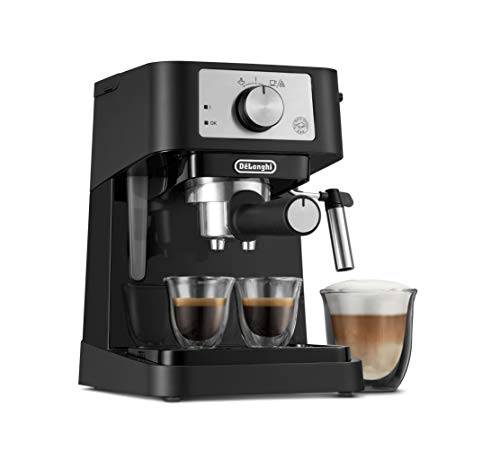
De'Longhi Stilosa Compact Manual Espresso Machine, Manual Milk Frother | #1 Worldwide Espresso Machine Maker, 15 Bar Pump Pressure, Stainless Steel Boiler, Frother, Compact Design
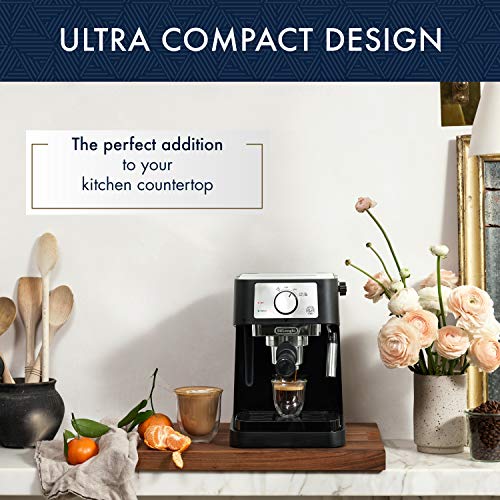
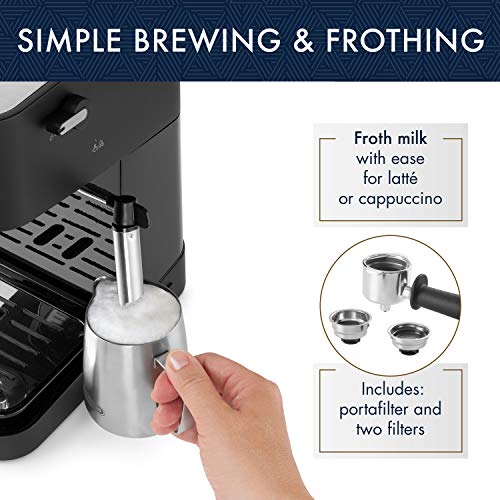


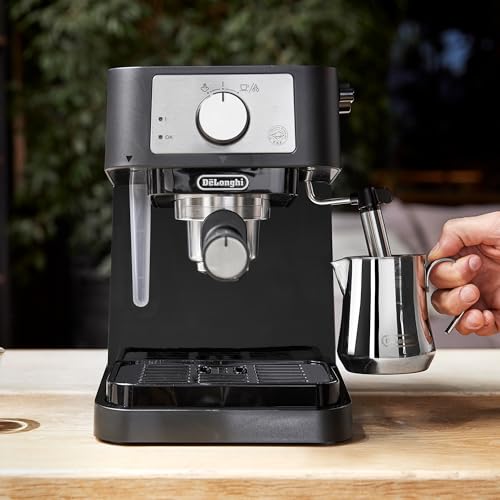
As an Amazon Associate we earn from qualifying purchases. Product prices and availability are accurate as of the date/time indicated.
De’Longhi Dedica Arte Espresso Machine with My LatteArt Steam Wand (Milk Frother), 15-Bar Pump & 3-Level Temp Control - Compact Espresso Maker for Latte & Cappuccino - Italian Stainless Steel Design


As an Amazon Associate we earn from qualifying purchases. Product prices and availability are accurate as of the date/time indicated.
Specs compared
| Feature | Dedica (EC685 family) | Stilosa (EC260) |
|---|---|---|
| Heating | Thermoblock | Stainless steel boiler (about 150 ml) |
| Pump | 15 bar | 15 bar |
| Controls | Buttons with cup presets and a display light | Selector knob, no display |
| Temperature setting | Low, medium, high | None |
| Heat-up | About 30 to 40 seconds | About 1 to 1.5 minutes |
| Steam wand | Adjustable frothing wand | Manual frothing wand |
| Descale alert | Light on the steam key | None; descale about every 200 coffees |
| Water tank | About 35 oz (one source) | About 1 L (33.8 oz) |
| Width | About 15 cm | About 21 cm (8.07 in) |
| Body | Stainless steel | Mostly plastic |
| Portafilter | 51 mm, 1-cup and 2-cup baskets | 51 mm, 1-cup and 2-cup baskets |
| Grinder | None | None |
| Weight | Not listed in most sources | About 8.6 lb |
A few of these figures vary by source. Reviewers disagree on the shower screen (about 42 mm on the Stilosa and about 50 mm on the Dedica in one comparison) and on whether the Dedica pre-infuses, so treat those as reasons to read the manual rather than as hard facts.
Heating: thermoblock versus boiler
The biggest difference is what happens between pressing the button and getting a drink. The Dedica thermoblock heats water on demand, which is why it is ready in well under a minute and can switch between coffee and steam quickly. The Stilosa boiler holds a small volume of hot water and needs a minute or more to warm up. Many owners run a blank shot or hot water through the group head first to warm the portafilter and cup, because a cold metal portafilter drags shot temperature down.
The reviewers’ rule of thumb: if you make one shot at a time and have patience, the Stilosa copes fine. If you make a drink for two people, then milk, then another shot, the Dedica’s quicker recovery and temperature setting save time. The Dedica’s temperature setting also helps with beans: use the higher setting for dark roasts that taste flat, and the lower one if a medium roast turns out harsh.
Controls: knob versus buttons
On the Stilosa you turn a knob between off, espresso and steam, and you stop each shot yourself by turning it back. There is no volume memory. That is simple and cheap, but it takes a few tries to learn how long to run a shot.
The Dedica adds one-cup and two-cup buttons, which stop the shot automatically after a set volume that you can reprogram. For a beginner, that repeatability is the biggest practical upgrade, because the main way a new user ruins a shot is stopping it too early or too late. One reviewer notes a downside: the narrow body means a small drip tray that you must empty often.
Steam and milk
Both machines use a simple frothing wand rather than a commercial one, so milk results depend on technique. Use cold milk, a small jug about half full, and keep the wand tip just under the surface until the pitcher feels warm to the hand, then submerge it a little deeper to heat. Expect a beginner-friendly cappuccino foam, not café microfoam latte art. The Dedica’s wand is described as adjustable, so you can move between a light, airy froth and denser foam. The Dedica Arte variant shown above comes with a My LatteArt wand intended to help with finer foam.
- Steam run time: one comparison notes the Dedica limits steam to about 60 seconds at a time. That is enough for one cup of milk but not for two large lattes back to back.
- Hot water: use the hot water function sparingly to rinse the wand before and after every use.
- After each use: wipe the wand, purge it for a second and clear any milk from the tip so it does not block.
Daily use, descaling and care
| Task | Dedica | Stilosa |
|---|---|---|
| Descaling reminder | Orange light on the steam key | Count your coffees; about every 200 |
| Descale duration | About 25 minutes | About 45 minutes |
| Drip tray | Small; empty often | Larger and easier to see |
| Auto-off | Selectable 9 min, 30 min, 3 hours | Yes, duration not listed in most sources |
| Cleaning effort | Low | Low |
| Running-cost tier | Low | Low |
Whichever you choose, descale with the descaler the manufacturer recommends and follow its instructions exactly. Our guide on how to descale an espresso machine shows the general routine. Unplug the machine before you clean around the group head.
What is the same
Both share a 15-bar pump, a 51 mm portafilter with one-cup and two-cup baskets, a steam wand for milk and the same lack of a grinder. Both are compact by home-espresso standards. Neither has a built-in grinder or a pressure gauge, so a gentle, repeatable routine beats chasing tiny adjustments. For both machines the quality of the coffee depends on the grind, the dose and the freshness of the beans more than the logo on the front.
That also means you will need a grinder. A cheap blade grinder gives uneven particles and bitter or sour shots. A burr grinder with enough fine settings is the single best companion purchase for either machine; see our guide to the best coffee grinders.
A morning with each machine
It helps to picture the routine rather than the spec sheet. With the Dedica you fill the tank, switch on, wait roughly half a minute for the light to settle, place the portafilter with your ground coffee, put a cup underneath and press the one-cup or two-cup button. The machine stops the shot on its own. For milk, you turn the dial to steam, froth, then return to coffee mode; because the thermoblock switches quickly, the gap between espresso and steam is short.
With the Stilosa you fill the tank, switch on, and wait a minute or more. Turn the knob to the coffee symbol, watch the cup, and turn the knob back at the volume you want. To steam, turn the knob to the steam symbol and wait for the wand to reach temperature. Because the boiler is small, many owners let it recover for a moment before steaming after a shot. None of this is hard, but it adds steps, and each step is a chance to get a different result from yesterday.
Starting recipe for either machine
Treat these as starting points, then adjust to taste. De’Longhi baskets for this class are designed to forgive grind variation, which is why a grinder with fine, repeatable steps matters more than an expensive one.
- Grind: start fairly fine, finer than drip coffee, and adjust one step at a time.
- Dose: fill the basket level, tamp evenly and brush off loose grounds from the rim.
- Time: aim for a shot that starts to flow in a few seconds and finishes in roughly 25 to 30 seconds. Much faster tastes sour, much slower tastes bitter.
- Cup: warm the cup with a little hot water first.
- Change one thing: if the shot tastes off, change the grind first, then the dose, then temperature (Dedica only).
Longevity, repairs and ownership
Both machines are simple appliances, which is part of their appeal. There is no electronic grinder, no brew group and no milk carafe to fail. The common faults are scale in the heater, a clogged steam wand tip and worn gaskets. A thermoblock is more sensitive to scale than a boiler, so Dedica owners in hard-water areas should descale at the first light and use filtered water. Stilosa owners must count shots, since nothing warns them. Keep the receipt, register the warranty and use the cleaning tools that come in the box.
| Ownership factor | Dedica | Stilosa |
|---|---|---|
| Feels solid | Stainless exterior | Mostly plastic |
| Scale sensitivity | Higher (thermoblock) | Lower (boiler) |
| Parts to replace over time | Gaskets, shower screen, filter baskets | Gaskets, shower screen, selector knob |
| Upgrade room | More (larger shower screen) | Less (smaller shower screen) |
| Cost-of-ownership tier | Low | Low |
Accessories worth buying
- A burr grinder: the single most important add-on.
- A tamper and a milk jug: the bundled tools are basic; a better tamper and a small stainless jug make milk and dosing easier.
- A water filter or jug: helpful for hard water.
- De’Longhi-approved descaler: keep a bottle ready.
- A thermometer or scale (optional): a kitchen scale makes dose repeatable.
Safety notes for both machines
- The steam wand and the group head are hot enough to scald. Keep hands clear and let the wand cool before wiping.
- Never remove the portafilter while the machine is still under pressure; release pressure with the steam knob or dial as the manual describes.
- Unplug before descaling or cleaning around the heater, and rinse the tank thoroughly after a descale so no solution remains.
- Use only water in the tank. Milk, flavoured liquids and cleaning products do not belong there.
- Keep the machine on a level, dry surface and give it room to vent steam away from cabinets.
Making a cappuccino step by step
- Pour cold milk into a small jug, filling it to about one third.
- Pull the espresso first and set it aside, or steam first if your machine switches slowly.
- Purge the wand for a second to clear water.
- Put the wand tip just under the milk surface and open steam. Listen for a soft hissing, not a loud screech.
- Once the jug feels warm, lower the tip slightly and keep the milk swirling until it is hot but not too hot to hold for a second.
- Stop steam, wipe the wand, purge again, and pour over the espresso.
On the Stilosa, wait for the steam indicator before you start; on the Dedica, switch the dial to steam and allow a short pause. In both cases, a wand that blocks with dried milk is the usual reason for weak steam, so wipe it every time.
Who should buy which
| Your situation | Better fit | Why |
|---|---|---|
| Absolute beginner, wants repeatable shots | Dedica | Cup buttons and temperature setting reduce guesswork |
| Tightest budget | Stilosa | Lowest entry cost for pump espresso |
| Very narrow counter | Dedica | About 15 cm wide |
| Makes several drinks in a row | Dedica | Thermoblock recovers fast |
| Wants to learn manual technique | Stilosa | Everything is controlled by hand |
| Uses ESE pods | Check the exact model | Pod support varies by version |
| Wants to upgrade the basket later | Dedica | The Stilosa’s smaller shower screen limits aftermarket options |
Common problems and who should skip them
Skip both if you want a built-in grinder, a pressure gauge, or two drinks from one button press. Compare them with the full best espresso machines for beginners and the best compact espresso machines for small kitchens. If your counter is the main constraint, our Dedica vs Breville Bambino comparison is the natural next read.
- Watery or sour shots: grind finer, dose a little more, and let the machine fully warm up.
- Bitter, choking shots: grind slightly coarser or lower the temperature on the Dedica.
- Weak steam: clean the wand tip and check the water level.
- Cup does not fit: remove the drip tray plate and use a shorter cup.
Alternatives to consider
Dedica Maestro
De’Longhi Dedica Maestro Espresso Machine with Milk Frother, 15-Bar Pump & Temperature Control - Barista Coffee Maker Kit for Espresso, Latte, Cappuccino & Iced Coffee - Italian Stainless Steel Design


As an Amazon Associate we earn from qualifying purchases. Product prices and availability are accurate as of the date/time indicated.
The listing shows a milk frother, a 15-bar pump and temperature control. It is the Dedica pick for people who want a few more controls than the base model.
Dedica Duo

De'Longhi Dedica Duo Compact Espresso Machine - Cold Brew Coffee Maker with Milk Frother Wand- for Espresso, Hot & Iced Coffee, Cappuccinos, Lattes & Home Barista Brewing, Stainless Steel Finish


As an Amazon Associate we earn from qualifying purchases. Product prices and availability are accurate as of the date/time indicated.
The listing shows a compact design with cold brew capability, a milk frother wand and espresso plus hot and iced coffee options. It suits people who drink more iced coffee than milk drinks.
Classic Signature
De'Longhi Classic Signature Espresso Machine, Adjustable Milk Frother | #1 Worldwide Espresso Machine Maker, Rapid Heat-Up, Preset Single & Double Espresso, Frother, Pressure Gauge, Compact Design


As an Amazon Associate we earn from qualifying purchases. Product prices and availability are accurate as of the date/time indicated.
The listing shows rapid heat-up, preset single and double espresso, a pressure gauge and an adjustable milk frother. It is worth a look if the Stilosa feels too basic but a Dedica is unavailable. See also the DeLonghi EC155 review.
FAQ
Is the Dedica better than the Stilosa?
For most buyers, yes, because it is easier and faster. It heats in seconds, remembers cup sizes, offers temperature settings and warns when it needs descaling. The Stilosa is only better on price.
Do either of them grind beans?
No. Neither machine has a grinder, so you need a separate burr grinder or pre-ground coffee. Fresh grinding gives better flavour than store-bought ground coffee.
Is the Stilosa a good choice for a beginner?
It can be, if you want to learn. It is manual and has no volume memory, so shots take practice. A beginner who wants repeatable results will usually be happier with the Dedica.
Can I use pods in them?
Some versions accept ESE paper pods; others need a specific portafilter. Check the model number in the listing and the manual before assuming pod support.
How often do I descale?
The Stilosa needs descaling about every 200 coffees, tracked by you. The Dedica lights up to tell you. Hard water shortens both intervals.
Which makes better milk drinks?
Both make decent cappuccino foam with practice. The Dedica’s adjustable wand and faster switch between coffee and steam make milk drinks easier. Neither makes café-style microfoam.
Will they fit under a standard cabinet?
Both are compact, but measure first. Allow room above the machine to fill the tank and for steam to disperse.
Which one should you buy?
Pick the Dedica for ease, speed and a narrow footprint. Pick the Stilosa for the lowest entry cost and a manual routine. Either way, budget for a grinder, a tamper and a milk jug, and plan to use fresh beans.
Last updated: October 2026


Write Your Review
No reviews yet. Be the first to share your experience!