

The best espresso machine for most beginners in 2026 is a compact single-boiler or ThermoJet model with a pressure-regulated 9-bar pump, a steam wand you can learn on, and a portafilter basket that forgives sloppy technique. The Breville Bambino Plus is the safest all-round start, the De’Longhi Dedica Arte suits tiny counters, and the Gaggia Classic Pro rewards you if you want a machine you will not outgrow. If you would rather not buy a separate grinder, the Breville Barista Express family is the simplest bundle.
Below you will find seven current models, a spec table with concrete numbers, a decision matrix by situation, a cost-per-cup calculation, and a first-week routine that explains the reason behind each step. Specifications come from the manufacturers’ published spec sheets as of 2026; always confirm the exact variant sold in your region before buying, because voltage, accessories and basket sizes can differ.
Our top picks


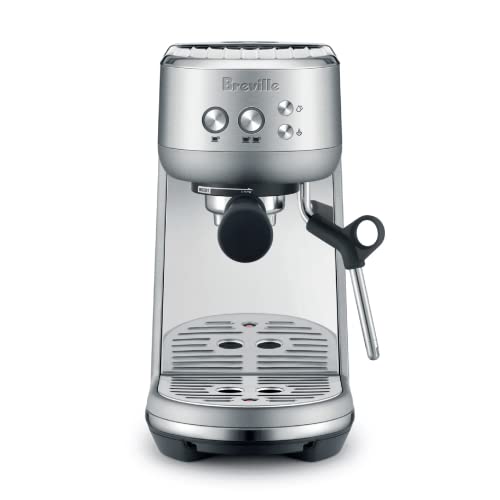 Breville BES450BSS Bambino Espresso Machine
- Cappuccino maker and latte machine has an automatic…
- Espresso maker includes innovative ThermoJet heating system that…
- Manual espresso machine features low pressure pre infusion…

As an Amazon Associate we earn from qualifying purchases at no extra cost to you.
Quick comparison of the seven beginner picks
| Pick | Best for | Portafilter | Heat-up | Milk system | Grinder included | Price tier |
|---|---|---|---|---|---|---|
| Breville Bambino Plus | Best overall starter | 54 mm | About 3 seconds (ThermoJet) | Automatic wand with temperature and texture settings | No | Mid |
| Breville Bambino | Best value from Breville | 54 mm | About 3 seconds | Manual wand | No | Entry to mid |
| De’Longhi Dedica Arte (EC885) | Smallest footprint | 51 mm | Under 1 minute | Manual wand | No | Entry |
| Gaggia Classic Pro | Best to learn real technique | 58 mm | Several minutes | Manual commercial-style wand | No | Mid |
| Breville Infuser | Best for consistent temperature | 54 mm | About 30 seconds | Manual wand | No | Mid |
| Breville Barista Express | Best all-in-one with grinder | 54 mm | About 30 seconds | Manual wand | Yes, conical burr | Mid to upper-mid |
| Breville Barista Express Impress | Best hands-off puck prep | 54 mm | About 30 seconds | Manual wand | Yes, with assisted tamping | Upper-mid |
How to choose a beginner espresso machine
Beginners usually ask which machine makes the best espresso. A better question is which machine gives you the most good shots in your first month, because early frustration is the main reason people abandon home espresso. Five factors decide that, and they matter in this order.
1. Grinder first, machine second
Espresso needs a fine, even grind, and a grinder that cannot go fine enough will make every machine taste thin and sour. Most specialists advise putting as much budget into the grinder as into the machine. That is why bundles with a built-in grinder are attractive to beginners, and why five of the seven picks below need a separate espresso-capable grinder. Blade grinders and coarse-only brew grinders are not suitable. A conical or flat burr grinder with stepless or very fine stepped adjustment is the target.
2. Portafilter size and basket type
The common sizes are 51 mm, 54 mm and 58 mm. A 58 mm portafilter is the commercial standard, so it has the biggest accessory ecosystem: tampers, distribution tools, precision baskets and bottomless portafilters. The 54 mm size is common on Breville machines and has a healthy aftermarket too. The 51 mm size is the smallest and the hardest to upgrade. Beginner machines also ship with pressurized (dual-wall) baskets, which hide grind and tamp mistakes by forcing the flow through a small exit hole. They are useful in week one, but you will eventually want to move to the non-pressurized single-wall baskets for better flavor.
3. Heat-up time and temperature stability
Machines with a ThermoJet heater, such as the Bambino line, are ready in about three seconds, which makes a morning routine painless. Traditional single-boiler machines such as the Gaggia Classic Pro need several minutes to warm the brew group, and the portafilter should be locked in during warm-up. PID temperature control, found on the Breville Infuser and Barista Express, keeps brew water within a narrow window so a bad shot is more likely to be your technique than the machine.
4. Steam wand behavior
If you drink lattes and cappuccinos, the steam wand matters as much as the brew side. Automatic wands (the Bambino Plus) produce acceptable microfoam with almost no practice. Manual wands give more control and a higher ceiling but take a week or two of practice. Steam power also differs: ThermoJet machines recover quickly after a shot, while small single-boiler machines need to switch to steam temperature first.
5. Footprint and water tank
Measure your cabinet clearance with the tank in place. The Dedica Arte is only about 6 inches wide, and the Bambino is roughly 7.7 inches wide. The Barista Express is closer to 13 inches wide with its hopper. A small tank means more refilling; a bigger tank holds weight and needs counter space.
Best overall: Breville Bambino Plus
The Bambino Plus pairs a ThermoJet heating system with a 54 mm portafilter, a 9-bar over-pressure valve limit, and an automatic steam wand. According to Breville’s spec sheet, it reaches brewing temperature in about three seconds and is under 8 inches wide. It also features low-pressure pre-infusion, which gently wets the puck before full pressure and helps reduce channeling, one of the most common beginner problems.
Who it suits: anyone who wants a quick, no-fuss start, drinks milk drinks, and has limited counter space. The automatic wand lets you choose milk temperature and texture, so your first week of lattes tastes decent while you learn grinding and dosing.
Main trade-off: it has no grinder and a limited steam ceiling compared with machines that have a manual wand and boiler. The automatic wand is helpful early on, though you can switch it to manual mode when you are ready to learn latte art. Plastic housing and a lighter build mean it is not designed to last decades the way a brass-boiler machine can.
- Pros: three-second heat-up, pre-infusion, automatic milk texturing, compact, large aftermarket of 54 mm accessories.
- Cons: needs a separate grinder, mostly plastic construction, no pressure gauge.
Best value: Breville Bambino
The Bambino drops the automatic wand and a few conveniences but keeps the same ThermoJet heater, 54 mm portafilter and pre-infusion routine. If your budget leans toward spending more on a grinder, this is the pairing many specialists recommend. The manual wand gives you a proper steaming workflow from day one, and the smaller tank is not a problem when you are making one or two drinks at a time.
Who it suits: beginners who want to learn manual milk steaming and are happy to put the savings toward a better grinder.
Main trade-off: a smaller water tank than the Plus, and the steam wand has a learning curve. Expect to pour out a few pitchers of milk before the texture comes together.
- Pros: same quick heat-up as the Plus, compact, pairs well with an upgraded grinder.
- Cons: no grinder, smaller tank, manual-only milk steaming.
Best for tiny counters: De’Longhi Dedica Arte (EC885)
The Dedica Arte is among the slimmest espresso machines you can buy, at roughly 6 inches wide, and it heats up in under a minute using a thermoblock. It uses a 15-bar pump rated at 1300 watts, a 51 mm portafilter, and a manual steam wand. The listed baskets are non-pressurized, so it is less forgiving of a poor grind than machines that ship with pressurized baskets, though it also accepts ESE pods for an easy first cup.
Who it suits: apartment dwellers, office kitchens, and anyone who wants a real espresso workflow in the smallest footprint.
Main trade-off: the 51 mm portafilter limits accessory choice, and the compact thermoblock has less steam power than a boiler machine. It rewards a lighter hand with milk, working best on a single drink at a time.
- Pros: very slim, fast heat-up, non-pressurized baskets for real espresso, accepts ESE pods.
- Cons: 51 mm size has fewer upgrades, limited steam capacity, needs a separate grinder.
Best to grow into: Gaggia Classic Pro
The Gaggia Classic Pro is the classic beginner choice for people who want a machine to last. It has a commercial-style 58 mm portafilter, a three-way solenoid valve that releases pressure from the puck after brewing (leaving a drier, easier-to-knock-out puck), and a manual steam wand that behaves like a commercial one. The pump is rated at 15 bar, with an over-pressure valve that can be tuned to 9 bar, a popular mod among owners. Housing is stainless steel, and the machine is straightforward to service.
Who it suits: hobbyists who enjoy tinkering, who want true café accessories, and who accept a steeper first month.
Main trade-off: temperature stability is the weak spot. A single boiler without PID means you may need to learn temperature surfing (waiting a few seconds after the heater light cycles) for consistency, and many owners add an aftermarket PID kit. The brew group needs several minutes to fully warm up.
- Pros: 58 mm portafilter, solenoid valve, strong repairability, wide mod community.
- Cons: no PID by default, slow warm-up, steeper learning curve, needs separate grinder.
Best for temperature stability: Breville Infuser
The Infuser sits between the Bambino and the Barista Express. It has a PID-controlled heater for stable brew temperature, a 54 mm portafilter, a pressure gauge, and a pre-infusion stage that gently wets the puck at low pressure before ramping to full pressure. The pressure gauge is a useful teaching tool because it shows whether your grind and dose are in range during extraction.
Who it suits: beginners who want a gauge to learn from, steadier temperature, and a manual wand, and who already own or plan to buy a quality grinder.
Main trade-off: you pay more than for the Bambino without adding a grinder, and it is larger. For some buyers the Barista Express, which adds a grinder for a modest step up, is the better use of money.
- Pros: PID, pressure gauge, pre-infusion, good steam wand.
- Cons: no grinder, larger footprint than the Bambino, plastic parts inside.
Best all-in-one: Breville Barista Express
The Barista Express integrates a conical burr grinder with 18 grind settings, a 54 mm portafilter, PID temperature control, a pressure gauge, and a manual steam wand. According to Breville, the hopper holds about 250 grams of beans, and the machine includes a water tank of roughly 2 liters. Dose-control grinding delivers a measured amount directly into the portafilter, which removes one step from the morning routine.
Who it suits: beginners who want one box, one footprint and one plan. It is also the pick most often named in 2026 roundups of machines with built-in grinders.
Main trade-off: the built-in grinder is serviceable rather than excellent, and if it fails the whole appliance is affected. Many owners eventually add an outboard grinder and use the machine alone. It is also wider than other beginner picks, at around 13 inches.
- Pros: integrated grinder, PID, gauge, steam wand, strong accessory support.
- Cons: large footprint, grinder range limits upgrades, plastic parts.
Best hands-off puck prep: Breville Barista Express Impress
The Impress adds an assisted tamping lever that applies a consistent tamping pressure and a larger grinder range of 25 settings, plus guidance on dose and grind adjustment. The core hardware (54 mm portafilter, PID temperature control, manual steam wand) is similar to the Barista Express, but the process is more guided and more repeatable, which suits beginners worried about tamping technique.
Who it suits: people who want the shortest route to a consistent shot and are willing to pay more for it.
Main trade-off: a higher price and a bigger footprint than the standard Express. The assisted tamp removes a skill that you may eventually want to learn, and some enthusiasts feel it hides the connection between puck prep and flavor.
- Pros: assisted tamping, 25 grind settings, consistent dosing, guided workflow.
- Cons: costs more, large, hides some skill-building steps.
Decision matrix: which beginner machine fits your situation
| Your situation | Best match | Why |
|---|---|---|
| Small kitchen, one or two drinks a day | De’Longhi Dedica Arte | About 6 inches wide, heats in under a minute |
| Mostly lattes, want less practice | Breville Bambino Plus | Automatic wand with temperature and texture control |
| Want to learn manual steaming cheaply | Breville Bambino | Manual wand, fast heat-up, lower cost |
| Want one purchase with grinder | Breville Barista Express | Conical burr grinder and PID in one body |
| Worried about tamping | Barista Express Impress | Assisted tamp and guided dosing |
| Want a gauge and stable temperature | Breville Infuser | PID and pressure gauge for feedback |
| Plan to keep one machine for years | Gaggia Classic Pro | 58 mm standard, serviceable, upgradeable |
Worked calculation: what a home cup really costs
Home espresso pays for itself, but not as fast as marketing suggests. Use this simple model. A standard double shot uses 18 grams of coffee. A 340-gram bag (12 ounces) yields about 18 doubles, minus two or three used for dialing in, so call it 15 usable drinks. If the bag costs 16 units of local currency, the coffee is roughly 1.07 per drink. Add milk at about 0.25 for 180 milliliters and the latte costs about 1.30 in ingredients.
If a café latte costs 5.50 near you, the saving is about 4.20 per drink. A set-up costing 700 in total (machine plus grinder) breaks even after roughly 167 drinks, which is about 24 weeks at one drink a day, or about 12 weeks at two. Include descaling supplies, a spare filter and a scale, and the break-even moves out by a few weeks. The practical lesson: a machine that makes you want to use it every morning beats a cheaper machine that you avoid.
Your first week: a step-by-step routine with reasons
- Rinse and flush the machine. Run water through the group head and wand. This removes manufacturing residue and tells you the pump works.
- Use fresh beans roasted within the last four weeks. Old beans produce little crema and fail to extract evenly, which beginners often blame on technique.
- Weigh the dose. Use a scale accurate to 0.1 gram and target 18 grams into a standard double basket, or the basket’s stated capacity. Volume scoops hide a lot of variation.
- Start with a medium-fine grind, then adjust. Aim for about 36 grams of liquid in 25 to 30 seconds. If the shot runs fast and tastes sour, grind finer. If it crawls and tastes bitter or harsh, grind coarser. Change only one variable at a time.
- Level and tamp evenly. Use a level surface, tamp straight down with firm pressure, and do not twist. An uneven puck lets water channel through weak spots.
- Preheat the cup. A cold ceramic cup can drop espresso temperature fast and sharpen acidity.
- Purge the steam wand before and after steaming. This clears condensed water and milk residue, so the next drink does not taste of old milk.
- Wipe the wand and backflush as directed. Check your model’s manual, since machines with solenoid valves handle backflushing differently from thermoblock models.
Ownership realities: what wears first and what it costs to maintain
Gaskets, screens and baskets
The group gasket hardens over time, usually after a year or two of daily use, and starts to leak around the portafilter. Replacing it takes minutes with a basic tool. Shower screens clog with oils and scale, so remove and soak them monthly in a coffee-equipment cleaner.
Scale and water
Hard water is the leading cause of failures in small machines, especially thermoblock and ThermoJet designs with narrow passages. Use filtered water with moderate mineral content, descale on the interval in your manual, and do not run vinegar through machines where the manufacturer forbids it.
Common beginner mistakes
- Buying an inexpensive blade grinder and expecting café results.
- Keeping the pressurized basket forever, which flattens flavor differences.
- Changing grind, dose and tamp at the same time, so no one change can be diagnosed.
- Skipping the steam-wand purge and clogging the tip.
- Leaving milk residue on the wand, which bakes on during the next steam.
Machine types explained in one paragraph each
Thermoblock or ThermoJet machines heat water on demand as it passes through a heated element. They are quick to warm and compact, but steam output and temperature stability are less robust than boilers. Single-boiler machines keep a small tank of heated water that is shared between brewing and steaming; they are simple and repairable but need a pause between brew and steam. Heat-exchanger and dual-boiler machines separate brew and steam functions for simultaneous operation, but cost significantly more and are better suited to a second machine. Super-automatic machines grind, tamp and brew with the press of a button; they are the easiest to use but give you the least control and are a different category from the semi-automatic machines above.
Frequently Asked Questions
Do I need a separate grinder for a beginner espresso machine?
Yes, unless you choose a model with a built-in grinder such as the Breville Barista Express. Pre-ground coffee goes stale quickly and is rarely fine enough or consistent enough for espresso. If you buy a machine without a grinder, plan to spend at least as much on the grinder as on a budget machine.
Is a pressurized basket bad?
No, it is a useful training aid. It produces a crema-like foam regardless of grind quality, which keeps early shots drinkable. Once your grind is consistent, switch to the single-wall basket to taste more detail from the beans.
How long does it take to pull good shots at home?
Most beginners get drinkable shots within the first week, and consistent good ones within a month of daily practice. The machines with automatic features shorten this learning period, but the grinder and the freshness of the beans matter more than any feature on the machine.
Which is better for a beginner, a 54 mm or a 58 mm portafilter?
Both work well. The 58 mm size has the broadest range of accessories and upgrades, while 54 mm machines tend to be more compact and are designed for quick heat-up. The 51 mm size is the most limited and is best suited to buyers who value space over upgrades.
Can a beginner machine make latte art?
Yes, with a manual steam wand and practice. Machines with automatic wands produce good microfoam but are less flexible for pouring designs. For serious latte art, a machine with strong steam power and a manual wand is the better route.
How often should I descale?
Follow the interval in your machine’s manual, which depends on your water hardness and usage. Many manufacturers suggest every two to three months for hard water. Always use a descaler approved for your machine and rinse the tank thoroughly afterward.


Write Your Review
No reviews yet. Be the first to share your experience!