

Key takeaways
- Best Overall: Takeya Deluxe Cold Brew Coffee Maker, 2 quart Tritan pitcher, fine-mesh filter.
- Best Glass Pitcher: JunVpic Cold Brew Coffee Maker, 64 oz glass mason, 100 micron stainless steel filter.
- Best Value: QHH Cold Brew Coffee Maker, 64 oz mason jar pitcher with stainless steel filter and pour spout.
- Best Wide-Mouth Design: County Line Kitchen 64 oz Cold Brew Coffee Maker, wide-mouth glass mason jar.
- Best Compact Carafe: Primula Burke Deluxe Cold Brew Iced Coffee Maker, 1.6 qt glass carafe with comfort grip handle.
- Best for Big Batches: dailybrew 1 Gallon Cold Brew Coffee Maker with stainless steel spigot.
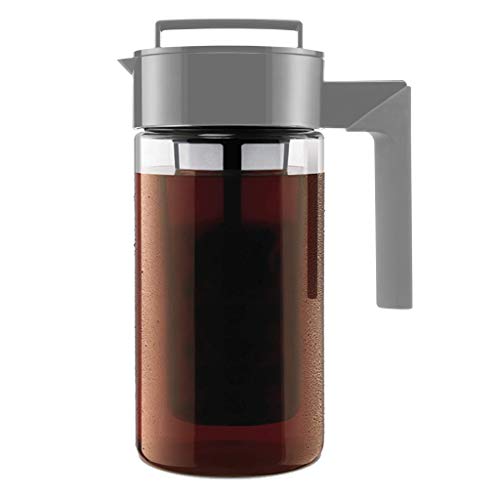
The best cold brew coffee maker for most home espresso fans is the Takeya Deluxe, a 2 quart BPA-free Tritan pitcher with a fine-mesh filter, an airtight leakproof lid and a silicone grip handle. The runner-up is the JunVpic 64 oz glass mason pitcher, which adds a 100 micron stainless steel filter and a pour spout for less mess. Both make a strong concentrate that you can use as the base for iced lattes, which is the reason many espresso drinkers keep a pitcher in the fridge alongside the machine.
If you already own an espresso machine, why add a cold brew maker? Because an iced latte made from espresso needs the machine to be warm, pulled, cooled and poured over ice, whereas concentrate from a pitcher is ready in the fridge and pours in seconds. It is also a way to use up beans that are slightly past their prime for espresso, and a good solution for hot afternoons when you do not want to heat the kitchen. This guide compares six pitchers, shows how to turn their output into lattes, and answers the common questions about the best cold brew coffee maker, coffee makers for cold brew, top rated cold brew coffee makers and the best coffee maker for cold brew. We did not personally use these products. The guide is research-based, built from manufacturer specification pages and listing details, and anything a maker does not state is marked “not listed”.
Our top picks


As an Amazon Associate we earn from qualifying purchases at no extra cost to you.
Top Picks at a Glance
- Best Overall: Takeya Deluxe Cold Brew Coffee Maker, 2 quart Tritan pitcher, fine-mesh filter.
- Best Glass Pitcher: JunVpic Cold Brew Coffee Maker, 64 oz glass mason, 100 micron stainless steel filter.
- Best Value: QHH Cold Brew Coffee Maker, 64 oz mason jar pitcher with stainless steel filter and pour spout.
- Best Wide-Mouth Design: County Line Kitchen 64 oz Cold Brew Coffee Maker, wide-mouth glass mason jar.
- Best Compact Carafe: Primula Burke Deluxe Cold Brew Iced Coffee Maker, 1.6 qt glass carafe with comfort grip handle.
- Best for Big Batches: dailybrew 1 Gallon Cold Brew Coffee Maker with stainless steel spigot.
Comparison Table
| Product | Best for | Key specs (as listed) | Watch for | Price tier |
|---|---|---|---|---|
| Takeya Deluxe, 2 qt | Everyday use, fridge door storage | Tritan, fine-mesh filter, airtight lid, shatter-proof, dishwasher safe, made in the USA | Plastic can hold odors | Mid-range |
| JunVpic, 64 oz | Glass fans, easy pouring | Glass mason, 100 micron stainless filter, wide mouth, pour spout | Glass is breakable | Budget |
| QHH, 64 oz | Budget buyers | Mason jar pitcher, stainless filter, airtight, pour spout handle lid | Filter micron size not listed | Budget |
| County Line Kitchen, 64 oz | Easy loading and cleaning | Wide-mouth glass mason, stainless filter, leak-proof lid | Lid design not described in detail | Mid-range |
| Primula Burke Deluxe, 1.6 qt | Small households | Glass carafe, removable mesh filter, comfort grip handle, dishwasher safe | Smaller batch | Budget |
| dailybrew, 1 gallon | Entertaining and weekly batches | Heavy-duty glass, stainless filter, stainless steel spigot | Large, heavy and needs fridge space | Mid-range |
From Pitcher to Iced Latte: The Espresso Fan’s Method
A cold brew pitcher makes coffee at a different strength from espresso, but it can stand in for it in cold drinks. The usual approach is to brew a concentrate and dilute it. The table gives common starting points.
| Goal | Coffee to water by weight | Steep time | How to serve |
|---|---|---|---|
| Concentrate for iced lattes | 1 : 4 to 1 : 5 | 12 to 18 hours in the fridge | Equal parts concentrate and milk over ice |
| Ready-to-drink cold brew | 1 : 8 | 12 to 18 hours | Pour over ice, add milk if desired |
| Strong base for espresso-style tonics or dessert drinks | 1 : 3 | 18 hours | Dilute heavily and treat as a syrup-like base |
A worked example: a 64 oz pitcher holds about 1.9 liters when full to the brim. Leave a little headspace and fill with 1.5 liters of water. At a 1:5 concentrate ratio you need 300 grams of coarsely ground coffee, and you will collect roughly 1.2 to 1.3 liters of concentrate after the grounds absorb some water. Mixed one to one with milk, that makes around 2.5 liters of latte, about eight 12 oz glasses. This is why a single pitcher can supply a household for most of a week.
A note on equipment you already own: an espresso grinder is usually set too fine for cold brew. Open the grind to coarse, like sea salt, or use a separate grinder. Using espresso-fine coffee in a mesh filter will clog it and produce a muddy, bitter drink.
1. Takeya Deluxe Cold Brew Coffee Maker: Best Overall
- 2 quart BPA-free Tritan pitcher.
- Fine-mesh filter.
- Airtight, leakproof lid.
- Silicone grip handle.
- Shatter-proof, dishwasher safe, made in the USA.
Best for: a household that keeps cold brew in the fridge door and pours it daily. Skip if: you dislike plastic or are sensitive to plastic odors.
The Takeya is the most complete package in this group. The Tritan body will not shatter if dropped, which matters in a busy kitchen, and the silicone handle gives a secure grip when the pitcher is full. The lid is airtight, so the coffee will not pick up fridge odors. A fine-mesh filter keeps most sediment out of the carafe, though no mesh removes every particle.
At 2 quarts, it suits a batch of ready-to-drink cold brew, or a smaller batch of concentrate. For espresso fans making concentrate for lattes, 2 quarts will give you several drinks. The maker states that the pitcher is dishwasher safe, which simplifies cleaning; check the instructions for how to treat the filter and the lid.
The trade-off is plastic. Tritan resists staining better than many plastics, but it can still absorb strong odors over time. Wash it thoroughly, and avoid steeping flavored coffees if you want to prevent lingering smells.
Pros:
- Shatter-proof and dishwasher safe.
- Airtight lid.
- Fine-mesh filter and grip handle.
Cons:
- Plastic can hold odors.
- Mid-range price for a pitcher.
2. JunVpic 64 oz Glass Mason Pitcher: Best Glass Option
- 64 oz glass mason pitcher.
- 100 micron stainless steel filter.
- Wide-mouth design.
- Leak-proof lid with handle.
- Pour spout for iced coffee, tea and cold drinks.
Best for: people who prefer glass and want an easy pour. Skip if: you worry about breakage.
Glass does not hold odors or stain, so the coffee tastes only of the beans. The 100 micron filter is fine, about the width of a human hair, and it is explicitly listed, which gives you a way to compare it with other mesh filters. A wide mouth makes it easy to scoop in grounds and to scrub the inside.
The pour spout and handle address the common complaint about mason jar makers: dribbling and awkward lifting. A full 64 oz glass pitcher is heavy, so handle it with two hands near the fridge shelf. Glass is also vulnerable to temperature shock, so do not pour hot water into a cold glass or place a hot pitcher on a cold counter.
Pros:
- Glass body does not hold odors.
- Listed 100 micron filter.
- Pour spout and handle.
Cons:
- Breakable and heavy when full.
- Check the lid seal when new.
3. QHH 64 oz Mason Jar Pitcher: Best Value
- 64 oz mason jar pitcher.
- Stainless steel filter.
- Pour spout handle lid.
- Airtight and leak-proof.
- Listed for iced coffee, tea and lemonade.
Best for: a first cold brew maker at a low cost. Skip if: you need confirmed filter fineness.
This is a straightforward design that resembles the JunVpic and is also listed for tea and lemonade. That multi-use feature is good for households that want one pitcher for everything. The listing does not state the micron rating of the filter, so you cannot compare it directly with the JunVpic. If you are fussy about sediment, you can strain the finished coffee through a paper filter or a fine cloth.
It is at the lowest price tier, so it makes sense to try cold brew without a big commitment.
Pros:
- Low cost.
- Pour spout and handle.
- Also suits tea and lemonade.
Cons:
- Filter fineness not listed.
- Limited maker information.
4. County Line Kitchen 64 oz Cold Brew Maker: Best Wide-Mouth Design
- 64 oz glass wide-mouth mason jar.
- Stainless steel filter.
- Leak-proof lid.
- Gray finish.
Best for: people who like easy loading and cleaning. Skip if: you want a spout and handle on the lid.
A wide mouth is the feature that matters in daily use. Spooning coffee into a narrow mouth makes a mess, and cleaning the inside with a sponge is hard. The wide opening on this model helps with both. The glass body avoids odors, and the filter is stainless steel.
The listing does not detail the lid beyond leak-proof, and does not give a micron size for the filter. If the lid has no pour spout, expect to pour with the filter in place and possibly a bit of drip.
Pros:
- Wide-mouth glass is easy to clean.
- Stainless steel filter.
- Leak-proof lid.
Cons:
- Filter micron size not listed.
- Glass can break.
5. Primula Burke Deluxe: Best Compact Carafe
- 1.6 quart (6 cup) glass carafe.
- Removable mesh filter.
- Comfort grip handle.
- Dishwasher safe.
- Aqua finish.
Best for: one or two people who want a smaller fridge-friendly carafe. Skip if: you want large concentrate batches.
At 1.6 quarts, this carafe is smaller than the 64 oz mason jars, which fits in more fridge doors and suits single drinkers. A removable mesh filter lets you lift the grounds out cleanly. The comfort grip handle and glass carafe give it a classic pitcher look.
The smaller batch size means you will brew more often. As a worked example, at a 1:5 concentrate ratio a 1.6 quart carafe filled with 1.2 liters of water needs about 240 grams of coffee and yields around one liter of concentrate, which makes approximately two liters of latte when mixed with milk.
Pros:
- Compact.
- Removable mesh filter.
- Dishwasher safe.
Cons:
- Smaller yield.
- Mesh fineness not listed.
6. dailybrew 1 Gallon Cold Brew Maker: Best for Big Batches
- 1 gallon capacity.
- Heavy-duty glass pitcher.
- Stainless steel filter.
- Stainless steel spigot.
- Marketed for iced coffee and tea.
Best for: households that entertain or drink several glasses of cold brew a day. Skip if: your fridge shelf is narrow or low.
One gallon is about 3.8 liters, so this is the largest in the group. A spigot lets you pour without lifting a heavy container. It is helpful when the pitcher sits on a lower shelf or counter. The downside of spigots is cleaning and sealing: the tap has gaskets and a narrow passage, so rinse it after each batch and check it for leaks when you fill.
Plan fridge space before you buy, since a gallon container is tall and wide. At a 1:5 concentrate ratio, you would use about 600 grams of coffee for 3 liters of water, which makes a lot of lattes. For regular daily use at home, a smaller pitcher is easier to manage.
Pros:
- Large capacity.
- Spigot for easy pouring.
- Stainless steel filter.
Cons:
- Heavy and bulky.
- Spigot needs careful cleaning.
Also Consider
- VA1KENE 64 oz Cold Brew Maker: glass mason pitcher with a 100 micron fine mesh 304 stainless steel filter, airtight lid and pour flip spout.
- OXO Brew Compact Cold Brew Maker: 24 oz glass carafe that yields concentrate, with a small footprint for the fridge or counter.
- Snap! 5 Gallon Commercial Cold Brew Maker: dual filtration for cafes and offices that need large-batch output.
How We Chose
This guide is research-based. We did not personally use these products. We started with cold brew makers currently sold in the site’s store and kept pitcher-style makers that need no power, because espresso fans usually want a simple companion to their machine. We compared manufacturer specification pages and listing details for capacity, body material, filter type, lid design and cleaning notes. Where a listing did not give the filter fineness or another detail, we marked it “not listed”. We use tiers instead of exact prices. Ratios and steep times follow widely used cold brew guidance from coffee organizations.
Buying Guide
Material: glass or Tritan
Glass does not absorb odors or stain, and it looks clean in the fridge. It can break and is heavy. Tritan is lightweight and shatter-resistant but can hold smells over time. For a household with children or a slippery counter, Tritan is safer. For flavor purity, glass is better.
Filter fineness
Stainless steel mesh filters range from coarse to very fine. A 100 micron filter, as on the JunVpic, is fine enough to leave little sediment, but some will always pass through. For the cleanest drink, pour the finished coffee through a paper filter or a cloth.
Size and fridge fit
Measure the height of your fridge shelf or door bin before you buy. A 64 oz mason jar is about the height of a tall wine bottle. A smaller carafe suits narrow shelves. Remember that concentrate takes less space than ready-to-drink, so a smaller pitcher can still supply many drinks.
Lid, handle and pour spout
A good lid prevents leaks and fridge odors. A pour spout and handle reduce spills. Check that the lid seals when the pitcher is tipped.
Cleaning
Disassemble the filter and wash with warm soapy water. Use a bottle brush for the mesh. Allow parts to dry fully before storage. Old coffee oils cause stale flavors, so replace any filter that stays stained or clogged.
Three Ways to Use Your Concentrate if You Own an Espresso Machine
| Drink | Build | Why it works |
|---|---|---|
| Iced cold brew latte | Ice, 100 ml concentrate, 100 ml cold milk | No machine warm-up and no dilution from melting hot espresso |
| Cold brew with a steamed milk float | Ice, 120 ml diluted cold brew, a spoon of steamed milk foam from your wand | Uses the steam wand for texture while keeping the base cold |
| Affogato-style dessert | One scoop of ice cream, 50 ml concentrate poured over | Concentrate is strong enough to cut the sweetness |
These are serving ideas, not rules. Concentrate strength varies with the beans, the ratio and the steep, so taste first and then adjust. If a drink is too strong, add more milk or water; if it is too weak, increase the concentrate or brew a stronger batch next time.
What Wears First: Ownership Notes for Pitchers
Pitchers have few parts, but each wears in a predictable way. Silicone gaskets in the lid soften and absorb coffee odors; replace them if the lid stops sealing or smells stale. Stainless steel mesh filters can bend if pushed with a spoon or scrubbed with a hard brush, so clean them gently with a soft bottle brush and warm soapy water. Plastic Tritan bodies can scratch and cloud over years of dishwasher use. Glass pitchers are less likely to wear but can chip at the rim, and a chipped rim is a safety risk and a sign to retire the jar.
A good habit is to keep a spare lid or filter if the maker sells them separately, since these are the parts most likely to fail. Also store the pitcher with the lid off between batches so that it can air out. If your pitcher develops a persistent smell, soak the parts in a mixture of warm water and a little baking soda, rinse well and dry. Never use bleach on stainless steel filters, because it can pit the metal.
Common Mistakes to Avoid
- Using the espresso grind setting. It clogs the filter and tastes bitter.
- Steeping on the counter for a day. Use the fridge or limit counter time to the maker’s advice.
- Skipping a measured ratio. Guessing gives inconsistent strength.
- Keeping cold brew for weeks. Use it within about a week.
- Leaving the filter wet. Rinse and dry it to avoid odors.
Frequently Asked Questions
What is the best cold brew coffee maker?
The Takeya Deluxe is the best all-round pitcher in this guide, with a fine-mesh filter and an airtight lid. The JunVpic is the best glass alternative.
What is the best coffee maker for cold brew concentrate?
Any of the 64 oz pitchers works. Use about 1 part coffee to 4 or 5 parts water, steep for 12 to 18 hours and dilute to taste. The OXO Brew Compact is made specifically to yield concentrate in a small size.
Can I use my espresso machine’s grinder for cold brew?
You can, if it has a coarse setting. Otherwise, use a separate grinder. Espresso-fine grounds will clog filters.
How long should cold brew steep?
Typically 12 to 18 hours in the fridge. Shorter makes a weaker drink, and longer can taste harsh.
How do I make an iced latte from cold brew?
Fill a glass with ice, add equal parts concentrate and milk, and stir. Adjust to taste.
Is cold brew stronger than espresso?
Concentrate can be strong, but espresso is made differently and is typically served in small volumes. Compare by caffeine content only using the maker’s guidance, and speak to a doctor if you are concerned about caffeine intake.
How long does cold brew keep?
About a week in a covered container in the fridge. Discard it if it smells or tastes off.
Which One Should You Buy?
Choose the Takeya Deluxe for a durable, easy everyday pitcher, and the JunVpic if you prefer glass. The QHH is the value pick, the County Line Kitchen is the easy-to-clean wide-mouth design, the Primula Burke Deluxe is the compact option, and the dailybrew gallon suits big batches. Whichever you pick, use a coarse grind, weigh the coffee and keep the concentrate in the fridge, ready for your next iced latte.
Sources
- Takeya manufacturer product page for the Deluxe Cold Brew Coffee Maker
- JunVpic, QHH, County Line Kitchen and dailybrew manufacturer listings
- Primula manufacturer page for the Burke Deluxe
- OXO and VA1KENE manufacturer pages
- Specialty Coffee Association cold brew ratio guidance
Last updated: October 2026




Write Your Review
No reviews yet. Be the first to share your experience!