

Key takeaways
- 12V DC direct. The Dometic draws 170W at 12V, which is about 14 amps. A typical brew cycle for a full pot runs several minutes, so a short brew uses a small slice of a battery bank.
- Inverter AC. Many household brewers are rated well above 1,000W. One roundup lists the K-Mini at about 1,470W, and Cuisinart’s 5-cup is listed at 1,100W by one retailer and 600W by another. Because the listings disagree, check the rating label on your unit or the manual before relying on a number. A 1,000W inverter can struggle with a 1,100W heater, and one guide suggests looking for 800W or less when running coffee from an inverter.
- Shore power or generator. If you are hooked up at campgrounds, wattage is rarely an issue; counter space and weight are.
- No power. Manual and stove-top options need only hot water or a flame.
The best RV coffee maker depends first on your power source, not on taste. If you drive on battery and a 12V system, the Dometic PerfectCoffee MC 052 is a purpose-built drip brewer that runs straight off 12V. If you have shore power or a generator, a compact Keurig K-Mini or a Cuisinart 5-cup drip machine is easier. If you boondock with no power to spare, a hand-pumped Wacaco, an AeroPress Go or a stovetop percolator removes the electricity question entirely.
RV coffee has constraints a kitchen does not: limited counter space, a small inverter, a battery bank you do not want to drain before breakfast, and a vehicle that moves. This guide ranks seven real options by how they fit those constraints, with the wattage and size numbers that decide whether a machine will run on your setup. Specs come from manufacturer and retailer listings, and where sources disagree, the article says so.
Our top picks


As an Amazon Associate we earn from qualifying purchases at no extra cost to you.
Quick comparison of the seven picks
| Pick | Best for | Power | Key specs |
|---|---|---|---|
| Dometic PerfectCoffee MC 052 | True 12V drip coffee | 12V DC, 170W | 5 cups (about 625 ml), 1.1 kg, mounting kit included |
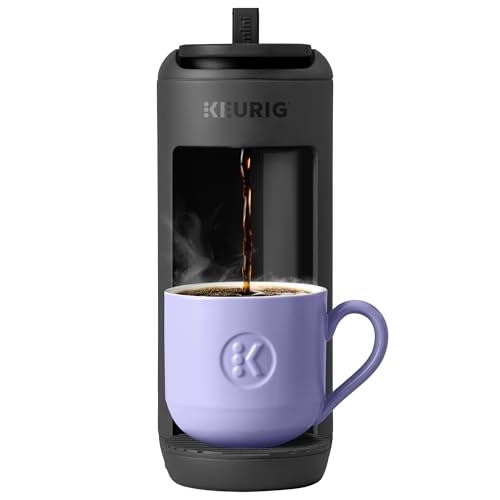
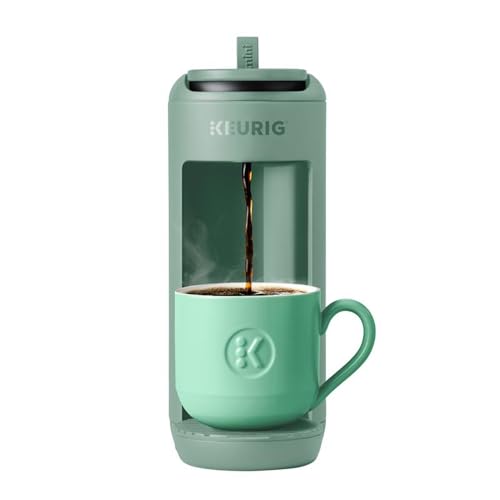
| Keurig K-Mini Plus | Small RVs with shore power | 120V AC | 4.5 in wide, 6-12 oz brews, stores 9 pods |
| Cuisinart DCC-5570 5-Cup | Couples sharing a pot | 120V AC | 25 oz brew, stainless carafe, 3.5 lb |
| Wacaco Picopresso | Espresso without power | Manual | 18 bar, 80 ml tank, 350 g, 18 g dose |
| Wacaco Nanopresso | Lightest espresso option | Manual | 18 bar, 80 ml tank, 336 g |
| AeroPress Go | Most durable off-grid brewer | Manual | Up to 8 oz per press, 11.4 oz kit weight |
| Stanley Classic Camp Percolator 1.1 qt | Stovetop coffee for groups | Stove or fire | 18/8 stainless, 6 cups, about 1.1 lb |
First, work out your power budget
Before you shop, check what your RV can run. Electric drip machines and pod brewers draw a lot of power for a short time, which matters on an inverter.
- 12V DC direct. The Dometic draws 170W at 12V, which is about 14 amps. A typical brew cycle for a full pot runs several minutes, so a short brew uses a small slice of a battery bank.
- Inverter AC. Many household brewers are rated well above 1,000W. One roundup lists the K-Mini at about 1,470W, and Cuisinart’s 5-cup is listed at 1,100W by one retailer and 600W by another. Because the listings disagree, check the rating label on your unit or the manual before relying on a number. A 1,000W inverter can struggle with a 1,100W heater, and one guide suggests looking for 800W or less when running coffee from an inverter.
- Shore power or generator. If you are hooked up at campgrounds, wattage is rarely an issue; counter space and weight are.
- No power. Manual and stove-top options need only hot water or a flame.
Worked example: what one brew costs your battery
Suppose you brew a 5-cup pot on the Dometic at 170W for roughly 10 minutes. Energy use is 170W times one-sixth of an hour, or about 28 watt-hours. A 100 amp-hour lithium battery at 12V stores about 1,200 watt-hours, so that pot uses roughly 2.4 percent of the bank. Add the warming plate for another half hour at a lower duty cycle and you still stay under about 5 percent. By contrast, an 1,100W inverter-powered brewer running about six minutes uses roughly 110 watt-hours at the inverter, plus conversion loss, which is nearly four times as much per pot. These are estimates from rated wattage, not measured draw, but they show why a true 12V machine makes sense for dry camping.
Best 12V option: Dometic PerfectCoffee MC 052
The Dometic PerfectCoffee MC 052 is a five-cup drip machine designed for boats and RVs. Per retailer listings of its spec sheet, it is a 12V DC unit rated at 170W, with a capacity of about 625 ml (one retailer lists 680 ml), dimensions of 155 mm deep, 270 mm high and 240 mm wide, and a net weight of 1.1 kg. It includes a glass pot, a swing filter, a warming plate with a thermostat, overheat protection, an LED indicator, auto shut-off and a carafe retention system that keeps the pot in place when the vehicle pitches. A mounting kit lets you fasten it to a wall or horizontal surface, and the cord is 1 m with a 12V plug.
It is the machine for owners with 12V outlets who want a real pot of drip coffee without an inverter. The trade-off is volume: five small cups, not a full diner-size pot. A 24V version exists for larger vehicles, so match voltage to your system. Reliability depends on a solid 12V connection; use a dedicated outlet with a proper fuse rather than a loose adapter.
Best compact pod brewer: Keurig K-Mini Plus
For small RVs with shore power, the Keurig K-Mini Plus is the space-saving pod option. Keurig lists the K-Mini and K-Mini Plus at 12.1 inches tall, 4.5 inches wide and 11.3 inches deep. Both brew any size from 6 to 12 oz, with no presets; you pour the water you want into the reservoir. The Plus adds storage for up to nine K-Cup pods, a Strong button, a removable drip tray that fits travel mugs up to 7 inches tall and auto-off 90 seconds after the last brew.
It suits couples or solo travelers who want one cup fast with minimal cleanup. The trade-offs are that it runs on household power, with one roundup listing about 1,470W, and that pods create waste and cost more per cup than ground coffee. In a moving rig, secure the reservoir and empty it before driving to avoid spills.
Best drip machine for two: Cuisinart DCC-5570 5-Cup
The Cuisinart DCC-5570NAS is a compact drip maker with a stainless steel carafe. Listings give a 25 oz brew capacity (five 5 oz cups), a 26 oz reservoir, dimensions of about 5.67 by 10.14 by 10.85 inches and a weight of 3.5 lb. It has a removable water reservoir, a charcoal water filter, Brew Pause, a 30-minute keep-warm and a limited three-year warranty.
It suits two people who want a shared pot and a carafe that does not break on a bumpy road. The caution is wattage: listings range from 600W to 1,100W, so treat inverter sizing as something to confirm from your own unit. The carafe is for this brewer only and should never go on a stove. Brew Pause means you can pour early, but it also means a drip tray full of coffee if you forget to put the carafe back.
Best espresso with a real basket: Wacaco Picopresso
The Wacaco Picopresso is a hand-pumped espresso maker that uses an 18 g dose in a 52 mm basket. According to Wacaco’s specs as reported by retailers, it reaches 18 bar, has an 80 ml water tank, weighs about 350 g and measures 71 by 78 by 106 mm. It needs roughly 13 kg of force at peak pressure, so the pump is a workout rather than a convenience.
It is for espresso fans who want a proper puck with ground coffee and a basket that rewards good prep, with hot water from a kettle. The trade-off is effort and cleanup: you need a fine grind, a hand grinder or pre-ground coffee, and a rinse after each shot. It adds no electrical load at all.
Lightest espresso option: Wacaco Nanopresso
The Nanopresso reaches 18 bar with a hand pump, holds 80 ml of water, weighs about 336 g and uses roughly 8 g of ground coffee in a pressurized basket. Dimensions are about 6.1 by 2.8 by 2.4 inches. It has no heater, so you add hot water yourself.
It suits people who want strong coffee in a pocket-size tool and are not chasing fine-tuned shots. The pressurized basket is forgiving but limits control compared with the Picopresso’s open basket. If your RV has limited cabinet space, the Nanopresso takes almost none.
Most durable off-grid brewer: AeroPress Go
The AeroPress Go is the travel version of the classic press. AeroPress lists the full kit at 11.4 oz (about 323 g) with a 15 oz mug and lid, and a capacity of up to 8 oz per press. Parts are food-safe polypropylene except for a silicone lid and plunger seal. It works with mugs having a top inner diameter between 2.75 and 3.25 inches, so you can brew straight into a cup you already own.
It suits anyone who wants the simplest, hardest-to-break coffee tool. The trade-offs are that it makes one to two small cups at a time and the mug is not insulated. Paper filters are cheap and light, and you only need hot water.
Best stovetop for a group: Stanley Classic Camp Percolator 1.1 qt
Stanley’s 1.1 qt camp percolator is made of 18/8 stainless steel, brews up to 6 cups and has a removable silicone grip. Stanley lists the Hold Tight version at 1.12 lb and 7.28 by 4.80 by 8.46 inches; retailers list slightly different figures for older Cool Grip versions, so check the exact version you buy. A comparable alternative is the GSI Outdoors Glacier Stainless percolator, which comes in 3, 6, 9 and 12 cup sizes; the 6-cup is about 0.9 L and 1 lb 4 oz.
It suits groups who share a campfire or propane burner and like a bold, hot pot. The trade-off is control: percolators can over-extract if left on the heat too long, so time the brew and pull it off the flame when the stream in the knob turns a steady color. A percolator needs coarse grounds so they do not slip through the basket holes.
Decision matrix
| Your situation | Pick | Why |
|---|---|---|
| 12V system, no inverter, likes drip coffee | Dometic MC 052 | Runs directly on 12V |
| Full hookups, one cup at a time, minimal space | Keurig K-Mini Plus | 4.5 in wide, fast single cups |
| Two coffee drinkers, shore power or generator | Cuisinart DCC-5570 | 25 oz pot with stainless carafe |
| Boondocking, wants real espresso | Wacaco Picopresso | No electricity, 18 g basket |
| Minimal space, pocket weight | Wacaco Nanopresso | 336 g, small footprint |
| Rough use, kids, simple routine | AeroPress Go | Plastic body that resists drops |
| Four or more people at a campsite | Stanley percolator | 6-cup stovetop pot |
How to choose: five checks
- Check your power first. List your inverter size, battery capacity and outlet types. Do the same arithmetic as in the worked example: watts times hours divided by battery watt-hours.
- Measure the counter space. A machine that is 10 inches wide may not fit between a stove cover and a wall. Compact pod brewers like the K-Mini are 4.5 inches wide.
- Plan for vibration. Look for a carafe retention system, a pot that locks in place or a stovetop pot with a lid latch. Anything with a glass pot should be stowed before driving.
- Think about water. RV tanks and campground hookups vary. A charcoal filter or a separate filter pitcher helps with taste and scale.
- Count consumables. Paper filters, K-Cup pods and descaler all take storage space. Choose a system whose supplies you can carry.
Ownership realities
- Descaling. Campground water is often hard. Run a white vinegar or citric acid cycle monthly if you use hookups regularly, then rinse with two full tanks of fresh water.
- Cold weather. Do not leave water in a reservoir that may freeze. Ice can crack plastic reservoirs and damage heater tubes.
- Cord and connector care. A loose 12V plug can overheat. Use a secure connector and check the plug for heat after the first few uses.
- Secure storage. Pack glass pots separately, pad manual espresso makers in a towel and keep K-Cup storage drawers latched.
- Cleaning. Manual brewers need a rinse after every use; drip machines need the basket and carafe washed daily to avoid stale oils.
Setting up a coffee station that survives the road
Where you brew matters as much as what you brew with. A coffee station in an RV needs a flat, stable surface close to an outlet or a stove burner, a spot to stow everything quickly and a way to catch spills when the vehicle moves.
- Pick a fixed spot. Choose a counter section near your 12V or 120V outlet, away from the sink splash zone. A silicone mat under the machine stops sliding on short moves.
- Use a latch bin. A shallow bin with a lid holds filters, pods, scoops and cleaning tablets, and prevents them from rattling free.
- Keep the water close. A small jug beside the machine saves trips to the tap and lets you measure by the cup instead of by guess.
- Add a drip tray or towel. Manual brewers drip, and a folded towel soaks up the last drops after the press.
- Secure the last step. Before driving, empty reservoirs, dry the machine and put glass pots in a padded drawer.
Beans, grind and water for the road
Grind size changes by brewer. A percolator needs a coarse grind, close to sea salt, so the grounds stay in the basket. A drip machine uses a medium grind similar to sand, while the Picopresso and Nanopresso need a fine espresso grind. The AeroPress is flexible and works with medium-fine grounds. If you carry a hand grinder, grind just before brewing for the best taste; if you carry pre-ground coffee, store it in an airtight container and use it within a couple of weeks.
A rough ratio for a 5-cup drip pot is about one level tablespoon of ground coffee per 5 to 6 oz of water, adjusted to taste. For an AeroPress Go, 15 to 17 grams of coffee to about 200 ml of water is a common starting point. Manual espresso makers use the dose their basket is designed for, such as 18 g in the Picopresso.
RV water varies by campground. If a tap tastes of chlorine or sulfur, run it through a charcoal filter or use bottled water for coffee. Hard water leaves scale in heaters, so descale periodically and avoid leaving water standing in the reservoir between trips.
Packing list for a coffee-ready RV
- Your chosen brewer and its power cord or fuel source
- Paper filters or reusable filter baskets sized for the machine
- A small hand grinder or pre-ground coffee in an airtight canister
- A kettle suitable for your stove or a hot-water source
- Insulated mugs that do not tip easily
- Descaling powder or citric acid, and a small bottle brush
- A spare 12V fuse if you use a 12V machine
Frequently Asked Questions
Can I run a regular Keurig or drip machine from an RV inverter?
Often yes, but only if the inverter can cover the machine’s heater load. Rated draws for popular models range from 600W to well over 1,000W, and inverters struggle with sustained loads near their limit. Check the rating label on your unit and choose an inverter with headroom.
Is there a true 12V coffee maker for an RV?
Yes. The Dometic PerfectCoffee MC 052 runs on 12V DC at 170W, and a 24V version exists. A 12V machine avoids inverter loss, so it uses less of your battery per pot.
What is the best coffee option for dry camping?
A manual brewer such as the AeroPress Go, Wacaco Picopresso or Nanopresso only needs hot water, which you can heat on a propane burner. A stovetop percolator is another no-power option for groups.
How many watts does an RV coffee maker use?
Draw varies widely. The Dometic is rated at 170W, while household drip and pod machines are commonly listed between about 600W and 1,500W. Always confirm the rating on your own unit.
How do I stop coffee from spilling while driving?
Empty the reservoir and carafe before moving, stow glass pots in a padded space and choose machines with a carafe retention or lid latch system. A mounted unit like the Dometic is designed to hold the pot in place when the vehicle pitches.
Do I need a special filter for RV water?
Not required, but a charcoal or inline filter improves taste and reduces scale. Use fresh water from a trusted source and descale periodically.





Write Your Review
No reviews yet. Be the first to share your experience!