

Key takeaways
- Who it is for: Home baristas who want repeatable, café-style shots and room to learn pressure profiling.
- Pros: Heated brew head for stable temperature, standard 58 mm basket, a gauge for feedback, a longer lever with a T-handle and a detachable portafilter.
- Cons: It needs a counter outlet for preheating, you must boil water separately, and it takes up more space than the smaller Flair models. A grinder capable of fine adjustment is essential.
The best lever espresso machine for most home users is the Flair 58 Plus 2, a direct-lever machine with a heated brew head, a real pressure gauge and a 58 mm basket that fits standard accessories. If you want the lowest-cost route to excellent shots, the Cafelat Robot and Flair Neo Flex deliver the same lever experience without electronics, while the La Pavoni Europiccola, Profitec Pro 800 and Londinium R24 are the classic and premium boiler-based levers. This guide ranks seven real lever machines by skill level, budget and how much work you want to put into each shot.
Our top picks


As an Amazon Associate we earn from qualifying purchases at no extra cost to you.
Quick Comparison of the Best Lever Espresso Machines
| Pick | Type | Basket / group | Best for | Price tier |
|---|---|---|---|---|
| Flair 58 Plus 2 | Direct lever, electric preheated head | 58 mm, 16-20 g dose | Best overall, pressure profiling | Mid to upper |
| Cafelat Robot | Direct lever, no electronics | 57.5 mm, up to 25 g | Simplicity and durability | Mid-range |
| Flair Pro 3 | Direct lever, manual preheat | 46 mm, 16-24 g | Affordable entry with a gauge | Budget to mid |
| Flair Neo Flex | Direct lever, polymer frame | 40 mm format, 12-18 g | Cheapest way into lever espresso | Budget |
| La Pavoni Europiccola | Spring-assisted boiler lever | About 49 mm | Classic design, steam wand | Upper |
| Profitec Pro 800 | Spring lever, dual boiler with PID | 58 mm | Modern prosumer lever | Premium |
| Londinium R24 | Spring lever, large boiler | 58 mm | Purists, long sessions | Premium |
Specifications follow manufacturer information and reputable retailer listings. Dose ranges, water capacities and prices differ by version and region, so confirm the details for the exact model you are considering.
How a Lever Espresso Machine Works
A lever machine builds the pressure for espresso mechanically rather than with an electric pump. In a direct lever, you push the lever and the force you apply becomes the brewing pressure, usually targeted at around 6 to 9 bar. In a spring lever, you pull the arm down to compress a spring, then release it so the spring pushes water through the coffee at a pressure set by the spring, typically near 8 to 9 bar, which gradually declines as the spring extends. In both designs you control the shot with your hand, which makes lever machines the most direct way to practice pre-infusion and pressure profiling.
The appeal is mechanical simplicity. With fewer electronic parts, a well-built lever machine can last decades and be repaired with basic tools. The cost is a learning curve, and the fact that you take responsibility for details a pump machine hides, such as water temperature and pressure.
Best Overall: Flair 58 Plus 2
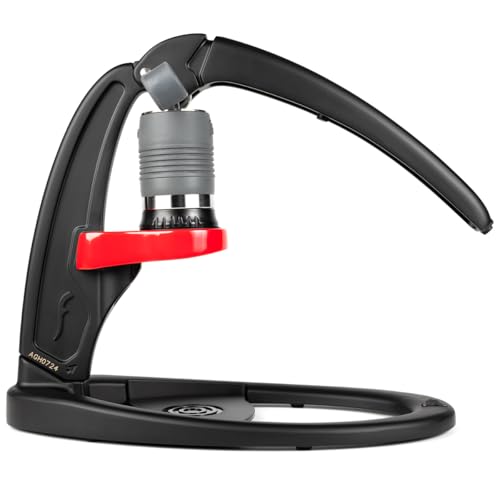
The Flair 58 Plus 2 is a direct-lever machine that adds an electric heating element in the brew head, with three preheat settings of roughly 185, 194 and 203 degrees Fahrenheit. It uses a 58 mm portafilter basket, so you can use common tampers, baskets and distribution tools, and it includes an analog pressure gauge with a target zone of about 6 to 9 bar. Per the manufacturer’s information, the dose capacity is 16 to 20 g, water input is about 90 ml, and the machine weighs roughly 12 pounds.
- Who it is for: Home baristas who want repeatable, café-style shots and room to learn pressure profiling.
- Pros: Heated brew head for stable temperature, standard 58 mm basket, a gauge for feedback, a longer lever with a T-handle and a detachable portafilter.
- Cons: It needs a counter outlet for preheating, you must boil water separately, and it takes up more space than the smaller Flair models. A grinder capable of fine adjustment is essential.
Best for Simplicity and Durability: Cafelat Robot
The Cafelat Robot is a compact, all-metal direct-lever machine with no electronics. Its basket is about 57.5 mm and accepts doses up to roughly 25 g. Weight is listed near 2.8 to 3 kg depending on the source, and it has a clamp or bench-mount design that keeps it stable. You heat water in a kettle, preheat the group, pull the lever and control the shot by feel, with an optional pressure gauge that many owners add.
- Who it is for: Users who value reliability, portability and a distraction-free brewing experience.
- Pros: No wiring or boiler to fail, very stable pressure with practice, excellent shot quality for the cost and easy cleaning.
- Cons: Water temperature drops across the shot if you do not preheat well, steaming milk requires a separate device, and the lever motion needs some physical effort.
Best Budget Gauge-Equipped Lever: Flair Pro 3
The Flair Pro 3 uses a 46 mm portafilter, a dose range of about 16 to 24 g and a thin stainless steel brewing cylinder that is designed to avoid separate preheating. It includes a pressure gauge with a 6 to 9 bar espresso zone, an integrated shot mirror and a removable stainless steel spout, and it ships with a carrying case. It weighs around 7 pounds, and the water input is approximately 70 ml with a yield of up to about 56 ml.
- Who it is for: Travelers and apartment dwellers who want a capable lever in a smaller package.
- Pros: Portable, quick to set up, a gauge for learning, and a case.
- Cons: The 46 mm basket is less common than 58 mm, so accessory choice is smaller, and the machine is lighter than the Robot, so it moves if you do not stabilize it.
Cheapest Way In: Flair Neo Flex
The Neo Flex is the budget Flair, built on a lightweight polymer frame with a 2024 update that added an integrated pressure gauge and a thin no-preheat brewing cylinder. It uses a smaller 40 mm format with a 12 to 18 g dose, a reservoir of about 60 ml and a yield up to about 45 ml. Two portafilters are included: a pressurized Flow-Control version for beginners and a bottomless 2-in-1 for more advanced work. It weighs roughly 4.5 pounds.
- Who it is for: Beginners who want to try lever espresso before investing in a larger machine.
- Pros: The lowest cost, light and portable, with a gauge and two portafilters.
- Cons: A small basket restricts dose and yield, plastic parts feel less durable than metal machines, and shots are less forgiving of grind errors than larger-basket levers.
Best Classic Design: La Pavoni Europiccola
The La Pavoni Europiccola is the machine that defined the home lever category. It has a built-in boiler of roughly 0.8 liters, a chrome-and-wood or chrome-and-steel body, and a steam wand, so it can make milk drinks without any extra equipment. You lift the lever to fill the group from the hot boiler and push down to pull the shot. It uses a small basket, around 49 mm, and it lacks a pressure gauge, so technique matters a lot.
- Who it is for: Enthusiasts who love tactile machines and want milk drinks from a single unit.
- Pros: Built-in boiler and steam, long track record, repairable, and attractive on the counter.
- Cons: Strict temperature management, a steep learning curve, the group runs hot after repeated shots, and the cost is high for its capacity. Handle the lever with care when the boiler is pressurized.
Best Modern Prosumer Lever: Profitec Pro 800
The Profitec Pro 800 is a spring-lever machine with a 58 mm group and dual-boiler construction with PID temperature control. It pairs the feel of a lever with a stable, adjustable brew temperature and a dedicated steam boiler, so you can pull a shot and steam milk at the same time. It is built for daily use in a kitchen or small café. Premium pricing puts it well above the direct-lever machines.
- Who it is for: Experienced home baristas who want convenience and precision from a lever machine.
- Pros: Temperature stability, dual boilers for milk, a standard 58 mm basket and a robust build.
- Cons: A high price, a bigger footprint, and the need for a plumbed or tank water supply and routine maintenance.
Best for Purists: Londinium R24
The Londinium R24 is a hand-built spring-lever machine with a large boiler of about 2.8 liters and a 58 mm group. It is aimed at people who want a lever pull that behaves consistently, with a long preheating routine and a robust, serviceable design. Availability depends on the maker’s production, so confirm lead times before committing.
- Who it is for: Enthusiasts who want a long-lasting, traditional lever and who can afford a premium machine.
- Pros: A large boiler for sustained use, standard accessories, and a design that has been refined for years.
- Cons: Cost, size and weight, and a longer warm-up than a small direct-lever.
How to Choose a Lever Espresso Machine
Direct Lever or Spring Lever
Direct levers like the Flair and Cafelat models give you full control and are affordable, but you need to learn to apply smooth pressure. Spring levers, including the Europiccola, Pro 800 and R24, deliver a repeatable pressure curve and are easier to repeat shot to shot, though they cost far more and need power and water plumbing or tanks.
Budget and Hidden Costs
The machine is only part of the cost. A lever machine will not hide a poor grinder, and you will want a capable burr grinder with fine steps. Add a scale, a kettle, a distribution tool and a tamper if one is not included. In practice, a modest machine with a good grinder will outperform an expensive machine with a poor one.
Counter Space and Workflow
Direct levers need a separate kettle, plus room for the lever swing; the Flair 58 Plus 2 adds a plug-in preheat. Boiler levers need a power outlet and room to clear the lever arm. Measure your upper cabinets: the Pro 800 and R24 need generous headroom when the lever is raised.
Decision Matrix by Situation
| Your situation | Choose | Reason |
|---|---|---|
| First lever, small budget | Flair Neo Flex | Lowest cost and a built-in gauge |
| Travel and small apartment | Flair Pro 3 | Carrying case, compact size |
| Want rock-solid reliability | Cafelat Robot | All-metal with no electronics |
| Want the best temperature stability without a boiler | Flair 58 Plus 2 | Heated brew head and 58 mm basket |
| Want milk drinks in one machine | Europiccola or Pro 800 | Built-in steam capability |
| Want a lifetime machine | Londinium R24 | Serviceable, large boiler |
A Worked Example: Pulling a Shot on a Direct Lever
Take a Flair 58 Plus 2 with an 18 g dose. Preheat the head on the medium setting, then grind to a fine setting and tamp level. Pour about 90 ml of just-boiled water into the chamber, close the lever and begin with a gentle pre-infusion at 2 to 3 bar for around 8 to 10 seconds, watching the gauge. Then ramp smoothly to 6 to 8 bar. A shot targeting 36 g of liquid in 30 to 35 seconds gives a 1:2 ratio, which is a common starting point. If the shot runs in 20 seconds, grind finer; if it takes 45 seconds or more, grind coarser. Because you control the pressure, you can also try a gentle decline in the last third of the shot, which often reduces bitterness with lighter roasts.
Write down each variable, including dose, time, yield and grinder setting. Within a week of regular practice, most users produce consistent results, which is faster than many expect.
Ownership Realities and Maintenance
Seals and gaskets are the wear parts on every lever machine. Expect to replace the group gasket and piston seal periodically, typically once a year with daily use, and keep spares on hand. Flush and wipe the group after every session, and rinse the basket thoroughly. For machines with boilers, descale as recommended by the manufacturer and use water with moderate mineral content, since very soft water can accelerate corrosion and very hard water causes scale. Store direct levers disassembled and dry if you will not use them for several days.
- Common mistakes: using a grind that is too coarse, skipping preheat, pushing the lever too fast and ignoring the gauge.
- Safety: boiler levers hold pressurized steam and hot water; always follow the manufacturer’s instructions and never open a pressurized boiler.
Pre-Infusion and Pressure Profiling Explained
The main reason enthusiasts choose a lever is the ability to shape pressure through the shot. Pre-infusion wets the puck at low pressure, usually 2 to 4 bar for 5 to 15 seconds, which helps close small channels before full pressure arrives. On a direct lever you do this by pressing lightly and watching the gauge. On a spring lever, a lever with a pre-infusion chamber lets the group fill gently before the spring takes over. After pre-infusion, a ramp to peak pressure and a gentle decline toward the end of the shot is a common profile for lighter roasts, while darker roasts often taste better with a lower peak around 6 to 7 bar.
Keep one change per shot. If you adjust grind, dose and pressure together, you cannot tell which change helped. A good habit is to hold your dose and ratio constant for a week and vary only the grind and the pressure curve.
Water Temperature and Preheating
Temperature stability is the main weakness of simple direct levers. Cold metal pulls heat out of the water, so a shot that starts at 200 degrees Fahrenheit may finish noticeably cooler. Preheat the brew chamber, portafilter and cup with hot water before every shot, and use water just off the boil for medium and dark roasts. Light roasts benefit from the hottest water you can supply. The Flair 58 Plus 2 handles this with its heated head, while the Robot and Flair Pro 3 rely on your preheating routine. Boiler-based machines such as the Pro 800 hold temperature electronically, which is a large part of their appeal.
Frequently Asked Questions
Is a lever espresso machine harder to use than a pump machine?
Yes, in the beginning. You manage pressure and, on some models, temperature yourself. With a consistent routine and a good grinder, most people get reliable shots within a couple of weeks.
Do lever machines produce better espresso?
They can produce excellent espresso, but it depends on the grinder, the beans and your technique. The advantage is control: you can shape the pressure curve in a way that fixed-pressure pump machines do not allow.
Can I make milk drinks with a lever machine?
Yes, with the right machine. The Europiccola and Profitec Pro 800 have steam wands. Direct levers like the Flair and Cafelat models need a separate milk frother or steam source.
What grinder do I need for a lever espresso machine?
A burr grinder with fine adjustment steps is essential, either an electric espresso grinder or a high-quality hand grinder. Hand grinders pair naturally with the Flair and Robot because those machines need no power.
Which lever machine is best for beginners?
The Flair Neo Flex or the Flair Pro 3 are common starting points because they are inexpensive and include a pressure gauge. If you expect to stay with the hobby, the Flair 58 Plus 2 or the Cafelat Robot offers more room to grow.
How long do lever espresso machines last?
Well-built levers can last decades with regular seal replacement and cleaning. Direct levers have few parts to fail, and traditional boiler levers like the La Pavoni are known for being repairable long after purchase.



Write Your Review
No reviews yet. Be the first to share your experience!