

The best semi-automatic espresso machine for most people in 2026 depends on one decision: whether you want a separate grinder. If you do, the Gaggia Classic Pro is the standard recommendation for learning espresso properly. If you want grinder and machine in one box, the Breville Barista Express and Barista Pro are the easiest paths to a good shot. For small spaces and fast heat-up, the Breville Bambino Plus and De’Longhi Dedica are the compact options.
A semi-automatic machine pumps water through the coffee at a steady pressure, but you control the grind, the dose, the tamp and when to stop the shot. That is the sweet spot between a fully automatic machine, which makes the decisions for you, and a manual lever, which asks for the most skill. This guide sorts seven real machines by how they heat water, because the heating system shapes warm-up time, temperature stability and how well a machine handles milk drinks.
Our top picks

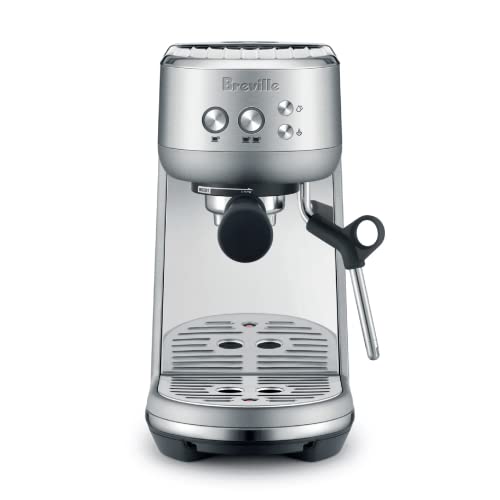 Breville BES450BSS Bambino Espresso Machine
- Cappuccino maker and latte machine has an automatic…
- Espresso maker includes innovative ThermoJet heating system that…
- Manual espresso machine features low pressure pre infusion…

As an Amazon Associate we earn from qualifying purchases at no extra cost to you.
Quick comparison of the picks
| Pick | Best for | Heating system | Portafilter | Built-in grinder | Standout feature | Price tier |
|---|---|---|---|---|---|---|
| Gaggia Classic Pro | Learning espresso properly | Single boiler | 58 mm | No | Commercial-size portafilter, 2.1 L tank, manual steam wand | Mid-range |
| Rancilio Silvia | Long-term upgrade | Single brass boiler | 58 mm | No | Cast iron frame, about 30 lb | Mid to premium |
| Lelit Victoria | Temperature control on a budget | Single boiler with PID | 58 mm | No | PID temperature display | Mid to premium |
| Breville Bambino Plus | Small kitchens, fast heat-up | Thermojet | 54 mm | No | Ready in about 3 seconds, automatic milk texturing | Mid-range |
| De’Longhi Dedica | Narrowest footprint | Thermoblock | Smaller than 58 mm | No | About 6 inches wide | Budget to mid-range |
| Breville Barista Express | All-in-one for beginners | Thermocoil | 54 mm | Yes, conical burr | Grinder, 67 oz tank and steam wand in one body | Mid to premium |
| Breville Barista Pro | All-in-one with faster heat-up | Thermojet | 54 mm | Yes, 30 grind settings | Digital display, heat-up in about 3 seconds | Premium |
The three heating systems and what they mean for you
Single boiler
The Gaggia Classic Pro, Rancilio Silvia and Lelit Victoria use a single boiler for both brewing and steaming. Brewing happens near 200 F, while steam requires a hotter setting, so you switch modes. That means you pull the shot first, then raise the temperature and steam your milk, with a short wait in between. Once you adopt a routine, a single boiler makes excellent espresso. They are the most repairable and the most modifiable machines in the category.
Thermocoil and thermoblock
Thermocoil and thermoblock systems heat water as it flows through a metal coil or block. They warm up fast, take up less space, and cost less to build. The trade-off is that they offer less thermal mass, so temperature can vary more between shots unless the machine has good control. The Breville Barista Express uses a thermocoil, while the De’Longhi Dedica uses a thermoblock.
Thermojet
Breville’s Thermojet system, used in the Bambino Plus and Barista Pro, reaches brewing temperature in about three seconds. It is the fastest heater in this guide and a good fit for people who want espresso without a warm-up ritual.
Best for learning espresso: Gaggia Classic Pro
The Gaggia Classic Pro is a semi-automatic, single-boiler machine with a commercial-size 58 mm portafilter, a three-way solenoid valve, a manual steam wand and a 2.1 liter removable water tank. It weighs about 20 pounds (9 kilograms), which makes it light for the category. Different sources describe its boiler differently, so check the current manufacturer specification before you buy if material matters to you.
It ships with an overpressure valve set around 12 bar, which is higher than the 9 bar most specialty roasters recommend, and it has no PID by default. Enthusiasts therefore treat it as a platform: a pressure adjustment, a PID kit and a better basket convert it into something far more capable. Even in stock form, a competent shot is possible once you manage temperature by waiting a short time after the heat light cycles.
Who it suits: beginners who want to learn real technique, and tinkerers who like to modify.
Pros: 58 mm ecosystem of accessories, serviceable, strong community support, manual steam wand.
Cons: needs a separate grinder, no PID in stock form, temperature surfing required, steam takes a wait.
Best long-term upgrade: Rancilio Silvia
The Rancilio Silvia is the step-up for people who graduate from entry-level machines. It has a 58 mm commercial portafilter, a brass boiler, a cast iron frame and a weight of about 31 pounds. The brass boiler holds roughly 12 ounces, handles brewing and steaming, though not at the same time, and the heat-up time is around five minutes. The V6 generation added PID-ready wiring and an updated steam valve.
Reviewers note the downsides honestly: there is no PID in the stock version, a single boiler requires a routine, and the learning curve is steep. For those who accept it, the Silvia rewards patience with a durable machine that many owners keep for a decade or more.
Who it suits: committed hobbyists who value build quality over features.
Pros: heavy-duty build, long lifespan, strong steam for a single boiler.
Cons: needs a separate grinder, no PID by default, steep learning curve.
Best temperature control on a budget: Lelit Victoria
The Lelit Victoria is a single-boiler machine that adds PID temperature control, a 58 mm portafilter and a temperature display. PID control addresses the weakness of many single-boiler machines, since it holds the brew temperature steadily instead of letting it drift between heater cycles. If you want the stability of a prosumer machine but not the size, it is a sensible middle point.
Who it suits: people who value temperature stability and want to dial in light roasts.
Pros: PID control, 58 mm accessories, solid construction.
Cons: needs a separate grinder, single boiler workflow for milk, mid-to-premium price tier.
Best for small kitchens: Breville Bambino Plus
The Bambino Plus is a compact machine with a Thermojet heater that is ready in about three seconds. It has a 54 mm portafilter, a roughly 1.9 liter (64 ounce) water tank and an automatic steam wand that textures milk to a set temperature and foam level. That automation makes the milk step forgiving, which is why the machine suits beginners who want a latte routine.
A trade-off is that the 54 mm portafilter has fewer aftermarket accessories than the 58 mm standard, and the machine has less control over shot parameters than the single-boiler enthusiast machines.
Who it suits: small apartments, beginners and milk-drink drinkers.
Pros: very fast heat-up, automatic milk, small footprint.
Cons: needs a separate grinder, 54 mm accessory range, fewer ways to tune.
Best narrowest footprint: De’Longhi Dedica
The Dedica is known for a slim body about 6 inches (15 centimeters) wide, which lets it slide into tight counter spaces. It uses a thermoblock heater, a manual steam wand and a pressurized portafilter in its basic configuration, which helps beginners get crema from slightly inconsistent grinds. The trade-off is less flexibility for those who want to dial in precisely.
If you buy one, pair it with a decent burr grinder, since the machine can only work with the coffee you feed it.
Who it suits: renters, small kitchens, and first-time buyers.
Pros: slim body, quick warm-up, forgiving pressurized basket.
Cons: limited upgrade path, smaller drip tray, needs a separate grinder.
Best all-in-one for beginners: Breville Barista Express
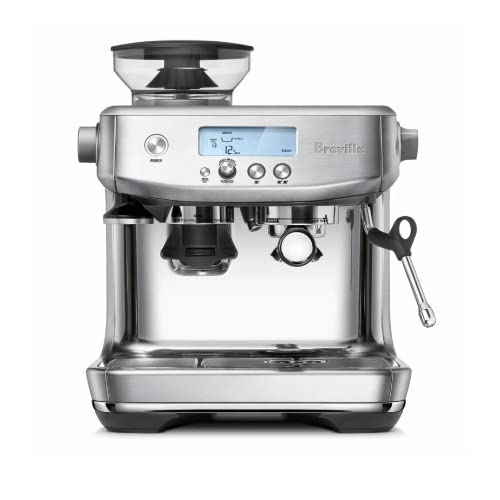
The Barista Express packs a conical burr grinder, a 54 mm portafilter, a thermocoil heater, a steam wand and a 67 ounce (about 2 liter) tank into one body. One roundup names it the best choice for most home users because it removes the need to shop for a grinder, a scale and a tamper separately.
The built-in grinder is the compromise. It is competent for espresso at standard settings, but it lacks the fine adjustment and durability of a standalone grinder. Many owners eventually upgrade the grinder and keep the machine.
Who it suits: beginners who want a complete setup that fits on one counter space.
Pros: grinder included, simple workflow, helpful accessories.
Cons: grinder limits long-term quality, thermocoil heats more slowly than the Thermojet, fewer repair options.
Best all-in-one with faster heat-up: Breville Barista Pro
The Barista Pro keeps the all-in-one concept and adds the Thermojet heater, so it reaches temperature in about three seconds. It has a 15 bar Italian-made Ulka pump, a 54 mm portafilter and an integrated grinder with 30 grind settings. A digital display shows the shot timer and settings, which helps beginners learn what a good extraction looks like.
Who it suits: beginners who want speed and a screen, and households that do not like to wait in the morning.
Pros: fast heat-up, built-in grinder with finer control than older models, digital feedback.
Cons: premium tier cost for a 54 mm machine, the same grinder-upgrade question as the Express.
Decision matrix by situation
| Your situation | Choose | Why |
|---|---|---|
| You want one box and minimal shopping | Barista Express or Barista Pro | Grinder included |
| You have a decent grinder already | Gaggia Classic Pro | 58 mm ecosystem and low entry cost |
| You drink mostly lattes | Bambino Plus | Automatic milk texturing |
| Your counter is under 8 inches of free width | De’Longhi Dedica | About 6 inches wide |
| You want temperature stability above all | Lelit Victoria | PID control |
| You plan to keep the machine 10+ years | Rancilio Silvia | Metal build and serviceability |
How to choose: the numbers that matter
Portafilter size
The 58 mm portafilter is the commercial standard and has the widest choice of baskets, tampers and tools. A 54 mm portafilter is common on Breville machines and works well, but accessory choices are narrower. A 51 mm portafilter is small enough that dosing is limited. If you like to upgrade, 58 mm gives you the most room.
Pressure
Most pumps are rated at 15 bar, but espresso is best extracted at around 9 bar at the puck. Good machines include an overpressure valve or a pressurized basket to bring actual pressure into that range. Rating numbers on the box are not a measure of quality.
Dose and ratio: a worked example
For a standard double shot, use 18 grams of ground coffee and aim for 36 grams of liquid espresso in 25 to 30 seconds. That is a 1:2 ratio. If you use a 16-gram basket, aim for 32 grams out. Weigh the output on a scale rather than guessing by volume, because crema inflates the volume of the shot.
Water tank and steam
A tank of 1.9 to 2.1 liters supports roughly 20 to 25 double shots between refills, allowing for rinse and steam use. Steam power matters for milk drinks: single-boiler machines with a manual wand need practice, while automatic wands like the Bambino Plus remove the learning step.
Grinder pairing: the part many buyers miss
Five of the seven machines above need a separate grinder. A burr grinder with fine adjustment is not optional for a semi-automatic machine. A blade grinder or a coarse-only burr grinder cannot produce the consistent fine grind that espresso needs, and the shots will taste uneven no matter which machine you buy. Budget for the grinder when you plan the purchase, and put as much attention into it as into the machine. A hand grinder with espresso-capable burrs is a sensible low-cost starting point.
Durability and ownership realities
- Shower screens and gaskets wear first, usually within a year or two of daily use. They are inexpensive and simple to replace on 58 mm machines.
- Scale damages thermocoils and thermoblocks faster than large brass boilers. Use filtered water and descale on a schedule.
- Built-in grinders wear their burrs over time. Plan on burr replacement or a standalone grinder as your skill grows.
- Plastic parts on compact machines, such as drip trays and tanks, can crack. Handle them gently and keep spare seals on hand.
- Single-boiler workflow: after steaming, cool the boiler before pulling the next shot by running water through the group, or the next espresso will taste burnt.
Weekly and monthly care
- After each session: wipe the steam wand, purge it, empty the drip tray and rinse the portafilter and basket.
- Weekly: backflush with a blind basket and water. If your machine has a three-way valve, add a small amount of cleaning powder once a month and rinse well.
- Monthly: unscrew the shower screen, soak it in a cleaning solution and wipe the dispersion plate.
- Every 2 to 3 months: descale based on water hardness, following the manufacturer’s instructions.
- Yearly: replace the group gasket if it looks flattened or hard.
Common mistakes with semi-automatic machines
- Using stale or pre-ground coffee. Freshly roasted beans, ground just before brewing, make a bigger difference than any machine upgrade.
- Changing too many variables. Adjust only grind size first. Keep dose and ratio fixed until the shot is close.
- Skipping the preheat. On single-boiler machines, let the group warm for 10 to 15 minutes, and warm the cup, for consistent results.
- Tamping unevenly. Distribute the grounds level and tamp straight down with firm, even pressure. A tilted tamp causes channeling.
- Buying only for features. A simpler machine with a good grinder will outperform a feature-rich machine paired with a poor one.
A realistic first-month routine
New owners often get discouraged because the first shots taste sour or bitter. A simple plan helps. In week one, fix the dose at 18 grams and the target output at 36 grams, then change only the grind setting until the shot lands between 25 and 30 seconds. In week two, taste each result and note whether sourness or bitterness dominates: sourness points to a finer grind or a longer shot, while harsh bitterness points to a coarser grind or a shorter one. In week three, begin to adjust the dose by half a gram and experiment with a short pre-infusion by lifting the lever or pausing the pump for a few seconds if your machine allows it. By the fourth week, most people can dial in a new bag of beans within three or four shots, and that skill carries over to any machine they buy later.
Frequently Asked Questions
What is the difference between semi-automatic and automatic espresso machines?
On a semi-automatic machine, you start and stop the pump yourself, so you control the shot length. An automatic machine adds programmed volume controls that stop the shot for you. Fully automatic machines also grind, dose and tamp. Semi-automatic offers the most control without requiring a lever.
Do I need a separate grinder?
Only if your machine does not have one. Models such as the Barista Express and Barista Pro include grinders, but dedicated grinders tend to be more precise and longer-lasting. Machines like the Gaggia Classic Pro, Rancilio Silvia, Lelit Victoria, Bambino Plus and Dedica all need a grinder purchased separately.
Is a 54 mm portafilter worse than 58 mm?
Not in terms of espresso quality, which depends mostly on grind, dose and temperature. The 58 mm size has an advantage in accessories and upgrade options. A 54 mm machine can make excellent espresso if you pair it with a good grinder and fresh beans.
How long should a semi-automatic machine last?
With regular descaling and maintenance, brass-boiler machines like the Silvia and Gaggia are often reported to last 10 to 20 years. Compact thermoblock and thermocoil machines tend to have shorter lives, and parts availability varies by brand.
Can I make lattes on a semi-automatic machine?
Yes. Every machine here has a steam wand, and the Bambino Plus automates the milk texturing. On single-boiler machines, plan on steaming after you pull the shot, with a short wait for the boiler to reach steam temperature.
What is temperature surfing?
It is a technique for single-boiler machines without PID control. You watch the heater light and start the shot at a consistent point in the heating cycle, so brew temperature is repeatable. A PID controller does this automatically.



Write Your Review
No reviews yet. Be the first to share your experience!