

Key takeaways
- Looking for the best stovetop moka pots? Compare six Bialetti, Primula and Mongdio pots by size, material and care to find the right one for your kitchen.
The best stovetop moka pot for most households is the Bialetti Moka Express in the 6-cup size, because it pairs the classic octagonal aluminum design with a brew volume that covers two generous mugs or three to four small cups. If you want the same format at a lower commitment, the Primula Classic range covers six, three and one-cup sizes. A stovetop moka pot is a three-chamber aluminum brewer that pushes hot water up through ground coffee using steam pressure from the heated base. Pick your size first, then your brand.
Quick List
- Primula Classic 6-Cup – best for a household that drinks coffee in volume every morning
- Primula Classic 3-Cup – best for one or two people who want a standard daily pot
- Bialetti Moka Express 3-Cup – best for the original Italian design in a compact size
- Mongdio Stovetop Espresso Maker – best for shoppers who want a Cuban-style greca alternative to the big names
- Bialetti Moka Express 6-Cup – best overall pick for shared mornings and small gatherings
- Primula Classic 1-Cup – best for a single strong shot, travel kits and tiny kitchens
Which One Is Right for You?
| If you… | Choose |
|---|---|
| Want the best all-round pot for a couple or a small family | Bialetti Moka Express 6-Cup |
| Brew once a day for yourself or one other person | Primula Classic 3-Cup or Bialetti Moka Express 3-Cup |
| Need to feed a bigger table without brewing twice | Primula Classic 6-Cup |
| Only ever make one small, strong cup | Primula Classic 1-Cup |
| Care most about the original Italian pattern and its heritage | Bialetti Moka Express (3-Cup or 6-Cup) |
| Like the idea of a Cuban-style cafecito pot and want to compare options | Mongdio Stovetop Espresso Maker |
| Want to share one size across a household that already owns a Primula | Primula Classic 3-Cup |
Size is the decision that matters most, and it is easy to get wrong. Moka “cups” are small espresso-style servings, not mug measures, so a 6-cup pot makes roughly one large mug and a bit more. If you are torn between two sizes, step up, because a moka pot should be filled to the valve and brewed at full capacity for the best flavor.
All 6 Picks in Detail
1. Primula Classic 6-Cup – Best for Heavy Morning Use
As an Amazon Associate we earn from qualifying purchases at no extra cost to you.

This is the largest pot in the Primula Classic line on this list, and the listing frames it for Italian and Cuban-style coffee. It suits a household where two or three people drink coffee at the same time, or where one person wants a full mug of strong, concentrated coffee that can be topped up with hot water or milk. Larger pots also forgive small mistakes in dosing, because there is more coffee in the basket to even out the extraction.
- Six-espresso-cup capacity as stated in the listing name
- Stovetop espresso and coffee maker format with a three-part body
- Marketed for Italian and Cuban coffee brewing, including greca-style use
- Classic aluminum-style moka construction (confirm material on the listing)
- Intended for gas and electric coil or radiant stovetops; check the listing before using on induction
In daily use, a pot this size rewards a consistent routine. Measure the water to the same line each time, level the coffee in the basket without pressing it, and keep the flame small enough that it stays under the base of the pot. A burner that licks up the sides will scorch the handle and can make the last part of the brew taste harsh. Because the large chamber holds more water, give it a little extra time on the heat and stay close to the stove during the final minute.
Pros:
- Large enough to brew for several people in one go
- Familiar, simple design with easy-to-find replacement gaskets in standard sizes
Cons:
- Takes longer to heat and needs a bigger burner footprint
- Too big if you rarely brew more than one serving
Compared with the Bialetti Moka Express 6-Cup, the Primula covers the same nominal volume, so the real choice is between the Italian heritage name and a more budget-oriented line.
2. Primula Classic 3-Cup – Best for One or Two People

The three-cup size is the sweet spot for a solo drinker who wants a proper cup plus a refill, or for a couple who each have a small cafe-style serving. It heats quickly on a small burner and is easy to store. If you are buying your first moka pot and are unsure whether you will use it daily, this is the lowest-risk size, since it does not require much coffee per brew and cleans up in a minute.
- Three-espresso-cup capacity per the listing name
- Stovetop espresso maker with the classic bottom boiler, funnel basket and top collector
- Labeled for Italian and Cuban-style cafe brewing
- Compact footprint that suits small burners
- Hand washing and thorough drying recommended, as with any aluminum moka pot
A three-cup pot is also forgiving to experiment with. If the first brew tastes sharp, grind a touch coarser or lower the heat; if it tastes thin, grind slightly finer or add a bit more coffee to the basket. Keep notes for a week and you will land on a repeatable recipe. It also stores easily in a cabinet or a drawer, which matters in small apartments.
Pros:
- Right-sized for a typical weekday morning
- Quick to heat and straightforward to clean
Cons:
- Not enough for guests without a second brew
- Actual millilitre volume is not in the listing name, so confirm if you need exact yield
Next to the Bialetti Moka Express 3-Cup, it offers the same nominal size from a different maker; choose Bialetti for the original design, Primula for a simpler value-oriented purchase.
3. Bialetti Moka Express 3-Cup – Best for the Original Italian Design

The Moka Express is the pot most people picture when they hear “moka,” and the 3-cup version is stated as making three espresso shots, or 4.3 oz (130 ml). That makes it the best choice for someone who wants the authentic octagonal shape and a manageable yield. It suits a person who enjoys the ritual, brews every day and will take care of it, because aluminum rewards rinsing without detergent and drying every part after use.
- Three espresso shots, 4.3 oz (130 ml) per the listing
- Aluminum body, silver finish
- Iconic octagonal shape that spreads heat evenly and pours cleanly
- Safety valve in the boiler; fill water to just below it
- Designed for gas, electric and ceramic hobs; not for induction unless used with an adapter plate
Owners of this style of pot often keep a small cloth near the stove to wipe the outside while it is still warm, which keeps the aluminum looking even. Pair it with a decent burr-ground medium-fine coffee and it will deliver the dense, slightly syrupy cup that people associate with Italian home brewing. Pouring is clean thanks to the angled spout, and the octagonal panels make it easy to grip with a towel when the body is hot.
Pros:
- Clearly stated volume makes dosing predictable
- Widely available gaskets and filter plates for long-term use
Cons:
- Hand wash only; the dishwasher can dull and damage aluminum
- Small yield if you like a full mug
Compared with the Primula Classic 3-Cup, you are paying attention to brand heritage and a documented volume; the Primula does the same job at the same nominal size.
4. Mongdio Stovetop Espresso Maker – Best for a Cuban-Style Alternative
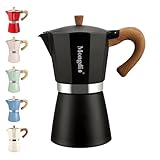
The Mongdio listing leans into Cuban coffee, greca and Italian espresso language, and the product title also mentions a percolator-style use. It is the pick for a shopper who has seen the major names and wants a less familiar alternative. The listing name does not state the capacity in the portion we could read, so confirm the cup size, material and induction compatibility on the product page before choosing it over a pot with a known volume.
- Stovetop espresso maker and moka pot, marketed for Cuban and Italian style coffee
- Greca-style three-chamber layout
- Capacity: confirm on listing
- Material and handle type: confirm on listing
- Induction compatibility: confirm on listing
Because the listing leaves out some details, a careful buyer should read the product page for the capacity in ounces or milliliters, the handle material and whether the base is flat enough for a glass-top range. If those details match what you need, it can be a perfectly serviceable pot. If they are missing, treat that as a reason to lean toward a model whose size is stated plainly.
Pros:
- Offers a different brand option in the same familiar format
- Same simple brewing method as every other pot here
Cons:
- Less brand documentation and fewer standard replacement parts than Bialetti
- Specs in the listing title are less explicit than for the Bialetti pots
Compared with the Primula Classic 6-Cup, it targets the same Cuban-coffee buyer, but you need to verify the size before deciding.
5. Bialetti Moka Express 6-Cup – Best Overall for Shared Mornings

This is our top overall pick. The 6-cup Moka Express is the version most households settle on: enough to fill a large mug or two smaller servings, still quick enough for a weekday, and made by the company that popularized the format. The listing describes it as an iconic Italian stovetop espresso maker in natural silver. Bialetti commonly lists this size at around 9 oz (270 ml), but confirm that on the product page.
- Six-cup size in natural silver aluminum
- Octagonal body, safety valve and heat-resistant handle and knob
- Three-part brewer: base boiler, funnel filter and top chamber
- Works on gas, electric and ceramic cooktops; use an adapter plate on induction if the maker allows
- Replacement gaskets and filter plates are widely sold
If you plan to serve guests, this is the size to own. It also scales well for milk drinks: brew a full pot, split it between two mugs, and top with steamed or frothed milk for a quick latte-style drink without an espresso machine. Keep a spare gasket in a drawer, since a pot used daily for years will eventually need one, and the part is cheap to replace in this common size.
Pros:
- Best balance of capacity, heritage and parts availability
- Proven design that has barely changed in decades
Cons:
- Needs hand washing and careful drying
- Overkill if you only ever make one small cup
Against the Primula Classic 6-Cup, it is the more classic and better-documented option, which is why it leads the list.
6. Primula Classic 1-Cup – Best for a Single Strong Shot

The one-cup Primula is a small-batch pot. It suits somebody who wants a single concentrated serving, an office desk, a dorm room or a camping kit with a single burner. It is also a cheap way to learn how a moka pot behaves before moving up in size. Do not expect it to fill a mug, and remember that a moka pot should still be filled to its valve line, so the yield is only a couple of ounces.
- One-espresso-cup capacity per the listing name
- Same Italian and Cuban-style brewing design as the larger Primula pots
- Very small base, so it works on tiny burners and camp stoves
- Light and easy to pack
- Hand washing and thorough drying recommended
Think of it as a tasting tool as well as a travel pot. Using a one-cup pot you can compare two beans on consecutive mornings without wasting a large dose, and you can practice grind adjustments quickly. Just remember that any pot brewed below its intended fill line behaves unpredictably, so measure the small dose carefully and use the whole basket.
Pros:
- Smallest and quickest to brew
- Great for experimenting with grind and heat
Cons:
- Only one small serving per brew
- Not practical for a household with more than one coffee drinker
Next to the Primula Classic 3-Cup, it trades capacity for portability; most people living with someone else should move up a size.
Specs Compared
| Pick | Stated capacity | Material | Design | Induction |
|---|---|---|---|---|
| Primula Classic 6-Cup | 6 espresso cups | Confirm on listing | Three-chamber stovetop | Confirm on listing |
| Primula Classic 3-Cup | 3 espresso cups | Confirm on listing | Three-chamber stovetop | Confirm on listing |
| Bialetti Moka Express 3-Cup | 3 shots, 4.3 oz (130 ml) | Aluminum | Octagonal, safety valve | Not directly; adapter plate |
| Mongdio Stovetop Espresso Maker | Confirm on listing | Confirm on listing | Greca-style stovetop | Confirm on listing |
| Bialetti Moka Express 6-Cup | 6 cups | Aluminum (natural silver) | Octagonal, safety valve | Not directly; adapter plate |
| Primula Classic 1-Cup | 1 espresso cup | Confirm on listing | Three-chamber stovetop | Confirm on listing |
How We Chose These
This guide is built from desk research and published specifications. We started from the six listings supplied for this topic, read each listing title and specification field, and compared them against manufacturer descriptions and general moka pot guidance. We weighed stated capacity, material, design heritage, cleaning requirements, availability of replacement parts and how clearly each listing documents its size. Where the listing name did not state a value, we say so rather than guessing. Ranking favors pots with clear, verifiable specs, a size that fits typical household use and a long record of the design in everyday kitchens.
What to Look For
Choosing the right size
Moka pot sizing is confusing because “cups” refer to small espresso servings of roughly 40 to 50 ml, not American mug measures. The Bialetti 3-cup pot is listed at 4.3 oz (130 ml), which is a useful anchor: that is a bit more than a single mug of drip coffee in concentration terms, but it is still only two or three small servings. A simple rule of thumb: count the number of people who drink coffee at the same time, multiply by two small cups each, and pick the closest size at or above that number. One drinker usually does well with a 3-cup pot, two drinkers with a 6-cup. Because you should always fill the basket and brew at full capacity, buying a pot that is too large leads to wasted coffee or under-filled baskets that extract poorly.
Material and induction compatibility
Classic moka pots are aluminum. Aluminum conducts heat well, is light and is inexpensive, but it is not magnetic, so it will not heat on an induction hob by itself. If you cook on induction you either need an induction adapter plate under the pot or a stainless steel moka pot made with a magnetic base. Several of the listings here do not state material or induction compatibility, so read the product page before buying if you have an induction range. Aluminum pots should be washed by hand with plain water or mild soap, rinsed, and dried fully, since leftover moisture can cause pitting and dull the metal. Never put an aluminum moka pot in the dishwasher.
Safety valve, gasket and filter
Every moka pot depends on three small parts: a safety valve that releases pressure if the spout clogs, a rubber or silicone gasket that seals the top to the base, and a metal filter plate that keeps grounds out of the cup. Check that the gasket is available as a standard replacement for the pot you buy, because it hardens and flattens over a year or so of regular use. If the pot starts leaking at the seam or sputters violently, a worn gasket is the usual cause. Fill the water chamber only up to the bottom of the valve, never above it, and never tamp the coffee in the basket, which can raise pressure unsafely and make bitter coffee.
Grind, heat and timing
Use a grind finer than drip but coarser than true espresso, similar to the texture of table salt or slightly finer. Start with hot water in the base to cut the time the aluminum sits on the burner, which reduces a metallic, scorched taste. Heat on medium-low and leave the lid open so you can watch the stream. When coffee begins to flow pale and honey-colored, then gurgles, take it off the heat and run the base under cool water to stop the extraction. A moka pot builds only around 1 to 2 bar of pressure, far below the 9 bar of an espresso machine, so the result is strong, concentrated coffee rather than true espresso with crema. Worked example: for a 3-cup pot, fill the basket level with medium-fine coffee, add hot water to just below the valve, heat gently for four to five minutes, and stop when the stream turns pale.
Cleaning and long-term care
Rinse after every brew. Take the pot apart, wash with water, dry every piece, and store with the lid off so air can circulate. Replace the gasket and filter plate when they look warped or when coffee tastes flat. Avoid abrasive pads that scratch the aluminum, and avoid leaving brewed coffee sitting in the pot for hours. Done consistently, this takes a minute and keeps a moka pot working for many years.
Questions
How much coffee does a moka pot actually make?
A moka “cup” is a small espresso-style serving, so a 3-cup pot makes around 130 ml and a 6-cup pot roughly double that. If you drink coffee from a standard mug, expect to make a concentrated pot and dilute it with hot water or milk.
Will a stovetop moka pot work on an induction cooktop?
Not by itself if it is made of aluminum, which is not magnetic. You can use a steel induction adapter plate under the pot, or choose a stainless steel moka pot designed for induction.
Is a moka pot the same as espresso?
No. A moka pot uses much lower pressure than an espresso machine, so it makes a strong, rich coffee without true espresso crema. Many people use it as a base for lattes and cafe con leche.
How do I stop my moka pot from tasting bitter or metallic?
Use hot water in the base, a medium-fine grind and gentle heat, and take the pot off the burner as soon as the stream turns pale. Never tamp the grounds, and wash the pot with plain water so no soap residue builds up.
How often should I replace the gasket?
Plan on replacing the rubber gasket about once a year with daily use, or sooner if it hardens, cracks or the pot leaks at the seam. Replacement gaskets and filter plates are inexpensive and standard for the common sizes.
Which size should I buy if I am unsure?
Choose the 3-cup size for one or two people and the 6-cup size for a household with regular guests or two heavy coffee drinkers. Moka pots brew best when filled to the valve, so avoid buying much larger than you need.
Update History
- October 20, 2026 – Initial publication; product set drawn from current catalog listings.
- Check the product page for current specifications and availability before buying.
Sources
- Manufacturer product and care pages for Bialetti
- Retailer listing titles and specification fields for each pick
- General moka pot brewing and care guidance from coffee retailers and manufacturer manuals





Write Your Review
No reviews yet. Be the first to share your experience!