

The best 54mm espresso tamper for most Breville and Sage owners is a spring-loaded, flat-base model sized at 53.3mm, with the Normcore V4 as the benchmark. The “54mm” on your machine describes the portafilter’s outer size, while the basket inside is closer to 53mm, so a tamper sold as exactly 54mm can bind against the basket wall. Pick by base diameter first, then by spring feedback, handle shape and finish.
Our top picks


As an Amazon Associate we earn from qualifying purchases at no extra cost to you.
Quick Comparison of the Picks
| Pick | Best for | Base size | Feedback | Handle / body | Price tier |
|---|---|---|---|---|---|
| Normcore V4 (53.3mm) | Best overall | 53.3mm flat | Spring, 15/25/30 lb options | Anodized aluminum | Mid |
| Normcore V4 Titanium | Premium upgrade | 53.3mm flat | Spring, 3 springs included | Walnut handle, PVD-coated base | Upper |
| Normcore palm tamper kit | Compact, built-in spring | 53.3mm flat | Built-in spring | Low-profile palm shape | Mid |
| KNODOS spring-loaded | Best wood-handle value | 53.3mm flat | Adjustable spring up to 30 lb | Rosewood handle | Budget to mid |
| IKAPE 53.3mm kit | Best budget | 53.3mm flat | Spring | Stainless steel | Budget |
| Stock plastic tamper from the box | Stopgap only | Approx. 50-53mm | None | Plastic | Included |
Why “54mm” Does Not Mean a 54.0mm Tamper
Breville and Sage label their portafilters 54mm, but the filter basket inside measures roughly 53mm across. Tamper makers therefore cut the base at 53.0 to 53.3mm so it slides down without scraping the wall. A base cut at 54.0mm can jam, scratch the basket and leave a ring of uncompressed grounds at the edge. Some retailers still list true 54mm tampers, so read the base diameter in the spec table rather than the headline.
The fit gap matters for puck quality. A gap of about 0.2 to 0.4mm between base and basket wall lets air escape as you press and keeps grounds from wedging up the side. A gap much larger than 0.5mm lets coffee slip past the edge, which can cause channeling because water finds the loose ring first.
Best Overall: Normcore V4 (53.3mm)
This is the tamper other 53.3mm models get measured against. According to the maker’s product page, it is designed for Breville and Sage 54mm portafilters, including the Barista Express, Barista Pro, Barista Touch, Bambino Plus, Infuser and Duo-Temp Pro. It ships with 15, 25 and 30 lb springs and a stand, so you can set the force to your preference.
The spring is the main benefit. Once you compress it fully, the tamper stops adding pressure, which makes your force repeatable shot to shot. The trade-off is weight and price compared with a simple solid tamper, plus a spring that eventually needs replacing if you tamp several times a day.
Premium Upgrade: Normcore V4 Titanium
The titanium version keeps the same self-leveling design but adds a PVD-coated base and an American walnut handle. The coating resists scratching from fine grit in grounds and looks better after a year of daily use. If you only make a couple of shots a day, the standard V4 gives the same tamping result and the extra cost is mostly cosmetic.
Compact Choice: Normcore Palm Tamper With Built-In Spring
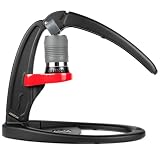
Normcore also makes a palm-style tamper with the spring built in, designed for use alongside its distribution tool kits. The low profile suits small counters and cabinets where a tall handle hits the shelf above. The shorter lever means less wrist reach, so users who like a long handle for leverage may find it less natural.
Best Wood-Handle Value: KNODOS 53.3mm
KNODOS sells a rosewood-handled spring-loaded tamper for Breville machines with an adjustable spring up to 30 lb. It gives the spring-loaded repeatability of the more expensive brands at a lower cost. The trade-off is finish quality and long-term spring feel, which varies more between units than premium makers.
Best Budget: IKAPE 53.3mm
IKAPE offers 53.3mm stainless tampers and kits that usually include a mat or holder. For anyone upgrading from the plastic stock tamper, a basic flat-base metal tamper delivers most of the improvement. Expect a less refined spring and a base that may show slight machining marks; check that the base is truly flat by placing it on a flat surface and looking for light under the edge.
Worked Example: Choosing Tamp Pressure
Many baristas aim for around 30 lb (about 13.6 kg) of final tamp force, though practitioners agree that consistency matters more than the exact number. With a 25 lb spring and a 53.3mm base, a full compression gives you a repeatable 25 lb. If your shots run fast and sour with a grinder setting you cannot go finer on, stepping to the 30 lb spring slightly raises puck resistance. Change one variable at a time: spring weight, then grind size, never both in the same shot.
| Spring | Force | Approx. kilograms | Good for |
|---|---|---|---|
| 15 lb | 15 pounds | 6.8 kg | Gentle starting point, pressurized baskets |
| 25 lb | 25 pounds | 11.3 kg | General default for non-pressurized baskets |
| 30 lb | 30 pounds | 13.6 kg | Finer grinds, firmer puck, common barista target |
How to Choose a 54mm Tamper
- Measure first. Use calipers on the inside of your basket at the rim. Most Breville baskets measure about 53mm.
- Pick a flat base. Convex bases leave a dome and uneven density; flat bases pair best with standard baskets.
- Decide on a spring. Beginners benefit most from it; experienced users who tamp consistently can use a solid tamper.
- Check handle comfort. A handle that sits in your palm with the base level is better than one that tilts your wrist.
- Material. Stainless steel bases resist corrosion and scratches. Aluminum is lighter but can dull over time.
Ownership and Maintenance
Wipe the base after each shot, since oils and fines build up and cause the puck to stick. Do not put wood handles in a dishwasher; moisture swells and cracks them. Spring models should be unscrewed and cleaned occasionally, and springs replaced when the stroke feels softer than it did when new. A tamper stand keeps the base off the counter so it never picks up grit.
Picking a Tamper Step by Step
Choosing a tamper looks trivial until you are standing in front of a dozen near-identical metal cylinders. The Normcore V4, Normcore V4 Titanium, Normcore palm tamper, KNODOS and IKAPE models in this guide all share the same base size, so the differences lie in feel, durability and how forgiving they are. Work through these steps and the choice becomes clear.
- Confirm your machine’s basket. Measure the inside of the basket at the rim with calipers, or read the maker’s specification. Everything else depends on this.
- Decide whether you want spring feedback. If you are still learning, the spring removes a variable. If you already tamp the same way every time, a solid tamper may feel more direct.
- Choose a handle you enjoy holding. Hand size, wrist comfort and counter height matter. A handle that feels perfect to one user may be awkward to another.
- Decide how much finish matters. Walnut, rosewood and coated bases look good and age well, but they do not change the espresso on their own.
- Consider extras. A stand, a mat or a distribution tool changes the workflow more than a fancy handle does.
- Set a tier. The budget picks give most of the improvement over the plastic tool in the box. The premium picks are for people who want better materials and a nicer daily ritual.
Who Should Skip a Spring-Loaded Tamper
The spring is useful for many people, but not for everyone.
- Skip it if your tamping is already consistent. If you have used a solid tamper for years and your shots are repeatable, a spring changes feel more than results.
- Skip it if you prefer to feel the puck compress. Some baristas like the direct connection of a solid metal base. A spring adds a small cushion that can feel indirect.
- Skip it if you dislike maintenance. A spring needs occasional cleaning and replacement. A solid tamper needs only a wipe.
- Skip the premium titanium option if you make only a few shots a week. The coating is nice, but a basic base does the same job.
- Skip the palm style if you have large hands or enjoy a long lever. It is compact, and that compactness is its main trade-off.
Scenario-Based Picks From This Guide
| Scenario | Closest pick | Reason |
|---|---|---|
| First upgrade from the plastic tamper | IKAPE 53.3mm | Metal base and spring at the entry tier |
| Daily home use with a Breville Barista Express | Normcore V4 (53.3mm) | Spring options and a well-known fit |
| Gift for a coffee lover who wants something handsome | Normcore V4 Titanium | Walnut handle and coated base |
| Small kitchen with low cabinets | Normcore palm tamper | Low profile fits under shelves |
| Wood handle at a gentler tier | KNODOS 53.3mm | Rosewood handle with adjustable spring |
| Office machine used by several colleagues | Spring-loaded 53.3mm model | Consistent pressure no matter who tamps |
Fit and Technique Checks Before You Buy
Check the base against the basket
Drop the tamper into the empty basket. It should slide down without catching and leave a hairline gap all around. If it feels tight at some points but loose at others, the basket may be slightly out of round or the tamper base uneven. Compare against a second basket if you have one.
Check whether you use a different basket
Aftermarket baskets and pressurised baskets vary in internal diameter and depth. If you plan to change baskets, verify the new size before tying yourself to a specific base diameter. A tamper that fits the stock basket may not suit a replacement.
Check the base shape
Flat is the default for good reason. A slightly curved or ripple base can look appealing, but flat bases make it easier to judge level. If you do experiment with other shapes, change one thing at a time and keep notes on the taste.
Practise level, not force
Place the portafilter on a stable surface, keep your wrist straight and press straight down. Look from the side to check that the base is level with the rim. A tilted tamp leaves one side less dense, which water will find as a channel.
Pay attention to the finish
After the tamp, avoid twisting the base on the puck. A polish twist adds nothing for flavour and can break the surface of the coffee. A clean, vertical lift is enough.
Consider a distribution step
Uneven grounds in the basket produce an uneven tamp no matter how good the tool is. Level the grounds with a tap, a finger sweep or a distribution tool before pressing.
Lifespan and Care in More Detail
A quality tamper is a lifetime item, but only if the small details are looked after.
- Cleaning. Wipe the base with a damp cloth after each use. Every few weeks, remove the handle where possible and clean the threads and the spring.
- Springs. They lose some stiffness over time. When the click or stroke feels softer, or your shots drift for no reason, swap in a fresh spring.
- Wood handles. Wipe dry, avoid soaking and occasionally treat with a food-safe oil. Oils and moisture from your hand can darken the wood, which many people consider part of the charm.
- Coated bases. Do not scrub with abrasive pads. A soft cloth and mild soap are enough.
- Storage. Use a stand, mat or drawer insert to keep the base from touching the counter. A small chip on the edge can scratch baskets over time.
Common Problems and Fixes
The tamper sticks in the basket
Check for a wet or oily base, and wipe it. If the sticking is at the edge, inspect the basket for a burr. A very tight fit suggests that the base is too large for the basket.
The puck has loose grounds around the edge
The base may be too small or the tamp uneven. Level your distribution, press straight and check whether a slightly larger base is available for your basket.
Spring feels gritty or noisy
Unscrew the assembly and clean it. A small amount of food-safe lubricant on the threads helps, but keep it away from the base.
Handle loosens
Tighten the retaining screw or collar. If it keeps loosening, use a small amount of thread-locking compound approved for food-adjacent use, or replace the fastener.
Shots still taste inconsistent
The tamper is rarely the only cause. Check the grinder setting, dose weight, water temperature and freshness of the beans. Change one variable at a time.
Building a Simple Dialling-In Routine With Your New Tamper
A new tamper is the moment to reset your routine, because every change in tool can shift how a shot runs. A short, repeatable routine turns the upgrade into better coffee rather than just a nicer object on the counter.
- Weigh the dose on a scale every time, even if you think you can judge it by eye.
- Level the grounds with a tap on the counter or a gentle finger sweep, with no pressing yet.
- Tamp once, straight down, until the spring bottoms out or you reach your target pressure.
- Lift the tamper vertically without twisting, and wipe stray grounds off the rim of the basket.
- Time the shot from the first drop and note the result alongside grinder setting and dose.
Keep this routine for at least a week before changing anything else. If the shots run too fast or too slow, adjust the grind rather than the tamping pressure. Once your results are steady, try a different spring weight as a deliberate experiment, and record the change so you can return to the previous setting if the taste is not better.
More Questions Buyers Ask
Is a heavier tamper better?
Not by itself. Weight adds a feeling of quality and can make tamping feel stable, but pressure comes from your arm and the spring, not the tamper’s mass. Choose a weight you are comfortable holding every day.
Should I buy a tamper with a distribution tool?
A combined kit can save space and money, and it helps with the levelling problem described earlier. If you only want a tamper, a stand-alone tool is simpler. Many baristas add distribution later once they see the benefit.
Can I use the same tamper for a double and single basket?
Yes, if the baskets share the same inside diameter. Check the depth of each basket, because a single basket may require you to dose less and tamp with less travel.
Do I need a tamping mat?
It protects the counter and the portafilter spout, and it gives a stable, slightly cushioned surface. It is a worthwhile low-cost accessory, but not essential.
How do I know my tamper is actually flat?
Place the base on a flat surface such as a glass pane or a granite counter and look for light beneath the edge. Press gently and rotate. Any rocking suggests an uneven base.
Frequently Asked Questions
Is a 54mm tamper the same as a 53.3mm tamper?
No. A 54mm portafilter holds a basket of about 53mm inside, so a 53.3mm tamper fits properly while a true 54.0mm base can bind. Always check the base diameter in the spec list, not just the portafilter size.
Do I need a spring-loaded tamper?
You do not need one, but it removes guesswork. The spring limits maximum force, so your pressure stays consistent from shot to shot. If you pull a few shots a day, that consistency helps you dial in grind size faster.
Will a 53.3mm tamper fit the Breville Barista Express?
Yes, a 53.3mm flat-base tamper fits the Barista Express and most other Breville and Sage machines with a 54mm portafilter. Confirm with the product’s compatibility list before buying.
Is the stock plastic tamper good enough?
It works as a starting point but it is light, slightly undersized and gives no force feedback. A metal tamper with a flat base is among the least expensive upgrades that improves puck consistency.
How hard should I tamp?
Consistent, level pressure matters more than raw force. Around 25 to 30 lb is a common target, and you can adjust grind size to correct taste rather than pressing harder.
More from Amazon
Programs that pair well with the guide above. Offers and eligibility are set by Amazon and may change.
Set up recurring deliveries of everyday items on eligible products. Terms and savings are set by Amazon.
Explore Subscribe & SaveCollect the home and kitchen items you want in one registry that guests can shop from.
Create a wedding registryFree shipping on eligible items, Prime Video and more. Eligible new members can start with a free trial.
Start a Prime free trialAudiobooks and podcasts to listen to on the go. Eligible new members can start with a free trial.
Try Audible freeAs an Amazon Associate we earn from qualifying purchases.
Write Your Review
No reviews yet. Be the first to share your experience!