

Key takeaways
- Baratza Encore ESP review: 40 mm conical burrs, a dual-range 40-setting dial, real limits and how it compares with the Pro, Encore and Fellow Opus 2.
The Baratza Encore ESP is a 40 mm conical burr grinder tuned to cover espresso and filter coffee on one dial, and it is aimed at home brewers who want a single grinder that can handle a Bambino-class espresso machine, a moka pot and a pour-over. It suits beginners and budget-conscious espresso newcomers. It is less convincing if you want stepless fine adjustment, single-dose workflow with minimal retention, or a timer that stops the motor on its own.
Quick Verdict
- A sensible first espresso-capable grinder: 40 settings split into a fine-stepped espresso range (1 to 20) and a coarser filter range (21 to 40).
- The 40 mm M2 conical steel burrs are shared with other Baratza models, and the motor is speed-reduced to keep burr speed low.
- Adjustment is stepped, so dialing in very fine espresso is limited by the number of positions available.
- No built-in timer or auto-stop; you start and stop the grind yourself.
- If you want more precision, the Pro version and the Fellow Opus 2 listed below are the natural step up.
Key Specs
| Spec | Baratza Encore ESP |
|---|---|
| Burrs | 40 mm M2 conical steel burrs, removable for cleaning |
| Grind settings | 40 stepped settings: 1 to 20 fine micro steps (espresso), 21 to 40 macro steps (filter methods) |
| Motor / speed | DC motor with gear and electronic speed reduction; burr speed quoted at about 550 RPM |
| Hopper | About 8 oz (roughly 230 g); product sheets differ (confirm on listing) |
| Grounds bin | About 5 oz (roughly 142 g); sheet versions differ (confirm on listing) |
| Power | About 70 W at 120 V in the US version |
| Size and weight | Roughly 13.8 x 4.7 x 6.3 inches and about 7 pounds |
| Extras | Dosing cup with 58 mm adapter and a grounds bin (confirm what ships on the listing) |
| Colors listed | Black (ZCG495BLK) and white (ZCG495WHT) |
Who It Is For (and Who Should Skip It)
The Encore ESP is built for people who brew in more than one way. A household that pulls espresso on weekdays, makes pour-over on weekends and keeps a French press for guests can use the same grinder across all three by moving between the espresso and filter ranges. It is also a natural pairing with a compact machine such as a Breville Bambino-class unit, which is why retailers bundle the two.
It is a good match if you want a conventional hopper-and-bin grinder that is simple to operate: set the dial, press the button, grind into the container, and repeat.
Consider skipping it if:
- You want very fine control over espresso. Twenty espresso steps are enough for many setups, but they are discrete positions. If a beans-and-machine combination lands between two settings, you cannot nudge it.
- You single-dose from a few grams of beans. A hopper-fed grinder with a chute holds back some grounds. If you switch coffees frequently, a design made for single dosing fits better.
- You want timed or weight-based dosing. The ESP has no timer; you stop the grind by feel or by watching the output.
- You only brew drip or French press. The standard Encore covers filter brewing for less money, as discussed below.
What It Does Well
A dual-range dial that matches how people brew
The ESP’s main change from a standard Encore is how the numbers are used. Positions 1 to 20 are fine-tuned micro steps intended for espresso, and positions 21 to 40 are larger steps for filter methods. That layout means the setting you need for espresso is not squeezed into the first few clicks of a filter grinder, which is the usual problem with entry-level models. A starting point for a medium roast on a pressurized or standard basket will sit inside the first half of the dial, then you refine from there.
Burrs and speed control
The 40 mm conical burrs are the same family Baratza has used across its entry range. A gear reduction and electronic speed control hold the burrs near 550 RPM, which keeps motor noise and heat generation in check compared with a high-speed direct-drive design. Lower speed is a common design choice in this class because it reduces heat and noise at the motor.
Simple operation and easy cleaning
There are very few controls: a switch, a pulse button and a hopper that rotates to change the setting. The burrs can be removed for cleaning, and the bin and dosing cup are straightforward to rinse. Neither is a complex design, which makes it forgiving for a first purchase.
A wide range of compatible gear
Because the dosing cup comes with an adapter for 58 mm portafilters, you can grind into the portafilter holder rather than moving grounds between containers. If your machine uses a 54 mm handle, as the Bambino does, confirm what is included and whether a holder fits your portafilter.
Where It Falls Short
- Stepped adjustment. Espresso is sensitive to tiny changes. With only 20 positions in the espresso range, you may find the ideal shot between two clicks. Adjusting dose or tamp pressure can compensate, but it takes extra work.
- Static and retention. Fixed-chute grinders trap a small amount of coffee and can produce static in dry conditions. Expect to tap the chute or wipe the bin; there is no ionizer on this model.
- No timer, no auto-stop. You stop each grind yourself. For consistency, weigh your dose on a scale.
- Specification inconsistencies. Hopper size, grounds-bin capacity and grind rate differ between retailer pages and manufacturer sheet versions. Confirm the figures you care about on the product page.
- Coarse end of the budget class. It is a good value grinder, not a prosumer one. If your goal is cafe-level repeatability, plan to move up eventually.
Dialing In Espresso on the ESP
Start by deciding on a dose and a target output, for example a basket-appropriate dose in grams and a liquid weight in roughly a one-to-two ratio, then adjust grind until the shot runs in a time you like. Change one thing at a time. If a shot runs too fast and tastes thin or sour, move one step finer; if it crawls out and tastes harsh or bitter, move one step coarser. Because the espresso range has twenty positions, each click is a meaningful change, so make a note of the setting each time you switch beans.
Fresh roasted coffee changes as it ages, so expect to move a click or two over the life of a bag. Darker roasts generally need a slightly coarser setting than lighter roasts for the same flow, though every bean and machine combination differs. If you land between two clicks, you can fine-tune with dose or distribution rather than the dial. Keep the burrs clean, since oils and fines build up and shift your results over weeks.
For filter brewing, the second half of the dial does the work. Move into the macro range, grind a small batch for the method you plan to use and adjust by taste: coarser if the cup is bitter or hollow-tasting from over-extraction, finer if it seems weak or sharp. Switching between espresso and filter on the same day is easy, but run a few beans through the chute after a big jump in setting to clear the old grind.
How It Compares
| Grinder | Burr | Adjustment | Dosing control | Best suited to |
|---|---|---|---|---|
| Baratza Encore ESP | 40 mm conical | 40 stepped settings, 20 for espresso | Manual start and stop | One grinder for espresso and filter |
| Baratza Encore ESP Pro | 40 mm conical (same family) | Continuous collar with digital readout (0.0 to 60.0 in half steps) | Timed dosing and auto-stop | Espresso-first users who want finer steps |
| Baratza Encore (standard) | 40 mm conical | 40 stepped settings, filter-oriented | Manual start and stop | Drip, pour-over, French press |
| Fellow Opus 2 | 48 mm conical | Stepless external dial | Single-dose bin with auto-stop | Single dosing, espresso and filter |
Alternatives Worth Considering
Baratza Encore ESP (Black) – the grinder reviewed above
As an Amazon Associate we earn from qualifying purchases at no extra cost to you.

This is the black ZCG495 version of the grinder covered above. It offers the dual-range dial with 20 fine steps for espresso, 20 coarser steps for filter, 40 mm conical steel burrs and a conventional hopper and bin. It is the simplest route into an espresso-capable grinder from a single manufacturer line. If you plan to brew mostly filter coffee and only occasionally pull a shot, the dial still serves both. Check the listing for what accessories ship, and confirm hopper capacity, which varies between sources.
Baratza Encore ESP (White) – why consider it

The white ZCG495WHT is listed as the same grinder in a different finish, with the same 40 mm conical burrs and 40-position dial. Choose by kitchen color rather than performance. If your counter is pale and you do not want a black appliance in the corner, this is the option; the specifications described for the black unit apply, but verify on the listing that nothing else differs, such as bundled accessories.
Baratza Encore (ZCG485) – why consider it

The standard Encore uses the same 40 mm conical burr family, 40 settings and a hopper of about 8 oz, but its dial is tuned for brewing methods such as drip, pour-over and French press. Sellers describe it as unsuited to true espresso, so pick it only if you are not buying an espresso machine. It is a straightforward, proven filter grinder, and the cleaner choice if espresso is not on your list.
Breville Bambino Plus Bundle with Baratza Encore ESP – why consider it

This listing pairs a Breville Bambino Plus espresso machine with the Encore ESP grinder, in black. The idea is a complete starter setup: a compact machine with an automatic steam wand and a grinder that already covers the espresso range. Bundles like this simplify shopping, but confirm exactly what is included and whether the portafilter size works with the dosing cup before you commit. Choose it if you are starting from nothing.
Baratza Encore ESP Pro – why consider it
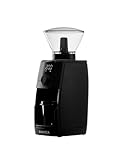
The Pro keeps the 40 mm conical burrs and low-speed drive, then replaces the stepped dial with a continuous collar and a digital readout, plus timed dosing, automatic stopping and a static-reducing ion generator. Reviewers describe its scale as different from the ESP, so a number from one will not transfer to the other. Pick it if espresso is your priority and the extra adjustment resolution matters more than saving money. Confirm hopper and dosing details on the listing.
Fellow Opus 2 – why consider it

The Opus 2 uses 48 mm stainless steel conical burrs with a stepless external dial, a 100 g single-dose load bin and an espresso catch cup that transfers to 54 mm and 58 mm portafilters. Fellow also lists an anti-static feature and an automatic shut-off when the bin empties. It is a good fit for people who switch beans often or want finer espresso adjustment. Spec details such as motor wattage and warranty vary by retailer, so confirm them on the listing.
Questions
Can the Baratza Encore ESP make real espresso?
Yes. The first 20 settings are fine-tuned steps intended for espresso, and the grinder is marketed as espresso-capable. Dial-in precision is limited by the stepped design, so some users will find the Pro or a stepless grinder easier for fine adjustment.
What is the difference between the Encore and the Encore ESP?
Both use 40 mm conical burrs and 40 settings. The standard Encore is tuned for drip, pour-over and French press, while the ESP spreads its settings so 1 to 20 serve espresso and 21 to 40 serve filter methods. If you buy an espresso machine, the ESP is the correct starting point.
Does it work with a 54 mm portafilter?
The dosing cup is listed with a 58 mm adapter, and many Breville-style 54 mm handles are filled by grinding into the cup and transferring grounds. Check the listing and your machine’s manual; you may prefer grinding into a separate container and dosing by weight.
How loud is it?
The gear-reduced motor runs at a lower speed than many direct-drive grinders, which reduces noise and heat. Exact decibel levels are not published in the sources checked, so treat quietness as a design intent rather than a measured figure.
Is there a timer?
No. The ESP has an on/off switch and a pulse button, and you stop the grind yourself. The ESP Pro adds timed dosing and automatic stopping.
How should I clean it?
Unplug the grinder, empty the hopper and remove the burrs following the manual. Brush the burrs, chute and bin, and avoid water on the motor housing. Run a small amount of coffee through before using it for brewing again.
Update History
- October 21, 2026 – Initial publication; specifications checked against manufacturer documentation where available.
- Check the product page for current specifications and availability before buying.
Sources
- Manufacturer and brand product pages and specification sheets for Baratza, Breville and Fellow
- Retailer listing titles and specification fields
- Published grinder reviews and comparison guides


Write Your Review
No reviews yet. Be the first to share your experience!