

Key takeaways
- Handground coffee grinder review: 40 mm ceramic burrs, 100 g hopper and 15 grind sizes. Specs, drawbacks and other hand and electric grinders compared.
The Handground Precision is a manual coffee grinder with 40 mm ceramic conical burrs, a 100 gram hopper and a numbered external dial. It is built for people who want a travel-friendly grinder that holds more beans than most hand mills and looks good on a shelf. It is larger and heavier than the usual portable grinder, and its handle sits on the side, not the top. This review covers the specifications, what the design does well, where it is limited, and how it stacks up against other hand and electric grinders in the same group.
Quick Verdict
- Best for: filter and press-pot drinkers who want a manual grinder with a large 100 gram hopper and a visible, repeatable dial.
- Standout features: a side-mounted removable handle, a glass catcher that resists static and an external adjustment ring with 15 grind sizes.
- Main limit: it is bulky for a hand grinder, so it is not the lightest option for hiking or flights.
- Espresso: setting 1 is labeled for espresso, but a hand mill with ceramic burrs is a modest tool for that job; confirm your needs before relying on it.
- If you grind for several cups each morning and prefer less cranking, an electric burr grinder is the easier route.
Key Specs
| Spec | Reported value |
|---|---|
| Burrs | 40 mm conical, sintered alumina ceramic |
| Axle | Triple-mounted stainless steel axle to reduce burr wobble |
| Hopper capacity | 100 grams of beans, marked in 10 gram steps |
| Grind adjustment | External numbered ring: 8 main settings with half steps, 15 grind sizes in total |
| Setting guide | 1 is fine (espresso range), 3 is about pour-over, 8 is coarse (French press, cold brew) |
| Catcher | Glass, designed to reduce static and cling |
| Handle | Side-mounted, removable |
| Weight | About 700 grams on the listing; reviewers report up to about 790 grams |
| Approximate size | Roughly 5 inches high, 6.3 inches wide and 9.7 inches long as reported |
| Materials | Mix of aluminum, glass, ceramic, stainless steel and wood or acrylic trim (confirm on listing) |
| Warranty | One year from the manufacturer as reported (confirm on listing) |
Who It Is For (and Who Should Skip It)
Manual grinders sit on a spectrum from tiny travel tubes to heavy countertop mills. The Handground leans toward the second group: it is more of a kitchen object that can travel than a pocket tool.
A good match if you:
- brew pour-over, drip, French press or cold brew and want to grind enough for two to three cups in one pass;
- like a clear, numbered dial that makes it easy to return to the same setting;
- want a grinder with a glass catcher that keeps loose grounds from clinging;
- enjoy the ritual of hand grinding and care about how a grinder looks.
Skip it if you:
- need an ultralight grinder for backpacking; compact grinders from other makers weigh much less;
- pull espresso shots daily and want tight grind consistency; electric or high-end hand grinders with steel burrs are generally preferred for that;
- grind for more than four cups in a sitting and dislike cranking;
- want a grinder with a simple fixed top handle, since the side-mounted crank takes a short adjustment period.
What It Does Well
A large hopper for a manual grinder
Many portable hand mills hold 20 to 30 grams. The Handground holds 100 grams, with marks every 10 grams on the hopper, so you can measure a dose by eye. Its quarter-turn locking top keeps beans from flying out while you crank. For a household that brews a pot or two cups at a time, that capacity removes the need to refill mid-session.
Clear, repeatable adjustment
The external ring is numbered from 1 to 8 with half steps between each, giving 15 grind sizes in all. Because the ring is on the outside, you can change it without opening the grinder or counting clicks. Writing down your preferred setting for each brewing method takes seconds, and it is easy to repeat on the next bag of beans.
Ceramic burrs that stay sharp
Ceramic burrs do not rust, resist heat from friction and tend to hold an edge for a long time. They also do not transfer any metallic taste. The triple-mounted axle is designed to keep the burr steady as it spins, which helps reduce wobble that causes uneven particle size.
A glass catcher that fights static
Plastic catchers can build up static and spray grounds when you lift the lid. Glass avoids much of that. The catcher also lets you see the amount of coffee at a glance, though it needs care to avoid dropping it.
Removable side handle
The side handle is a distinctive design. It sits low, which can feel more stable on a countertop, and it removes for storage in a bag. Some people find the lever action more comfortable than a top crank; others prefer the traditional layout.
Where It Falls Short
Size and weight
At around 700 to 790 grams, this is heavier than most hand mills. The footprint is also larger, at roughly 9.7 inches long. It is portable in the sense that it fits in a bag, but it is not a minimalist travel tool.
Espresso expectations
The dial labels setting 1 for espresso. In practice, espresso demands fine, uniform particles and very small adjustment steps. A ceramic hand grinder with 15 total sizes has limited resolution at the fine end, and one reviewer’s small particle check found a notable share of fines and oversize pieces. Treat espresso use as a possibility to try, not a promise.
Hand-cranking effort
Grinding 100 grams by hand takes real effort and time, especially at finer settings. Ceramic burrs are generally not as fast as sharp steel burrs of similar size. If you grind a full hopper every morning, the novelty may fade.
Cleaning needs care
Ceramic burrs, glass and wooden or acrylic trim should not go in the dishwasher. Brush the burrs and wipe parts by hand, and follow the manufacturer’s care notes.
Mixed materials
The design combines aluminum, glass, ceramic, stainless steel and several other materials. That adds appeal and weight but also means more parts that can wear. Check the listing and warranty terms for coverage details.
Getting the most from a hand grinder
A few habits improve any manual grinder. Weigh the beans instead of scooping them, since the hopper marks are only a guide. Grind with steady, even turns and keep the grinder braced against the counter so the burrs do not shift. Use fresher beans, because stale coffee grinds into more dust and clings to the catcher. If you switch brewing methods, move the dial and run a few beans through before the real dose so the first grounds from the old setting clear out. Brush the burrs weekly and avoid using water on ceramic parts or wooden trim.
Choosing a setting by brew method
The maker’s own guide places setting 1 at the espresso end, setting 3 around pour-over and setting 8 at the French press and cold brew end. Treat those as starting points and adjust by taste: if a pour-over tastes sharp and thin, go one half step finer; if it tastes bitter and heavy, go one half step coarser. Because the half steps are built in, you have enough room to fine-tune without guessing. Keep a short note with the setting that worked for each bag of beans.
How It Compares
| Grinder | Type | Burrs | Capacity | Adjustment |
|---|---|---|---|---|
| Handground Precision | Manual | 40 mm ceramic conical | 100 g | 15 sizes, external ring |
| CEVING Mini Manual | Manual | Conical (confirm material on listing) | Small (confirm on listing) | 40 settings per listing |
| CEVING 60g Large Capacity | Manual | Stainless steel per listing; ceramic variants exist | 60 g | 40 external settings |
| TIMEMORE Chestnut C2S | Manual | Stainless steel conical, about 38 mm | About 25 g | Stepped dial (click count varies by source) |
| OXO Brew Conical Burr | Electric | Stainless steel conical | 12 oz hopper | 15 settings plus micro-adjustments |
| OXO Brew Compact Conical Burr | Electric | Stainless steel conical | 50 g | 15 settings plus micro-adjustments |
The Handground has the largest hand-grinder hopper in the table, while the CEVING 60 gram model is the closest rival on capacity. The Timemore is lighter and tighter, and the OXO machines remove the cranking entirely.
Alternatives Worth Considering
Handground Precision Manual Coffee Grinder – the grinder reviewed above
As an Amazon Associate we earn from qualifying purchases at no extra cost to you.

This listing is for the conical ceramic burr mill covered in this review. It is the pick when you want a large manual hopper, a numbered external dial and a glass catcher. Its distinctive side handle and mix of materials give it a presence that a plain tube grinder lacks. Remember the trade-off: it weighs more than most hand grinders, so look elsewhere if every ounce matters in your pack.
CEVING Mini Manual Coffee Grinder with 40 Adjustable Settings – the smaller and easier-to-carry option

The listing title describes a mini manual grinder with 40 adjustable settings in black. A smaller body usually means a smaller hopper, so confirm capacity and burr material on the product page. The finer step count looks attractive on paper, but step count is not the same as grind quality; uniformity depends on burr alignment and build. Consider it for occasional travel or a single cup, when the Handground feels like too much to carry.
CEVING 60g Large Capacity Manual Coffee Grinder – for those who want even more beans per load

CEVING markets this grinder as the first manual model with a 60 gram capacity, and lists 40 external settings with a triple-bearing core and stainless steel burrs. Sources disagree on body material, and some listings show ceramic burr variants, so read the page for the exact version. With a smaller hopper than the Handground but more than most pocket grinders, it fits a household that brews one large mug or two small cups at a time.
TIMEMORE Chestnut C2S Manual Coffee Grinder – lighter and tighter

The Chestnut line uses stainless steel conical burrs, reported at about 38 mm, with a dual-bearing system to stabilize the burr. Capacity is around 25 grams, enough for a single mug. The body is lighter than the Handground, at roughly 435 grams on the C2 family. Click counts for the dial differ between sources, so check Timemore’s own specification for your version. Pick it if you want a compact grinder that is quicker to crank.
OXO Brew Conical Burr Electric Coffee Bean Grinder – no cranking, large hopper
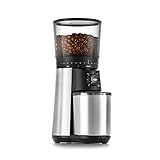
The full-size OXO uses stainless steel conical burrs, a 12 ounce hopper and 15 grind size settings, with additional micro-adjustments reported. It has a DC motor and a one-touch start, and its container holds enough grounds for roughly a dozen cups. Choose it over the Handground when you make large batches or simply do not want to crank. It takes more counter space and cannot travel like a hand mill.
OXO Brew Compact Conical Burr Electric Coffee Grinder – smaller footprint, same approach

The Compact model keeps 15 settings and stainless steel conical burrs, with a 50 gram hopper and a shuteless design intended to make cleaning easier. Sources describe a hopper and container made of Tritan Renew plastic and enough capacity for about six cups. It is a sensible alternative for a small kitchen: electric convenience in a smaller package than the full-size OXO, with a hopper that is half the size of the Handground’s.
Questions
Can the Handground make espresso-fine grounds?
The dial lists setting 1 as the espresso range, so it can grind fine. Whether the result suits your espresso machine depends on your basket and your tolerance for fines, so confirm with a small trial before relying on it.
How many cups can the hopper hold?
The hopper holds 100 grams of beans. At a common ratio of roughly 15 to 18 grams per mug, that is around five to six mugs of beans, though you will adjust by taste.
Is a ceramic burr better than steel?
Neither is better in every way. Ceramic resists rust and heat, while steel burrs often cut faster and can be machined more precisely. Build quality and burr alignment matter more than the material alone.
Is the glass catcher fragile?
Glass can chip or break if dropped. It resists static better than many plastic catchers, so the trade-off is a bit more care when you carry it.
Can I take it on a plane?
The handle is removable and the grinder fits in a bag, but its weight and size make it better for the kitchen than for long trips. Check airline rules on carrying coffee equipment if you plan to fly with it.
How should I clean it?
Brush out grounds from the burrs, wipe the body with a dry or slightly damp cloth and wash only the parts the manual says are safe to wash. Avoid soaking ceramic and wooden trim.
Update History
- October 21, 2026 – Initial publication; specifications checked against manufacturer documentation where available.
- Check the product page for current specifications and availability before buying.
Sources
- Manufacturer product information for the Handground grinder
- Manufacturer and retailer specification pages for the CEVING, TIMEMORE and OXO grinders
- Retailer listing titles and specification fields
- Independent hand-grinder review sites


Write Your Review
No reviews yet. Be the first to share your experience!