

Key takeaways
- Looking for the best French presses made in Italy? See what six Bodum listings really state about origin, plus size, frame and glass guidance.
None of the six presses in this set is made in Italy. Every listing is a Bodum, and each title states “Made in Portugal,” so an Italian-made requirement cannot be met from this shortlist. What these presses do share is design heritage that runs through Italy: the first patent resembling the modern plunger pot was filed there in 1929. If that history is the appeal, the Bodum 34 oz Chambord in polished stainless steel is the best overall pick here, with five close alternatives for different cup sizes and frame materials. If the label itself is non-negotiable, read the origin guidance below before buying anything.
Quick List
- Bodum Chambord 34 oz, Polished Steel – best for the classic eight-cup press with a metal frame
- Bodum Brazil 34 oz, Black (first listing) – best for a lighter plastic-framed family pot
- Bodum Chambord 34 oz, Copper – best for a warmer finish on the same design
- Bodum Brazil 34 oz, Black (second listing) – best for comparing the same size against the first Brazil listing
- Bodum Chambord 12 oz – best for a single generous mug
- Bodum Brazil 12 oz, Black – best for a small desk press
Which of These Should You Pick?
| If you… | Choose |
|---|---|
| want the shape most people picture when they hear “French press” | Bodum Chambord 34 oz, Polished Steel |
| care how the pot looks on an open shelf | Bodum Chambord 34 oz, Copper |
| mainly brew one mug at a time | Bodum Chambord 12 oz |
| want a lighter frame and lower handling weight | Bodum Brazil 34 oz, Black |
| see two near-identical Brazil listings and want to compare them | Second Bodum Brazil 34 oz, Black |
| need the smallest, simplest pot for a desk | Bodum Brazil 12 oz, Black |
Because the origin on every listing is the same, the choice comes down to size and frame. A metal frame on the Chambord line looks more refined and resists scuffs; the Brazil line uses a plastic body, which trims weight and is gentler on a countertop. Decide on capacity first: 12 oz is a one-person pot, while 34 oz suits two to four people.
All 6 Picks in Detail
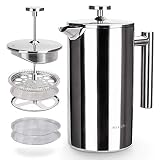
1. Bodum Chambord 34 oz, Polished Steel – Best for the Classic Eight-Cup Press
As an Amazon Associate we earn from qualifying purchases at no extra cost to you.

The Chambord is the press that put the plunger pot in most kitchens, and this one is the polished stainless version in the 34 oz size. Bodum counts a cup as 4 oz, which is why this one-liter pot is sold as an eight-cup model. The listing states a borosilicate glass carafe, a polished stainless steel frame, and manufacture in Portugal. Sellers add that the plunger is stainless and the handle is black polypropylene. It is the reference point for every other pick on this page. The frame holds the glass in a cage and doubles as the base, which is why the polished steel version has stayed popular for decades: it is a simple design with few parts that wear out. Handle and knob are plastic, so avoid setting the pot on a hot burner or near an open flame.
- Capacity: 34 oz (about 1 liter), the eight-cup size per Bodum’s cup measure
- Carafe: high-heat borosilicate glass per the listing
- Frame: polished stainless steel
- Origin: Made in Portugal per the listing title
- Spare parts: replacement carafes and filters are sold separately by the maker
Pros:
- Metal frame adds a sturdy, classic look
- Glass lets you watch the steep
Cons:
- Glass can break if knocked or shocked with extreme temperature changes
- Not made in Italy, per the listing
The copper version below has the same internals, so the choice there is purely cosmetic.
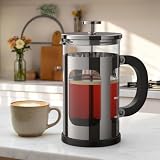
2. Bodum Brazil 34 oz, Black (First Listing) – Best for a Lighter Plastic-Framed Pot
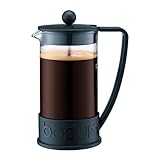
The Brazil swaps the metal frame for a plastic body, handle, and lid while keeping the glass carafe and stainless plunger. Bodum’s description calls the plastic BPA-free, and the listing title states Portugal. It is the same eight-cup volume as the Chambord. Choose it if you prefer a lower profile and a lighter feel, and accept that the plastic parts will age differently from steel. For a household that brews daily, the lighter body also makes it easier to pour from one-handed, though you should still hold the lid when pouring.
- Capacity: 34 oz (about 1 liter), eight-cup size
- Carafe: high-heat borosilicate glass per the listing
- Frame, handle, lid: plastic per maker descriptions; confirm on the listing
- Plunger and filter: stainless steel per maker descriptions
- Origin: Made in Portugal per the listing title
Pros:
- Lighter in the hand than the steel-framed Chambord
- Same capacity and filter style
Cons:
- Plastic frame feels less premium
- Not an Italian-made product
It trails the Chambord in finish but matches it in capacity.
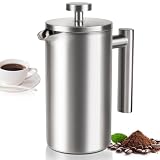
3. Bodum Chambord 34 oz, Copper – Best for a Warmer Finish

This is the same eight-cup Chambord with a copper-toned frame. The listing keeps the same description: borosilicate glass, stainless steel, and manufacture in Portugal. Finish is the only change that the title announces, so any other difference in weight or care should be confirmed on the listing. Coated or colored metal can be more sensitive to abrasive pads and harsh detergents, so keep a soft sponge for the frame. It is a better fit than the polished version if your kitchen uses warm metal tones or you want the press to double as a display piece.
- Capacity: 34 oz (about 1 liter) per the listing name
- Carafe: heat-resistant borosilicate glass
- Frame: copper-toned stainless steel per the title
- Origin: Made in Portugal per the listing title
- Finish care: confirm cleaning guidance for coated finishes on the product page
Pros:
- Distinctive look for the same proven design
- Glass carafe shows the coffee
Cons:
- Colored finishes can show wear sooner than plain steel
- Origin is Portugal, not Italy
Choose it over the polished Chambord only if the color matters to you.
4. Bodum Brazil 34 oz, Black (Second Listing) – Best for Comparing Against the First
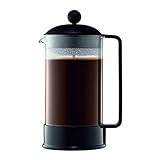
This listing has the same name, size, color, and Portugal origin as the first Brazil listing above, so the difference lies in the seller or catalog record rather than anything in the title. Read the product page for the model number, included parts, and any variation notes before choosing one over the other. If both are in stock and described identically, there is nothing in the listing to prefer except availability. A useful habit is to compare the bullet points, the included components, and the stated dimensions, since catalog duplicates sometimes carry different packaging or bundle details. We rank it below the first only because it duplicates a pick that appears above it.
- Capacity: 34 oz (about 1 liter), eight-cup size
- Carafe: high-heat borosilicate glass per the listing
- Frame: plastic per maker descriptions
- Origin: Made in Portugal per the listing title
- Model and seller details: confirm on the listing
Pros:
- Same proven Brazil design
- Useful as a second option when one listing is unavailable
Cons:
- Nothing distinguishes it from the first Brazil in the title
- Origin is Portugal
The practical advice is to pick whichever of the two shows clearer specifications and current availability.
5. Bodum Chambord 12 oz – Best for a Single Generous Mug

At 12 oz, the three-cup Chambord is aimed at one person or a quick pot for two small cups. It keeps the polished steel frame and glass carafe of its larger sibling, and the listing again says it is made in Portugal. Because less water means faster cooling, it rewards a hot-water rinse before brewing. It is also an easy way to try a French press without committing counter space to a full-size pot, and it makes a sensible second press for travel or an office drawer. The spare-part situation is the same as with the large size, which helps if the small carafe ever chips.
- Capacity: 12 oz (about 350 ml), the three-cup size
- Carafe: high-heat borosilicate glass
- Frame: polished stainless steel
- Origin: Made in Portugal per the listing title
- Typical dose: roughly 22 grams of coffee for a full 12 oz of water on a 1:16 ratio
Pros:
- Small footprint and quick to clean
- Same frame quality as the large pot
Cons:
- Too small to serve two full mugs
- Small glass carafes are easy to knock over
It is the pot to pick over the 34 oz Chambord when you drink alone.
6. Bodum Brazil 12 oz, Black – Best for a Small Desk Press

The smallest Brazil brings the plastic-framed design down to a three-cup pot. It suits a desk, a dorm shelf, or a small kitchen where a 34 oz pot would be left half full. As with the others, the listing names borosilicate glass and manufacture in Portugal. The small carafe is also lighter to lift when full, which helps anyone with a weaker grip. It also leaves room on a crowded desk next to a mug and a small grinder, and it rinses clean in seconds.
- Capacity: 12 oz (about 350 ml), three-cup size
- Carafe: high-heat borosilicate glass per the listing
- Frame and lid: plastic per maker descriptions
- Origin: Made in Portugal per the listing title
- Best dose: about 22 grams of coffee for a full 12 oz on a 1:16 ratio
Pros:
- Compact and light
- Good for single servings
Cons:
- One-mug capacity only
- Plastic frame, not metal
Next to the 12 oz Chambord it gives up the metal frame for a lighter build.
Specs Compared
| Product | Capacity | Cup size (Bodum count) | Frame | Carafe | Origin per listing |
|---|---|---|---|---|---|
| Chambord 34 oz, Polished Steel | 34 oz | 8 cups | Polished stainless steel | Borosilicate glass | Portugal |
| Brazil 34 oz, Black (first) | 34 oz | 8 cups | Plastic (confirm on listing) | Borosilicate glass | Portugal |
| Chambord 34 oz, Copper | 34 oz | 8 cups | Copper-toned steel | Borosilicate glass | Portugal |
| Brazil 34 oz, Black (second) | 34 oz | 8 cups | Plastic (confirm on listing) | Borosilicate glass | Portugal |
| Chambord 12 oz | 12 oz | 3 cups | Polished stainless steel | Borosilicate glass | Portugal |
| Brazil 12 oz, Black | 12 oz | 3 cups | Plastic (confirm on listing) | Borosilicate glass | Portugal |
How We Chose These
This is a research-based list built from the catalog listings for the topic. The brief was Italian-made French presses, but every listing in the set states Portugal in its title, so we ranked the products on the criteria that remain: design lineage, frame material, capacity, and how clearly each listing states its specifications. Origin claims are quoted from the listing text, not assumed. Where two listings looked identical, we said so rather than inventing a difference. Check the product page for the current country-of-origin field before buying. Where a size or finish appears twice, the ranking favors the clearer record. The goal is a shortlist that stays honest about its limits: a set of well-documented presses with a recognizable design, and no claim the listings do not support.
What to Look For
A Short History: Why Italy Keeps Coming Up
Most histories credit two Milan designers, Attilio Calimani and Giulio Moneta, with the 1929 patent for a plunger pot that resembles today’s press. A 1958 patent by Faliero Bondanini refined the idea, and it was produced in France under the Melior name, which is how the French connection arose. Bodum later took over the Chambord name and marketed it widely in the United States. Historians still disagree on some details, so treat the story as a general lineage rather than a precise record. Italy is more famous today for the moka pot and espresso than for presses, which is why genuinely Italian-made plunger pots are rare in mainstream listings.
How to Check Where a Press Is Actually Made
Start with the title and the “country of origin” field on the product page, then look for a stamp on the base of the carafe frame or the box. A “Designed in” line does not mean the same as “Made in,” and brand headquarters rarely match the factory. Bodum, for instance, is a Danish-founded company based in Switzerland, while these listings say Portugal. If the claim matters, message the seller before you buy and ask for the origin in writing.
Glass Versus Plastic Versus Steel Frames
The carafe in all six picks is borosilicate glass, which tolerates the temperature swing from a boiling kettle better than ordinary glass. The frame is where they differ. Steel frames, as on the Chambord, are rigid and protect the glass from bumps. Plastic frames, as on the Brazil, are lighter but may flex or yellow over time. If you place the press in a busy kitchen, a metal frame is the more forgiving choice.
Choosing Between 12 oz and 34 oz
Bodum measures coffee makers in four-ounce cups, so 12 oz is three cups and 34 oz is eight. A press works best when it is filled to the right level, because a half-empty big pot cools quickly and leaves a lot of air in the carafe. As a worked example, filling a 34 oz pot to about 28 oz of water means roughly 830 grams of water, which at a one to sixteen ratio needs about 52 grams of coffee. For the 12 oz pot at full volume, about 350 grams of water takes roughly 22 grams. Use a coarse grind and steep for about four minutes, with water between 195 and 205 degrees Fahrenheit.
Brewing Steps That Work in Any of These Presses
- Warm the carafe with hot tap water, then empty it.
- Add coarse ground coffee, about one gram for every sixteen grams of water as a starting point.
- Pour water just off the boil over the grounds and stir once to wet them all.
- Set the lid on with the plunger up and wait about four minutes.
- Press the plunger down slowly and evenly, then pour all the coffee out right away.
Pouring everything immediately matters, because coffee left on the settled grounds goes on extracting and turns harsh. If you want to hold some back, pour it into a warm insulated carafe instead.
Listing Phrases That Say Less Than They Seem
Words like “European style,” “classic,” or “imported” do not name a country. “Designed in” names where the product was drawn, not built. A “Made in” line in the title, as these listings carry, is the strongest clue available before the box arrives, and the product page often has a country-of-origin field you can check as well. If a seller lists a press with Italian styling and no origin at all, ask before buying.
Spare Parts and Long-Term Ownership
A press is a simple tool, and most failures come from three places: a chipped or cracked carafe, a stretched or stained filter assembly, and a loose knob or handle. Bodum sells replacement carafes and filter parts for many of its models, and replacing one part is usually more practical than discarding the whole pot. Before you buy any press, check that parts exist for that exact model line and size. Chambord and Brazil parts are generally not interchangeable across sizes, so note the cup count and the line name when you shop for a spare.
Where the Frame Matters Most
The frame is the part of a press you handle and the part that protects the glass. In a household with children, a rotating cast of roommates, or a busy morning routine, a rigid steel frame spreads the force of a knock and keeps the carafe seated. In a calm kitchen where the pot lives on one shelf, a lighter plastic frame is a sensible tradeoff. Either way, lift the pot by the handle, never by the lid.
Care and Safety
Never pour boiling water into a cold, chipped, or cracked carafe. Rinse the carafe with hot tap water first. If the glass has a chip, replace the carafe, since replacements are sold separately for most Bodum models. Disassemble the plunger to wash it, and check the dishwasher guidance on the specific listing, because plastic frames and coated finishes may have different limits.
Questions
Is there a French press made in Italy?
Other makers may offer Italian-made presses, but none of the six listed here is one of them. Each listing states Portugal. Check the origin field on any press before purchase.
Why do people connect French presses with Italy?
The earliest design that looks like a modern press was patented in Milan in 1929. A later refinement was produced in France, which explains the name that stuck.
Is Bodum an Italian brand?
No. Bodum is a Danish-founded company headquartered in Switzerland. The presses in this set carry a Portugal origin on their listings.
What does borosilicate glass change?
It is formulated to handle larger temperature changes than ordinary glass, which is why it is common in presses and lab glassware. It can still break from impact, so handle it with care.
How much coffee goes in a 34 oz press?
A starting point is about 50 grams for roughly 28 oz of water, based on a one to sixteen ratio. Adjust the dose to taste and keep the grind coarse.
Can I replace the glass if it breaks?
Many Bodum models have replacement carafes sold separately. Match the size and model line, and confirm the part fits on the replacement listing. A cracked carafe should not be used even if it still holds water, since heat can make a crack grow.
Update History
- October 21, 2026 – Initial publication; product set drawn from current catalog listings.
- Check the product page for current specifications and availability before buying.
Sources
- Manufacturer product and specification pages for Bodum
- Retailer listing titles and specification fields
- Published histories of the French press from specialty coffee educators and reference sources



Write Your Review
No reviews yet. Be the first to share your experience!