

Our Top Picks
 CASABREWS 3700 Essential Stainless Steel Espresso Machine with13.0*6.5*12.1 inches8.14 poundsCheck on Amazon
 Gevi 20 Bar Compact Espresso Machine for Home12.3"D x 5.5"W x 12"H12.3 x 5.5 x 12 inches8.6 poundsCheck on Amazon
The best compact espresso machines for small kitchens are the ones that still fit once you add elbow room for a tank refill, a portafilter handle and a steam wand, and from this group of eight the Breville Bambino is the safest bet for a beginner while the CASABREWS 3700 Essential is the easiest budget pick to defend. Here is the catch that most roundups skip: not one of the eight listings states a width, depth or height in its title. “Compact” is a marketing word, not a measurement, so this guide gives you a way to check fit yourself before anything goes in a cart.
Below you will find a fit-check worksheet with a worked example, a comparison table, eight individual write-ups with real downsides, an explanation of how the picks were made, a plain-language look at pump-bar claims, and a short routine for keeping a small machine clean. Prices are shown as tiers (Budget, Mid-range, Premium) relative to this set only, because listing prices move; confirm the current number on the listing itself.
Before anything else: the three-number fit check

CASABREWS CM5418 Compact Espresso Machine with Milk Frothing Steam Wand | Stainless Steel, 20-Bar Pump, Built-in Pressure Gauge, Powerful Steam Wand for Cappuccino Latte for Home, 34oz Water Tank


As an Amazon Associate we earn from qualifying purchases. Product prices and availability are accurate as of the date/time indicated.
CASABREWS 3700 Essential Stainless Steel Espresso Machine with Steam Wand | 20-Bar Italian Pump, Powerful Steam Wand, 43.9oz Removable Water Tank, Compact Espresso Maker for Home, Cappuccino & Latte


As an Amazon Associate we earn from qualifying purchases. Product prices and availability are accurate as of the date/time indicated.
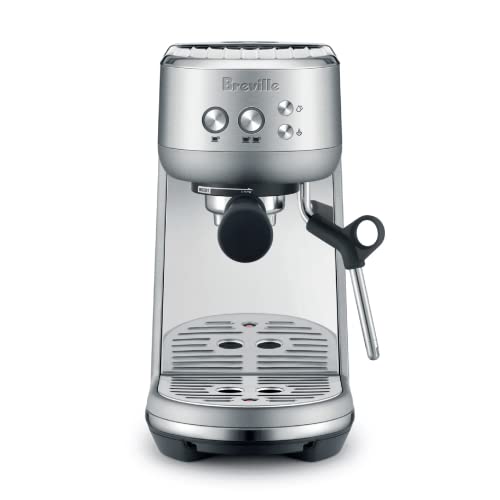
Breville BES450BSS Bambino Espresso Machine, Brushed Stainless Steel | Make café-quality espresso, lattes and cappuccinos at home with this compact, manual coffee maker | Beginner-friendly


As an Amazon Associate we earn from qualifying purchases. Product prices and availability are accurate as of the date/time indicated.
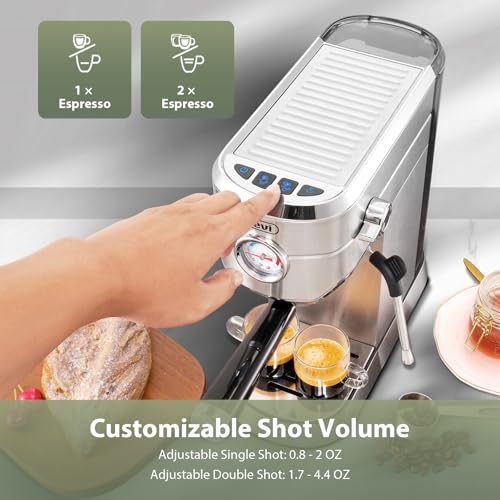
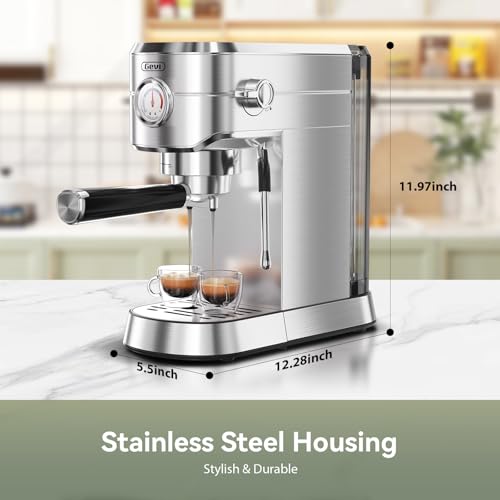
Gevi 20 Bar Compact Espresso Machine for Home,Latte、Cappuccino Coffee Maker | BPA-free;34oz Water Tank;Built-in Pressure Gauge;with Compatible Accessories;Can Make Americano;Easy to Clean;with Steam Wand




As an Amazon Associate we earn from qualifying purchases. Product prices and availability are accurate as of the date/time indicated.

Neretva Espresso Machine 20 Bar Super Compact Espresso Coffee Machine-Beige | Professional Stainless Steel Espresso Maker with LED Display and Powerful Steam for Home Baristas to Make Latte, Cappuccino


As an Amazon Associate we earn from qualifying purchases. Product prices and availability are accurate as of the date/time indicated.
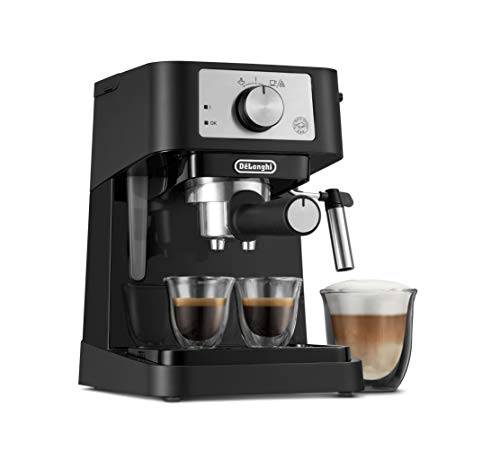
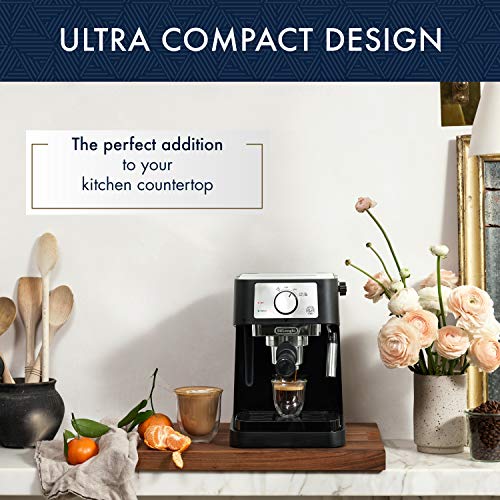
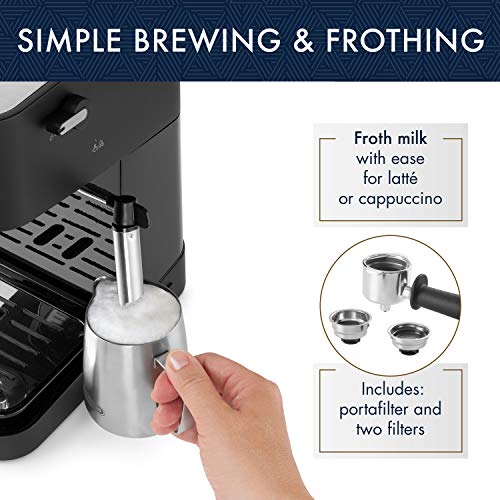
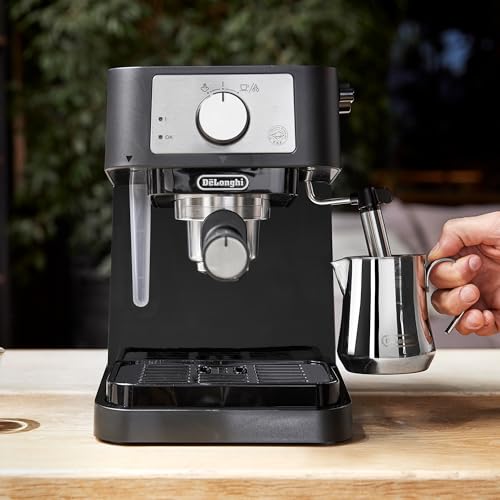
De'Longhi Stilosa Compact Manual Espresso Machine, Manual Milk Frother | #1 Worldwide Espresso Machine Maker, 15 Bar Pump Pressure, Stainless Steel Boiler, Frother, Compact Design


As an Amazon Associate we earn from qualifying purchases. Product prices and availability are accurate as of the date/time indicated.

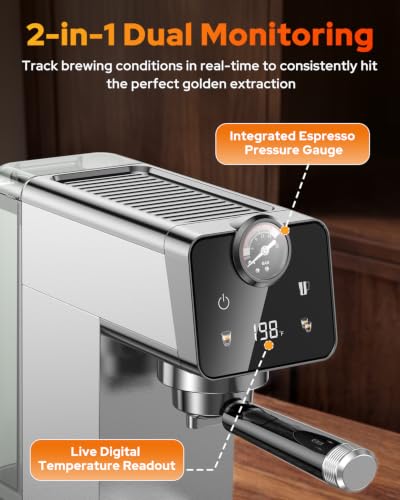
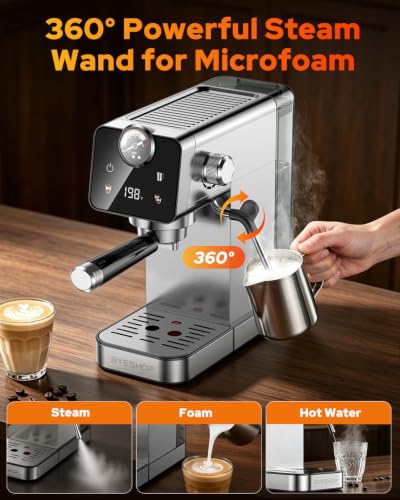
BYESHOP 20 Bar Compact Espresso Coffee Machines with Milk Frother for Home | Dual Display Pressure Gauge & Temp, LED Touchscreen Cappuccino Latte Machine Espresso Maker with Steam Wand, 37oz Water Tank




As an Amazon Associate we earn from qualifying purchases. Product prices and availability are accurate as of the date/time indicated.
A small kitchen punishes guesses. Measure three things with a tape, write them on your phone, and compare them with the dimensions on each listing’s detail page (the titles here do not give them).
Number 1, usable depth. Measure from the front edge of the counter to the backsplash or wall, then subtract about 2 inches for the power cord bend and rear airflow. That is the deepest machine you should consider. Many people forget that the portafilter handle sticks out the front, so add the handle length to the machine’s stated depth if the listing measures only the body.
Number 2, usable height. Measure from the counter to the underside of the upper cabinet. Machines with a top-fill water reservoir or a lid on top need extra clearance above them, and steam from the wand and group head rises toward whatever is overhead. As a working assumption (an estimate, not a spec), leave at least 3 to 4 inches above any machine that fills from the top, and make sure the cabinet finish tolerates steam.
Number 3, tank access. Does the water tank lift out from the back, side or top? A machine that must be dragged forward every time you refill it is not really compact in daily life.
A worked example. Say your coffee corner is 11 inches deep from counter edge to wall and the cabinet above sits 16 inches over the counter. Subtract 2 inches for cord and airflow and you have 9 inches of usable depth for the machine body, handle included. A hypothetical machine listed at 12 inches deep fails immediately, even if it is sold as compact. A hypothetical 8.5-inch-deep, 12-inch-tall model passes depth and leaves 4 inches above; if its tank fills from the top, it passes height as well, narrowly. The numbers in this example are invented to show the arithmetic. Substitute your own and the real listing dimensions.
One more constraint is electrical. Only the HBN listing states a wattage (800W). For the others, check the listing for power draw and avoid plugging an espresso machine, a kettle and a microwave into the same kitchen circuit, because simultaneous use can trip a breaker. Follow each manufacturer’s manual for outlet and grounding requirements.
Side-by-side snapshot
| Model | What the title confirms | Price tier | Best for |
|---|---|---|---|
| CASABREWS CM5418 | 20-bar pump, built-in pressure gauge, steam wand, 34oz tank, stainless steel | Mid-range | Learners who want a gauge to watch |
| CASABREWS 3700 Essential | 20-bar pump, steam wand, 43.9oz removable tank, stainless steel | Budget | Fewer refills on a tight budget |
| Breville Bambino BES450BSS | Manual compact machine, brushed stainless, billed as beginner-friendly | Premium | First machine you plan to keep |
| Gevi 20 Bar | 20-bar, pressure gauge, 34oz tank, BPA-free, steam wand | Mid-range | Americano and milk drinks |
| HBN 3.5Bar | 3.5 bar, 800W, milk frother, 2-4 cup | Budget | Occasional espresso-style drinks |
| Neretva 20 Bar | 20-bar, LED display, stainless steel, beige finish | Mid-range | Matching a light-colored kitchen |
| De’Longhi Stilosa | 15-bar pump, stainless steel boiler, manual milk frother | Mid-range | Simple controls, familiar brand |
| BYESHOP 20 Bar | 20-bar, pressure and temperature display, LED touchscreen, 37oz tank | Budget | Display-driven operation |
The eight machines, one at a time
CASABREWS CM5418: the gauge-equipped learner
The CM5418 title lists a 20-bar pump, a built-in pressure gauge, a steam wand for cappuccino and latte, a stainless steel body and a 34oz water tank. That tank figure is the most useful clue for small-kitchen life. Assuming roughly 3 ounces of water per double-shot drink once you count the purge and warm-up flush, and roughly 5 ounces per latte once steaming is included (both estimates, and your habits will shift them), one full 34oz tank covers somewhere around 11 black drinks or 6 to 7 lattes before you refill.
The gauge is the feature to understand. A needle that shows brewing pressure gives you feedback while you adjust grind size, which helps a beginner see what changed from one shot to the next. It does not make the coffee better by itself, and the 20-bar number on the box describes the pump’s maximum capability rather than the pressure at the coffee puck. Check the listing for whether the basket is pressurized, because that changes how forgiving grind size is.
The title gives no footprint. Pull up the dimensions on the listing and run the three-number check above before you commit, particularly for height if the tank sits on top.
Pros
- Pressure gauge gives visible feedback while dialing in a shot
- 34oz tank is workable for a household of one or two
- Steam wand supports cappuccino and latte, per the title
- Stainless steel exterior per the title
Cons
- No dimensions in the title, so fit in a small kitchen is unconfirmed
- Water tank is smaller than the 3700 Essential’s
- Steam wand technique takes practice, and steam can burn skin
- Whether it ships with a pressurized basket is not stated
Who it’s for: someone learning espresso who wants a gauge on the front panel and does not mind checking measurements first.
CASABREWS 3700 Essential: the biggest tank for the least outlay
This listing is a CASABREWS machine like the CM5418, but the title shifts the emphasis: a 20-bar Italian pump, a steam wand, a stainless steel build and a 43.9oz removable water tank. It does not mention a pressure gauge, so do not assume it has one. The removable tank is the headline for a cramped kitchen, because you can carry it to the sink instead of pouring water into a machine wedged under a cabinet.
On the same assumptions used above (about 3 ounces per black double, about 5 ounces per latte, both estimates), 43.9oz stretches to roughly 14 black drinks or 8 to 9 lattes per fill. For a person who makes one latte a day, that is about a week between refills if you also rinse and flush; stale water is not something to leave sitting in a tank for long, so empty and refill on a schedule that suits the manufacturer’s care instructions.
Because the listing gives no outer dimensions, treat the large tank as a possible size cost. A bigger reservoir often means a bigger housing, but that is a general tendency and not a fact about this unit. Check the listing’s width, depth and height, and look at where the tank detaches.
It sits at the low end of this set’s price range, which makes it a sensible way to find out whether you will actually use a machine at home before you spend more.
Pros
- 43.9oz removable tank, the largest capacity quoted in the set
- Low price tier relative to the others
- Steam wand for milk drinks, per the title
- Removable tank is easy to rinse at the sink
Cons
- No pressure gauge mentioned in the title
- Dimensions are not stated, and a large tank may mean a larger body
- Entry-level steam wands often need patience with milk texture
- Included accessories are not listed in the title
Who it’s for: a budget-minded household that would rather refill once a week than every other day.
Breville Bambino BES450BSS: the beginner pick with a premium price
The Bambino title calls itself a compact, manual coffee maker for café-style espresso, lattes and cappuccinos, with a brushed stainless steel finish and a “beginner-friendly” label. It is the only machine here whose title says “manual,” which in this context means you control the shot and the milk yourself. It does not list a pump bar number, a tank size or a pressure gauge, so each of those is a “check the listing” item.
Why does it still rank near the top for a small kitchen? Because it is the machine in this group most associated with a deliberately small footprint, and because an entry from a long-established espresso brand usually comes with clearer documentation and parts support. Both of those are general expectations rather than claims in the title, so confirm dimensions and warranty terms on the listing and the manufacturer’s page.
Its price tier is Premium within this set, roughly two to five times the cheapest entries by the numbers on the listings. For that gap, a buyer should expect more consistent shots and a steadier learning curve, but the title does not promise either. If you only drink espresso a few times a month, the extra spend is hard to justify.
Plan for a grinder. Any machine at this level works best with freshly ground beans, and a pre-ground bag will limit results whatever you buy.
Pros
- Positioned for beginners, per the title
- Brushed stainless steel finish
- Described as compact and manual, so you keep control of the shot
- Established brand name on the listing
Cons
- Highest price tier among the eight
- Title gives no tank size, pump pressure or dimensions
- Manual operation means a learning curve for milk drinks
- Benefits most from a separate grinder, which adds cost and counter space
Who it’s for: a first-time buyer who expects to make espresso several times a week and wants a machine meant to last through the learning curve.
Gevi 20 Bar Compact Espresso Machine: the Americano-friendly option
The Gevi title includes a 20-bar pump, a BPA-free build, a 34oz tank, a built-in pressure gauge, compatible accessories, a steam wand and the ability to make an Americano. It reads like a close cousin of the CM5418 on paper: same 34oz tank, same gauge idea. The distinguishing phrases are “BPA-free,” “easy to clean” and the mention of compatible accessories.
“BPA-free” tells you the plastic components that touch water are made without that compound; the title does not say which parts, so check the listing if material concerns matter to you. “Easy to clean” is a claim from the seller, not a measured result, and in a small kitchen the cleaning routine matters more than the claim. The steam wand and the group area are where milk residue and coffee oils collect, so wipe and purge after each session and follow the care instructions for rinsing.
The Americano mention is worth a practical thought. An Americano means diluting a shot with hot water. Some machines dispense hot water from the wand; others require you to heat water separately. The title does not say how this one does it, so open the manual or listing before planning your mornings around it.
As with every machine here, the footprint is the open question. Measure first, and read the accessory list closely, since “compatible accessories” in a title can mean anything from a tamper to a spare filter basket.
Pros
- Pressure gauge and 34oz tank, per the title
- BPA-free claim for water-contact plastics
- Mentions compatible accessories, so check what is bundled
- Steam wand for milk drinks
Cons
- Mid-range price tier, above the CASABREWS 3700 Essential
- Overlaps heavily with the CM5418, so differences are subtle
- No dimensions in the title
- Hot-water method for Americano is not described
Who it’s for: someone who drinks a mix of lattes and Americanos and wants the gauge-and-steam-wand layout in a mid-priced body.
HBN 3.5Bar Espresso Machine: what this one really is
This listing needs a plain explanation. The HBN title says 3.5 bar, 800W, a milk frother, a steamer, and a 2-4 cup capacity, and it calls the machine a cappuccino and latte maker. A figure of 3.5 bar is far below the 15 to 20 bar quoted for the other machines, and well below the roughly 9 bar commonly cited as the reference for espresso extraction. The 15 and 20 bar numbers are pump maximums and are not extraction pressure either, so the comparison is not apples to apples, but 3.5 bar is a signal to read the listing closely.
In practical terms, treat it as a steam-driven, espresso-style machine until the listing proves otherwise. Steam-driven designs tend to produce a stronger, coffee-concentrate style drink with less of the crema and body that pump machines are known for. That is a general pattern, so confirm how this unit brews on its detail page. If you want authentic shots, pay for a pump machine; if you want a warm, strong milk coffee at the lowest price, this can be enough.
It has the lowest price tier in the set, and the “2-4 cup” capacity suggests a small batch size, which suits one or two people. The title includes “for home and office,” which signals light use.
Because the title gives a cup range instead of a tank volume, check how much water the unit holds before assuming it suits a shared household. Anything that heats water and makes steam deserves caution: keep the lid secured, let pressure release as the manual directs, and keep children away from the frother.
Pros
- Lowest price tier among the eight
- 800W figure is stated, so circuit planning is easier
- Milk frother and steamer included, per the title
- Intended for small batches of 2 to 4 cups
Cons
- 3.5 bar is not comparable to the pump machines, so expect espresso-style rather than café espresso
- No dimensions or tank size in the title
- Less suitable if you care about crema and shot control
- Steam hazards need careful handling
Who it’s for: an occasional drinker who wants a strong, milky coffee at the lowest outlay and accepts that it is not a pump espresso machine.
Neretva 20 Bar Super Compact: the beige one
The Neretva title leads with “Super Compact,” a 20-bar pump, a beige finish, stainless steel construction, an LED display and a powerful steam wand. For a small kitchen, the color matters more than it sounds. Black and silver machines can feel heavy on a light counter, and a beige body blends with cream cabinets or a wooden shelf. If your coffee spot lives in plain view, that is a legitimate buying factor.
“Super Compact” is a stronger claim than “compact,” but there is still no number behind it. Measure before you trust it. The LED display, per the title, should help with indicating status, though the title does not say what it shows. Pressure and temperature readouts appear on other listings; here, check the listing before assuming either.
With a 20-bar pump and a steam wand, the layout is familiar: one boiler, a portafilter, and the usual milk-steaming routine. Tank size is not stated, so check that too. A tank that is too small turns a compact machine into one you refill constantly, which feels worse in a tiny kitchen where the sink may be a few steps away.
It lands in the middle of this set on price tier, which means it is not the bargain pick and not a splurge. A sensible way to decide is to line it up against the CM5418 and the Gevi: if the Neretva’s listing shows a smaller footprint and a tank you can live with, the color and size can justify it; if the dimensions are similar, the gauge-equipped machines give you more feedback for the same money.
Pros
- Beige finish suits light or warm-toned kitchens
- Described as super compact, with an LED display
- 20-bar pump and steam wand, per the title
- Stainless steel construction
Cons
- No tank size or dimensions in the title
- Display contents are not described
- Mid-range price tier without an obvious feature edge over the CASABREWS models
- Light color may show coffee splatter more
Who it’s for: a buyer whose kitchen is light-colored and whose machine will be on display.
De’Longhi Stilosa: familiar brand, familiar limits
The Stilosa title describes a compact manual espresso machine with a manual milk frother, 15 bar pump pressure, a stainless steel boiler and a compact design. It also carries a brand claim about being the number one worldwide espresso machine maker; that is the seller’s marketing, and it is worth reading as such rather than as a ranking you can verify from the listing.
The 15-bar figure is the lowest pump rating among the true pump machines here, but a lower number is not worse: extraction pressure at the coffee is set by the machine’s regulation, not the label. What the “stainless steel boiler” suggests is durability in the part that heats the water; it does not tell you how quickly it heats or how steady the temperature is. The title does not state tank size or dimensions, so check both.
The “manual milk frother” wording probably means a steam wand you operate by hand, which is the same approach as most rivals here; confirm in the listing. Learning to steam milk is the most skill-dependent part of a latte, so expect a few flat or bubbly attempts before it clicks, and use a thermometer or your palm on the pitcher as the manual advises.
It is the second most expensive machine in the set by price field, though still far less than the Bambino. If you are tempted by the brand, remember that the brand tells you about support channels and parts availability rather than guaranteeing a better shot, so compare the warranty terms and the listed accessories against the cheaper CASABREWS and Gevi options before deciding.
Pros
- Stainless steel boiler, per the title
- Simple, manual controls
- Established brand on the listing
- Compact design is part of the pitch
Cons
- 15 bar is the lowest pump figure among the pump machines, though not necessarily worse in the cup
- No tank size or dimensions in the title
- Marketing claims in the title are unverifiable
- Steaming milk by hand has a learning curve
Who it’s for: a shopper who likes the reassurance of a well-known brand and wants a straightforward manual machine at a mid-range price.
BYESHOP 20 Bar: the display-heavy one
The BYESHOP title promises a 20-bar pump, a dual display for pressure and temperature, an LED touchscreen, a steam wand, a milk frother and a 37oz tank. Of the eight, this is the listing that offers the most on-screen information on paper. A temperature readout is useful because water temperature affects extraction and milk texture. Whether the displays show real sensor readings or a simple status indicator is not stated, so check the listing.
The 37oz tank sits between the 34oz and 43.9oz machines. On the estimates used earlier (about 3 ounces per black double, about 5 per latte), that is roughly 12 black drinks or 7 lattes per fill.
A touchscreen on a kitchen appliance has an everyday downside: wet fingers, coffee splashes and steam. If you cook beside the machine, keep it away from the stove. The cleaning routine also changes. A flat touch panel wipes easily, but it should not be soaked, and the manual will say what is safe.
It is priced at the low end of the set, close to the CASABREWS 3700 Essential, so the real question is whether you want a display more than you want the extra tank volume. Dimensions are again not in the title, and the extra electronics may add height or depth. Also look at how the unit is powered down: some touch-controlled machines stay in standby unless you switch them off at the wall, which matters if you plan to leave it on a shared kitchen circuit.
Pros
- Dual display for pressure and temperature, per the title
- 37oz tank
- LED touchscreen controls
- Budget price tier
Cons
- Touch panels can misbehave with wet hands or steam
- What the displays actually measure is not stated
- No dimensions in the title
- Warranty and support terms are not in the title, so check them
Who it’s for: someone who likes seeing numbers while they brew and wants a lower price tier than the gauge-equipped CM5418.
How we picked these
The Editorial team built this list from published specifications, manufacturer documentation and buyer reviews. Nobody on the team used or measured these units. Everything stated about a machine comes from its listing title; anything beyond the title is marked as “check the listing” or as an estimate with its assumptions spelled out, such as the per-drink water figures above.
Selection followed the keyword. A machine had to be pitched as compact or small-footprint, and the set was then filtered to cover a range: one premium manual machine, several 20-bar pump models, a 15-bar model and one low-pressure steam-style unit. Where a listing is not really an espresso pump machine, as with the 3.5 bar HBN, we say so rather than leaving it in a ranking as if it were.
What the picks cannot tell you is how any of them behave on your counter. Footprint, noise, shot consistency and long-term reliability depend on details that titles do not carry. That is why the fit check comes first, and why this page does not rank the eight with a single score.
Pump bars, boilers and what “compact” costs you
Most listings lead with a bar number because it is easy to compare. Treat it as marketing shorthand. A pump rated at 15 or 20 bar is rated for its peak capability; the pressure at the coffee puck is regulated lower, and a figure around 9 bar is the reference people usually cite for espresso. A higher label does not buy better coffee, and it is not a reason to pick one 20-bar machine over a 15-bar one.
Compact machines usually compromise in three ways. Smaller boilers mean longer waits between pulling a shot and steaming milk, so a latte can take a minute or two longer than on a larger machine. Smaller tanks mean more refills. And light-weight housings mean the machine can slide when you lock the portafilter in, so use a non-slip mat.
Single-boiler designs, which is the likely setup for every machine here, cannot brew and steam at once. The sequence is brew first, then wait for the boiler to heat to steam temperature, then steam. If you want faster back-to-back drinks for guests, that is where heat exchanger machines come in, and our guide to heat exchanger espresso machines covers the step up if you outgrow a compact unit.
Grind quality matters as much as the machine. If you buy beans that are ground at the store, expect flat results. A separate grinder is a real cost and a real counter commitment, and our look at espresso grinders explains the options. If you are still weighing machine types, the beginner semi-automatic guide frames the next tier up.
Keeping a small machine running
Scale is the quiet enemy. Hard water leaves mineral deposits in the boiler and lines, which slows heating and eventually blocks flow. Use filtered or softened water if your tap water is hard, and descale on the schedule the manual gives. Our page on descaling kits lists solutions, but always use the descaler the manufacturer recommends, since the wrong product can damage seals or void warranty terms.
After each session: purge the steam wand and wipe it right away, because dried milk is hard to remove and can clog the tip. Rinse the portafilter and basket. Empty the drip tray before it overflows onto the counter. Once a week, remove and wash the tank and any removable parts according to the manual.
On safety: steam and hot water cause burns, and a pressurized portafilter should never be forced open while the machine is under pressure. Keep the cord away from the sink and the counter edge. Follow the manual for every step, and stop using the machine if you see leaks near the electrical parts or a damaged cord.
Common mistakes with compact machines
Buying on bar count alone. A 20-bar label is not twice as good as a 10-bar one. Look at what the listing says about the basket, the boiler and the controls.
Skipping the measuring tape. A machine that fits with a half inch to spare will frustrate you every time you lift the tank. Leave margin for refilling and for steam.
Ignoring the grinder. Freshly ground beans make a larger difference than a higher-priced machine with stale pre-ground coffee.
Assuming every “espresso machine” is a pump machine. The 3.5 bar listing is a reminder to read the numbers. If the pressure is single digits and low, the drink will be different.
Forgetting where the water goes. If the sink is across the room, a small tank is a chore. Size the tank to your routine.
Putting the machine under a cabinet without checking steam. Repeated steam can swell or discolor cabinet finishes. Pull the machine forward while steaming, or choose a spot with open space above.
Which one for which kitchen
For a first machine you plan to keep and a counter that can handle a premium purchase, the Breville Bambino is the sensible pick. For the lowest outlay with the largest tank, choose the CASABREWS 3700 Essential. If you want a gauge to learn from, take the CASABREWS CM5418 or the Gevi. For a light kitchen with an on-view machine, the Neretva stands out; for an on-screen readout, the BYESHOP; for brand familiarity, the De’Longhi Stilosa. Only choose the HBN if you understand it is a 3.5 bar, espresso-style machine and you want it for the price.
If you travel with coffee gear or have almost no counter, a manual brewer might suit you better than any of these; our portable espresso brewer guide covers that route.
Questions small-kitchen buyers ask
How small is a compact espresso machine?
There is no standard. Titles use “compact” loosely, and none of the eight listings here give dimensions in the title. Check width, depth and height on each detail page, add roughly 2 inches behind for the cord and airflow, and allow 3 to 4 inches above for top-fill tanks as an estimate. Then compare against the space you measured with a tape rather than trusting the label.
Does a higher bar number mean better espresso?
Not by itself. Bar figures on listings describe the pump’s maximum, while the pressure at the coffee is regulated to a lower level, with about 9 bar commonly cited as the reference. A 15-bar and a 20-bar machine can produce similar shots. Grind size, fresh beans, tamping and water temperature affect the cup more than the number printed on the box.
Do I need a separate grinder?
For the best results, yes. Freshly ground beans make a noticeable difference, and a pre-ground bag limits what any machine can do. A grinder adds cost and takes counter space, so factor both into your small-kitchen plan. If you are not ready for one yet, buy whole beans and have them ground at a shop close to the day you brew, and store them in an airtight container away from heat so they stay as fresh as possible.
How often should I descale?
Follow the manual, because intervals depend on your water hardness and how often you brew. Hard water needs more frequent descaling, and filtered water can stretch the gap. Use the descaler the manufacturer recommends. Signs it is overdue include slower heating, weak flow, odd noises and visible mineral buildup around the group head or in the tank. Never mix descaling products, and rinse the system thoroughly afterward as the instructions direct.
Is it safe to leave the machine plugged in?
Check the manufacturer’s instructions, since policies vary. Many people unplug machines they will not use for days, and you should always unplug before cleaning or if you notice damage to the cord. Keep the machine away from the sink edge, avoid overloading a shared circuit, and never run it with an empty tank. If anything smells burnt or leaks, stop and contact the maker.


Write Your Review
No reviews yet. Be the first to share your experience!